








The industry driving artificial intelligence (AI) is finding it increasingly difficult to project a friendly face. The official narrative promoted by the companies leading this technology is that it has arrived to improve the world. They promise it will enhance human capabilities, allow us to work less, facilitate tasks that have been tedious until now, revolutionize science, cure diseases, and even solve the climate crisis. But this week, several events have brought a good dose of reality. The European Central Bank has ordered banks to strengthen their cybersecurity because it fears that Anthropic’s latest model, which has proven especially good at detecting software faults, could wreak havoc in the sector, leaving millions of people’s accounts exposed. In the United States, Google broke its anti-war policy on Tuesday and signed an agreement with the Pentagon to hand over its models, which can be used for classified matters. On Friday, the Department of War announced that this agreement extended to xAI, OpenAI, Amazon, Microsoft, and Nvidia, among others. All this while the crucial trial about OpenAI, the developer of ChatGPT, is taking place, during which many technomagnates will testify over the next month — Elon Musk already did — revealing the power struggle underlying their proclamations to save the world with AI.
In five days, it has become clear that AI can topple the global financial system, that all the big tech companies are openly aligning with the war agenda of the world’s largest army, and that, rhetoric aside, this is not about benefiting humanity but enriching its owners.
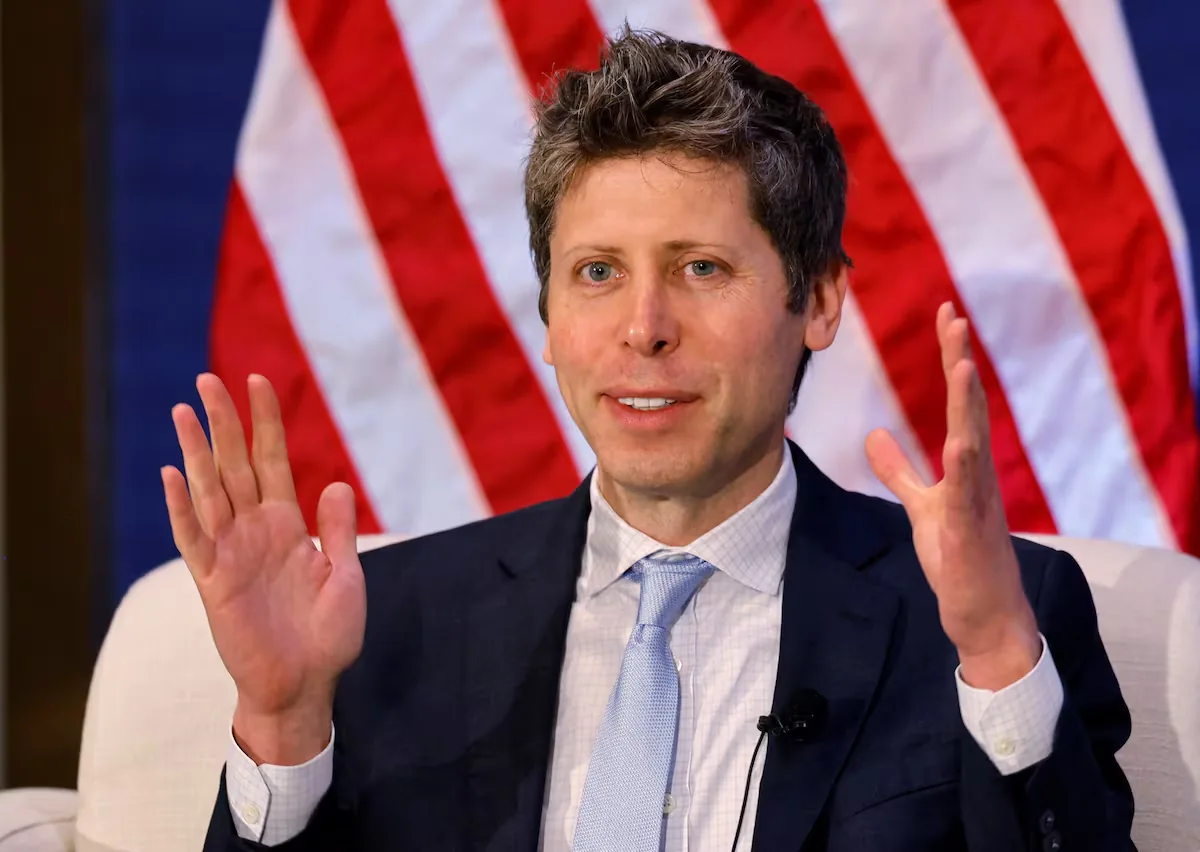
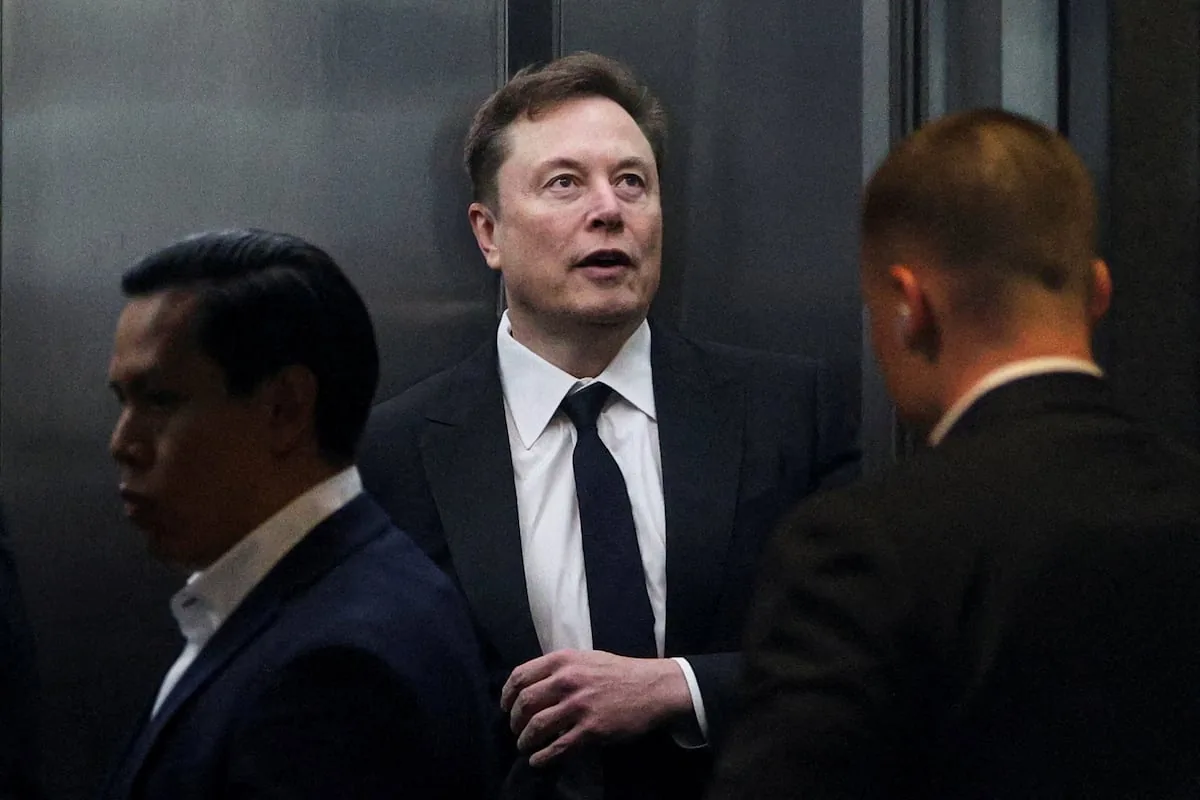
This last point is important, not so much for the substance — no one has ever believed that AI developers were NGOs — but for the form. The sector’s giants have worked hard to build a narrative presenting this technology as an unstoppable and inevitable force of progress. For years, they tried to avoid being associated with the military sector, autocratic governments, or disinformation. Now, AI is taking off its mask. The trial is airing the dirty laundry of some of the owners of these companies, who are also the largest in the world. The two protagonists of the lawsuit, Elon Musk, co-founder of OpenAI and owner of Tesla, SpaceX, and the X network, and Sam Altman, CEO of OpenAI, have positioned themselves as guides in a kind of civilizing mission.
They are not alone. Boosted by a turbulent international context in which the far right is advancing worldwide and with Donald Trump in the White House as the main supporter, some technomagnates even publish manifestos with their worldview. A major stir was caused two weeks ago by Palantir, the largest provider of data analysis tools applied to the Pentagon’s mass surveillance, which also has contracts, among others, with the Defense Ministries of Spain and the United Kingdom. In its 22 points, the text relativizes the value of democracy, calls for using AI as a weapon of war, and defends social control or what is already known as technofascism.
Because we get asked a lot.
— Palantir (@PalantirTech) April 18, 2026
The Technological Republic, in brief.
1. Silicon Valley owes a moral debt to the country that made its rise possible. The engineering elite of Silicon Valley has an affirmative obligation to participate in the defense of the nation.
2. We must rebel…
“The behavior of the big tech companies is consistent with what they have been doing for years,” says Lorena Jaume-Palasí, an expert in ethics and philosophy of law applied to technology. “Meta’s owner, Mark Zuckerberg, has worn t-shirts with quotes from the Roman Empire. OpenAI has published articles citing Thomas Hobbes’ Leviathan. What they are doing is something very classic in the history of political philosophy: from Hobbes to John Locke or Jean-Jacques Rousseau, the modus operandi consists of starting by describing what the human being is; then, based on that, they tell you what the good society is and, in a third step, how it is possible to create that society with certain political rules. What we are seeing today is precisely that: they are trying to integrate themselves into that chronology of historical thought.” Altman responded four days later to Palantir with his own manifesto, in which he says his technology seeks “universal prosperity” or the “resilience” of people.
This revision of the social contract goes beyond rhetoric. Investor Peter Thiel, Elon Musk’s partner in PayPal, president of Palantir, and Silicon Valley guru, has been in Argentina for a month. His agenda is not public, but it is known that he is holding meetings with high-ranking officials of Javier Milei’s government, probably to put his company’s manifesto into practice. “It is no coincidence that this visit is happening right now. Social support for Milei is falling. What Thiel has to offer through Palantir are technologies for personalized mass control and surveillance. Everything points to them working to start cross-referencing all the databases the State has, but also a lot of information that the intelligence service can access via phone taps and requests to the platforms themselves,” explains Cecilia Rikap, Economics professor at University College London, head of research at the Institute for Innovation and Public Purpose (IIPP) at that center, and advisor to several countries on digital sovereignty. Meanwhile, President Nayib Bukele has embarked on another technological experiment in El Salvador: handing over the country’s medical management to Google’s AI.
The business of war
Tech companies invest staggering amounts in developing AI. In the first three months of this year, Amazon, Google, Microsoft, and Meta spent about $130 billion (€110.9 billion) on data centers that feed and enable AI, according to data collected by The New York Times. That means they spent more each month than the entire Manhattan Project, which created the nuclear bomb. It is 70% more than in the same period last year.
For everything to work, data centers, where AI models are trained and where the resulting applications are then run, consume increasingly large amounts of energy that strain the system. In the United States, there was talk in Joe Biden’s last term of launching pocket nuclear plants to power these infrastructures, whose water consumption to cool the systems has intensified drought in some populations.

What is all that computing power being used for? To make programmers’ lives easier, to translate or write texts, and, of course, to make memes. But also to kill. “Since the time of General Von Clausewitz [1780-1831], decision-making was determined by the mission, terrain, enemy, and own resources. Today, AI facilitates all that for the command, even proposing possible decisions, which until now was the work of general staffs,” describes Fernando Puell de la Villa, historian, retired Army colonel, and author of History of War: Six Hundred Years of Conflicts in the West (15th-21st centuries) (Espasa).
The U.S. military used AI in Iran to select a thousand targets in just 24 hours. Or to design the operation that ended with the capture of Nicolás Maduro. The Israeli armed forces were pioneers in this field with Lavender, the algorithm they used to decide whom to bomb in Gaza, which considers it acceptable that, to kill a senior official of Al Fatah or Islamic Jihad, up to a hundred civilians may die. The Pentagon will now have at its disposal the most powerful commercial models for these and other tasks: from OpenAI’s ChatGPT to Google’s Gemini, through Microsoft’s and AWS’s (Amazon’s cloud subsidiary) infrastructure, or Nvidia’s advanced microprocessors. “Access to a wide range of AI capabilities from across the U.S. technology ecosystem will provide fighters with the tools they need to act confidently and protect the nation against any threat,” a Pentagon spokesperson said on Friday.
The big absentee on this list remains Anthropic, the developer of Claude or Mythos Preview, the model that scares the ECB so much. The company led by Dario Amodei refused to share its source code without restrictions with the Pentagon, which could include the development of autonomous weapons. As punishment, Trump canceled all federal contracts with Anthropic, something that, according to sources consulted by The New York Times, is now being reviewed at the White House, where its Mythos model has caused much “impression and concern.” According to the company itself, it is so powerful that it can discover vulnerabilities in the source code of operating systems, browsers, or financial programs that have gone undetected for decades in just a few minutes. These faults are a treat for cybercriminals, a springboard to enter other systems.
AI has been in the Pentagon for years, or decades: it is used to guide missiles, in navigation systems, and many other tasks. The difference is that, until now, those systems were developed by the government. After the emergence of generative AI, the one behind ChatGPT, Claude, or Gemini, Trump decided to hand over the baton to commercial companies. Even executives like Andrew Bosworth, Meta’s product chief, who was appointed reserve lieutenant colonel almost a year ago, have been given rank. For many analysts, it is disturbing that big tech companies are already managing national security matters. “If the goal of using AI is to make war more chaotic and devastating, it will undoubtedly have that effect. If the goal is to make war more precise and less dangerous for the civilian population, AI could have the capacity to reduce errors in conflicts, but no concrete case has yet been presented where generative AI has prevented errors in war,” says Arthur Holland, military technology specialist and UN advisor on autonomous weapons.
The Silicon Valley trial
Meanwhile, in Oakland, the richest man in the world has stirred things up. Elon Musk co-founded OpenAI to try to break Google’s scientific monopoly, which it then held on almost all AI fronts. He was the one who put Sam Altman in charge of the nonprofit entity, which later became a company and is now preparing to go public. Musk, who left OpenAI and founded his own startup in the sector, xAI, is seeking $150 billion (€128 billion) in compensation for the legal status change that enriched his protégé. Altman, for his part, claims that his mentor always knew that the only way to do something big and scale the technology was to create a company.

“To some extent, this is a battle of egos, and it is hard to side with either of them, but it is also a trial about whether OpenAI should fulfill its promise to remain a nonprofit entity and work for the good of humanity, which it clearly no longer does,” says Gary Marcus, emeritus professor of psychology and neuroscience at New York University and a well-known critical voice in the AI industry. “I’m not a big fan of Musk, but the world would be better if OpenAI were forced to pursue its original mission,” he adds.
The trial has revealed juicy passages. Like Zuckerberg writing to Musk when he was leading the Department of Efficiency (DOGE) to ask if he could help him. “I don’t mean to offend you, but the fate of civilization is at stake,” he replied. Despite that snub, the revealed documents show that Musk was in constant communication with Meta’s owner, whom he offered to join him to buy OpenAI. It is also known that, in 2016, Musk was asked whether OpenAI should be hosted on Microsoft or Amazon servers. “I think Jeff [Bezos] is a bit of an idiot and Satya [Nadella] is not, so I slightly lean towards Microsoft,” Musk wrote in an email.
“In the past, prophets who made reckless prophecies ended badly,” says philosopher Carissa Véliz, professor at the Centre for Ethics and Humanities at the University of Oxford. “Recently, making false promises has been free of charge. This trial will show us for the first time in a long time whether boasting certain intentions and then not fulfilling them can have legal consequences.”