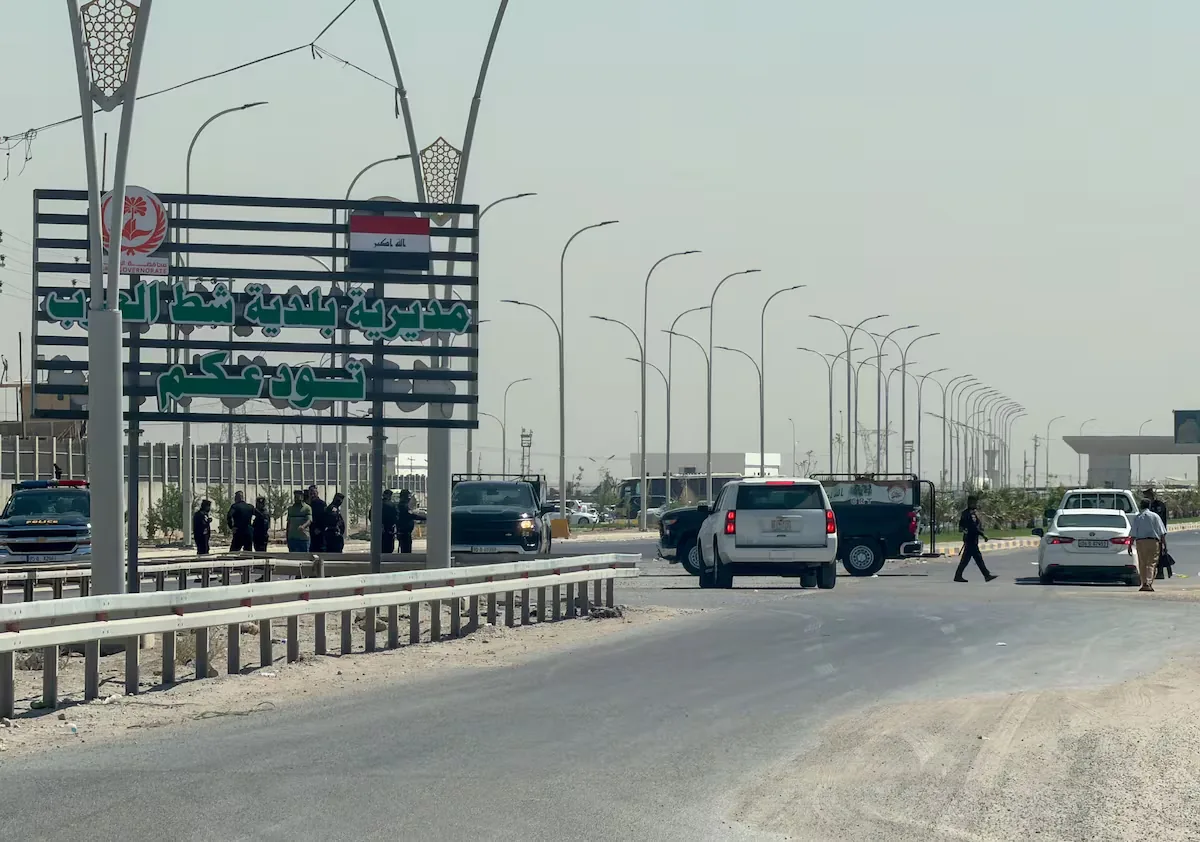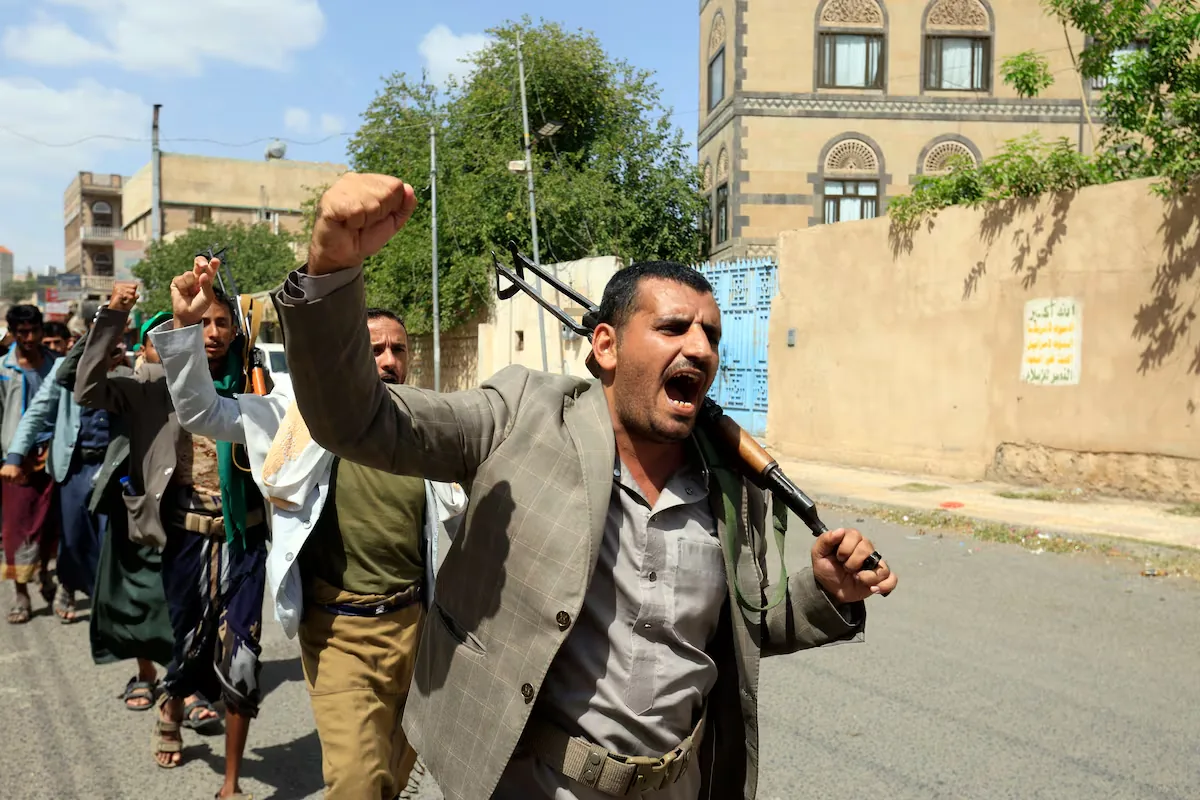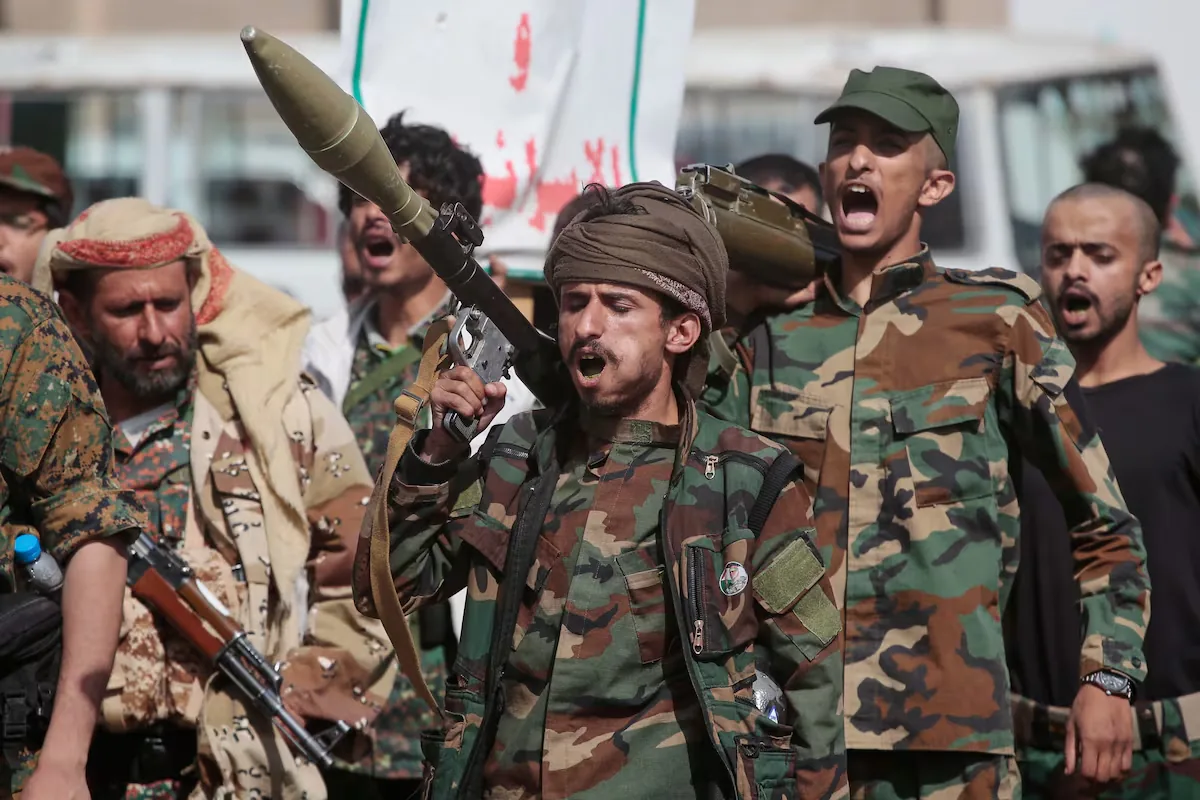









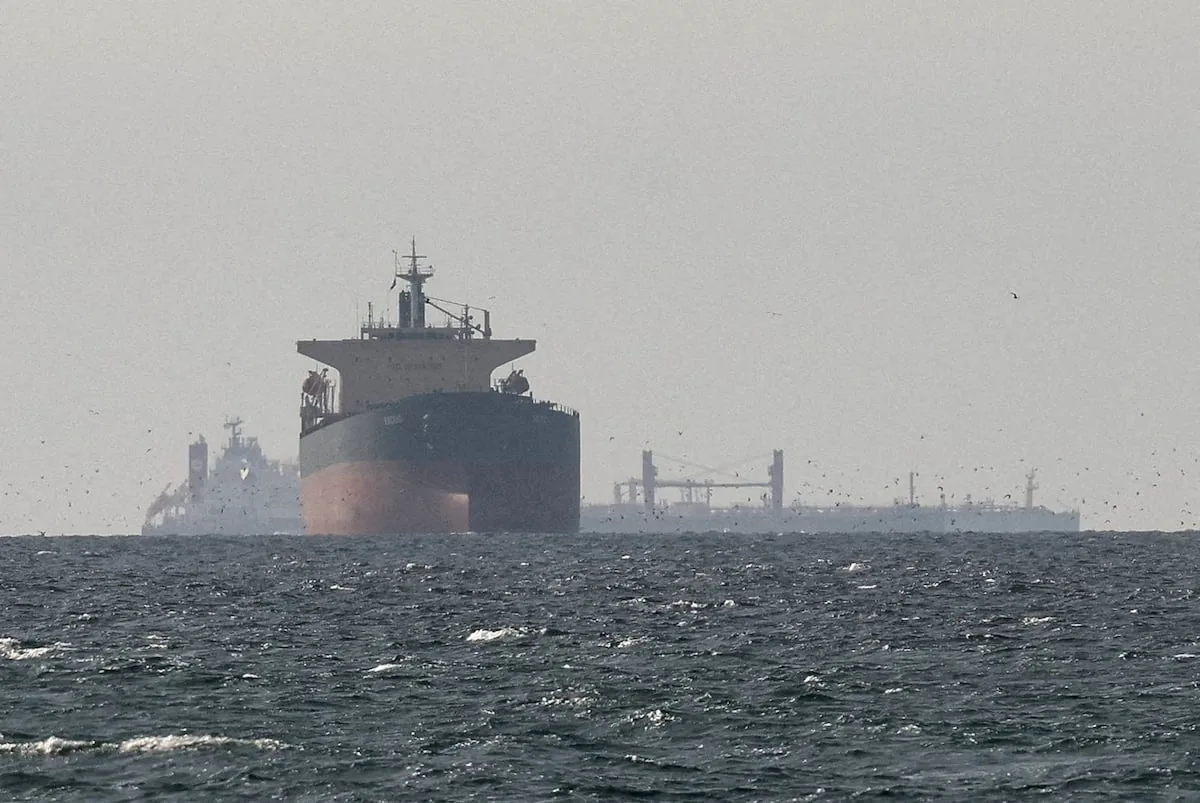
The announcement by United States President Donald Trump of the launch of Project Liberty, an operation to “guide” merchant ships from neutral countries trapped in the Strait of Hormuz due to the Iranian blockade, plunged this crucial Gulf passage into chaos on Monday, with attacks from Tehran, ships and oil facilities on fire, and mixed messages as part of the propaganda war that has been ongoing for just over two months. Since its start on April 8, the ceasefire between Washington and Tehran had never been so close to collapsing as it is now, and Trump has resumed his most dangerous rhetoric, threatening to wipe Iran “off the face of the Earth.”
Read more Anticorruption maintains its request for sentences and does not reduce Aldama’s sentence
Both sides worked throughout the day to give the impression that they control Hormuz. Iranian authorities published a map of what they defined as an expanded maritime zone under their control. The boundaries extend well beyond the strait: they include much of the coast of the United Arab Emirates and international waters.
The Iranian news agency Fars later reported, citing local sources, that they forcibly deterred a United States warship. It was sailing near the Iranian island of Jask and was about to pass through the strait when the launch of two missiles forced it, according to Fars, to turn back. The White House denied these reports, but a U.S. admiral admitted to Reuters a cruise missile attack against ships of his country.
It was the first show of force against Project Liberty, for which the Pentagon has mobilized “destroyers equipped with guided missiles, more than a hundred aircraft from air and land, multi-domain unmanned platforms, and 15,000 soldiers.” The United States Central Command (Centcom) wanted to highlight its effectiveness by reporting that at least two merchant ships, sailing under the U.S. flag, crossed the strait thanks to it.
Iran denied it and attacked the United Arab Emirates for the first time during the truce. A drone hit an oil complex in Fujairah, leaving a black cloud — visually reminiscent of the exchanges of fire from weeks ago — three injured Indian workers, and planes leaving the country, according to air traffic tracking systems. Anti-missile alarms sounded in Abu Dhabi for the first time in a month, while authorities reported an attack with two drones against a tanker of the National Oil Company while transiting the waters of Hormuz, causing no injuries.
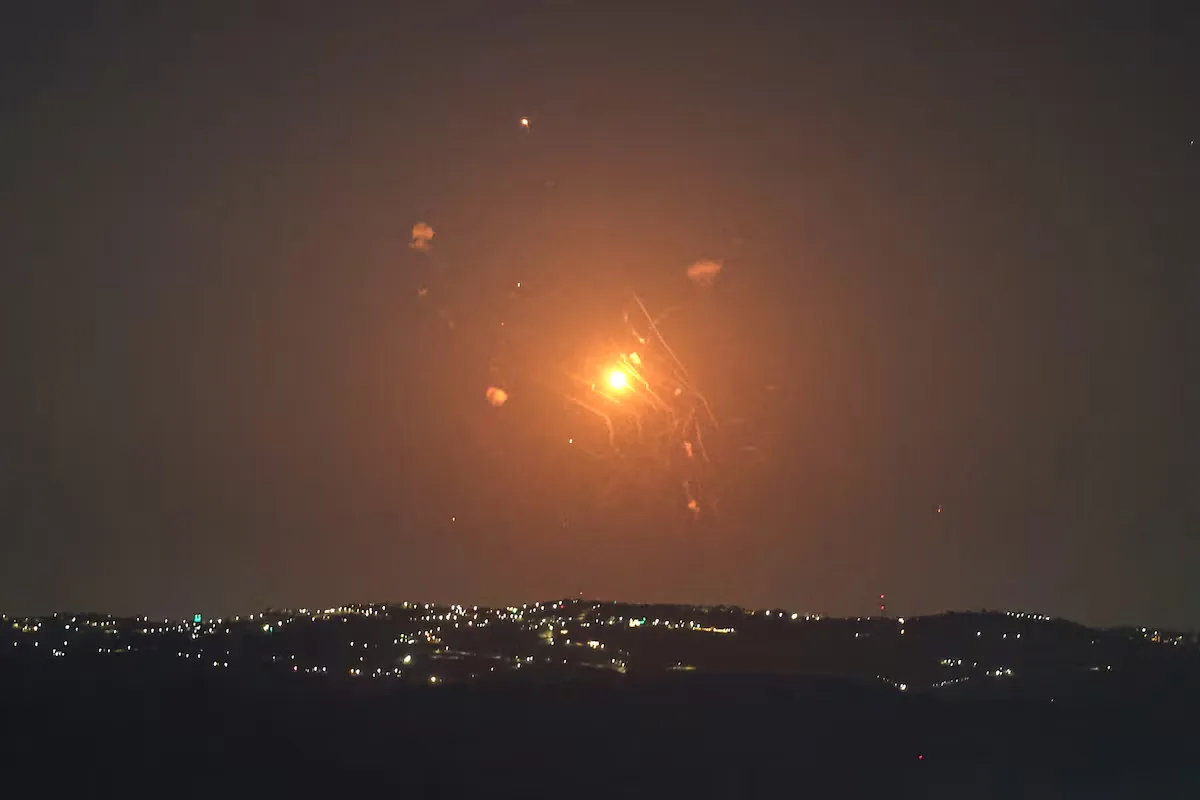
Iran also launched four cruise missiles, according to the Emirati Ministry of Defense. Three were intercepted and one fell into the sea, it said in a statement reassuring the population: the explosions heard in different parts of the country corresponded to the interceptions. According to CNN, at least one was the work of the Israeli anti-missile system. It had recently been revealed that they had already done so during the war. In an unprecedented event in the history of the region, Israel placed batteries there to defend what has become its main ally in the Gulf since they established diplomatic relations in 2020, as part of the Abraham Accords that Trump promoted in his first term.
Like the other Gulf countries hosting U.S. bases, the United Arab Emirates has not responded to Iranian attacks since February, wary of actively entering a conflict it did not want. On this occasion, its Ministry of Foreign Affairs has recalled in a statement that it reserves the “full and legitimate right to respond” to Monday’s missiles and drones, which it defines as a serious escalation and a direct threat to the country’s security.
Two other news items completed the chaotic snapshot of the day around Hormuz: an apparent attack without injuries against a South Korean-flagged ship anchored at the limits of the port of Umm al Qaywayn and the announcement by the U.S. (denied by Tehran) of the destruction of six small Iranian boats.
“Mistakes of the past”
“We have reiterated that the security of the Strait of Hormuz is in our hands and that the safe passage of ships must be coordinated with the Iranian Armed Forces,” emphasized the unified Iranian command to commercial and oil ships. “We warn that any foreign armed force, especially the aggressive U.S. military, will be attacked if it intends to approach and enter the Strait of Hormuz.” Hours earlier, the Foreign Ministry spokesman, Ismail Baghaei, presented his country as the guarantor of the security and stability of Hormuz. “U.S. leaders must understand that the language of threat and force does not work against the Iranian people, and that repeating the mistakes of the past will only sink them deeper into their own swamp, both in the region and in the international community,” he assured.
Read more Architecture that brings victories. This is the new factory of ‘txuri urdin’ talent
The tone of the threats rose during the day, culminating in the televised interview in which Trump said Iran would be “wiped off the face of the Earth” if it continues its attacks. “We have more weapons and ammunition, and of a much higher quality than we had before,” Trump said. “We have the best equipment. We have material all over the world. We have bases all over the world; all of them are supplied with equipment. We can use all that material, and we will, if necessary.”
Experts estimate that nearly a thousand merchant ships, with a total of about 20,000 crew members, are trapped in the strait, an essential transit route for global energy trade; it is estimated that one-fifth of oil traffic and one-fourth of natural gas passed through those waters daily before the war launched by the United States and Israel last February.
Tehran first imposed a de facto blockade of that passage. Trump announced the application of a strait blockade starting April 8. This Sunday, the U.S. president shared on his social network, Truth, an AI-generated image showing him smiling, holding a handful of cards and the message “I have all the cards!”
There was no further explanation about what exactly he meant, but what seems clear is that Washington is far from having the situation in the strait under control. Shortly before, Trump had used the same channel to announce his latest attempt to accelerate the end of a war that resists him, no matter how asymmetric the military balance between the two sides is.
“For the sake of Iran, the Middle East, and the United States, we have told those countries that we will guide their ships to safety outside that restricted maritime route, so they can continue freely with their tasks. I repeat: these are ships from parts of the world that are not involved in any way in what is happening in the Middle East,” he wrote, carefully choosing the verb guide (and not escort) before selling Project Liberty as a “humanitarian gesture.”
Ali Abdollahi, a senior Iranian military commander, responded to the announcement with the warning that “any foreign armed force — especially the aggressive U.S. military — that tries to approach or enter the Strait of Hormuz will be targeted and attacked.”
Treasury Secretary Scott Bessent insisted in an interview on Fox News, for his part, on the selfless justification put forward by Trump. “They are a bunch of pirates,” he said to the conservative television about the Iranians. “They are trying to prevent freedom of navigation through the Strait of Hormuz. And the United States is restoring that passage. It is a humanitarian effort,” Bessent stated.
Against the escalation dynamic, French President Emmanuel Macron has said that his country “will not participate in any force operation” and has defended a reopening of Hormuz “agreed upon between Iran and the United States,” in a “lasting” way and “without restrictions or tolls,” reports Manuel V. Gómez.
Read more Britney Spears avoids jail by pleading guilty to driving under the influence of drugs and alcohol