








Little space. Hard work. Relentless weather. Family disconnection. On medieval whaling ships, there was no room for delicacy nor light tasks. What there was, were risky jobs, long periods of overcrowding, and high mortality rates. In the mid-1500s, the journey from Basque ports to the coasts of Labrador and Newfoundland — in what is now Canada — could last almost two months if the wind was not favorable. The work was demanding and the tools, dangerous. Nothing was comfortable on board. And the kitchen, neither.
Feeding forty men every day under those extreme conditions was a challenge. Especially due to the planning and control of the pantry. Provisions had to be rationed to avoid shortages, combined skillfully to combat monotony, knowing that fresh products would run out in the first days of the voyage, and accounting for less quantity and variety of food on each leg. Cooking on board a whaler required imagination using preserves, composure with the sailors — who hydrated mainly with cider — and skill with a rudimentary stove subject to the whims of the weather.
In the 16th century, cooking was done outdoors. “The ship’s stove was a metal box; like a barbecue, but without legs. It was placed on the ground to prevent the embers from tipping over with the ship’s movements and was filled with sand to insulate the heat from the wooden floor. On that bed of sand, the fire was spread. The goal was to prevent fires,” describes historian Xabier Alberdi. He adds: “The metal box had an open front to cook, but the other three sides were higher. Those ‘walls’ were connected by metal bars that allowed placing grills or hanging pots with chains. Very similar to the typical hearth of rural houses, where pots hung in the chimneys, except here there was no chimney: cooking was done on the deck.”
A journey back in time on the nao San Juan
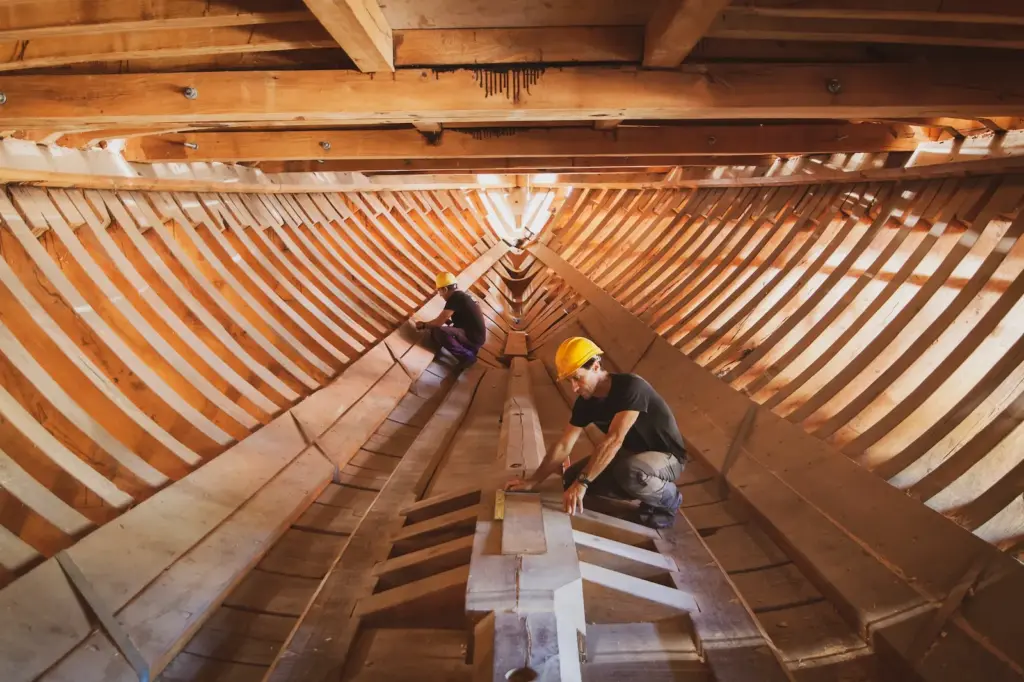
Alberdi is the director of the Research Department at Albaola, a cultural center, shipyard, and museum in the Basque Country dedicated to building historic ships using traditional techniques and period materials. They not only build the vessels; they also revive the trades, because the oaks for the structure or the hemp for the ropes require rope makers and ship carpenters who know how to work them as before.
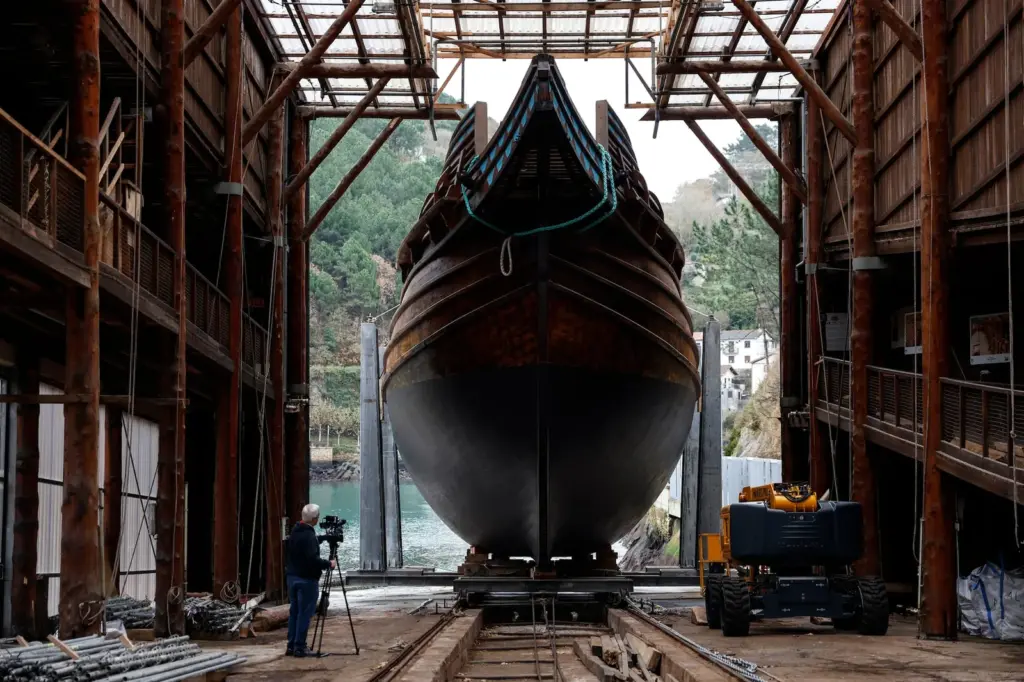
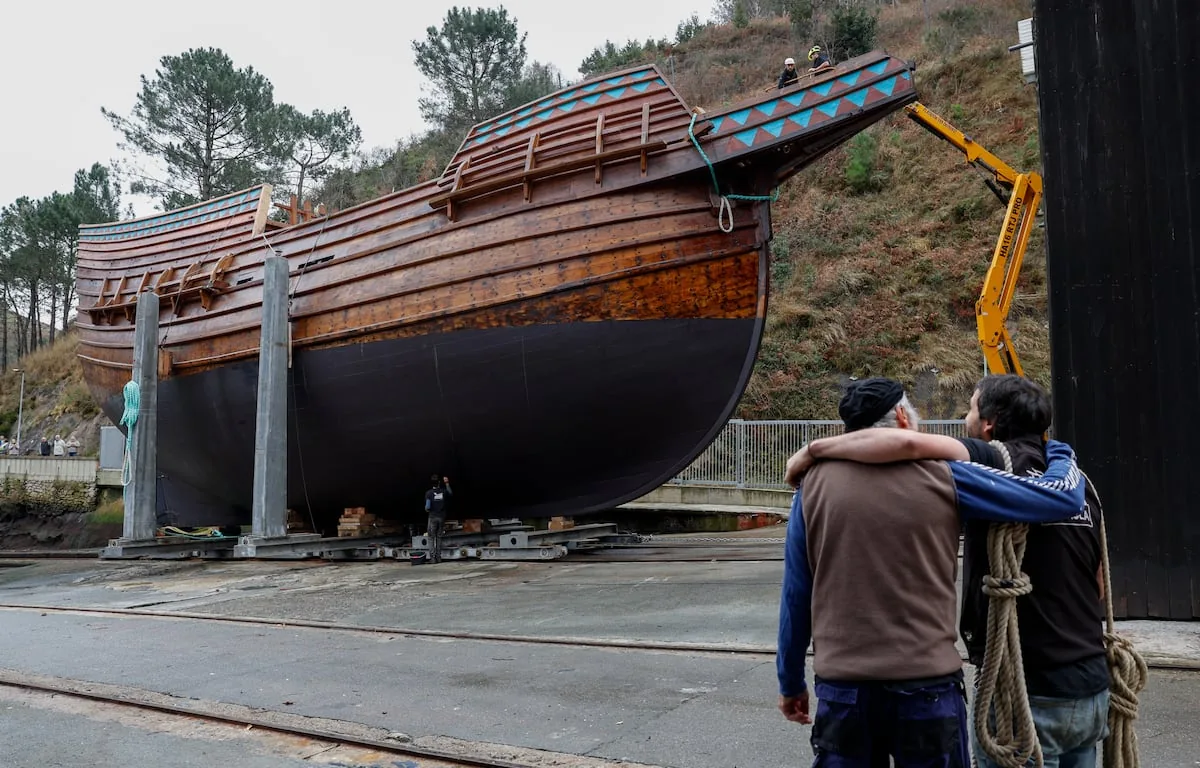
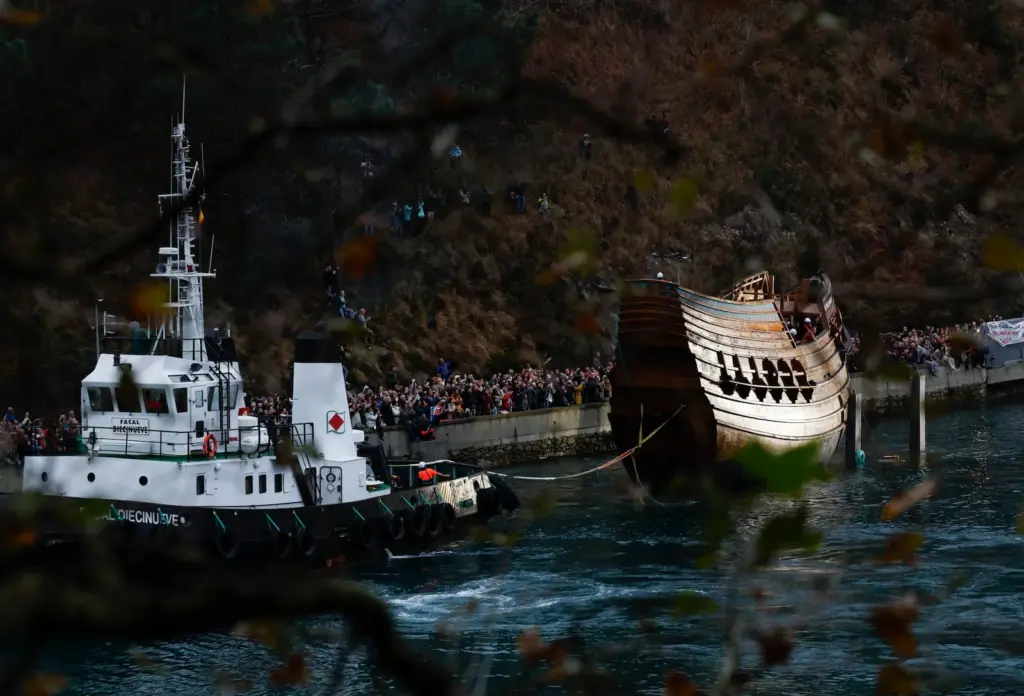
Albaola’s most ambitious project is the nao San Juan, a scientific replica of a Basque whaler that sank in Red Bay (Canada) in 1565 and remained there for centuries, resting on the seabed under a thick layer of sediments. Those sediments, the lack of oxygen, and the cold Atlantic waters allowed exceptional preservation of the wreck until 1978, when it was discovered by a team of Canadian archaeologists led by historian Selma Huxley. Almost four decades later, in 2014, Albaola began building the replica based on the meticulous research following the discovery. The vessel has now been in the water for six months and, when finished, will sail to Canada.
The whaler will follow the same route and use 16th-century navigation techniques. However, despite its appearance, it will function as a floating laboratory because it will allow studying numerous aspects during the voyage, from the behavior of materials and the vessel’s operation to the human experience of the sailors. The crew will dress as they did then — there is an agreement signed with the Costume Museum to make the clothing — cook on that open-air stove, and follow the same diet as those men.
Menu and pantry at sea
But what exactly did that diet consist of and what was cooked in the kitchen? Xabier Alberdi explains that different groups of food were embarked. On one hand, fresh items like onions, leeks, cabbages, or garlic, which were consumed during the initial weeks of the journey. Live animals, such as chickens or a pig, were also carried, intended to end up on the sailors’ table. However, the main part of the diet was dry foods.
Read more United States and Iran negotiate a proposal to end the war and finalize key issues in 30 days
“The mainstay of the diet was bread. But not the kind we consume today, fluffy and tasty, but in biscuit and hardtack form,” he points out. That is, bread with less water and no yeast so it could last longer in good condition. “It was a dense mass not eaten directly. It was used for cooking. With it, porridge and soups were made, complemented and seasoned with other dry foods.” Namely: legumes (such as broad beans and peas), dried cod and salted sardines, bacon, cured meats, and sausages. A collection of long-lasting proteins, according to the preservation techniques of the time.
Alberdi explains that fresh fish was also caught along the way, grilled or cooked on spits. And this, along with preserved products, allowed some variety in the menu, breaking monotony and keeping the crew’s spirits up… Unless there was a storm and cooking was impossible. “For those stormy days when lighting a fire on board was unfeasible, cheese was carried — he says —. Cheese was eaten in pieces, accompanied by bread. And since the bread was very hard, it was softened in the drink rations.” On Basque whaling ships, the main drink was cider because it was the cheapest in the region, although they also carried some locally produced wine, like txakoli, and some from other regions traded at the time.
This was, as Alberdi says, “the general ration.” What was given to everyone. Additionally, each sailor usually brought their own food; some treats. “They carried ceramic containers with chorizos, blood sausages, or homemade sausages preserved in lard. These products contributed to the crew’s morale,” he emphasizes. An invisible but direct connection to home, tangible like a fishing line. “When you are in that place of overcrowding and lack of hygiene, exposed to physical danger and rough, routine work, tasting the loin or the little blood sausage that was sent from home is something like a caress, like the letters soldiers received in the trenches,” the historian compares.
Cook wanted for medieval stove
When the nao San Juan is finished, it will replicate the original’s voyage to Canada. By then, there will be a selection and training process, as the 21st-century crew will have to learn 16th-century ship navigation. The same applies to the kitchen, which cannot be in just anyone’s hands. “People who have worked on fishing boats and fed 20 guys cooking in real shacks with a camping stove have already come forward,” Alberdi details. Far from being a drawback, for this job it is a talent that scores in favor.
“It is important that they have kitchen management skills and, at the same time, the knack for doing a lot with little. A good ship cook needs ingenuity; their work is very important for the crew’s morale. If they start serving bad food, there will be a mutiny,” he warns. And no one wants a mutiny at sea, 2,000 kilometers from any coast. In this regard, the historian points out that “a very interesting aspect to test, besides the physiological, is the psychological impact: how a person changes when subjected to those situations of overcrowding, lack of hygiene, and limited food,” a scenario far removed from the microwave and the sofa.
“It is true that, in the 16th century, living conditions on land were not great either, so the leap was not so big — he clarifies —, but the cook’s role was fundamental in that context.” The work of those men highlights the harshness of the environment, whale hunting, fat rendering, and navigation conditions. But the skill with the harpoon in the cold ocean waters would not have been possible without skill with fire, embers, and the cauldron.