





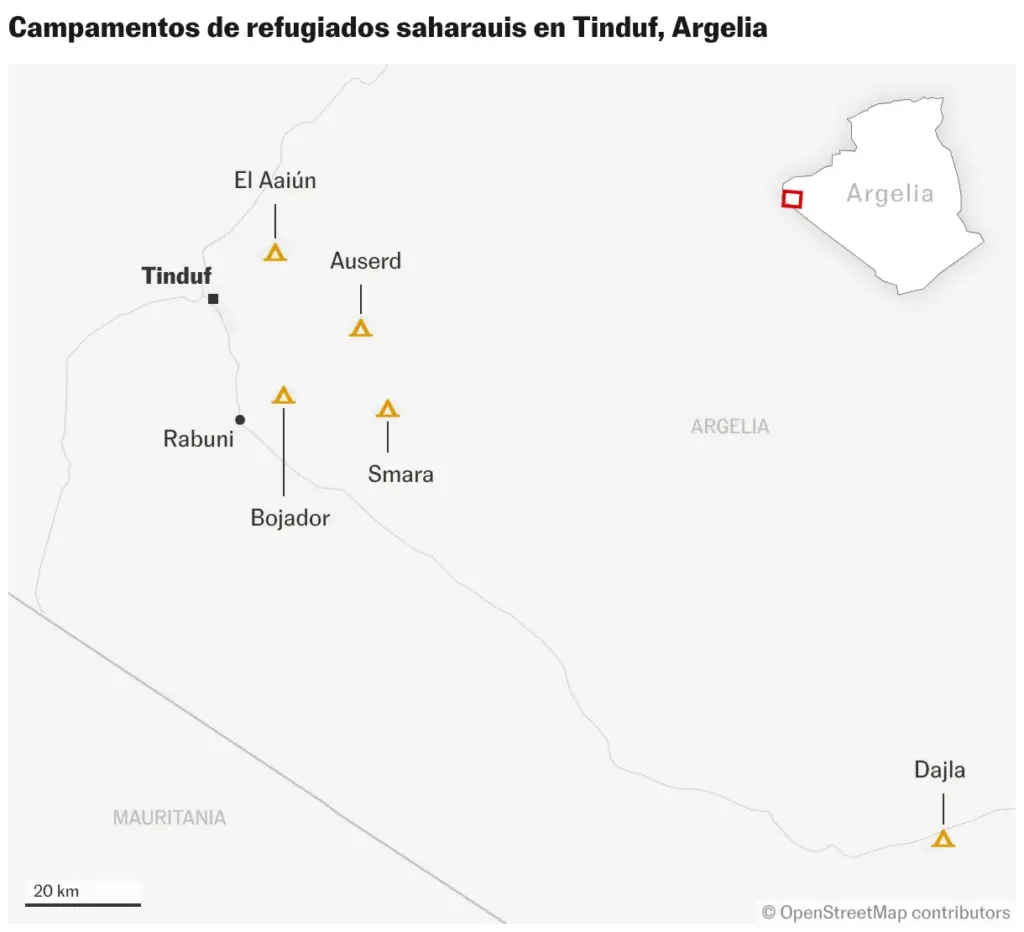
Mohamed Brahim runs his fingers through his hair sprinkled with white strands. “I’m only 40 years old and have a lot of gray hair,” he laments, sitting in a room at the Bachir Saleh National Hospital in Rabuni, located in the administrative center of the Sahrawi camps in Tinduf, Algeria. He earns the equivalent of 150 euros every three months as an incentive for his work as a nurse and deputy director of the hospital. The money “is not enough,” he says with a tired voice. To support his family, he also runs a small shop and takes extra jobs when they come up. “How am I going to feed them? With the two kilos of rice from the humanitarian aid they give me each month?” he wonders. “You will always see workers in the camps stressed, weakened, and figuring things out. We have to find a way to get money into the house,” he continues. “Today there are families who don’t even have enough to buy a piece of chicken per week,” he adds.
Read more This is how invasive snakes swim to the islets, annihilating a unique lizard in the Balearic Islands
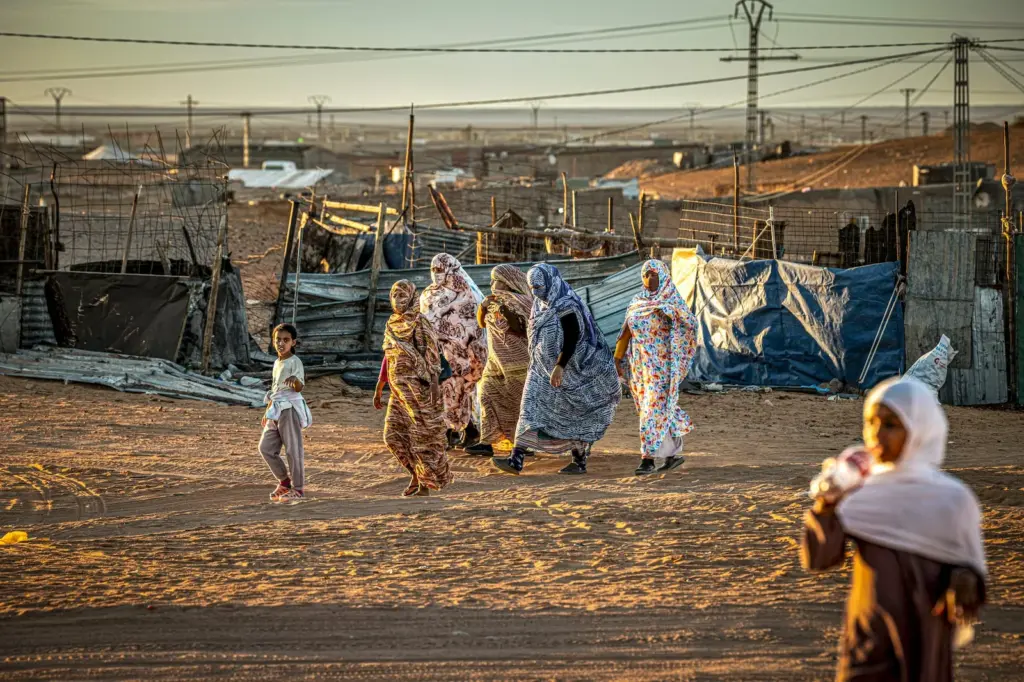
After 50 years of exile, the deterioration of humanitarian aid has further precarized the lives of the approximately 173,600 people living in the five Sahrawi camps located in the Algerian hamada, a rocky desert where the horizon is only broken by thousands of plastics scattered on the ground. In the central warehouses of the Sahrawi Red Crescent, its president, Buhubeini Yahia, describes the humanitarian aid received by the Sahrawis as “giving a paracetamol to a patient to ease their pain.”
A patch, yes, but essential in a territory where around 90% of its inhabitants depend on increasingly reduced international assistance, especially after 2025, the year in which the humanitarian sector experienced a shock caused by the closure of USAID, the U.S. cooperation agency, and cuts in official development aid from several European powers.
In 2024, Washington contributed more than 8 million dollars (about 6.8 million euros), nearly half of the funds UNHCR received in Algeria. In 2025, that contribution fell to just over 2 million dollars (about 1.7 million euros). This has been strongly felt in the budget that this United Nations agency allocates to the Sahrawis in Tinduf. “In 2024, UNHCR’s budget for Sahrawi refugees was 9.4 million dollars (8 million euros). In 2025, it fell to 5.6 million (4.79 million euros),” summarizes Yahia.
This abrupt cut has affected NGOs operating on the ground and has left strategic sectors such as water and health even more unprotected. In April 2026, the U.S. was no longer even listed among the main donors who had made contributions within the humanitarian plan.
Meanwhile, the system tries to sustain itself with much more limited funds and donors who have continued contributing, such as the Spanish Agency for International Development Cooperation (AECID), which in 2025 provided 12 million euros in humanitarian aid to the Sahrawi refugee population, figures similar to those of 2024.
A month-to-month struggle
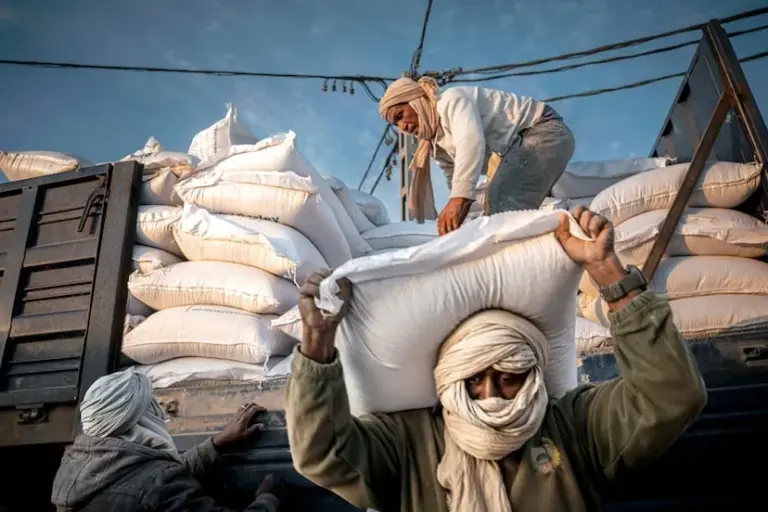
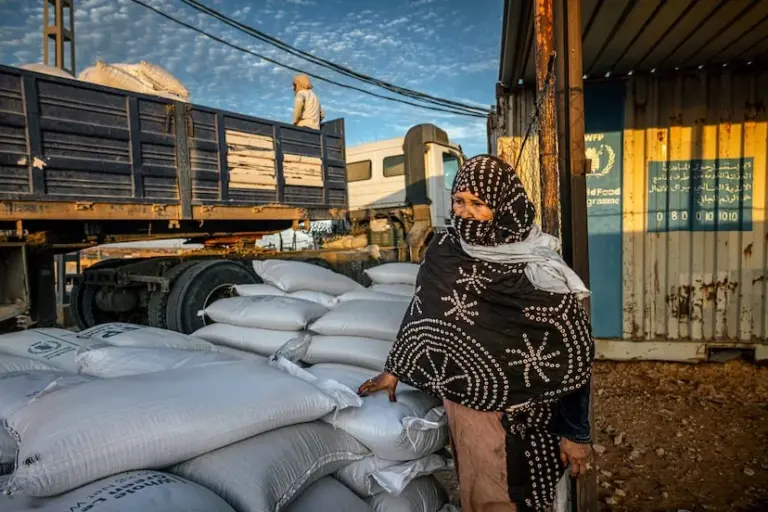
In Smara, a few kilometers from the Sahrawi Red Crescent warehouses, several workers unload large 50-kilogram sacks of rice and pasta from a World Food Programme (WFP) truck. It is seven in the morning, and Mariam Jairi patiently supervises the operation. She is responsible for that distribution point of the humanitarian food basket, which supplies the residents of one of the neighborhoods in this camp. She says the quantities are no longer the same. Nor the variety. Beans stopped coming a long time ago, and the products arrive later. It is May 1st, and the April food has not yet finished being distributed.
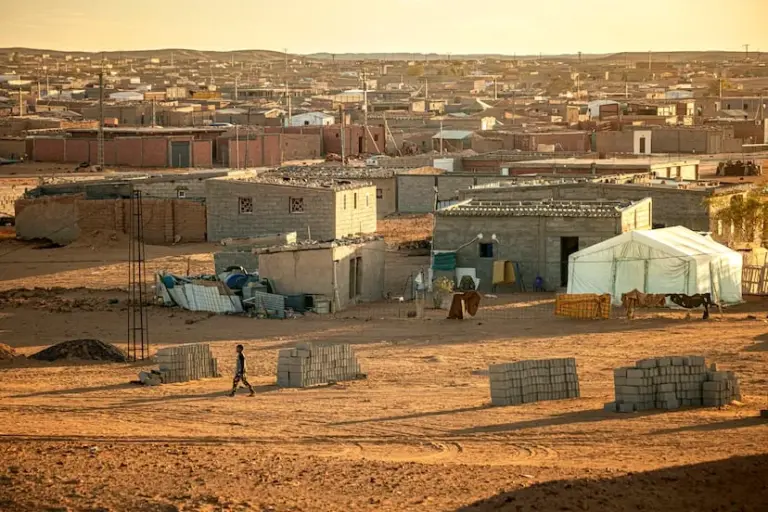
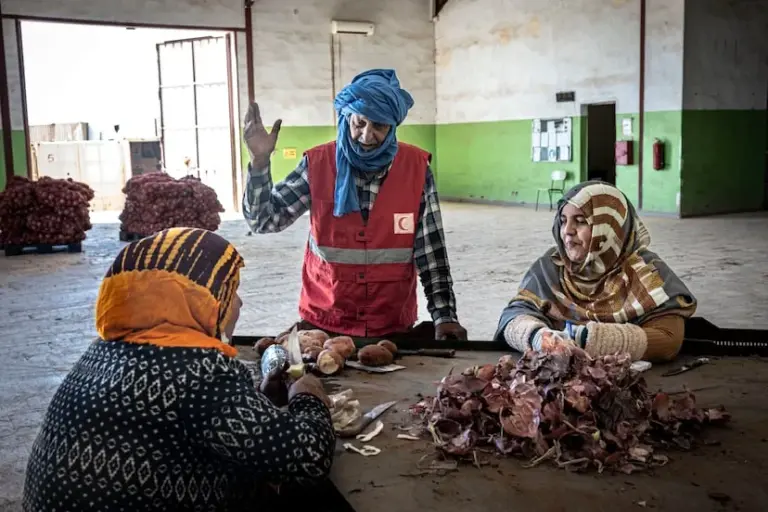
In a house in the Auserd camp, Jadu Mohamed, 40, recalls when families frequently received canned sardines and eggs. “Now they only arrive during Ramadan,” she says, sitting next to her mother, who nods in agreement resting on a cushion. The elderly woman arrived at the camps five decades ago after fleeing Dajla, her city in Western Sahara, when Morocco annexed what had until then been the Spanish province number 53. She doesn’t know how old she is. She says she was born when the Spaniards arrived in the Sahara with the first vaccine. She also remembers how the basic food basket was richer and more varied before. “My land was full of things, it had vegetables and food,” she murmurs. “I want to return.”
Just as the 50th anniversary of the proclamation of the Sahrawi Arab Democratic Republic (SADR) is marked, following the Moroccan occupation of Western Sahara in 1975 and the exodus of thousands of Sahrawis to the Tinduf camps, the Sahrawi cause is going through one of its most delicate moments. The UN and part of the international community have been supporting the autonomy plan proposed by Morocco as the main solution path, relegating the historic promise of a self-determination referendum defended by the Polisario Front for this non-autonomous territory pending decolonization.
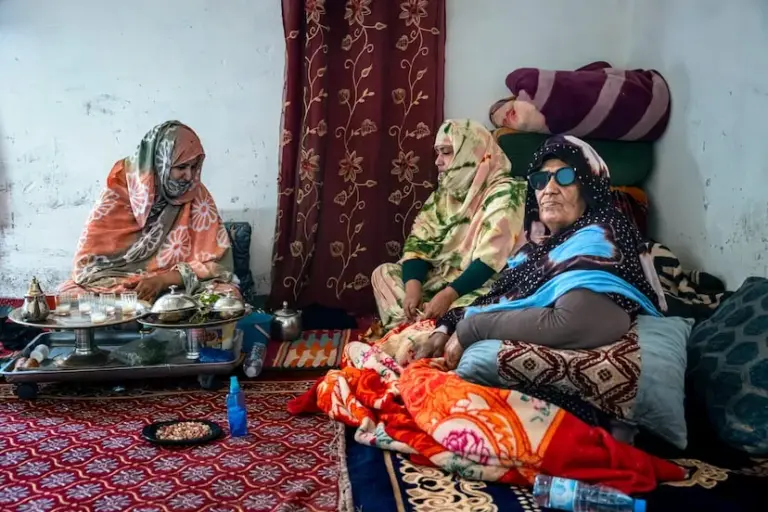
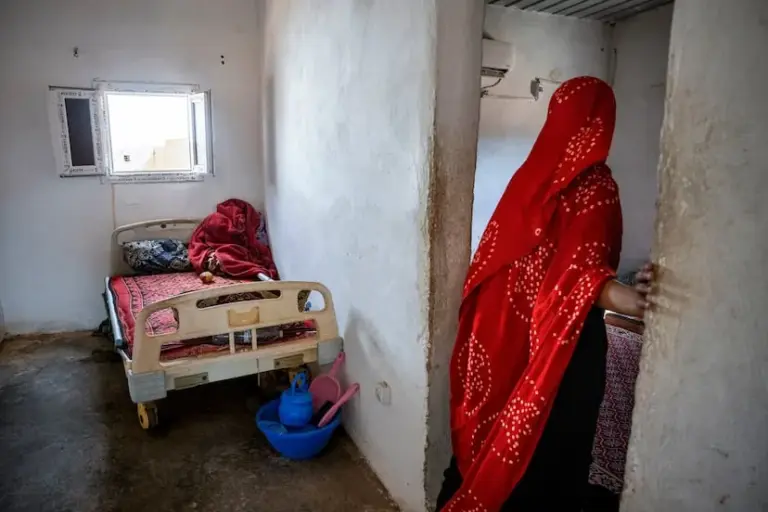
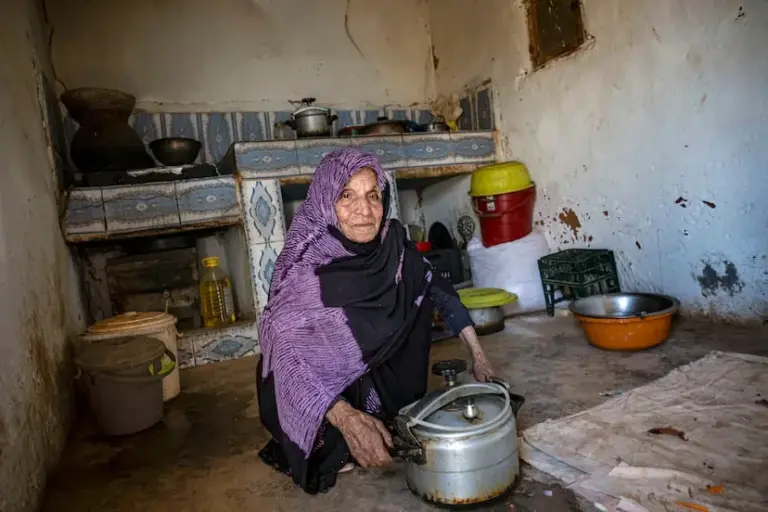
A few streets away, Caltum Mohamed Alí waits sitting on the carpets of her tent while her only grandson plays with a ball. Many families keep their traditional tents next to the houses in the camps. There they sleep some nights, receive visitors, and share the tea ceremony: three rounds and lots of sugar. It is Friday, and in Sahrawi homes, couscous is eaten that day. Caltum slowly gets up to prepare the tea and place the pot of food on the fire. She says meat has become too expensive and now “they live on chicken, which is cheaper.” Eggs, milk, and almost all basic foods have also risen in price. The only salary in the house, that of her soldier son, is often delayed. They also don’t have relatives in Spain “who can lend a hand.” She says humanitarian aid arrives increasingly late, although she is grateful it still does. “We manage,” she says. It has been a year since they last received the box with hygiene products. “It will surely come back,” she adds hopefully.
Funding cuts have come to stay; it’s not a bump in the roadEduardo Irigoyen Soria, director of the Association of Workers and Technicians without Borders (ATTsF)
The optimism of the elderly woman contrasts with the words of Eduardo Irigoyen Soria, director of the Association of Workers and Technicians without Borders (ATTsF), an NGO responsible for the maintenance and repair of the tanker fleet and water distribution in the camps. “Funding cuts have come to stay; it’s not a bump in the road,” he asserts in a phone interview. Not surprisingly, his sector is one of those that has suffered one of the hardest blows from UNHCR’s funding reductions.
“We are dying of thirst”
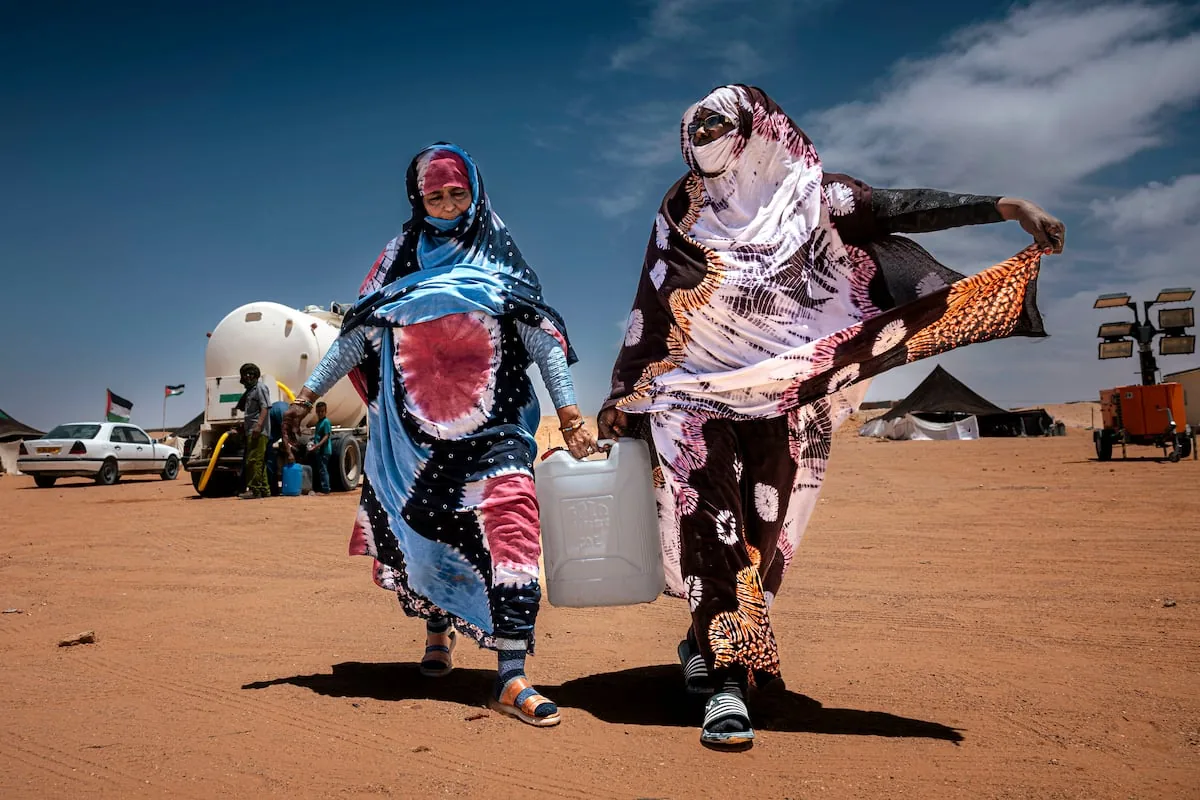
It is noon, and several groups wait for the tanker truck to arrive, sheltered from the sun under one of the few trees in the Auserd camp. Some teenagers play dominoes. Meanwhile, some women chat wrapped in brightly colored melfas. “We are dying of thirst,” someone shouts as the reporters arrive.
“Right now, not all camps reach the 20 liters per person, the minimum standard set by the UN for emergency situations,” explains Irigoyen. Two years ago, the system had 36 tanker trucks. In 2025, UNHCR funded 26 vehicles, plus drivers, mechanics, and maintenance. That contribution disappeared in January 2026, and although various European and own funds have partially sustained the service, only 16 trucks currently operate. “The impact has been brutal,” summarizes Irigoyen. “There will be longer waiting times for distribution, worse access, and more cuts.”
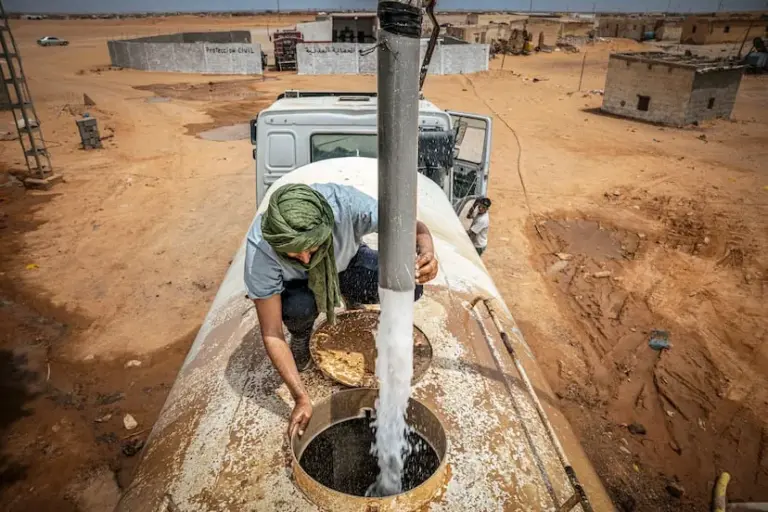
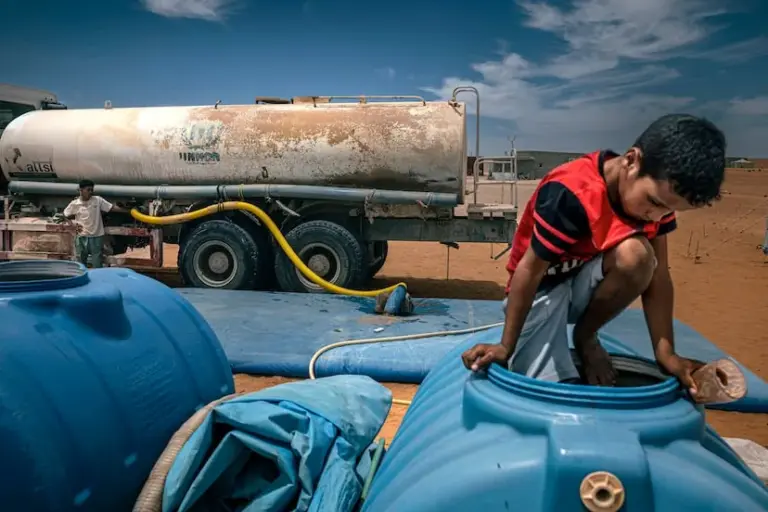
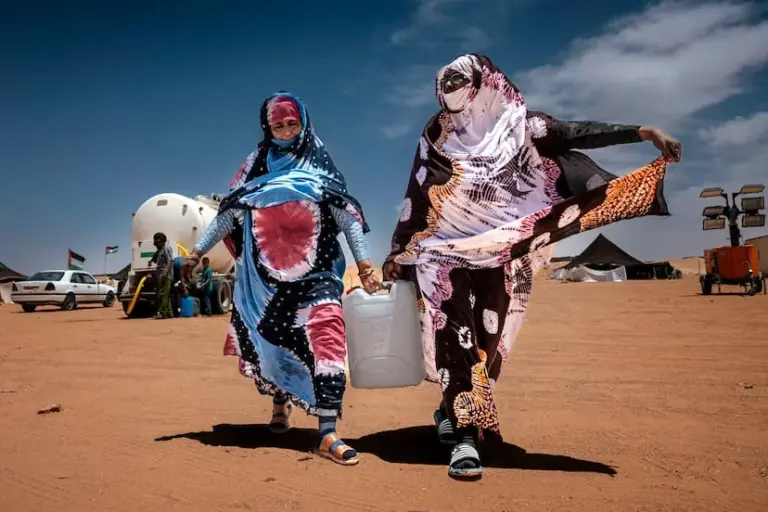
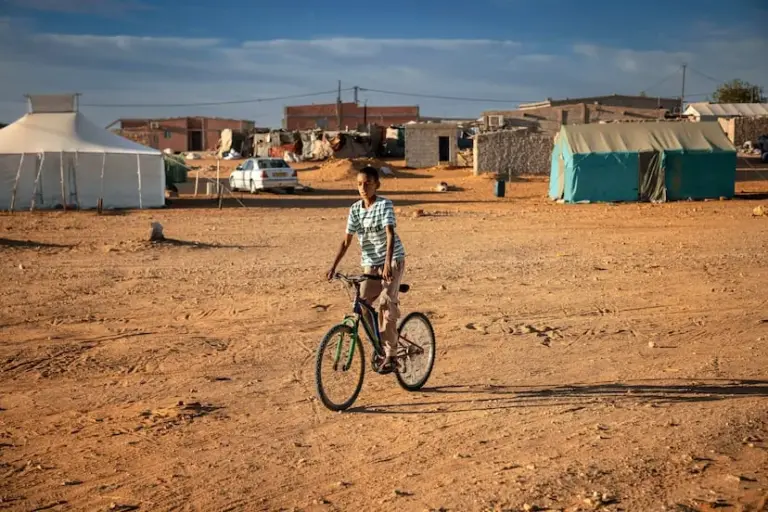
The water comes from a treatment plant located about 50 kilometers away and is then distributed among the different camps. On paper, families should receive supply every two weeks in summer and once a month in winter, explains Bol-la Salama, a Sahrawi project technician with ATTsF. In practice, delays are constant, and many distribution points do not have sufficient pressure. “As a child, we had less capacity to store water, but at least it arrived,” Salama recalls. Some families have been waiting more than a month for the next distribution.
Back at the Sahrawi Red Crescent warehouses, Buhubeini summarizes the overall picture as a “month-to-month struggle to find funding,” sometimes for gas, which was also affected by UNHCR cuts, other times for oil. In the case of other ingredients like yeast, essential for making bread, it has stopped being funded by the UN refugee agency and now falls on the families. The emergency food stock has run out, the safety stock is at its limit and zero for lentils and oil. The president of the Sahrawi NGO describes calls, meetings, and last-minute requests to various humanitarian actors with the aim of juggling increasingly scarce funds. The basic basket of 16 kilos now costs 782 dollars per ton; before COVID, it was 492. A price increase not accompanied by an increase in contributions, says Buhubeini. Last month, the WFP warned that funding needs from now until September are 6.4 million dollars (5.46 million euros). Without new contributions, it warns, it will be forced to reduce rations again, as happened in 2023, and suspend nutritional supplements.
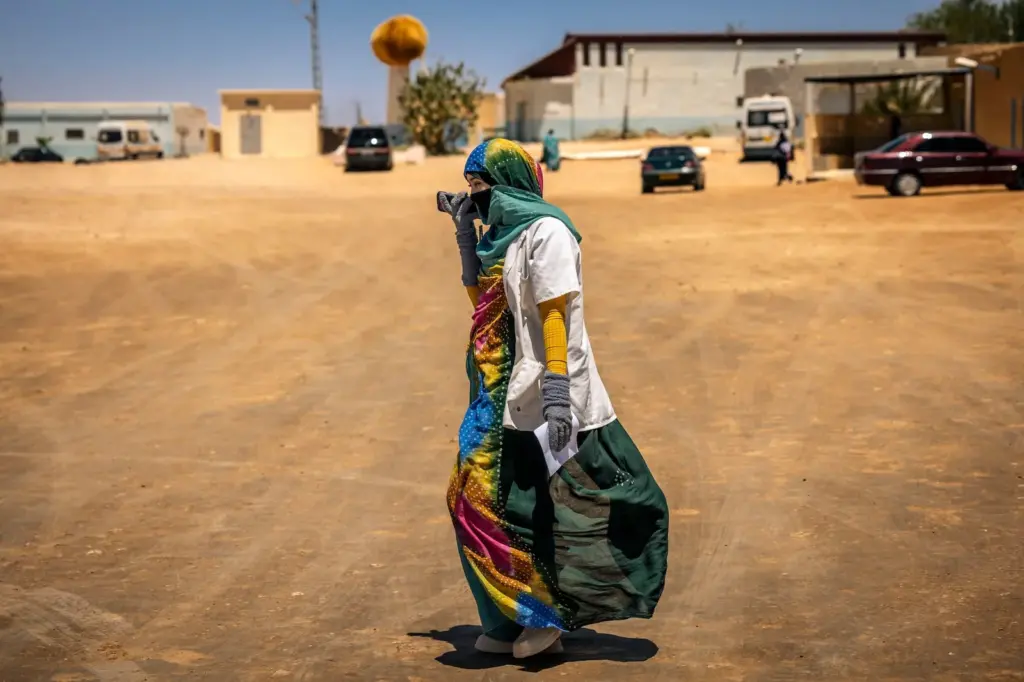
Gift wrap to cover cracks
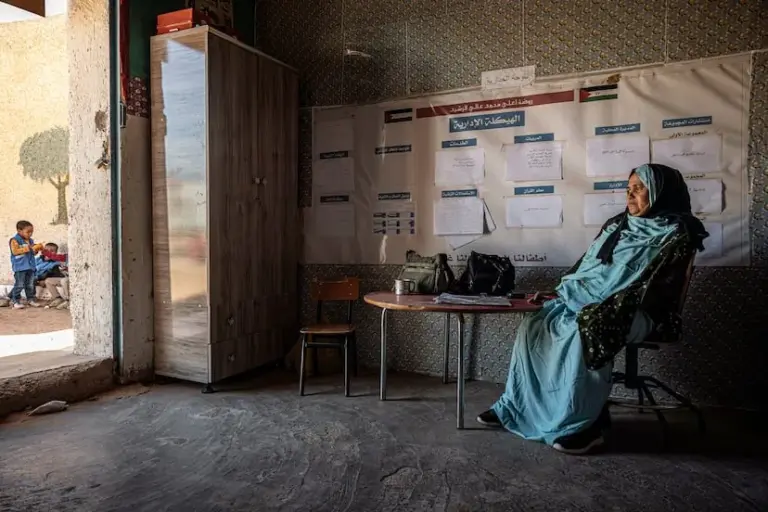
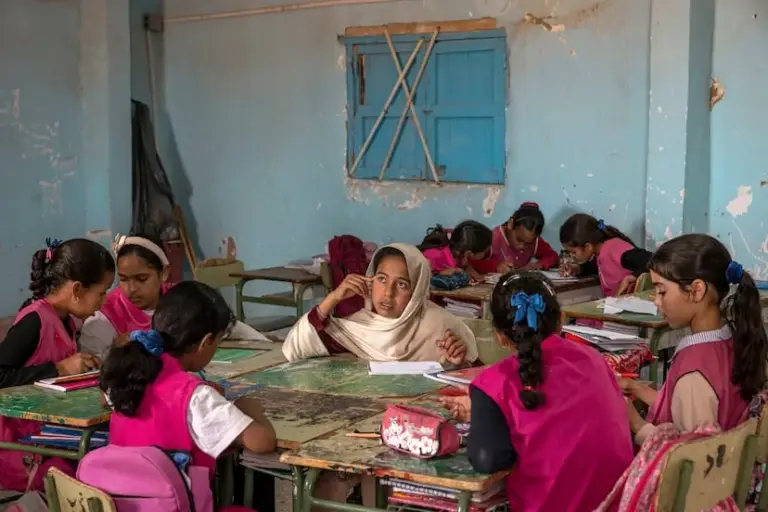
The walls of the Martyr Ali Mohamed Ali nursery school office in Auserd are covered with gift wrap full of teddy bears and moons. A pattern repeated over and over that, far from being a simple decoration, serves to hide paint chips and cracks threatening the center’s walls.
Read more Trump to Xi, about the war in Iran: “We feel the same, right? We want this to end”
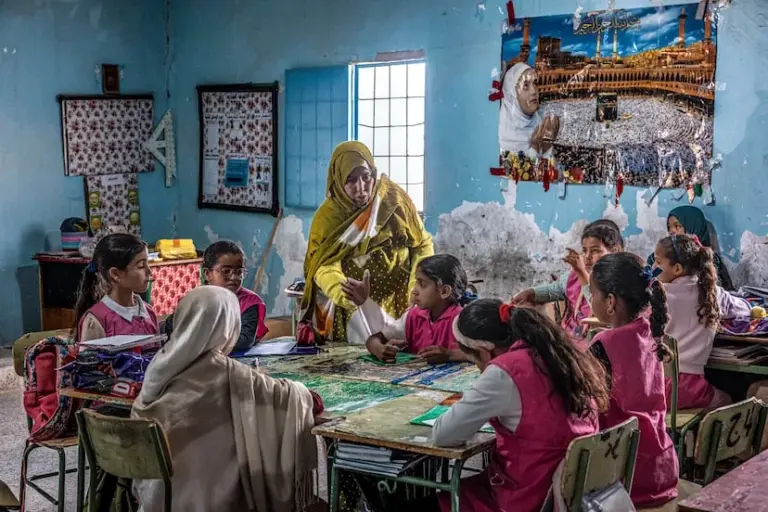
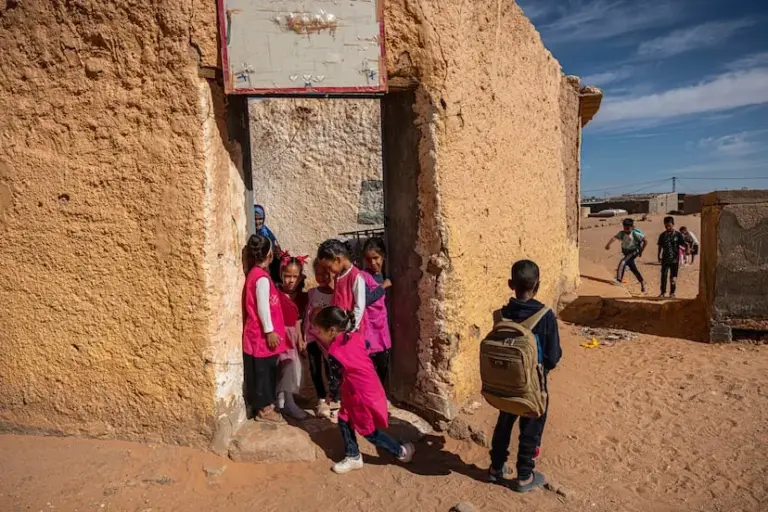
Its director, Meimuna Mohamed Fadel, explains that the school survives thanks to the effort of the educators and a constant capacity for improvisation. Toys, school supplies, and basic resources are lacking. The playground structures have been built by reusing iron and old desk chairs. For three years, hardly any school supplies have arrived, and this school year only the oldest students received a batch of notebooks and pencils. In a corner of the yard, a small garden tries to teach children that beyond the desert there are trees, vegetation, and other possible landscapes.
Preschool teachers receive about 30 euros a month. “No one can live on this,” admits the head of the center. Still, many continue working out of vocation. Mohamed explains that for decades men were on the war front while women took on “another front”: education and care of Sahrawi children in exile. Recently, UNICEF warned that more than 40,000 Sahrawi primary students risk losing schooling due to lack of funding and that the incentives for more than 2,000 volunteer teachers are in danger.
Day-to-day problem solving
The cuts have caused office closures, job reductions, and fund reallocations of NGOs and agencies, but they have also left other victims: Sahrawi workers. Luali Bah, 39, with a degree in English Philology, lost his job in May 2025 after the withdrawal of U.S. funding. Father of four children aged between 3 and 9, he had been working with international organizations for a decade and, in recent years, served as project manager in an Italian NGO. “Between May and September, they fired about five people from a team of 12. This year, they fired two more,” he says.
He says the same situation repeats in other organizations, where local workers have lost jobs as translators, drivers, or assistants. The 400 euros a month he earned disappeared overnight. “Right now — he smiles resignedly — my family has no income to live day to day. Each day comes with its challenges.” Since his dismissal, he survives by doing translations and occasional collaborations for other organizations. “You are also a refugee and need the money. And you don’t work just for your family, but also for your parents, sisters, neighbors, uncles…”
Most people don’t have monthly incentives. What they do is ask a neighbor for help or figure out how to complete the daily dietLuali Bah, Sahrawi humanitarian worker
He believes his children will grow up in harsher conditions than his own generation. The 2025 data reflect an alarming deterioration in child nutritional status in the camps, which has regressed to levels not seen in the last 15 years. Global acute malnutrition reached its highest percentage since 2010 (13.6%), and stunting (30.7%) and anemia among children under five and women (65%) increased.
“Most people don’t have monthly incentives. What they do is ask a neighbor for help or figure out how to complete the daily diet,” says Bah. The lack of stability and future prospects, marked by five decades of exile and worsened in recent years, has accelerated the exodus of young Sahrawis.
A diagnosis shared by Alien Abdullah Chej, director of cooperation at the Sahrawi Ministry of Public Health. He cites the Ahmed Abdel-Fatah Nursing School, which trains between 10 and 15 Sahrawi nurses each year. “Most went to Spain and other European countries. There are no incentives [to stay],” he explains. The school’s survival now depends on increasingly uncertain funding. UNHCR funds that supported the project were only guaranteed until May. The new class will graduate on the 20th, but no one yet knows how the next course will continue. “The UNHCR health officer told us he expected to receive funds from the European Union and the Spanish Agency for International Development Cooperation (AECID), but nothing is assured yet,” Abdullah says.
At the Rabuni hospital, nurse Mohamed Brahim voices a concern that crosses the camps. “If everyone migrates, who will take care of the elderly, women, children?” he wonders. Brahim recalls the case of nine nurses who this year boarded a boat to try to reach Europe. “The world changes and everything rises, including life. That’s why they look for other possibilities,” he says. “Thank God they arrived. But if one had fallen into the sea, a family would have lost one of its members.”
The staff who stay try to cover the gaps. “We should have 50 nurses; however, we are 24,” summarizes Brahim. Due to the lack of specialists, sometimes a doctor, an assistant, or a nurse like him end up performing tasks that would not correspond to them. Other problems are broken equipment that is not replaced or underfunding of departments like physiotherapy, which operates with barely 20% of the funds. Essential medicines to treat chronic diseases like diabetes are also scarce. “Insulin has a very, very high deficit. Almost 70%,” he explains. “Medicines are funded by ECHO, and we expect them to arrive starting in July; the ones we have now are from last year’s order,” says Abdullah, who notes that European funding only covers 70% of needs.
Cubans are already specialists; we have a master’s degree in doing more with lessJorge Luis Morera, Cuban doctor in the Sahrawi refugee camps
Cuban doctor Jorge Luis Morera, 56, has been dedicated to his “people of the desert” for three years. Affable and slow-speaking, this emergency ward doctor has also noticed the decrease in resources. “If you look around, you will see many empty medicine shelves,” he says. He quickly dismisses the reporters because he has to attend a patient with a cardiovascular problem. “But we try to work with what we have,” he summarizes, shrugging. Then he smiles ironically: “Cubans are already specialists: we have a master’s degree in doing more with less.”
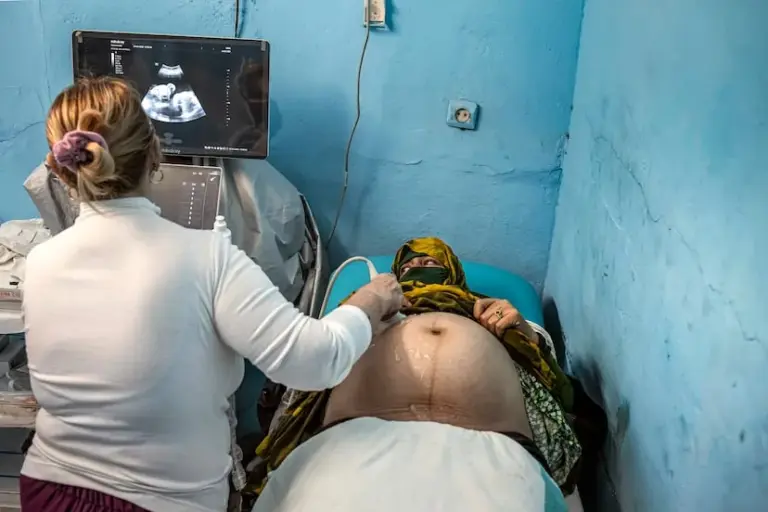
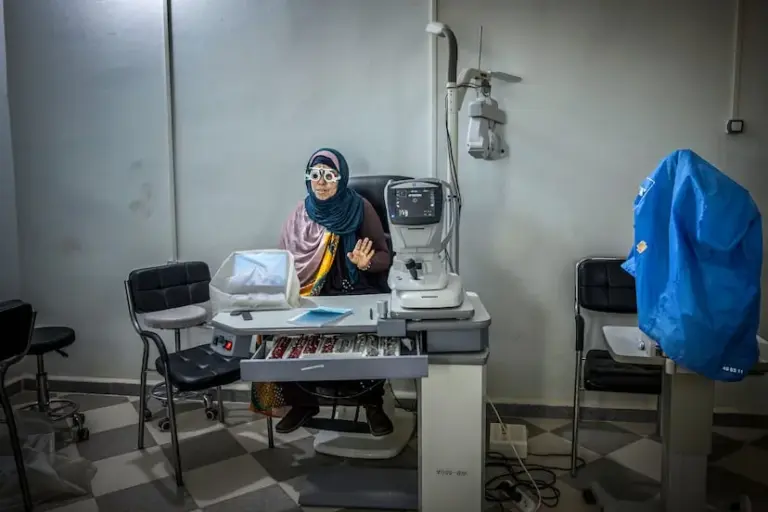
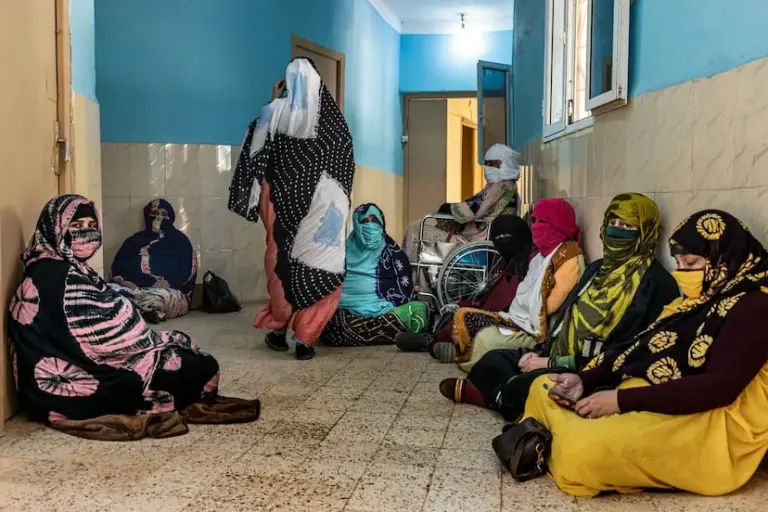
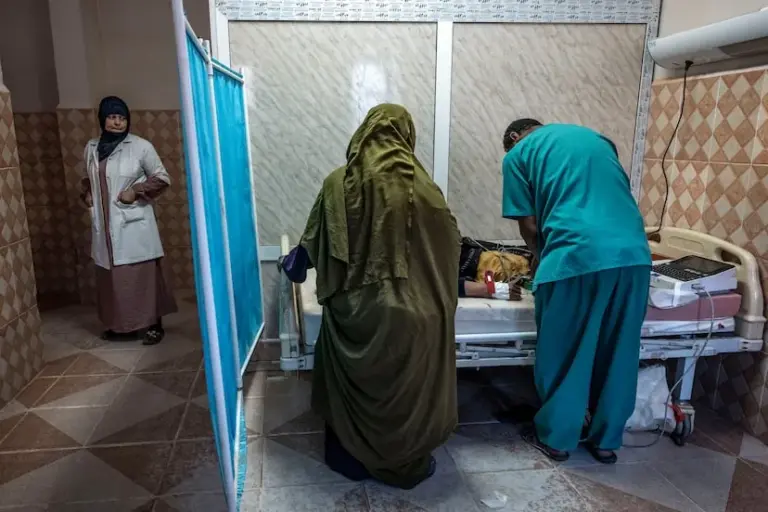
In the gynecology and obstetrics ward, several women wait to be seen sitting on the floor. Inside one of the consultations, gynecologist María Ofelia Benítez, 61, performs an ultrasound on a pregnant woman. In one of the rooms, two women are admitted. One of them twists slightly resting on the bed. The contractions are increasingly intense; she is about to give birth. In the adjacent bed, Fahda Said, 38, mother of a one-year-and-a-few-months-old boy, recovers from a 12-week miscarriage. She says her living conditions are very harsh and that she suffers from anemia, a condition affecting a good part of women of reproductive age in the camps. After walking 500 meters carrying 20-liter water jugs, she began to feel unwell. Shortly after, she lost the child she was expecting.
Benítez, who has been working in the camps for a year and is a member of the Cuban Medical Brigade, assures that the Sahrawi population is in great need of medical services, especially women. “Many arrive at delivery without having received prenatal care. There are many problems with anemia; they need iron and vitamin supplements to face pregnancy and childbirth under better conditions.”
Condemned to live apart
Sheltered from the midday sun, which in May already burns the skin and in August exceeds 50 degrees, Mohamed Ahmed — a changed name — puts words to a frustration shared by many young Sahrawis. “Currently, it is essential [for families] to have someone working in Spain.”
When he lived there, he was the one sending money. Now, at 34, he is the one receiving it from his brothers who migrated to Europe. Ahmed sums up the feeling of many Sahrawis of his generation: you are of age, you work, you want to start a family, but you depend on a brother who picks olives in Spain to support you. For those who emigrate, he adds, the burden ends up being enormous. “The Sahrawi exodus has condemned us to live apart,” he says bitterly.
“The Sahrawi population does not suffer from hunger; it suffers from the long wait, from the time that has passed, from this inhospitable place,” he complains, pointing around him. “Now they say we have electricity,” he says ironically. “Come in August: they cut it off at eleven in the morning.” Finishing university also guarantees nothing. “Those who train have nowhere to perform their work; those who don’t, are even worse off,” he laments. “When I was a child, in conferences they repeated to us: ‘Even if I don’t see a free Sahara, I hope my children do,’” Ahmed recalls. He understood that people like his parents could say it because they were born there, because they had known their land. He pauses for a few seconds before continuing: “But now I am the one who has three children, and it is hard for me to say that same phrase. Although I still wish to see it.”
Read more Taiwan, the island that threatens to spark a crisis between Xi and Trump