







On the fourth floor of a building without an elevator in Seville, Yulitza Zambrano’s daily life is measured in kitchen shifts and the exact space occupied by a single bed. At 39 years old, this Venezuelan manages an impossible household. She shares a small room, designed for one person, with her 16-year-old son. “He sometimes cries, gets sad because he wants his own space and imagines another home,” she recounts. She pays 450 euros a month for this space, after having suffered harassment and xenophobia from a previous landlord who took advantage of her vulnerability as a migrant. In total, there are 10 people living in four rooms, with only one bathroom and a refrigerator whose capacity is not enough to store food for everyone.
Read more Madness in Barcelona over the sale of a Swatch collection inspired by luxury watches
With so many people in the same apartment, the home has ceased to be a space of intimacy and has become a mere logistical stop. Yulitza gets up at five-thirty in the morning to cook before going to work. She has two jobs; from 10:00 to 16:00 she works as a teleoperator in a call center, and from 17:00 to 21:00, as a cleaner in different homes. She does not return to her room until late at night, just the time needed to sleep and repeat the operation. Her son manages during those hours to do homework and eat in the same room, the only space they have available, because the apartment is so overcrowded that it does not even have a living room.
Her case is not a statistical anomaly. On the contrary, it is a housing reality that has been gaining ground in Spain. The latest data published by Eurostat, the statistical agency of the European Union, show that 20.5% of tenants renting at market prices live in overcrowded conditions, which represents an increase of more than 25% compared to pre-pandemic figures. Spain has established itself as the second European country where residential overcrowding has grown the most since 2019, only behind Ireland, in a phenomenon that experts link to an increasingly deep gap between stagnant wages and rents that have risen by up to 30% in the last five years.
For Juan Antonio Módenes Cabrerizo, professor in the Department of Geography at UAB and researcher at the Center for Demographic Studies, these data do not respond to a temporary setback, but to a disconnection between demography and housing policy. According to the expert, as long as the parameters of the current system do not change, the situation will worsen because “the growth of households is potentially greater than that of the population alone and does not find a corresponding growth in supply.” This lack of sufficient housing is creating, according to Módenes, a “paradigm of unmet housing needs” that hinders the ability to save and blocks the strategic life decisions of thousands of residents.
Although the country’s overall overcrowding rate (9.5%) remains below the European average due to the historical accumulation of residential assets in families, this figure acts as a statistical mirage that hides the housing emergency of those who do not have access to ownership.
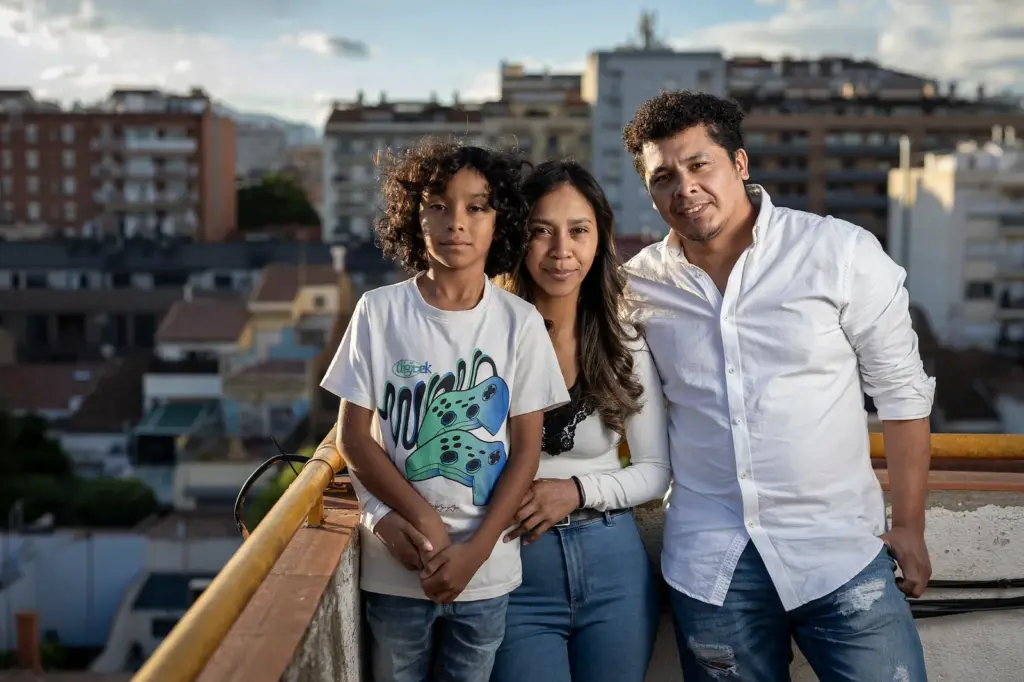
Organizations working on the front lines of social exclusion have detected this change. Carmen Ruiz, national coordinator of the inclusion area of the Spanish Commission for Refugee Aid (CEAR), explains that the organization is increasingly looking for rooms and fewer apartments, “even for families of two or more people, because they cannot afford single homes.” This setback in living standards disproportionately affects migrants, who are often forced to accept abusive conditions.
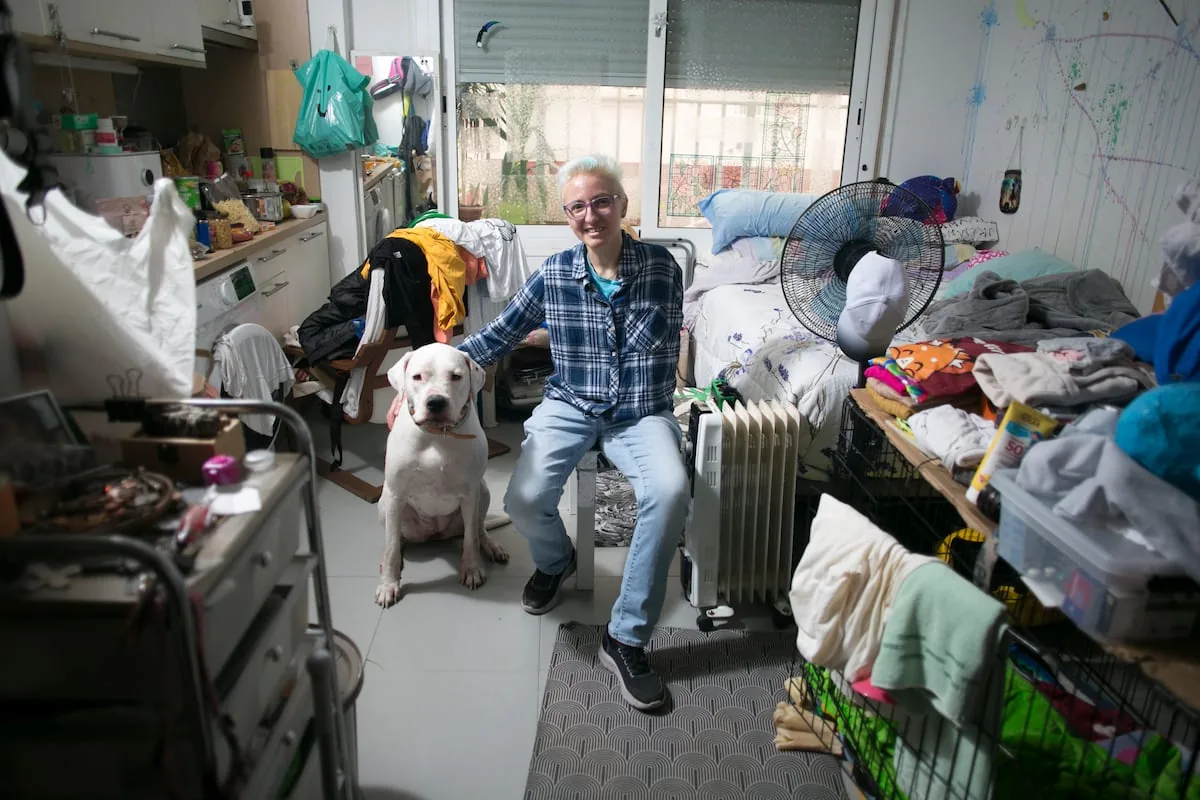
In Madrid, precariousness is finding a niche in the illegality of converted premises. Laura Prieto, 47 years old, lives with her dog in what she describes as a “hole” of barely 10 square meters. It is a former commercial premises without a certificate of habitability for which she pays more than 500 euros monthly. Her case is a window into an ecosystem of exploitation. In her building, owned by a landlord with other buildings in the Sol area, entire families live in spaces identical to hers. This former ONCE worker recounts how couples with children, including one of Filipino origin and another Ecuadorian, manage in these cubicles where “they have to use mattresses stored under the bed” to be able to move during the day.
For Jaime Palomera, PhD in economic anthropology and researcher at the Urban Research Institute IDRA, this situation is not an accidental consequence of the market, but a deliberate strategy of space fragmentation. The analyst identifies a business logic designed to obtain more profitability per square meter, dividing homes into minimal coliving units, often through short-term contracts that avoid tenant stability and allow constant price rotation.
Another example of this housing emergency is Diana Lora Effio, a single mother of Peruvian origin, who lives with her three children aged 14, 11, and 5 in a room in the Madrid district of Usera, for which she pays 500 euros a month. In recent months, her family has been involved in one tragedy after another, first being forced to leave their apartment after the landlord raised the rent from 600 to 800 euros and later being scammed out of 4,000 euros by a fake rental that ended in a traumatic police eviction in front of her children. This 42-year-old woman sums up her current reality with a phrase that reveals the collapse of her privacy: “There are four of us in one room and only one bed.”
To get around the lack of space, this family has chosen to spend most of the day in the park to avoid the tension of a shared apartment among seven, where the use of the bathroom and kitchen is a daily battle. “It’s frustrating because I’ve been here for eight years and instead of improving, I’m going backward,” she laments. Diana survives on less than 1,000 euros a month doing manicures and cleaning houses, without a contract, to be able to take care of her youngest daughter. And despite her current situation, she clings to the possibility of finding a home where her children can grow up in a good environment.
In Sabadell, Suyapa Orellana, a 29-year-old Honduran, shares a 12-square-meter room with her husband and their 10-year-old son. Despite having regularized her migratory status and having a job, the requirements of two years of registration and three fixed pay slips to access a public apartment keep this family trapped in living with seven other people. Suyapa has had to normalize the absolute lack of privacy, installing two double beds in her room to ensure that her son grows up with some stability, while she tenaciously saves for a future down payment on an apartment whose price will hardly drop below 200,000 euros.
Housing pressure
The case of these women illustrates a trend that Módenes describes as critical. What was once a transitional phase for those arriving in Spain is now becoming chronic. “The housing alternative we grant [to the immigrant population] is overcrowding, because what was a temporary stage related to arrival is becoming a permanent situation,” warns the professor. Unlike young Spaniards, who usually live with their parents “until advanced ages,” migrants face a market that prevents them from evolving in life, which for many ends up being the first step to accepting a certain “failure in the migration project” that could lead to an increase in returns.
In any case, housing pressure is not an exclusive phenomenon of the foreign population. It also erodes the mobility capacity of nationals. The professors warn that the system is failing even those who until recently had stable integration. Today, “dual-income couples” or young people with “good job prospects” find that free market prices are simply “unaffordable for their salaries,” insists Módenes.
It is at this point that José García Montalvo, professor of Economics at Pompeu Fabra University (UPF), identifies a phenomenon of forced immobility and considers that the outflow of housing has been blocked. “There are many couples, for example, who would like to divorce,” explains Montalvo, but the material reality of not being able to pay a second rent or access another mortgage forces them to maintain cohabitation under the same roof. This stagnation, where the lack of supply prevents households from dividing or growing naturally, explains why overcrowding among owners with mortgages has doubled in just five years, rising from 3.5% to 7.8%.
The housing crisis is not only redefining how people live but also how much they are willing to give up to stay within the market. Its effects are immediate, but they also leave a long-term mark that will likely affect the children of Yulitza, Diana, and Suyapa. They all share a common symptom: the loss of a personal space for the construction of their identity. Housing precariousness not only reduces space, it also limits private life and leaves many people exposed to the arbitrariness of some landlords.
The scenario takes place at a critical moment, as throughout this year, the country is undergoing a massive review of rental contracts signed during the pandemic, a process that threatens to worsen the crisis after the Congress annulled the decree that extended the conditions of those leases for up to two more years. Without this legal shield, which sought to avoid drastic increases and maintained a cap on rent updates, thousands of households face a rise in their contracts like the one Diana suffered. And like her, the lack of housing alternatives turns overcrowding into the only way out against eviction.
Read more «I’ll pay you later» or why lending money to a friend can blow up the relationship