




With the arrival to power of President Abelardo de la Espriella, the narrative of the military victory over illegal armed organizations — guerrillas, narcos, or paramilitaries — has once again become the hallmark of national events. The policy of total peace is a thing of the past. The hawks are back, this time protected by the Shield of the Americas and Donald Trump’s national security strategy.
Read more The Latin American Art Museum of Buenos Aires grows: adds 1,250 works and doubles the space
The bodies of illegals killed in bombings or special forces operations, placed in white bags and presented as war trophies, are the initial symbol of a government that shelved the word negotiation and prioritizes the legitimate use of state force against those who insist on criminal action.
The dialogue tables with the FARC dissidents, the Gulf Clan, or the Conquering Self-Defense Forces of the Sierra Nevada, ACSN, were closed and the negotiators dismissed. The Tiger kicked the doves out of the Palace. Not even the one by master Fernando Botero, which adorned the halls of the Casa de Nariño, remains as before. Petro removed it before finishing his term. Today, bombings and aerial fumigation are the reality in areas under the control of warriors and illegal economies.
The flag of peace no longer flies at any government headquarters. From the outstretched hand, the country moved to the clenched fist. The Tiger has been clear: “Bandits who do not surrender will be taken down.” He said this on September 17 in San Juan del Cesar, La Guajira, the same department where, days earlier, alias Bendito Menor and his wife, alias La Bebecita, leaders of the ACSN, were killed. A blow that made headlines and reaffirmed the official security policy.
Dialogues, ceasefires, and peaceful ways to achieve the demobilization of irregular armies are a thing of the past. The government imposed one solution: submission or death. The rule is simple. Those who abandon the war will find a legal path to justice. Those who persist in drug trafficking and terrorism will feel the weight of the law and a state that will not hesitate to extradite them, seize their assets, or take them down. The future of illegality is not a negotiation table, but a white bag or submission under still unknown conditions. The Tiger does not play cat and mouse.
Congress expects the Minister of Justice, Iván Cancino, to present the bill that the government will call “submission,” seeking to give it a stamp of magnanimity. But submission and acceptance are not synonyms for negotiation: they express the strength of a state that must offer, in exchange for the surrender of rifles, assets, and truth, much more than a future of imprisonment.
An unnegotiable factor of that bill, for a sector of Congress, must be the protection of victims, with guarantees of justice, truth, reparation, and non-repetition. The Historic Pact, a minority in the legislature, will face a true trial by fire.
The submission of the warriors will be a door that the government must open without repeating past mistakes. Transitional justice comes into play here, called to guarantee truth, justice, reparation, and non-repetition. Colombia has already tested these mechanisms and each process left lessons. From Justice and Peace, applied to the AUC during Uribe’s government, part of the truth remains. From the JEP, born from the Havana Agreement, came the clarification of the false positives and the responsibility that the FARC claim in the assassination of Álvaro Gómez Hurtado.
It is difficult to think of submission to justice without transitional justice. The paradox is that this initiative is presented when the far right has sought to strangle the JEP, with proposals like that of Senator Enrique Gómez Martínez, who suggests taking 100 billion pesos from that body to transfer them to ordinary justice, under the argument of contributing to judicial decongestion.
Read more Five arrested for attempting to steal copper from the tracks in Roda de Berà
And the truth? How will the knowledge of the names of those who have fueled and instigated the war, drug trafficking, and crimes against humanity committed by illegal armed actors for decades be guaranteed? The question is powerful precisely because Colombia is a global reference in transitional justice processes. Will everything that has been done be thrown overboard or will it be built upon, prioritizing the victims?
The new hardline strategy implies a stronger military apparatus, coordinated intelligence, and robust justice. And preventing violence from recycling. In just 10 years, the FARC signed peace, demobilized, dissidents emerged, and their numbers now exceed 10,000. The lesson is clear: today the guerrillas and paramilitary groups gather about 30,000 armed men. Killing leaders is not enough; the conditions that generate these organizations must be defeated.
Colombia has been a war laboratory amid hostile geography: three mountain ranges, difficult-to-access jungles, two oceans, porous borders, and regions where state presence has been weak or intermittent. Stable and lasting peace does not arise exclusively from the rule of force nor from Roman peace.
It requires comprehensive state action. The unequal distribution of land is the heart of the conflict. If this issue remains unresolved, if the path taken in recent years is reversed and a new agrarian counter-reform is promoted without addressing rural poverty and the exclusion of communities, war will sprout again wildly in the territories.
Every war strategy requires winning over the civilian population. And here an essential issue arises: the defense of human rights and international humanitarian law. Colombia has already experienced harsh periods of repression against the civilian population. The murders of social leaders are a shame for any democracy. The false positives are a scar that still hurts. The echo of the post-pandemic social outburst is still heard. The intensification of the war cannot raise the banana republic syndrome that Colombia has suffered for decades.
The Tiger roars and the echo of his sentences crosses the jungles, where thousands of armed men threaten democracy. Congress will have to debate the submission law taking into account previous peace processes, the country’s adherence to the international agreements it is part of, and the Constitution itself, whose article 22 states that peace is a right and a duty of mandatory compliance.
There is also the fight against drug trafficking. Colombia remains decertified by the United States, which has not suspended the agreed aid and expressed confidence that the De La Espriella government will achieve results. Demonstrating that glufosinate kills the plant, but not human life, nor turns jungles into deserts, will be a huge challenge for the government. It will also be a challenge to offer economic alternatives and a comprehensive rural development proposal that prevents the narrative of illegality from winning the day.
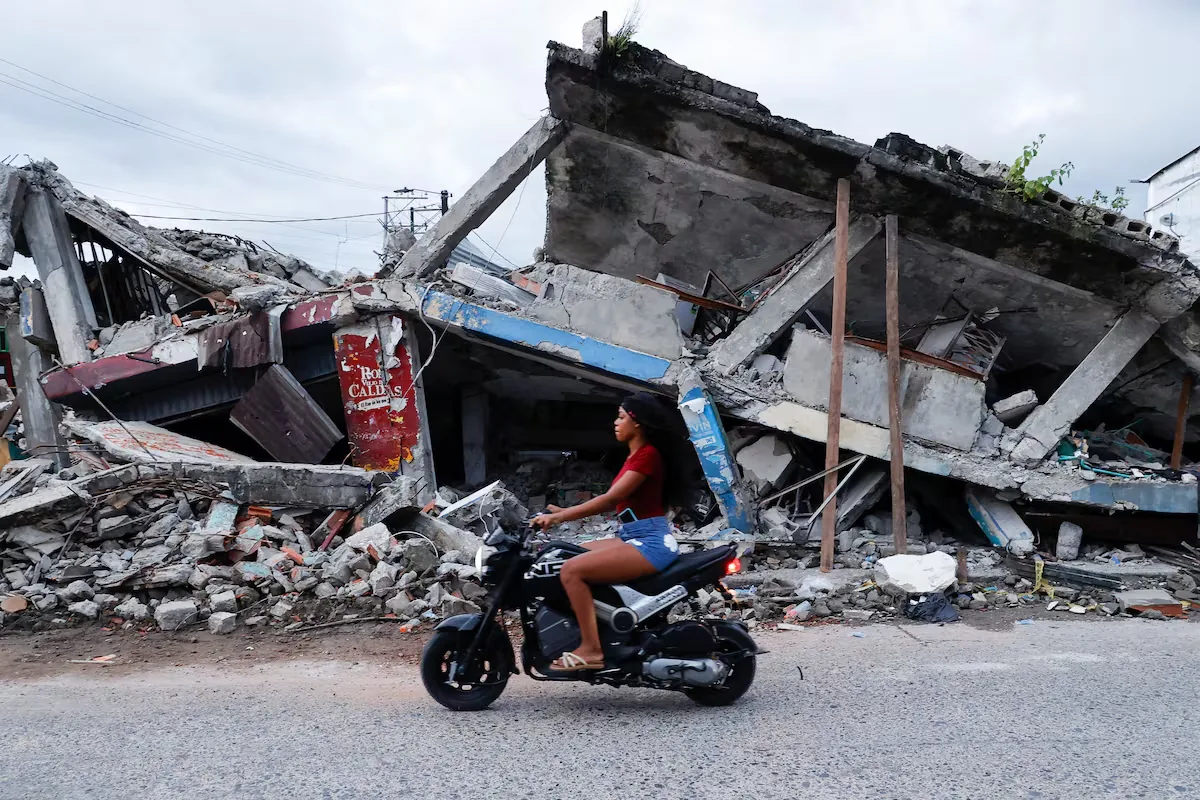
Amid the aftermath of the earthquake, Colombia today talks about war without many asking how to prevent a new spiral of violence from snatching the future and weakening democracy. Only more democracy, respect for the lives of social leaders, full guarantee of human rights and international humanitarian law, protection of communities besieged by illegality, and an economic policy that promotes development, protects the environment, and encourages decentralization will prevent the country from returning to a past of fields sown with tragedy and youth filled with hatred, ready to take up arms to cry out for revenge.