







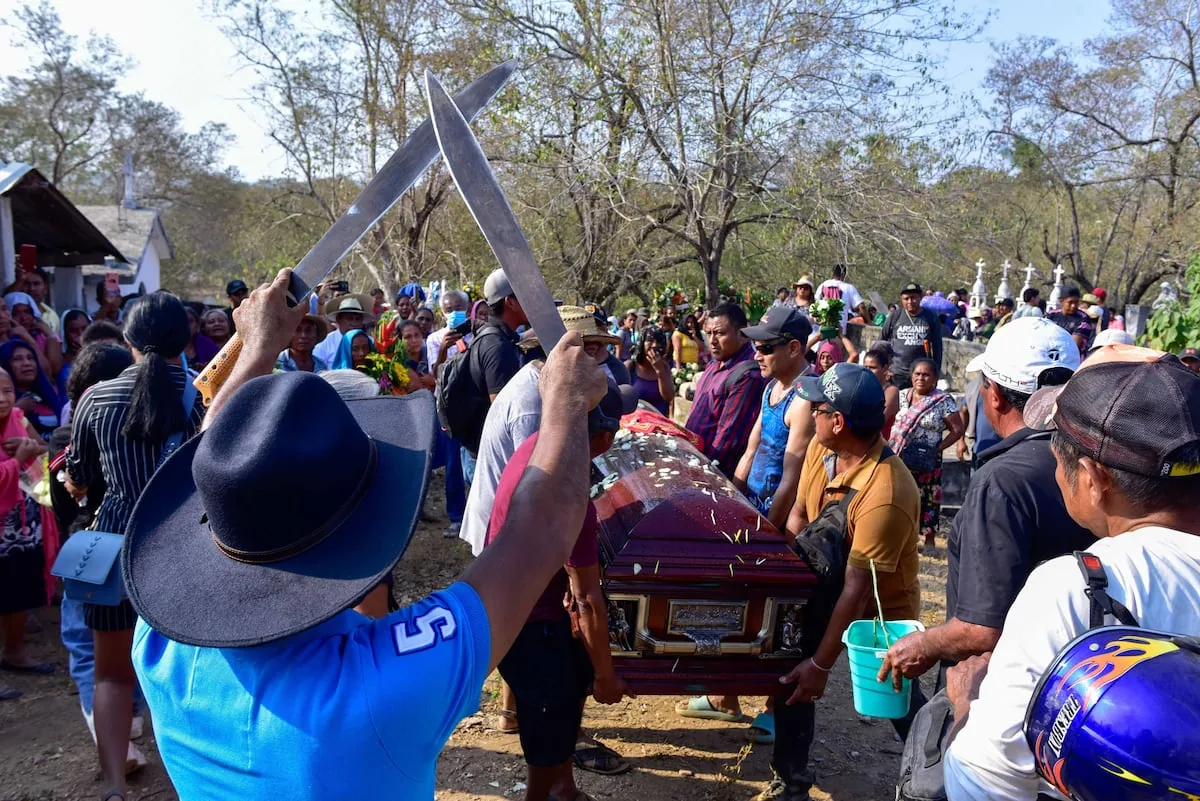
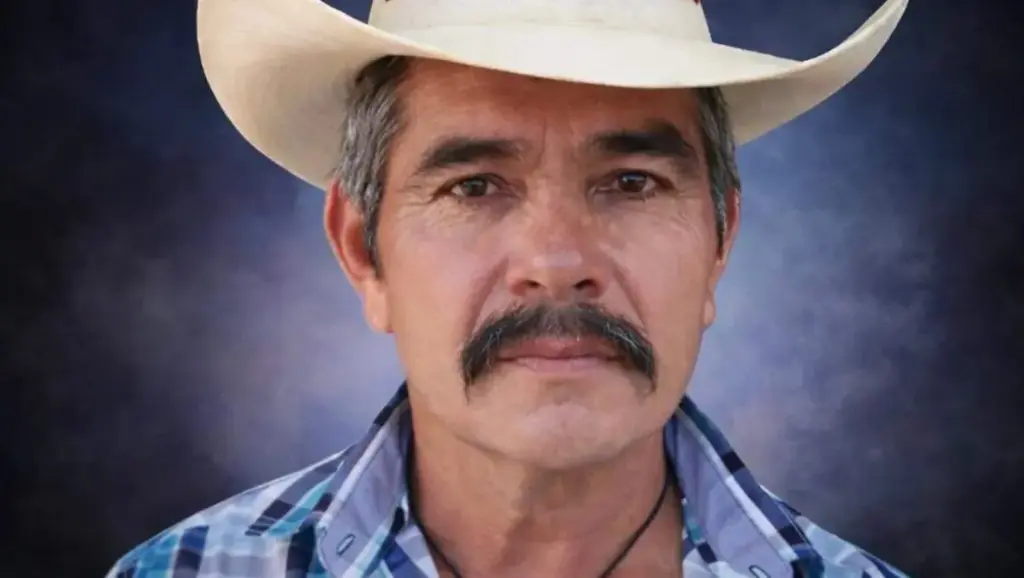
Roberto Chávez Bedolla had already had his ranch taken away by organized crime. His colleagues, members of the environmental defense committees in the municipality of Villa de Madero, Michoacán, recalled this Tuesday that Don Roberto, as his close ones called him, was grateful at that time that “at least” they had left him alive. Chávez Bedolla, 64 years old, was murdered on the night of Sunday, April 12, while he was on his way home. Unknown assailants shot him. “Where are we going to stay? Where are we going to hide from the criminals?” his colleagues said at the press conference called after the crime. What happened to Chávez Bedolla is increasingly happening in Mexico, denounces the Mexican Center for Environmental Law (Cemda). In 2025, 10 activists and defenders were murdered in the country, according to their report on the situation of people and communities defending environmental human rights.
The case of Chávez Bedolla is another example of that reality that pushes people to become activists overnight, when the need for survival forces them to defend the natural resources on which their families, communities, and their own lives depend. Chávez Bedolla defended his right to the land, the forest, and the springs of his region, co-opted by organized crime and the violence of criminal groups disputing the area.
Cemda released on Thursday the results of a report that exposes the situation, over the past 12 years, of those who defend resources and territory in Mexico. The organization presented its report, accompanied, among others, by the activist from Nayarit Erik Saracho, who survived an attack on March 11. The balance of the last year, 2025, recorded 10 murders, mostly of activists who defended their right to water, opposed megaprojects such as hydroelectric plants or trains, or protected beaches and forests.
The most common aggressions last year were reflected in stigmatization, defamation, and criminalization, especially against women defenders, collectives, and civil society organizations. They represent just over half of all recorded cases. Among the main aggressors, the report points to governments, private individuals, private companies, and organized crime. The report follows the pattern of previous years and recent cases like that of Chávez Bedolla, who had reported kidnappings and threats without authorities responding in a timely manner.
The report documents a total of 135 aggression events — a period in which one or more aggressions occur against one or more victims — in addition to 314 specific aggressions — a particular aggression — representing an increase compared to 2024. That year recorded 94 aggression events and 236 specific aggressions, without surpassing in 2025 the 25 deaths recorded the previous year. The data places 2025 as the second year with the most aggression events against environmental defenders and communities in the last decade, only after 2022, when 197 occurred.
Regarding the victims, the most exposed were community members, with 11.3% of the total recorded, followed by independent defenders (3.3%), lawyers (2.6%), and academics (2%). Among the agents identified as main aggressors or perpetrators of these attacks, most were not identified: 51.6% of the total. But following are governments at all levels with 37.1%, private companies with 6.3%, and community members with 4.4%.
The text adds that in 2025 aggressions against members of civil society organizations increased alarmingly, with a growth of 171.4% compared to 2024.
Cemda specifies that, due to lack of necessary data during 2025, they did not record extrajudicial executions, that is, murders perpetrated directly or by order of some state agent. However, they point out that the lack of information does not necessarily imply that this type of aggression did not occur. According to their study, the government participated in 76 aggression events and “was, once again, the main aggressor against people and communities defending environmental human rights.” “Government agents, at all levels, participated in 56.2% of the recorded events,” they stated in one of their conclusions.
The states with the highest number of aggressions were Mexico City, with 39, Puebla with 20, and Oaxaca with 17. Regarding the rest of the country, the report mentions that the lack of information and the vulnerability of those reporting cases makes it difficult to properly record this type of aggression. However, Jalisco received a special mention and its records “drew attention during 2025,” where they noted eight aggression events with 17 specific aggressions. Three of the 10 murders occurred in that state, as well as one of the three disappearances, placing Jalisco as one of the “most dangerous territories to carry out the defense of environmental human rights,” they emphasize.
In 2025, defending access to water was the most risky, followed by the biodiversity sector, communication routes, and energy.
The 10 murdered activists
Arnoldo Nicolás Romero (San Juan Guchicovi, Oaxaca) was a member of the Union of Indigenous Communities of the Northern Isthmus Zone (UCIZONI). His body was found with gunshot wounds and burns in January 2025, after being reported missing by his family. UCIZONI had already suffered aggressions before, due to its defense of the territory particularly related to the Interoceanic Corridor of the Isthmus of Tehuantepec (CIIT) project, the railway megaproject promoted by the government.
Read more Body warns of the risk to tourism from the shortage of fuel for airplanes
Cristino Castro Perea (Barra de la Cruz, Santiago Astata, Oaxaca), founder of the collective Environmental Defenders of Barra de la Cruz for the protection of beaches and against illegal logging, was shot dead by two people on February 28, 2025.
Marco Antonio Suástegui Muñoz (Cacahuatepec, Guerrero) was a defender of the Papagayo River, which flows through central Guerrero, and communal lands against extractive activities and against La Parota, a project that intended to install a hydroelectric plant by the CFE. He was pursued and imprisoned three times. On April 18, he was shot at. In 2021, his brother, also a defender, disappeared at the hands of criminal groups.
Karina Ruiz Ocampo (El Arenal, Jalisco) was a defender of the right to water in the municipality of El Arenal, member and legal representative of the neighborhood association La Cima Nuestra Prioridad, who denounced on several occasions the million-dollar debts of the CFE construction company. On April 14, people entered her house, kidnapped her, and she was missing until May 3. Her body was found lifeless in a public area.
Francisco Macías Sánchez (Cherán, Michoacán) was murdered while patrolling in a community round in his area, besieged by drug trafficking.
Sergio Hugo Ureiro Catañeda (Tlapa, Guerrero) was one of the leaders of the Movement in Defense of the Plazuela de los Cántaros. In June, his house was set on fire and on July 20 he was murdered in his vehicle.
Cándido Esaú Román Pérez (Cihuatlán, Jalisco) was a leader of the defense of ejidal lands in the area. Legal representative of the ejido Nuevo Centro de Población Agrícola General Emiliano Zapata, of Cihuatlán. He was murdered on November 3 outside his house. He had already reported threats.
Silvia Hernández Meza (Huitzilac, Morelos) was an activist and environmental defender, recognized for her reforestation work and denunciation of illegal logging threatening the Lagunas de Zempoala National Park of Huitzilac, Morelos, and Ocuilan, State of Mexico. On January 13, 2025, Hernández and four of her companions, Álvaro Horacio Rojas Mancilla, Juan Manuel Dávila Lagunas, Juan Carlos Cuevas, and Juan García Jurado, were murdered.
Marcos Aguilar Rojas (Azqueltán, Jalisco) was the agrarian representative of the Tepehuana–Wixárika indigenous community, which has inhabited its territory ancestrally; he defended the land and territory, water, culture, and memory of his community against invasions, displacements, and mining activity. He was murdered on November 26.
José Luis Lucas Quirino (Acuaco, Puebla) was a teacher, ejidatario, and social leader known for defending the rights of peasants, water, and forests in the Sierra Nororiental region of Puebla. In February, a group of people intercepted and murdered him outside the school where he was principal.
Read more Barcelona will dedicate a monument to Cerdà in the Plaça de la Universitat