
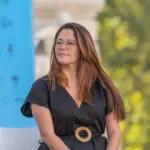



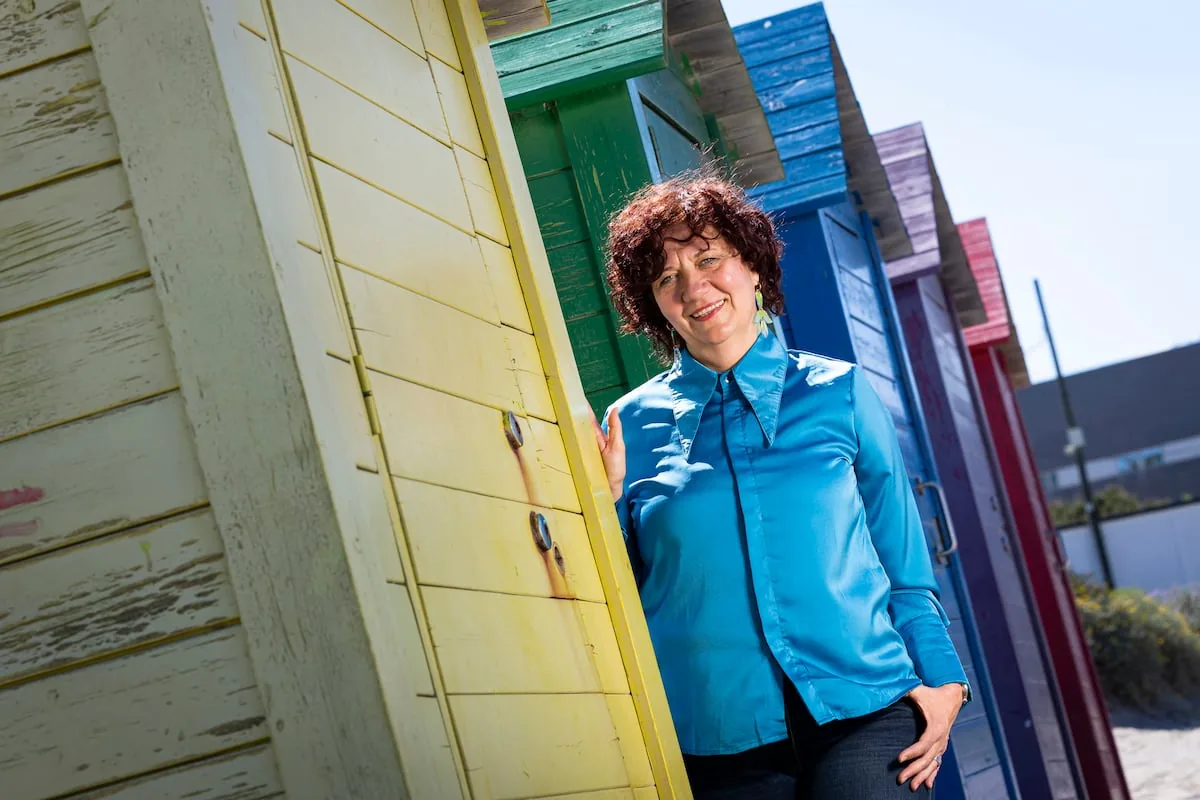
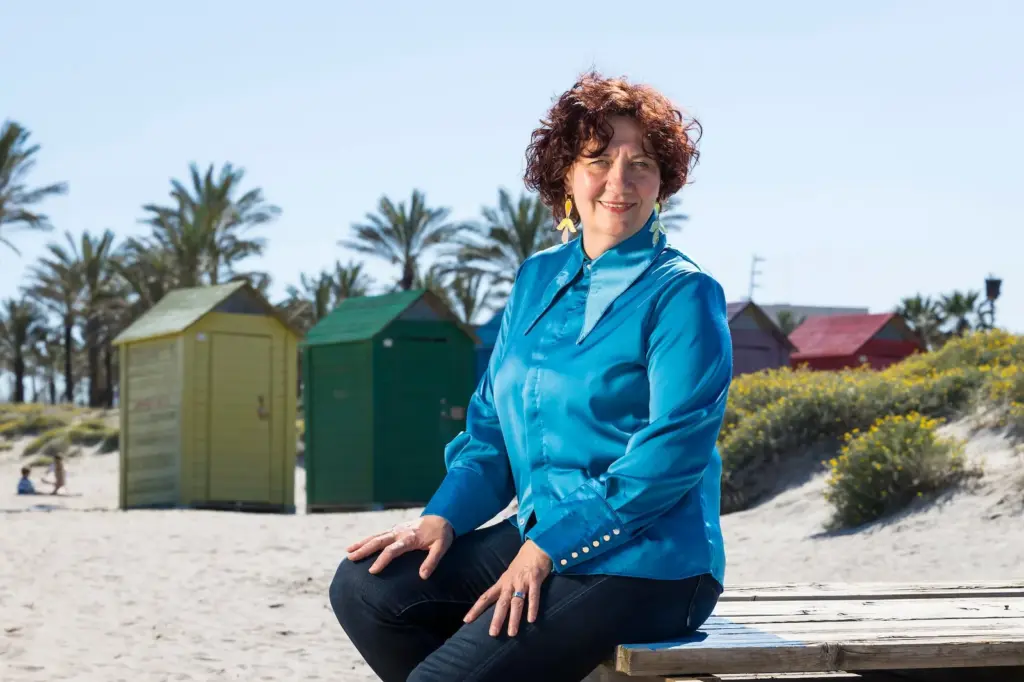
At the beginning of the century, when she moved to Spain at 28, Alina Tudose felt invisible. This nurse, now 53, took a bus in 2000 from Buzau —in southeastern Romania— and arrived in Castellón, in the Valencian Community, with a German visa that had cost her a thousand marks (about 500 euros). She arrived with only a piece of paper and a phone number, without speaking or understanding the language. “I didn’t exist, I was invisible. And that’s despite being 1.78 meters tall,” she recounts. To remedy this, she learned Spanish by cleaning houses, scrubbing hotels, and cooking in bars, the jobs she used to earn a living. It was almost four years of “despair and frustration” until she managed to validate her studies as a healthcare professional. “It was an enormous joy,” says Tudose, who has now been living for 25 years in the country of which she finally became a citizen a month ago.
Read more Spain and the Global South
“[The validation] took a very long time, but I had one thing very clear,” the nurse emphasizes, “only with my studies could I have a better life.” It was her friend Elena Martínez who recounted Alina’s journey in a letter to the editor of EL PAÍS: “She came in search of better opportunities for her family,” the letter stated. Her story reflects that of thousands of migrants who struggle to have their training from their countries of origin recognized, a process that, in many cases, can last for years due to the slowness and complexity of the procedures. The Government has just announced this week a considerable reduction in the waiting list of foreign applicants waiting to validate their degrees: from nearly 123,000 in October 2024 to the current 72,000 applicants, in what the Minister of Science, Innovation and Universities, Diana Morant, considered “an act of justice” for graduates who have been waiting for years, and a fact that “strengthens the Spanish economy.”
In one year, the Government has validated 65,000 foreign university degrees, 30,000 of them for doctors. Precisely, it is one of the professions that requires the most personnel in Spain. By early 2025, the , according to government data. This figure is the amount of personnel that would be needed to match the ratio with that of the EU, which is 8.5 per 1,000 inhabitants.
It was difficult for Tudose to decide to leave her country, mainly because she had to leave behind her parents and a three-year-old daughter. But in those years, Nicolae Ceaucescu’s regime had left a deep economic crisis in the country that led its population to an exodus. Spain appeared as a possibility for her thanks to a phone number her mother had written down on a piece of paper: that of a cousin who had been living there for a few months. Those digits became her only guarantee of security, proof that someone on the other side could lend her a hand. “I didn’t have an address or anything, just a phone number,” she says.
When Tudose arrived in Spain and applied for the validation of her nursing studies, her country was not yet part of the European Union. The facilities for doing so, therefore, were scarce or directly non-existent. To validate her studies, her father gathered all the necessary documentation from Romania: grade certificates, enrollment records proving the continuity of her studies, and the corresponding degrees, from secondary education to nursing school. Everything had to be translated, apostilled, and officially validated before reaching her hands in Spain.
In May 2002, she received a letter denying her validation. The administration considered that her studies were not equivalent to a university diploma in Nursing. As an alternative, they suggested she apply for an equivalency to Vocational Training. “I flatly refused. In Romania, at that time, that was the only way to be a nurse. It was not an inferior training,” Tudose emphasizes.
So she decided to re-submit the validation application in 2003. The outcome arrived in May 2004. She received the news that her studies were finally validated. “By validating my degree, I achieved economic stability and my integration into Spanish culture,” she states. Working as a nurse allowed her to interact with more people, improve her language skills, and understand a little more about the culture of the country she had emigrated to. Finally, the veil of invisibility began to fade. “Before, I worked alone or surrounded by other foreigners in bars or restaurants. The words I knew were not technical or specific to my profession. I didn’t have that contact,” she explains.
Read more The paradox of Madrid’s public bike: many bicycles, few lanes to cycle safely
Tudose belongs to the second largest migrant population in Spain (609,270 Romanians), surpassed only by that of Morocco (968,999), according to the latest data available from the National Institute of Statistics (INE), from January 2025. The validation was the beginning of a new stage: that of practicing, under equal conditions, the profession for which she had prepared. “During those years, I always said: ‘I am a nurse,’ but since I couldn’t corroborate it, some people even laughed, thinking it was a lie. Finally, I could prove that I was,” she recounts.
Her career as a healthcare professional in Spain began in a private nursing home. As Romania still did not belong to the EU (it did not until 2007), she could not work in public entities. “It was a gratifying moment,” she emphasizes. But she adds a nuance that encompasses an entire reality: “We were all Romanian nurses with validated degrees, but none of us had a nurse’s contract. We all had an auxiliary contract.”
“If the working conditions were different, I would love to continue working in this because it is a forgotten sector. It is a big mistake. We all get older. It is a lack of respect that the State does not care, that people do not care. It’s just that people don’t want to talk about old age,” Tudose complains.
Her path, however, later continued in a gynecology clinic, her first job in Spain with a nursing contract, which, she says, was the job of her life, where she felt “heard, respected, and useful” accompanying women. “I was dedicated to family planning. The doctors are still my friends. They counted on me. It was the first time they asked me what I thought about the decision that had to be made,” she recalls.
She currently works at the Benicàssim outpatient clinic, on the coast of Castellón. Tudose, who at 28 built her life in a country that was not her own, strongly defends professional equality and feels deep admiration for Spanish public healthcare. “I will always defend it. Public healthcare is ours and we must all take care of it,” she affirms. Her experience as a migrant has shaped not only her way of seeing life and society, but also her own place in the world. “I am still Romanian in essence,” she says. “But also Spanish in rights and citizenship.”
Read more Peridis: the disciple Peter