






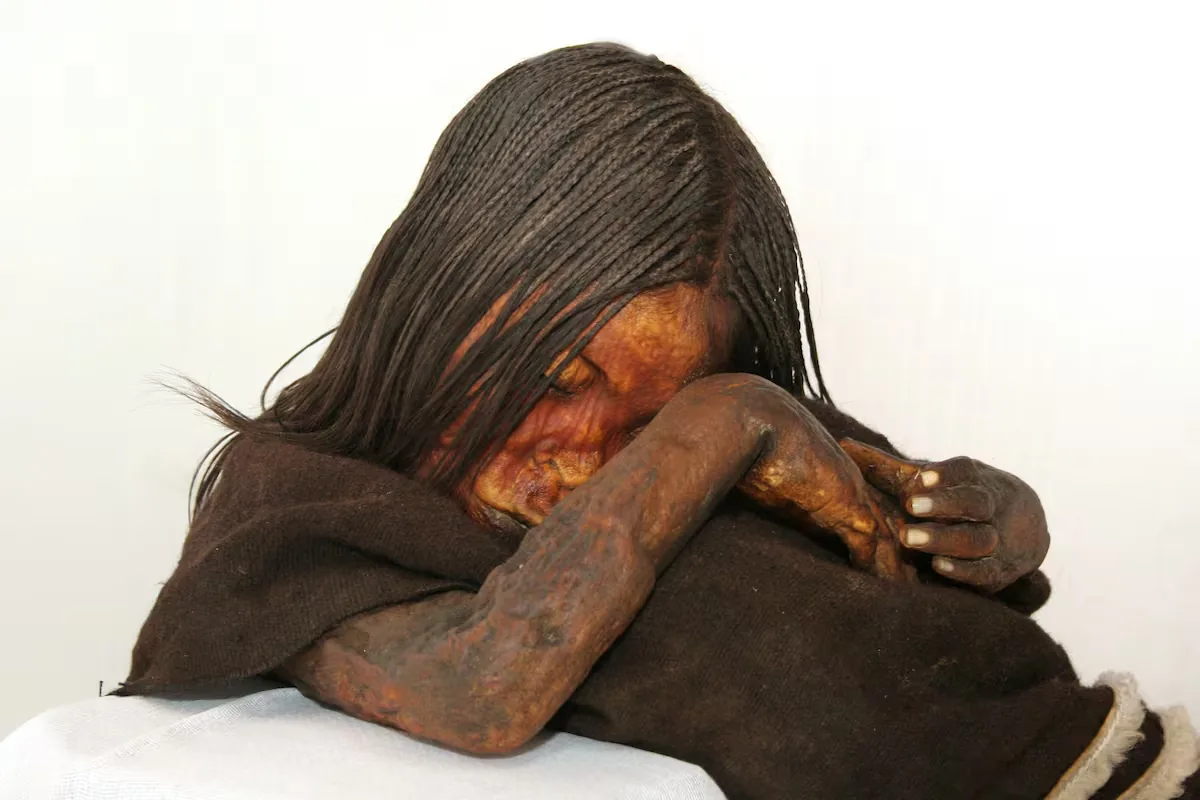
A curious and observant girl who grew up poring over encyclopedias, in a house in the municipality of La Florida, in the southeastern sector of Santiago, in the mid-eighties, became in July 2026 the first Chilean physical anthropologist —the discipline that studies human bodies from evolution to today— whose research,Pilgrimage to Sacrifice: Mechanisms, Causes, and Time of Death in the Western Andean Capacocha of Southern Tawantinsuyu, made it to the cover of Science Advances, one of the world’s most prestigious multidisciplinary journals. She is Verónica Silva Pinto (Santiago, 49 years old), curator of the anthropology area of the National Museum of Natural History (MNHN) in Santiago, Chile, who rewrote the history of the child from Cerro El Plomo, who was found intact in 1954 at more than 5,400 meters high in the Southern Andes, in front of Santiago, in central Chile. Until her investigation, the story, which lasted for seven decades, was that the approximately eight-year-old child had died of hypothermia, more than 500 years ago. But today it is known that his death was due to a blow to the skull, in the context of the Capacocha ceremony, during the Inca Empire, as an offering to the gods in the high mountains. For this, he journeyed from Cuzco, accompanied by a large retinue and on a long nine-month trip, which Silva reconstructed by analyzing his hair, styled with dozens of small braids, which revealed the diet he received during the preparation period.
Read more Before you start, check this list: 10 essentials to carry in the car (including the V-16 light)
It was not her only finding, in an investigation that took her 14 years. Silva changed another narrative, about the cause of death of the so-called Maidens of Cerro Esmeralda, an 18-year-old girl and a nine-year-old girl, also offered in a Capacocha ceremony in the Coastal mountain range. Their bodies were found in 1977 at about 900 meters high in Iquique, in the far north of Chile, when the land was dynamited to build a road. Due to marks on their necks, it had been concluded that they were strangled, but the MNHN anthropologist, based on bioanthropological and tomographic evidence, has determined that those marks are the result of the textiles in which their bodies were wrapped. Both, through the analysis of their hair, allowed the researcher to establish that their pilgrimage lasted five and three months.
“A Transition Towards the Gods”
The Maidens’ study was Silva’s first, which opened a window for her to then focus on the Child of Cerro El Plomo. All three died in the Capacocha, the two Inca ceremonies recorded in Chile.
The anthropologist emphasizes that, for the Incas, and “in general for Andean peoples,” death had a totally different meaning than what is understood today, as “it is not the end of life, but a transition to another state, towards the gods and the spiritual world.” And she adds: “The Capacocha was a ceremony in which children, girls, and young women were chosen for their beauty and perfection. That is, they were the most precious possessions of the Empire and were offered to huacas or sacred places, and the power they would have was much more important than what they would have alive.”
Silva led an investigation with Professor Domingo C. Salazar-García, from the University of Valencia, in Spain, where she completed her doctorate. It is a multidisciplinary team of 14 professionals from different areas, among whom stand out the Chileans Marcela Sepúlveda, archaeologist; Eugenia Gayó, paleoecologist; María Luisa Cerón, chemist and engineer; and Verónica Catalán, dermatologist.
Daughter of a veterinarian and a paramedic, Silva especially remembers a period in the eighties when her house was robbed, and everything was taken except the books. Without a television, she dedicated herself to reading encyclopedias, which families of yesteryear acquired in volumes. She went straight to the history pages and, of course, eagerly read about the mummies of Egypt. Mummy, however, is a term that, since she studied physical anthropology, she does not allow herself to use. “I speak of people, with great respect. For me, ‘mummy’ is to objectify them,” she tells EL PAÍS.
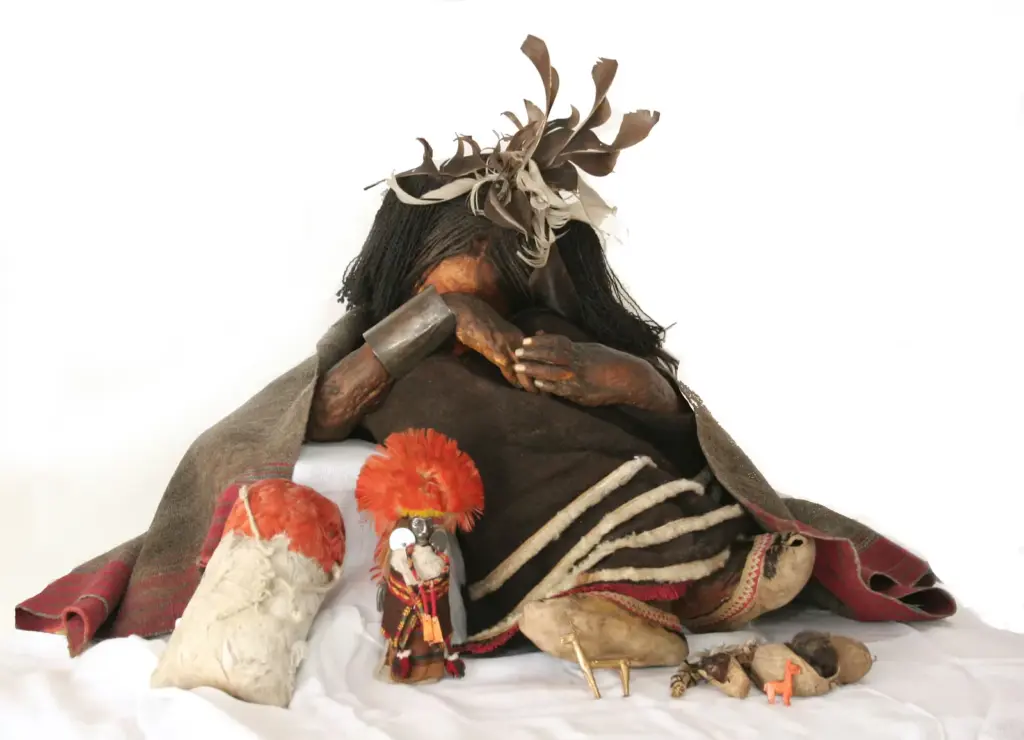
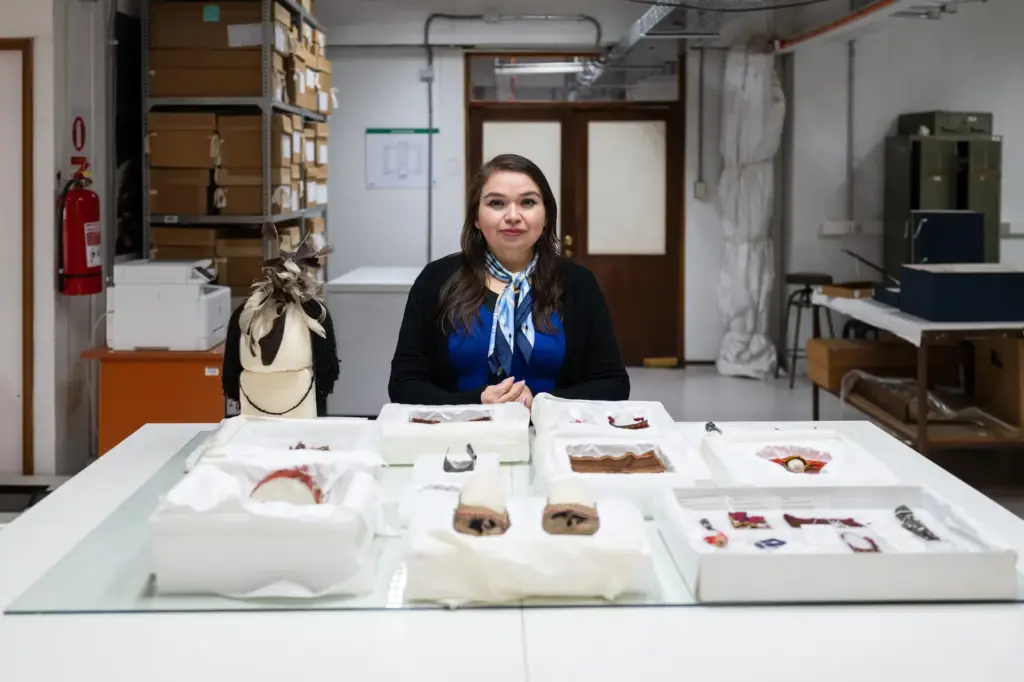
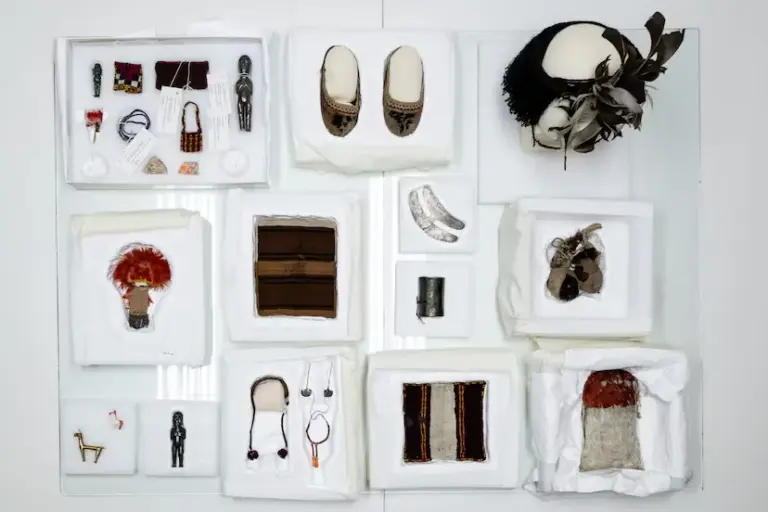
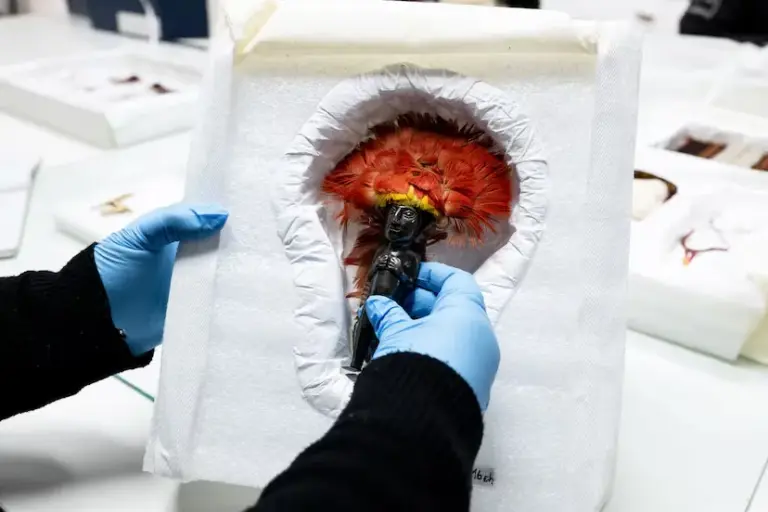
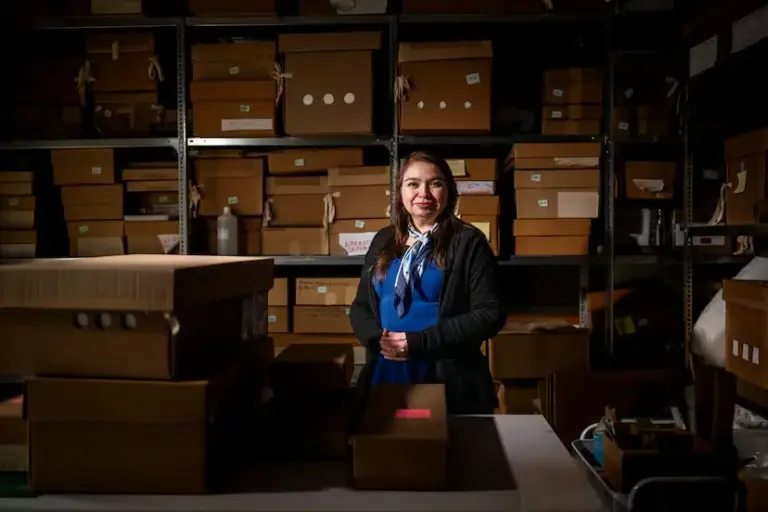
Her office at the MNHN, a building constructed in 1875 inside Quinta Normal Park, is located a few meters from where the Child of Cerro El Plomo is housed, sheltered within a cold chamber, between -2°C and -4°C, which allows for his preservation. His tomb was found 72 years ago by mine and treasure hunters Guillermo Chacón, Luis Gerardo Ríos, and Jaime Ríos, although it had been visited, Silva explains, since 1929, which is why several objects that were part of the ritual were removed. He was surrounded by a trousseau, today carefully stored inside boxes: small leather shoes, a black wool headdress, a condor feather plume, two small llamas, among other textile objects that remain intact.
The Child of Cerro El Plomo, which the museum had to acquire in 1954 to safeguard him, has not been exhibited to the public since the mid-90s: those who visit him at the MNHN see a replica. Silva, however, is part of the generation of schoolchildren who did get to see him, when she was about eight years old. “I was impacted. I have always been fascinated by death, in the sense of how mummification, and in this case the preservation [of the Child of Cerro El Plomo] defy death,” she says. “They are bodies that, despite all the time that has passed, which can be thousands or millions of years, still reach us defying all phenomena of cadaveric decomposition and transformation. That is the phenomenon that fascinates me and is what happened to me when I saw the Child, who looks asleep.”
Read more What is an active carbon memory foam pillow for? We tell you all its benefits
She reconnected with the Child when she was a student at the University of Chile, during a three-month volunteer program she undertook at the MNHN. And, many years later, she saw him again, but with different eyes, in an observation that culminated in the research published by Science Advances and which changed history. The conclusion that he died of hypothermia was a hypothesis reached in 1959 by Grete Mostny, then head of the Anthropology area of the MNHN, because his fingers and nails, being darkened, showed necrosis due to his exposure to extreme cold in the high mountains. Mostny also determined that he had been sedated.
Commensality Ceremonies
Silva’s research began out of her curiosity, “like all things in science,” says the anthropologist, who started working as a curator at the MNHN in 2016. The Child is rarely removed from the cold chamber, and on one of those occasions, she noticed his fingers. “When I arrived at the museum, the first thing I did was question that he had necrosis. I know necrosis, as I am also a forensic anthropologist,” she recounts.
In 2013, when she obtained a scholarship to study at the Max Planck Institute in Leipzig, Germany, she had requested hair samples from the Child of Cerro El Plomo, as she specializes in studying nutritional status and diet in pre-Hispanic populations. The hair was already safeguarded at the MNHN, and she needed it to perform a sequential analysis of stable isotopes, which allows obtaining information about the past, diet, mobility, and trajectories. This made it possible to know that the Child’s pilgrimage, for the Capacocha, lasted nine months, and that of the Maidens, five and three months.
A precedent occurred between 2003 and 2005, when the complete body of the Child was examined by another researcher, Álvaro Sanhueza: he concluded that he died of natural causes, from high-altitude cerebral edema, although, the anthropologist says, some openings in the cranial sutures were already observed.
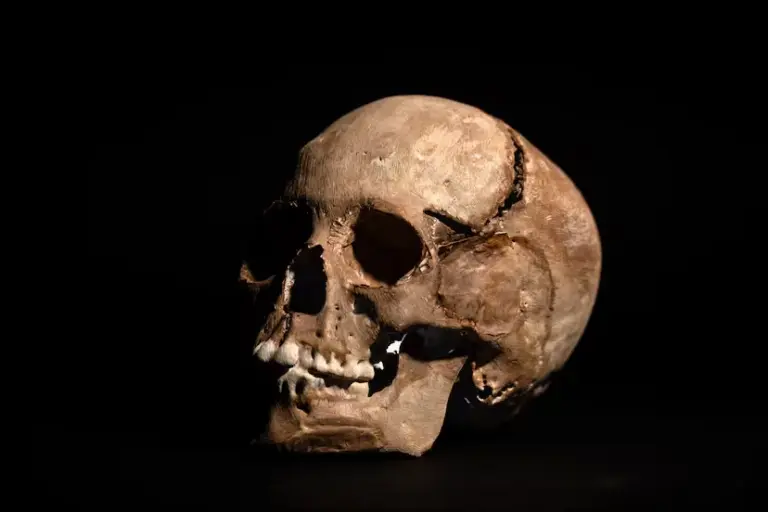
For Silva, “it was strange that an eight-year-old child had those sutures, and that caught her attention.” She decided to take new samples and convened a team of different disciplines to perform dermatological and histological analyses that did not show he had frostbite injuries prior to his death. She also requested a computed tomography scan and searched for the cranial fracture until she found it, something confirmed by Clínica Alemana de Santiago. The detail was such that it was determined that the blow, with an Inca weapon (a star-shaped carved stone), was to the left frontal region of the skull. “It was very evident,” says the anthropologist next to the 3D reproduction of the skull she keeps in her office.
That’s not all she found. Changes in their diet also revealed a new interpretation of the Capacocha, as the research led by Verónica Silva proposes that “as these children and their retinues journeyed through different territories, they were received by local populations and fed in commensality ceremonies where food and drinks were exchanged through reciprocity.” And she adds: “With this, the Inca made a biopolitical use of the bodies in which the chosen ones were not only transformed into divinities, but also, throughout the journey, carried out a spiritual conquest.”
Read more Cracks in marble? This kit repairs tables and countertops for less than 20 euros