






Tension over the daily violence by settlers in the West Bank led this Friday to one of the most serious incidents in months, with six dead (four Palestinians and two Israelis) in a confrontation and a subsequent wave of violent attacks by radicals from Jewish settlements against Palestinian towns. Confusion reigns over the details of the incident, but versions from both sides, along with partial videos of the moment, show how a group of settlers, some armed, approached a Palestinian village and was confronted by a group of locals. One of them took a rifle from a settler-soldier when he was assaulting him —as captured in a recording— and several shots were heard. In another video, an Israeli is seen shooting from a distance with a long gun at Palestinians, already disarmed and on the ground. The Israeli army is preparing a “broad” operation in the West Bank, and Prime Minister Benjamin Netanyahu has warned that there will be a “very harsh” response.
Read more Trump threatens Europe with new tariffs after the EU fine to Google
In addition to the threats, Netanyahu has announced a series of political measures: accelerating the national legalization of particularly contentious settlements and establishing new enclaves, as well as collective punishments against Palestinian towns and a reinforcement of military deployment throughout the West Bank. His most radical ministers are calling for action similar to that in Gaza, demolishing or emptying entire Palestinian villages.
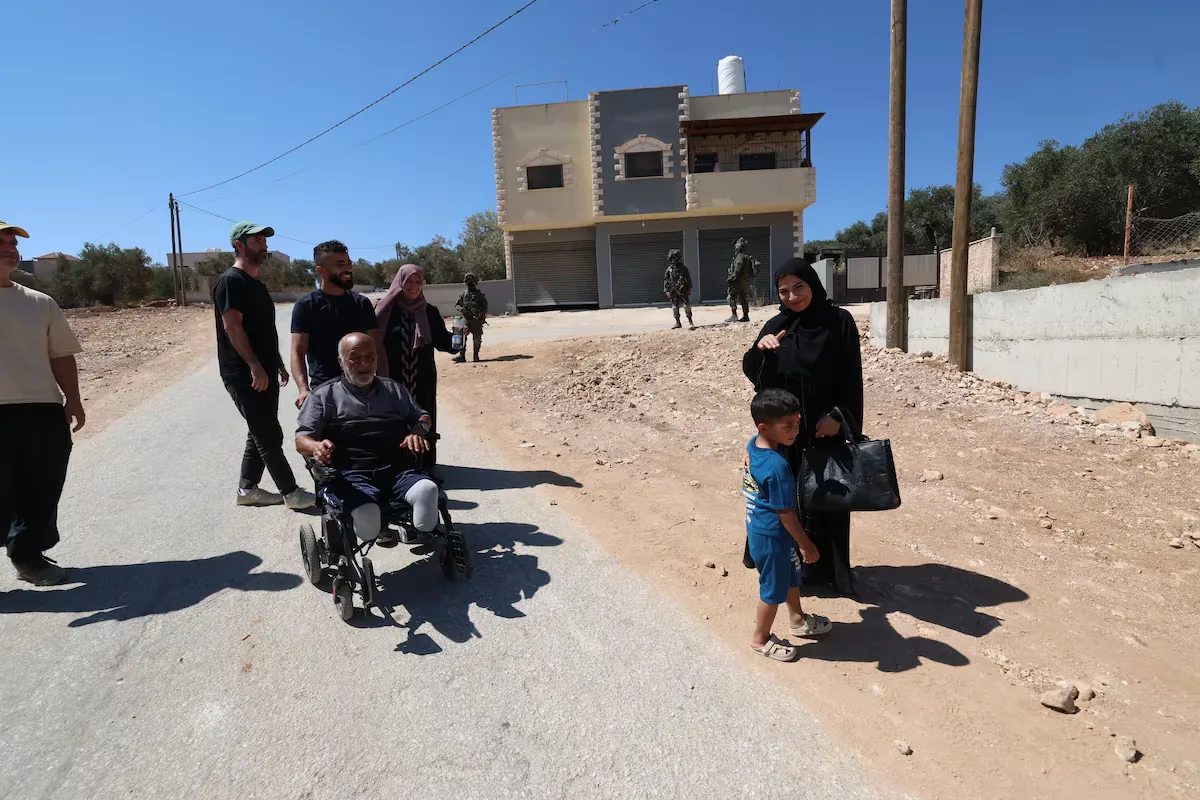
The group of about 20 or 30 settlers arrived in Til, a village near Nablus. Their movement had not been coordinated with the army. The locality of Til is located in the so-called Area A of the West Bank, which —according to the Oslo Accords— is under the administrative and security control of the Palestinian National Authority (PNA) and which Israel prohibits its citizens from accessing.
The settlers and the Israeli army claim that the group was merely hiking. The Palestinians claim they had launched one attack and were preparing another. When residents of the area came to confront them, Israeli soldiers who were nearby arrived. In the videos, they are seen only observing or accompanying the settlers, some of whom are armed. The scene is tense.
Gunfire
At one point, two Israelis with rifles aggressively rush towards several Palestinians. A member of the so-called early security teams —through which settlers receive long guns and serve as reservists— pushes and kicks a Palestinian, who takes advantage of the proximity to snatch the rifle from him. Several shots are heard. One of the dead soldiers is the security coordinator of Havat Gilad, one of the small settlements with the longest history of violence against Palestinians. The other soldier was deployed in the area.
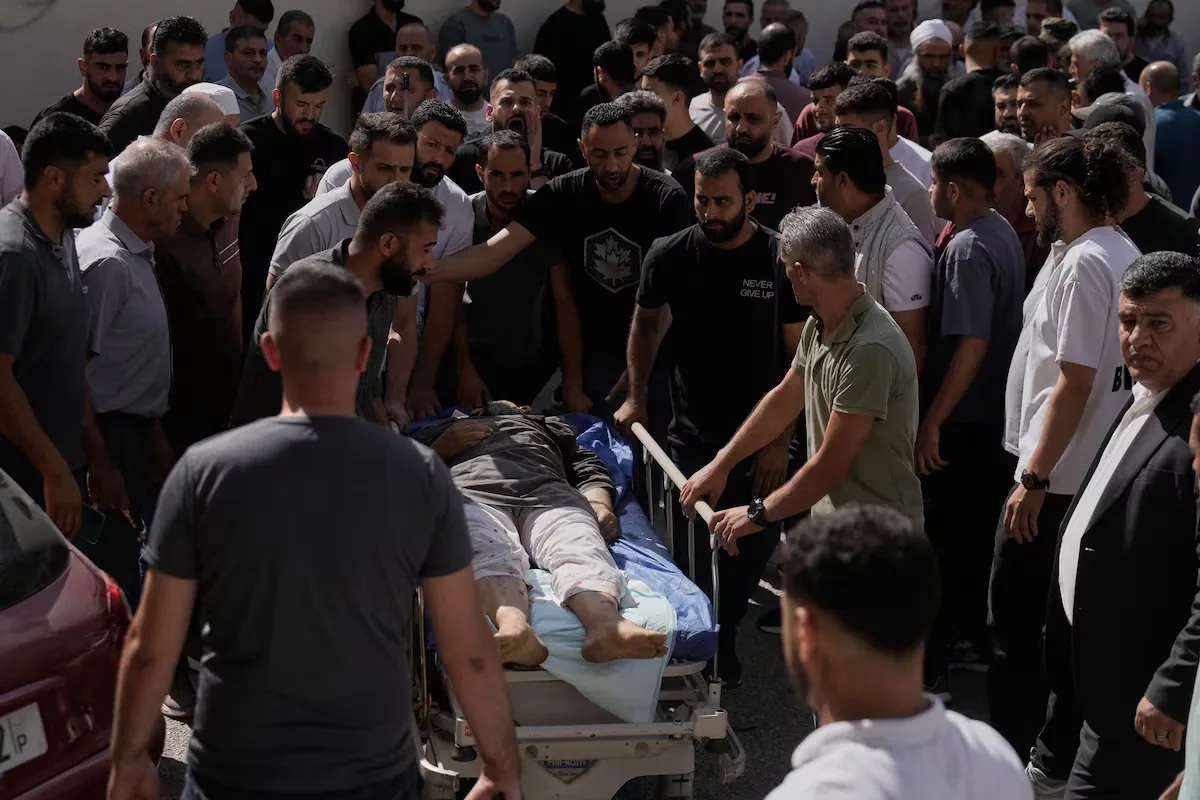
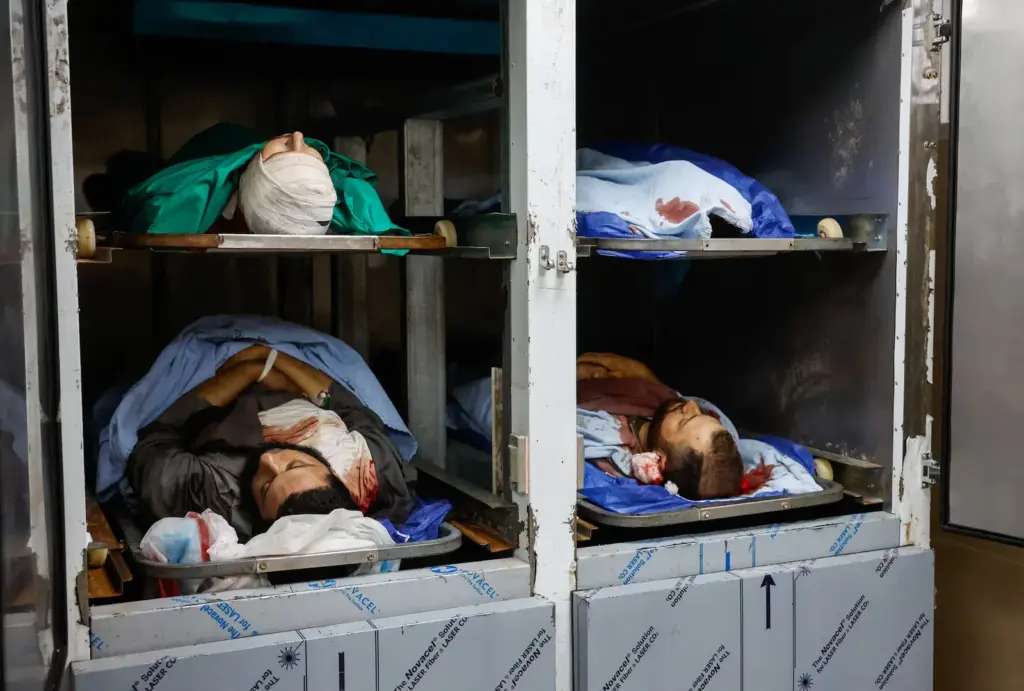
In addition to the four dead Palestinians, there are four other injured, three of them seriously, according to the Palestinian Ministry of Health. The Israeli army stated in a communiqué that it killed the man who snatched the weapon from the settler and emphasized that he was armed when he was shot. But neither the motives nor the moment he killed three others are clear. Another video, confirmed by the army, shows an Israeli shooting while children and teenagers shout in Hebrew “Revenge!” during the gunfire.
Israeli soldiers subsequently entered a hospital in the city of Nablus to arrest one of the injured Palestinians and his brother, who was accompanying him in the room, according to the PNA Government. Several videos have captured the soldiers inside.
The Palestinian Government has called what happened a “massacre” and Hamas, a “summary execution.”
Israeli civil and military authorities, on the other hand, are treating it as a Palestinian “terrorist attack.” After a series of meetings, Netanyahu, who is seeking re-election in October, has ordered the army to demolish the family home of the “terrorist responsible for the attack” —a common measure— and to act “forcefully in villages that serve as terrorist centers, including the confiscation of weapons and the revocation of work permits.” Also, to further close access to roads, by means of barriers and checkpoints. And a measure much to the liking of his ultranationalist partners: accelerating the legalization of dozens of settlement-farms (a successful way of nibbling away at land in the West Bank) and establishing new ones.
The response in Israel to the incident opens the door to violent days. On the one hand, radical settlers have already caused fires and assaults in at least five villages in the West Bank, militarily occupied since the Six-Day War of 1967. This is the case of Yit itself or Farata.
On the other hand, Netanyahu’s most ultranationalist ministers have been competing since the morning over the brutality of the response. The Minister of Finance, Bezalel Smotrich, has called the villages of Til and Iraq Burin “terrorist strongholds” and has called for them to end up “like the refugee camps of Nablus and Tulkarem,” which the army keeps forcibly emptied. “It is necessary to evacuate the population for their protection and dismantle them, eliminating the infrastructure and the terrorists to restore deterrence and security in the area,” he said.
Read more The International Criminal Court dismisses its chief prosecutor for sexual misconduct