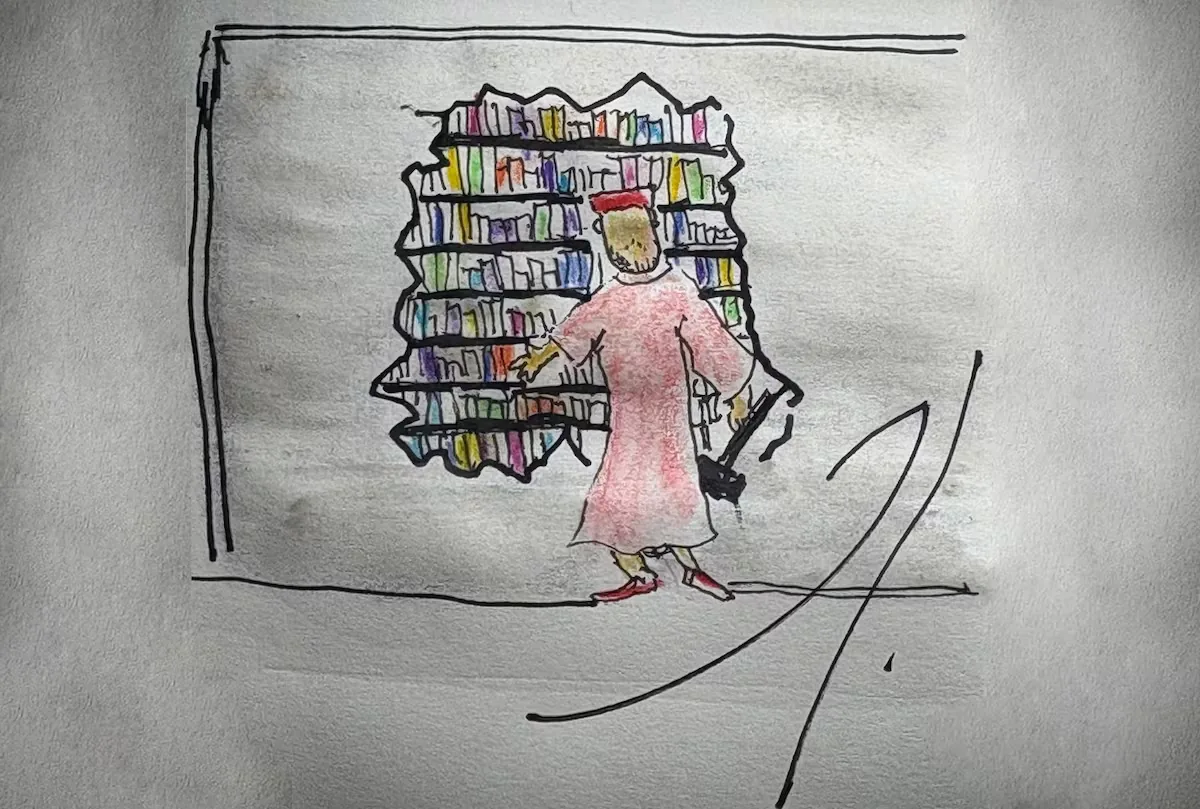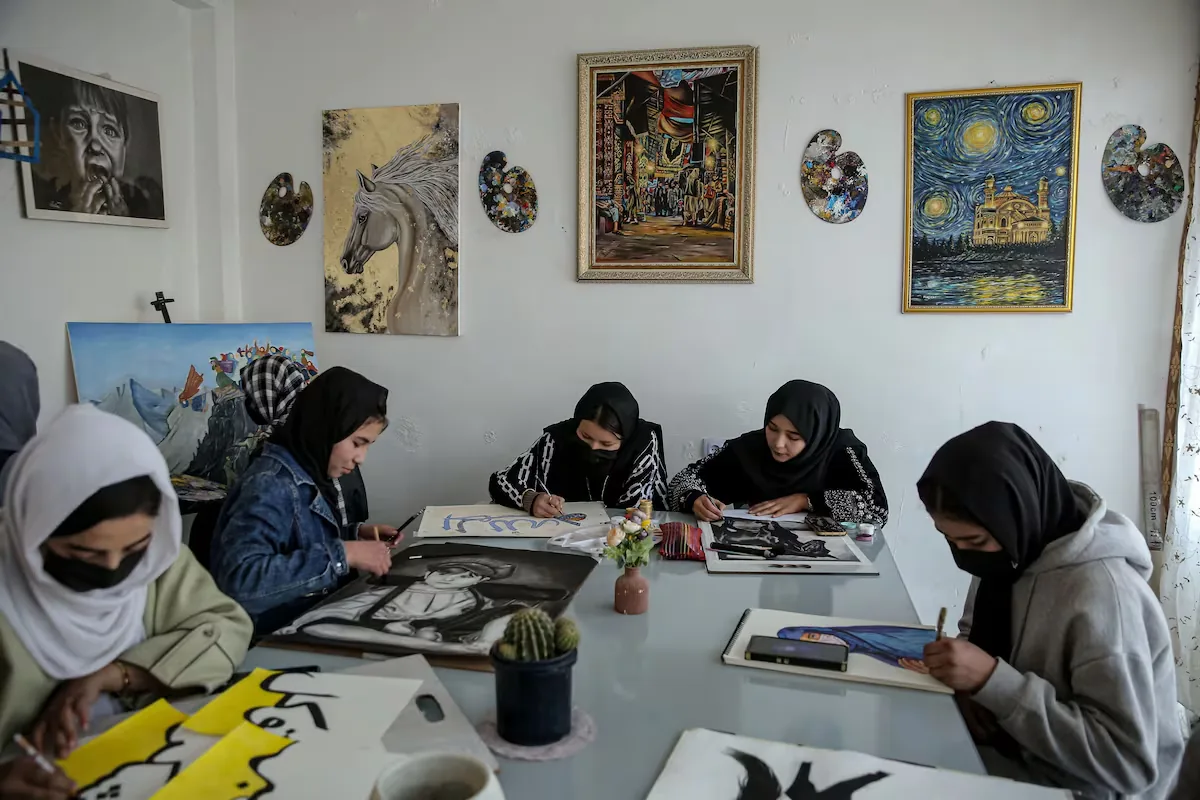
Since August 15, 2021, every day feels the same. In Kabul, Herat, Kandahar, or Bamiyan. “I spend almost all my time at home because I’m afraid to go out. I wake up, get ready, read, take online courses, write poems… My world now is limited to the walls of my room.” Soobabeh, 23 years old, is one of three young Afghan women who agreed to tell EL PAÍS how the Taliban’s restrictions have shaped their lives for the past five years. “The person I was until August 15, 2021, no longer exists. I was alive, and now it’s almost as if I were dead.”
Soobabeh, Mitra, and Motahara share their stories in voice messages sent via WhatsApp. The emotion when recalling everything they cannot do in their daily lives forces them to pause and take a breath before continuing to speak. Every act, no matter how small, is filled with fear. “Especially of being detained. Because when you are arrested, you no longer know what will happen to you. Today, for example, is Friday, a day off, and in a normal world, I should be out with my friends,” says Motahara, 18, from Herat, in the west of the country.
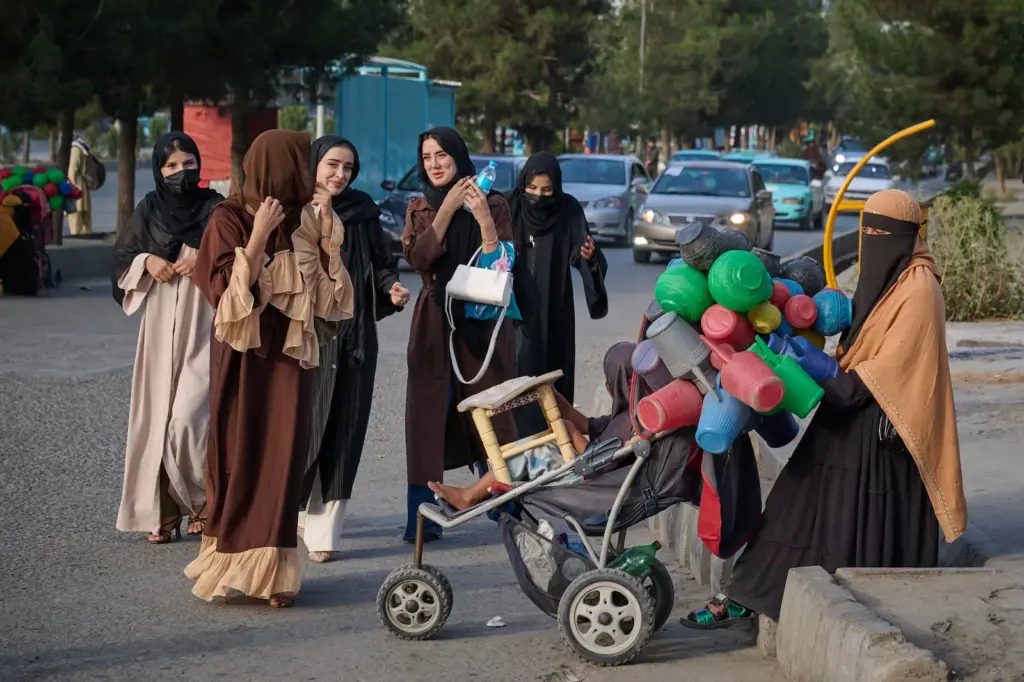
But going to class, walking outdoors, meeting people, hanging out in a café, buying the books they like, or moving around without a male companion have been complicated or outright impossible tasks for five years. “If I went out today, I would have to go with my father or brother, cover myself completely, cover my face, and even wear gloves. It’s 45 degrees, and I’m suffocating. But it’s that or nothing, and it’s very frustrating,” adds this young woman.
Since 2021, the Taliban have issued more than 130 edicts that dangerously reduce women’s rights. They have closed the doors of education to Afghan girls over 12 years old, and 80% of women are today excluded from the workforce and education, according to UN Women.
“A few months ago, we tried to go to a café to celebrate a birthday. When we were about to enter, the owner came out and apologized. The Taliban often went to the place, checked the security cameras, and he couldn’t risk admitting a group of young women. We had to leave,” says Soobabeh, who also lives in Herat.
Another day, several friends met in a city cemetery, convinced they wouldn’t be discovered there. “But two armed Taliban arrived. They asked for our names and addresses. We gave them a false one and left immediately,” she recalls.
Also, some young women left the country, or many others got married. “When I see them, I realize how sad we all are and that we spend our time remembering past times,” says Motahara.
Not being able to choose
Mitra is 21 years old and was studying in high school when the Taliban returned to power. She lives in Kabul, where she says that, unlike other cities, she can still go out to buy things or go to the doctor without a mahram or male escort. “But nothing is like before. For example, buying clothes is not pleasant at all. We can no longer choose how we dress, you don’t feel beautiful, and that hurts when you’re young,” she says.
In Herat, the situation is more complicated. “Before going to the market, I try to be sure there are no government people in the area arresting people. Recently, several women were arrested just a few streets from my house,” says Motahara.
The UN considers that the fundamentalists have established a gender apartheid “that denies women and girls autonomy over their own bodies, their health, and their future” and constitutes “a crime against humanity,” in the words of Richard Bennett, UN special rapporteur on human rights in Afghanistan.
The three young women interviewed also explain that dating has become an impossible mission, and for that reason, some of their friends have married without having spoken a word with their future husband. “Talking to a man who is not from your family is a crime. For example, responding to a man on the street, even if he has disrespected you. And going out with a boy without being married can lead us to jail or to be stoned,” summarizes Soobabeh, whose boyfriend left Afghanistan. “I’m afraid the Taliban will detain me, confiscate my phone, and find our messages.”
The young woman listens to herself speak and admits she doesn’t recognize herself and that, even if the horror she lives through ended tomorrow, the setback of these five years will be very difficult to recover from. “What terrifies me is realizing that I have lost my place in society. I never feel safe. If I go out, I ask myself, will I return home, will they detain me? Even when I write, I feel that words can put me in danger,” she explains.
“What scares me the most is losing our connection with the world. For example, last year we were without internet for three days. It may seem like a short time, but for me, it was eternal. I felt lonelier than ever,” says Mitra.
These Afghan women explain that all this has taken a psychological toll on them. Sleeping pills, migraines, nightmares, inability to concentrate, anxiety attacks, or joint pain are also part of their daily lives. “I have been taking sleeping pills for months. Two nights ago, I dreamed I was going back to university, but the Taliban stopped me at the entrance. Fear doesn’t even leave me in my dreams,” laments Soobabeh, who was studying Medicine five years ago and could not finish her degree.
“But despite everything, we are still here. The Taliban have deprived me of education and work, but that is exactly what I do: I read, study online, teach English remotely. That’s how I resist,” says Mitra.
Invisible to the world
Motahara is the oldest of her sisters and spends much of the day taking care of them. She also cooks, watches movies, and her leisure ends there. “When I go to sleep, I think about the plans I had for myself. I want to believe that my present will not define my entire life, but some nights I can’t sleep from anguish,” she explains.
For these three young women, no one outside Afghanistan can imagine what they are living through daily. “Not even I can grasp the suffering of other Afghan women who live in more rural areas, where everything is much more traditional,” says Soobabeh.
There is also no news headline that can describe their daily life. “No article can explain what a nine-year-old girl who is forcibly married feels, the fear caused by the possibility of being detained at any moment, or being killed for defending something as basic as continuing to study,” adds this young woman.
The three also regret that the world does not react and that hardly anyone takes to the streets to protest when “the future of an entire generation has been destroyed.” “Since we are invisible to the world, everything can get worse, and absolutely nothing happens. We can only count on ourselves,” concludes Soobabeh.
Read more The keys to the trial for the murder of Tupac Shakur, 30 years after his death