









Access to affordable housing is a top issue for European citizens. And Brussels also feels the pressure to curb this crisis. In this context, the European Commission launched a regulation this Wednesday that, among other things, seeks to curb short-term rentals, driven by digital platforms like Airbnb or Booking, which have been identified as one of the causes of rising prices. The Community Executive now proposes limits on this activity, provided they are “proportional” and “temporary.” The decision to take the step to set restrictions lies with national, regional, or local authorities, who have housing competence and who, in some cities, have already undertaken initiatives.
With the measure, the Commission gives municipalities and governments “a common basis” and proposes a series of criteria to establish pressured zones and tries to provide legal certainty in the face of the constant judicialization of initiatives being adopted by many cities. This regulation is a chapter of a strategy that supports the Community Executive which, with the few legal cards it has at its disposal (competences are mostly national), thus tries to provide solutions to a huge snowball with serious political and social consequences.
“The Union faces an affordable housing crisis that weakens social cohesion and threatens the overall competitiveness of the EU,” says the legal text presented this Wednesday in Brussels. Since 2013, housing prices have increased nominally by more than 60% across the EU, at a rate far exceeding citizens’ incomes, with direct implications for social inclusion and labor mobility. In Spain, the increase is above that average: it has been 72% in that period, compared to 26.6% in France, 13.3% in Italy, or 51.3% in Germany, according to a European Council report published last October.
The regulation, which now begins its journey in the European Parliament and the Council (that is, among Member States), applies to measures adopted once the European regulation comes into force, not to previous ones. Therefore, it is not a disavowal of what cities like Barcelona, Chamonix (France), the land of Bavaria (Germany), or the Netherlands have already adopted, with restrictions greater than the minimums now established by Brussels. Nor, the EU Executive points out, does it become an endorsement.
The regulation sets a series of criteria that would allow authorities to declare an area as “pressured” and thus apply restrictions. One of them is that the average price of a home must be at least equivalent to eight years of the disposable income per capita of its inhabitants, according to the Community document. In addition, that price-to-income ratio must have been rising over the last decade. However, it opens the door to applying that definition alone (without the other criteria) also when the mismatch is especially large: if the ratio reaches or exceeds ten times the income.
Brussels — which determines that these criteria be reviewed every five years — also emphasizes that to apply the new European framework, authorities must demonstrate (based on demographic trends and supply and demand data) that it is unlikely that the pressure will decrease in the following three years.
Read more The opposition sees Trapero’s resignation as a “government crisis”
“We are not against short-term rentals in principle, on the contrary,” said Energy and Housing Commissioner Dan Jorgensen in a meeting with journalists from several European media, including EL PAÍS. “But — and there is a very important ‘but’ — we see in many cities across Europe, and I have heard it again and again from mayors, members of local communities, deputies, and ministers every time I have traveled through the Union over the last year and a half, that this has become a real problem. It is causing an increase in the cost of everyday life in many cities. Sometimes, it is even forcing people to leave their homes. And this is, of course, totally unacceptable. So we present a legislative proposal that, first, will allow cities to define specific problem areas,” he detailed.
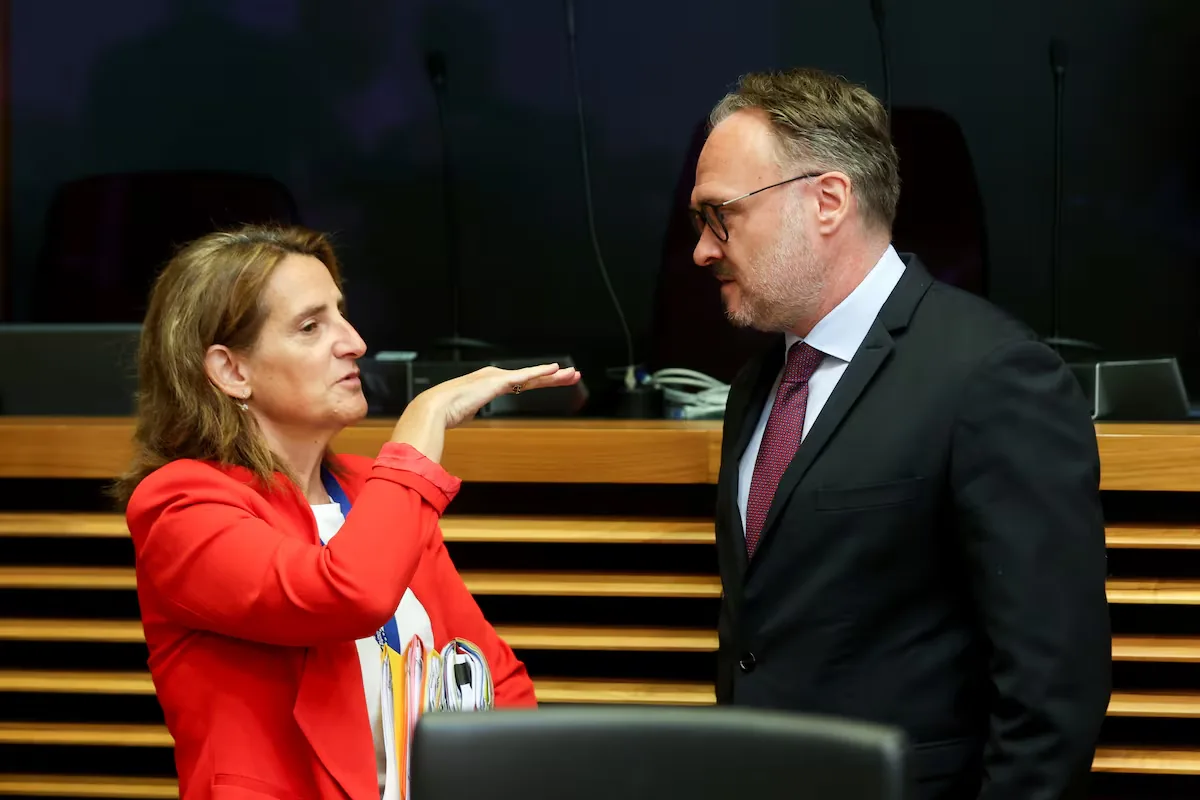
“For the first time, Europe establishes a legal umbrella to support cities in the housing crisis and shares recommendations and best practices in housing policy. This common framework is especially relevant because mayors of different political stripes, from different countries, and in very diverse contexts, have asked us for the same thing: that Europe establish a common framework that allows them to take measures to facilitate access to housing,” defends, along the same lines, the Commission Vice-President, Teresa Ribera.
“We have the obligation to join local and national authorities in their efforts,” adds the Spanish socialist, who recalled that this is the second package of measures adopted by Brussels to address the housing crisis, since last year European funds were made more flexible so that resources could be allocated to fight it.
The European Commission, which identifies several realities as reasons for the housing crisis, including changes in demand, limited housing supply, rising construction costs, or persistent productivity gaps, estimates that Europe will need to add 650,000 homes per year — in addition to the 1.6 million currently built annually — to meet the population’s needs.
Brussels, however, is realistic about the effect of the measure in the Community club, with different situations. “The effects on housing affordability will be indirect, local, and depend on the competent authorities and the broader housing market conditions,” the text acknowledges, which also notes that it expects it to reduce “regulatory uncertainty, administrative burden, compliance costs, and avoidable litigation for competent authorities, citizens, and economic operators.”