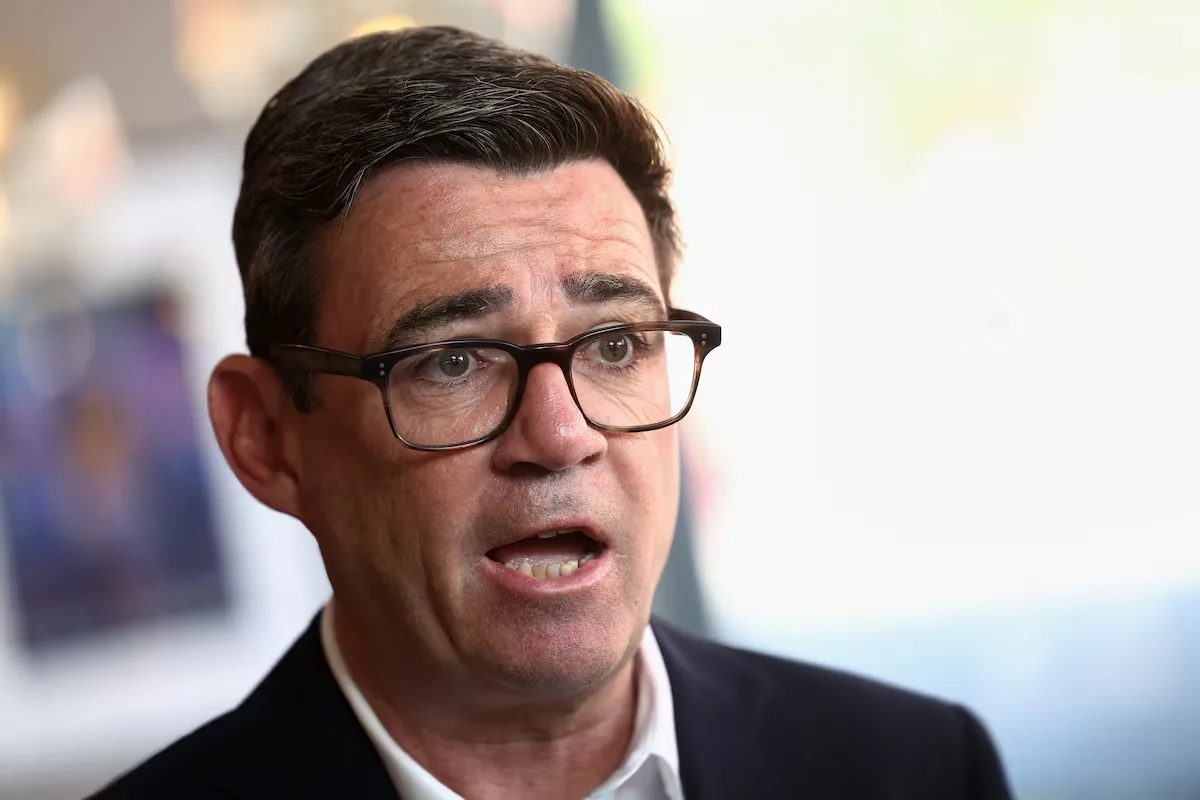
There is a political maxim that says governing is choosing, and the British Prime Minister, Andy Burnham, has chosen “not to accept that it is impossible to do more” to prevent the early release of dangerous criminals responsible for crimes that have shaken the collective conscience. His first crossroads since taking office just over three weeks ago is an inherited problem, the result of the overcrowding of the prison system in England and Wales, which had already forced the government of his predecessor to decree the early release of thousands of prisoners. Among the beneficiaries were two of the three convicted for the brutal death of police officer Andrew Harper in 2019, and faced with the controversy generated, Burnham has decided to intervene. This Tuesday, he appeared “increasingly confident” in a solution.
Read more Guide to Watching the Perseids: How, Where, and When to View the ‘Tears of Saint Lawrence’
The Labour leader has asked the Ministry of Justice to design a contingency plan to free up space in the prisons of England and Wales — under the British government’s jurisdiction, unlike Scotland and Northern Ireland, where management has been transferred — which currently operate practically at the limit of the existing 87,000 places.
The task means reversing his initial position. Last week, in an editorial in the conservative newspaper Daily Telegraph, Burnham had lamented that, although “he wanted to go further,” he could not do more “without risking the collapse of the prison system.” But social pressure, led by the family of the murdered officer, has changed the approach of a politician with an almost pathological aversion to disappointing.
Police officer Andrew Harper died at 28, just a month after his wedding, after being dragged more than a mile and a half by the vehicle in which three teenagers were trying to escape, after stealing a quad bike in Berkshire county (southern England). The driver was sentenced to 16 years and did not meet the requirements for early release, unlike the other two occupants of the vehicle, Jessie Cole and Albert Bowers, sentenced to 13 years for manslaughter. After serving half of their sentence, they could be released from prison in January, under the changes introduced by Keir Starmer’s government in response to a system practically at its limit. Under previous rules, they would have been required to serve at least two-thirds of their sentence behind bars.
Faced with the demands of Harper’s family, a spokesperson for the prime minister clarified this Monday that it was “not possible” to exclude “one or two criminals” from the rule, so the solution necessarily involved expanding prison places, to be able to deprive more prisoners of the early release program, including those responsible for the officer’s death. The Ministry of Justice had previously calculated that without the release of 6,000 prisoners, the prisons of England and Wales would run out of places in November.
Read more Rafa Jódar — Arthur Fils live, the quarterfinals of the Canadian Masters 1000 live
The options considered by the government include accelerating the deportation of foreign criminals, more than 10,000, 12% of the total prison population, with Albania, Ireland, and Poland leading. One third are awaiting sentencing or trial, which prevents deportation. Other proposals, as Burnham revealed this Tuesday, include releasing low-risk prisoners serving indeterminate sentences and using part of the female prison system to house male prisoners.
The Ministry of Justice will present the plan to Parliament once it resumes activity after the summer recess. Burnham is thus trying to overcome the first obstacle of his mandate, although the exchange of messages has created a sense of confusion, criticized by the officer’s own family. Just 24 hours before the prime minister appeared “confident” that it would be possible to intervene, his team had declared it impossible, and over the weekend, the Department of Justice insisted on the official line that limiting the early release of more prisoners would put the system at risk of collapse. His own minister, Alex Norris, publicly apologized to the victims’ families, including Andrew Harper’s.
One of the reasons British prisons are overcrowded is the lack of creation of new places. In the 14 years of Conservative governments, from 2010 to 2024, barely five hundred were created, despite the fact that in England and Wales more people are incarcerated per capita than in any other Western European country, except Poland. Furthermore, according to an independent review commissioned by the government and published last year, the narrative of “toughness on crime” has encouraged longer sentences, without considering the implications.
Read more The Trump Administration has revoked more than 175,000 visas amid its immigration crackdown