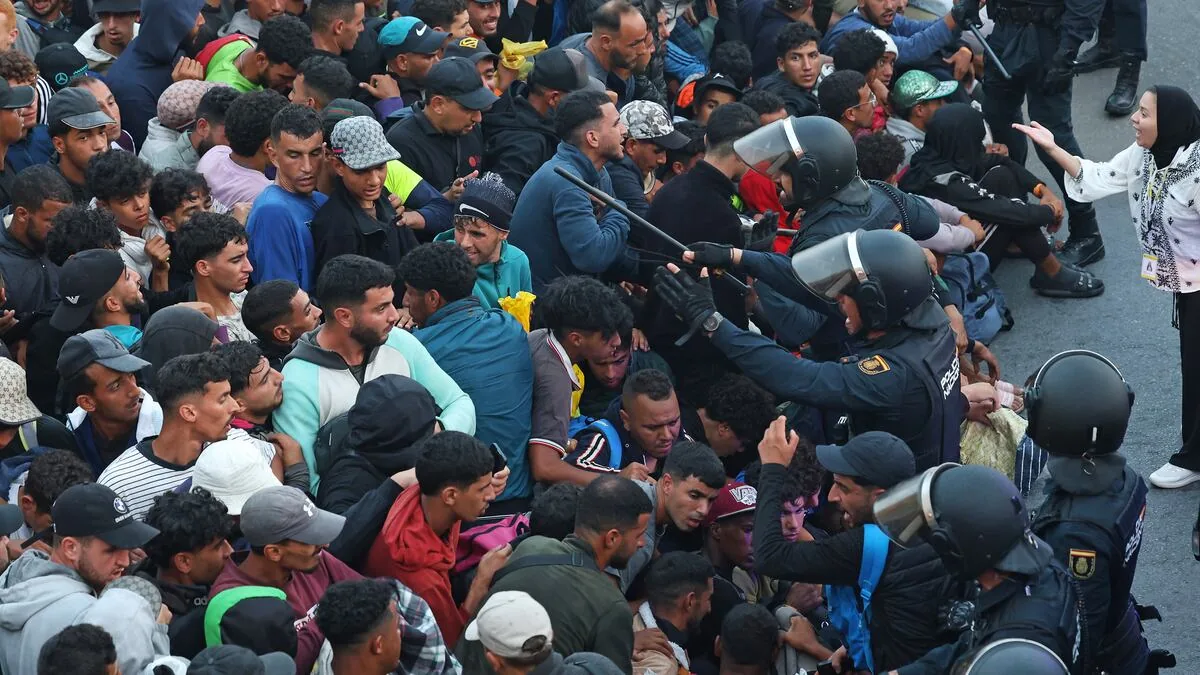
Lying on their right side, with their faces oriented towards Mecca and careful that the earth does not touch their bodies. The first 18 deceased from the massive arrival of migrants through the Ceuta border pier on July 30 and 31, in which 82 people died, all men except for one woman, were given their final burial this Friday afternoon in the Muslim cemetery of Sidi Embarek. The public burial gathered a dozen imams from the city’s mosques. Their tombstones, identified with numbers because their names and stories are unknown, are connected to a judicial case with the few data available about them: where they were found, physical characteristics, clothing, and some peculiarity that might link them to their own. Only nine of the deceased have been identified and, for now, Morocco does not accept handing them over to their families, explained the Health Councilor, Nabila Benzina. “The reasons are unknown. The funeral home has tried twice. Some families have come and have been able to watch over their loved one, but not reunite with them in their country,” she said before the burial began. Benzina assures they will keep trying, although they do not have much time because health recommendations must be followed.
Read more Civil Protection maintains the Inuncat plan alert and warns of torrential rains in Tarragona
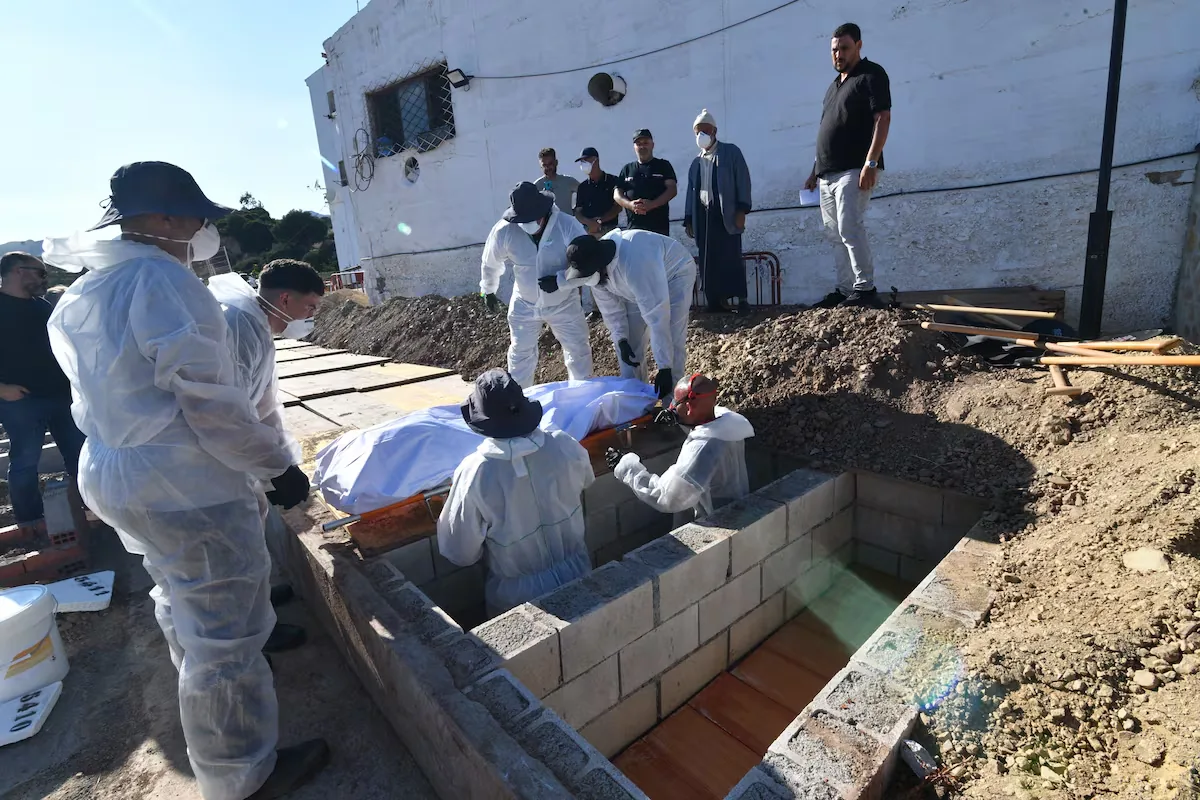
The ceremony started before the five to six prayer and ended at eight. Hours earlier, the space they were going to occupy was already prepared, in an extension area of the cemetery. A pit with cement walls contained their graves. It was covered by wooden planks and had several piles of sand nearby. The humid heat of the afternoon made six gravediggers, equipped with coveralls, gloves, and masks, gesture asking for something to cover their heads and water. On the right side, 18 triangular tombstones marked with their respective numbers, from 5,408 onwards, awaited. On the sand, about ten shovels, hoes, and rakes.
“We have called all the staff,” explained Councilor Benzina. The city’s only Muslim cemetery holds an average of 20 funerals a month and in a single afternoon 18 people were buried, indicating the extraordinary nature of the situation. “We have never done anything like this,” she said.
The first deceased were taken out of the hearse at 18:23, in four white funeral bags. The gravediggers placed them on four orange stretchers. A dozen city imams began to pray and continued while the body was lowered into the pit. “There is a supplication that is always recited when a burial is about to take place: ‘In the name of Allah and upon the religion of the Messenger of Allah.’ Then they continue with aleyas (verses) from the Quran chosen by the imam who has the most authority or respect in the group,” explains Navil Rahal, city councilor and former cemetery gravedigger. “They all go the same, they are shrouded, they are prayed for. There are no rich or poor,” he adds.
Read more Gil Marín: “We are going to help Julián, we need him to compete among the big ones”
After placing them in their graves, they covered their bodies with rectangular clay bricks and began filling the grave with sand. The solemnity was not without system; the cemetery workers shoveled and at the same time sprayed water to reduce dust. “The earth must not touch the body, there is a chamber inside, as if he were sleeping inside,” they detailed. The city’s Muslim cemetery is expanding continuously because the deceased cannot be buried one on top of another, as in niches, explains Rebeca Benarroch, general director of Health.
The second group of deceased began to be buried at 18:51. The process was repeated with variations in the aleyas. Doctor Cleopatra R’kaina and nurse Caridad Blanco were there, as mortuary police. Blanco explains that the sack in which they were buried covers the shroud of the deceased and is made of zinc, a resistant material that allows, in case an exhumation is necessary, to keep it in good condition. In the grave, they also poured several scoops of a product called Biosac, to neutralize bacteria and odors.
When it ended, all attendees made new supplications. A group of young Maghrebis who claimed to have arrived in the city by swimming, though with better luck, joined in.