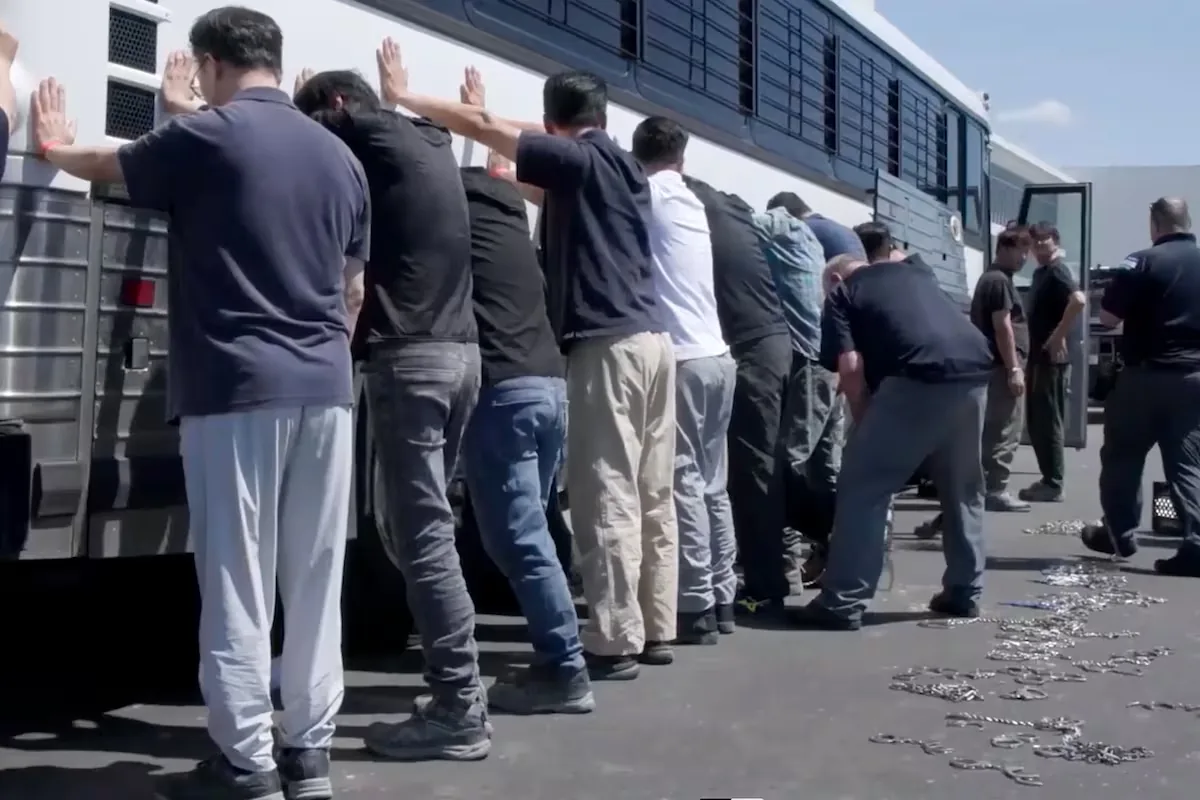





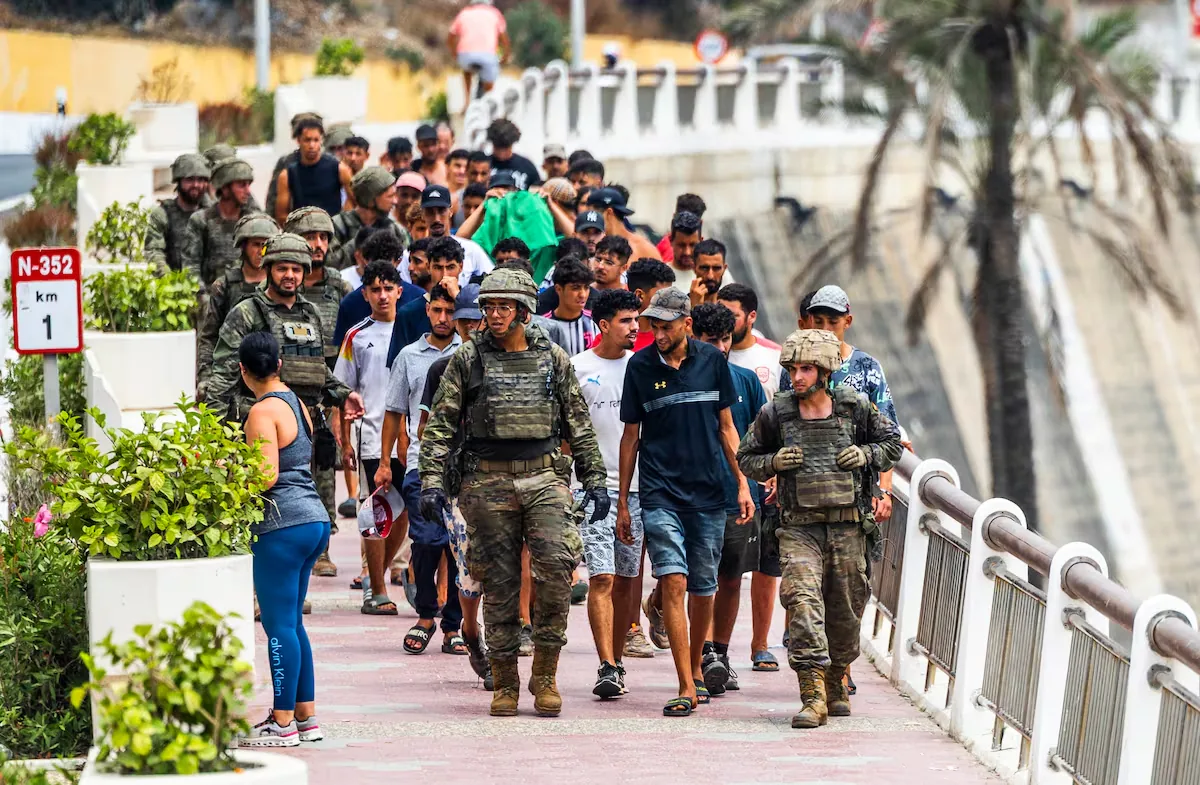
Ceuta has regained some of the calm stolen by the massive entry of thousands of Moroccans in an unprecedented crisis. On the streets, young people with bags were still seen wandering back and forth this Saturday, but in much smaller groups than in the previous hours. In the preceding days, up to 60,000 Moroccans managed to set foot in the autonomous city — with Thursday being the day of massive arrivals with numbers never before recorded — but since Friday the migrants have been returning the same way. Access has been stopped from Morocco and only sporadic attempts have been recorded. The massive entry, which has left at least 67 dead, kept the city of Ceuta on edge, with the Army deployed and the Civil Guard organizing the huge human flows. The pressure cooker that Ceuta became is beginning to ease. But political tension is rising.
Shops, bars, gas stations, all businesses that had closed tightly have been timidly reopening and some food stores were selling products to migrants crowding at the gates, from where they could pick them up (since shopkeepers did not risk letting dozens of people enter their establishment at once). In addition to the border closure by Moroccan agents completed in the afternoon, Spanish security forces have deployed since early morning a pneumatic barrier about 500 meters long next to the Tarajal border jetty, between Ceuta and Castillejos, to further slow the arrival of migrants and “provide a temporary response while waiting to see exactly what legal changes we need to make,” said the Prime Minister on Friday.
Pedro Sánchez’s government attributes much of the problem to the Supreme Court ruling issued three weeks ago, in which the high court bans hot returns of migrants intercepted at sea who try to swim into the autonomous cities, as an interpretation of the laws. The government also blames the massive entry on the “mafias” that traffic in people. These reasons were emphasized by the Interior Minister, Fernando Grande-Marlaska, this Saturday, in his appearance from the autonomous city after meeting with those responsible for the operation. The minister highlighted Rabat’s cooperation, stressed that Morocco “is not a threat,” and praised that La Moncloa has reversed “the situation in 24 hours.”
In the early hours of the morning, videos from citizens showed how the deployed Army soldiers in Ceuta and police officers were herding groups of young men to redirect their steps to the border, where a few hundred people continued to leave this Saturday, heading to Morocco. Some soldiers entered neighborhoods giving instructions with loudspeakers with the same goal. The aim was to clear the streets and push immigrants to return.
Certain unease
Amid the returns, the citizens are regaining some normality, although the people of Ceuta, as their president, the Popular Party’s Juan Jesús Vivas, has said, still live with some unease. Some see several youngsters sleeping or sitting at their doorsteps at dawn and that generates distrust. Interior has denied rumors of any knife attack. This humanitarian crisis has also seen church doors closed, but this morning, in the city center, some displayed velvet banners and had decorated their interiors to commemorate the Virgin of Africa on her big day. Religious events can be held, but the fair in honor of the patron saint has been canceled. The city presidency apologized and asked for understanding from citizens and business owners, many of whom will incur losses due to this setback. The circumstances, the authorities said, do not allow the festive events to proceed as planned.
The city still lacks rhythm. Taking a taxi is still complicated. Hotels are full of police and specialized security and rescue teams, as well as forensic personnel and staff who have come from the Peninsula to assist in collecting bodies and their identification. Journalists from all over have also arrived, setting up their tripods in front of the border post to record how this morning the buoy rope was placed to extend the jetty out to sea, making it harder for migrants to enter as has happened these days.
Those who try to swim will have to go even further, into open sea, to bypass this new obstacle if they want to enter without being penalized with an immediate return. All this, as humanitarian NGOs warn, only contributes to having more deaths underwater, but for the governments these are deterrent elements that, they trust, will prevent another massive entry like last Thursday.
In fact, the work of placing the aquatic containment buoy was mixed this morning with the efforts of Civil Guard agents who were striving to recover the bodies of people who lost their lives in the massive arrival to Ceuta on Thursday. At least 67 people have died, a number that has not stopped growing over the hours. Agents from the Maritime Service of the armed institute and divers from the Special Group of Underwater Activities were engaged in detecting and retrieving the deceased from the bottom off the El Tarajal border, where numerous journalists, many from international media, record the work and broadcast their movements live.
“There are more dead at sea,” laments a police source. During the morning, agents recovered about ten bodies and continued spotting more fatalities, some in small groups, according to consulted sources. On the other side of the border, Moroccan agents are also recovering fatalities at sea, the same sources maintain.
Political quarrel
While the situation in Ceuta calms down, the political quarrel begins to heat up. After demanding in recent hours in various statements that the immigration law be reformed to “guarantee rejection at the border for entries by sea” and also requesting the urgent appearance of Pedro Sánchez in Congress over the Ceuta crisis, Alberto Núñez Feijóo traveled this Saturday to the autonomous city, from where he harshly criticized the Prime Minister. The PP leader appeared alongside the Ceuta leader, the Popular Juan Jesús Vivas, who dedicated all kinds of praise to him before his party leader’s speech.
Feijóo has stated that the entry of thousands of people is a “premeditated occupation” of which La Moncloa was aware and blamed the government for a “Spain invaded” by the massive regularization of irregular immigrants, reports Virginia Martínez. From the PSOE, their spokesperson Montse Mínguez censured the “political opportunism” of the Popular Party. This Sunday, it will be the president of Vox, Santiago Abascal, who will travel to Ceuta after canceling the trip for the investiture in Colombia of the ultra Abelardo de la Espriella.
Read more It’s about walnut