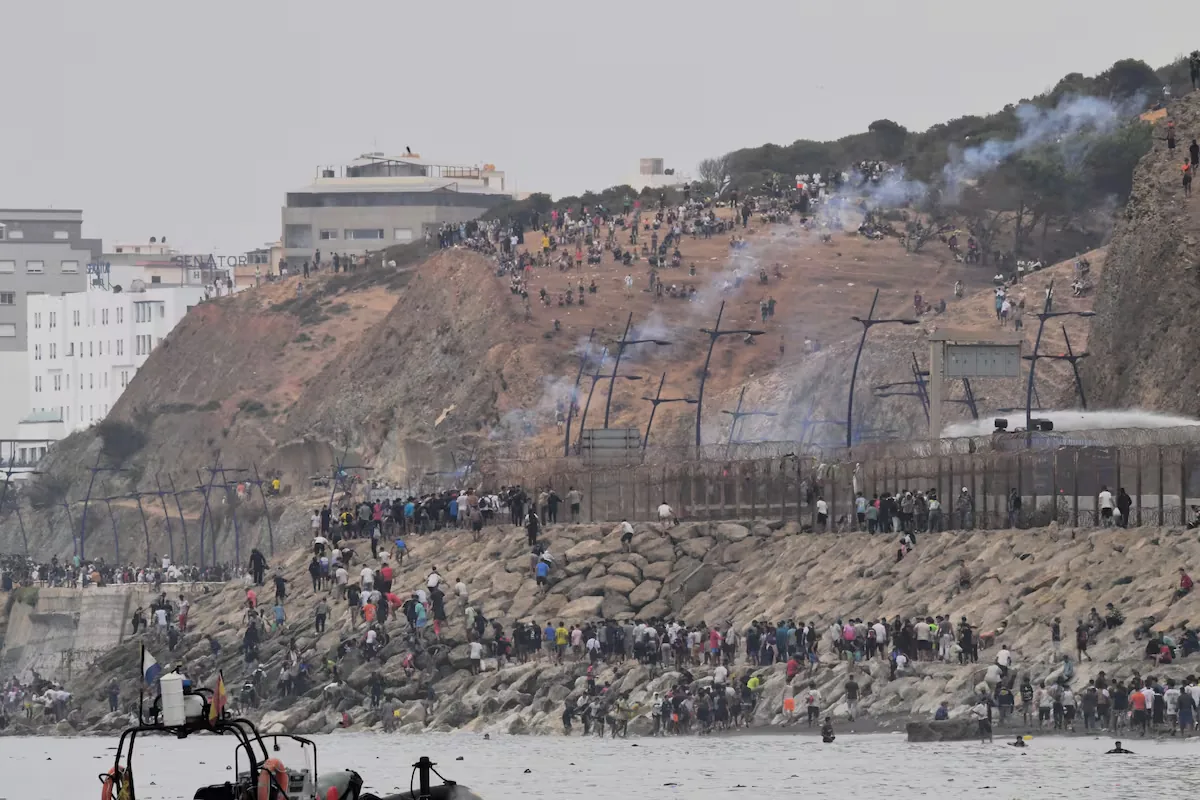









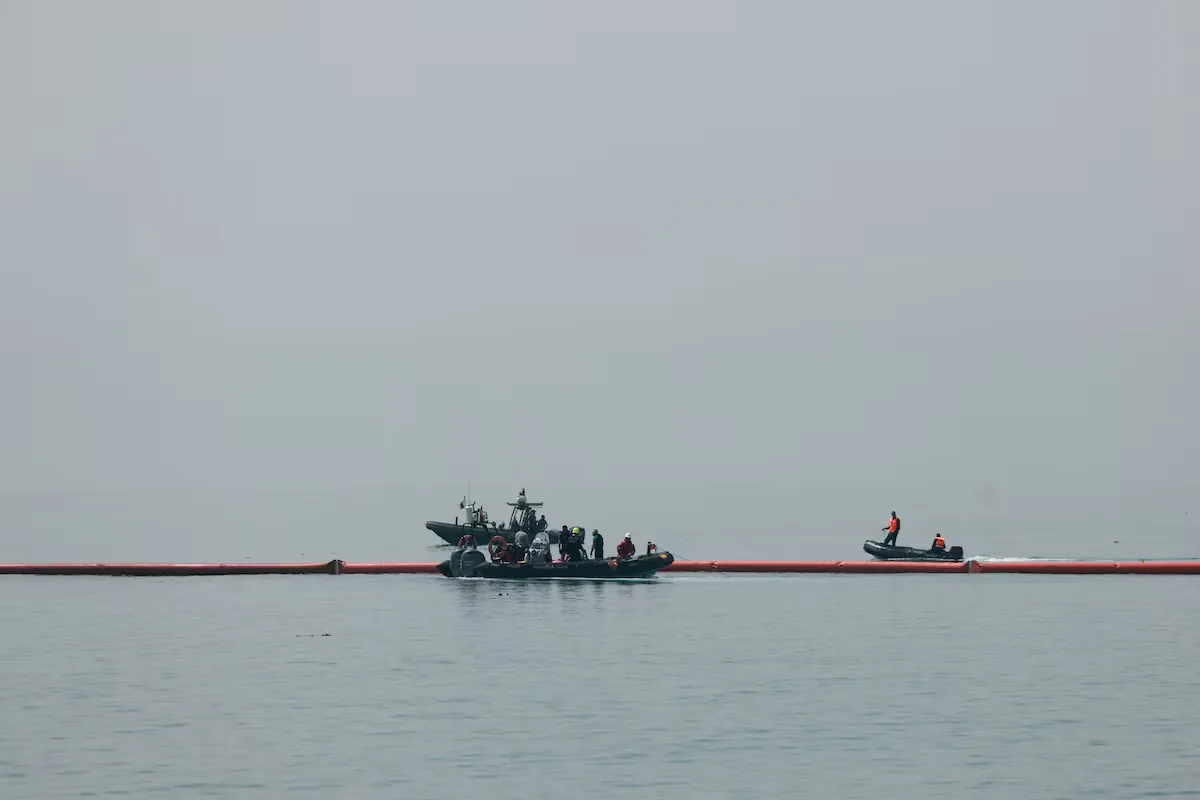
Spanish security forces have deployed an inflatable barrier about 500 meters long next to the Tarajal border pier, between Ceuta and Castillejos, to stop the arrival of migrants. Sources from La Moncloa consider that, in addition, with this installation it will be possible to return to Morocco those who overcome it, without violating the Supreme Court ruling that determined that this measure cannot be executed with those who enter by swimming into this autonomous city and Melilla, since the magistrates concluded that the express rejection is only applicable to those who try to enter “by overcoming the established border containment elements, such as fences.”
Read more It’s about walnut
The placement of the new floating barrier, as well as the presence of the Army and the large deployment of maritime resources, have already stopped the entries of people into Ceuta. On the afternoon of this Saturday, only some sporadic attempts are recorded. According to police sources and confirmed by EFE, about a dozen maritime units, from both Maritime Rescue and the Civil Guard and the Moroccan Royal Navy, are stationed near the pier.
The floating barrier, installed by the Ministry of the Interior, has a surface height of 30 to 70 centimeters and a submerged part up to one meter deep. This structure is combined with a first line of anchored buoys provided by the Navy. This containment element, along with the presence of the Civil Guard, has prevented any new illegal entry of migrants into the city, despite a small number of people trying by sea, who have been intercepted by Morocco; according to security forces.
Sources from the Ministry of the Interior reported this Saturday the start, at 7:50, of the installation of containment barriers on the Tarajal pier. La Moncloa considers that this measure allows the recovery of so-called hot returns of migrants who irregularly access Spanish territory by sea. The President of the Government, Pedro Sánchez, already announced on Friday that there would be a “deployment of buoys on the pier to comply with the Supreme Court ruling.”
Read more The promise of eternal youth: a multimillion-dollar business not without dangers
Border returns are regulated in the tenth additional provision of the immigration law, which states: “Foreigners detected on the border line of the territorial demarcation of Ceuta or Melilla while trying to overcome the border containment elements to cross the border irregularly may be rejected in order to prevent their illegal entry into Spain.” In a recent ruling, issued on the case of a migrant who appealed his delivery to Moroccan authorities after being intercepted in international waters in 2024 while trying to enter Ceuta by swimming, the Supreme Court interpreted that rule and concluded that it cannot be applied to those who access the autonomous cities without overcoming any containment element. However, the court added that “nothing would prevent that, if containment elements were established in the sea to protect the border line” in the water, express rejection could be applied “to those who intended to cross the border irregularly by overcoming those maritime containment elements.”
For his part, the president of the PP and leader of the opposition, Alberto Núñez Feijóo, has called the Government’s measure to install a 500-meter containment barrier on the Ceuta pier in the sea “ridiculous.” “If buoys are valid now, why weren’t they put much earlier?” questioned the popular leader.
Read more Remco Evenepoel wins his fourth San Sebastián Classic and breaks Marino Lejarreta’s record