









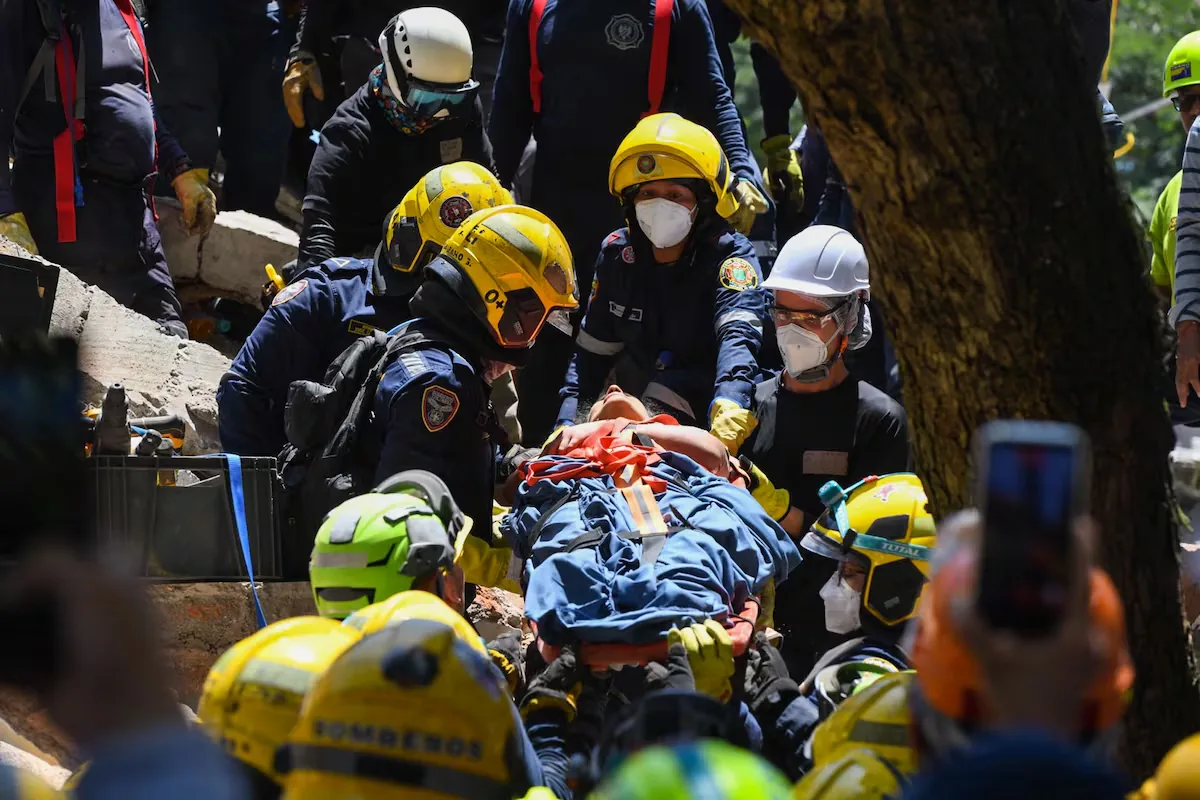
The mayor of Pereira, Mauricio Salazar, cannot hold back tears when talking about his neighbors: his municipality accounts for 73 of the 224 deaths caused so far by Monday’s earthquake. A TV reporter ends up consoling him live. Shortly after, he breaks down again in front of the microphones. The affected populations are torn between shock and the urgency of getting survivors out from the rubble. The first 72 hours, the deadline given by rescue experts before hope begins to fade, will soon arrive.
Read more Marta García wins the silver medal in the 5,000 meters
The long tremor, measuring 7.4, has left at least four departments in southwestern Colombia with dozens of collapsed buildings, thousands of uninhabitable homes, and a number of missing persons that changes with each update. Just 24 hours after the quake — which was felt for four eternal minutes — rescue efforts continued in the most affected regions with the help of heavy machinery, rescuers, and military personnel.
Pereira, the gateway to the Coffee Axis, one of Colombia’s most sought-after tourist destinations, experiences a strange normality. Most businesses in this city of over 800,000 inhabitants are closed, but traffic is heavy despite mobility restrictions. Ambulances can be heard occasionally. Few. Some of its residents cook in huge pots heated on makeshift fires in the street.
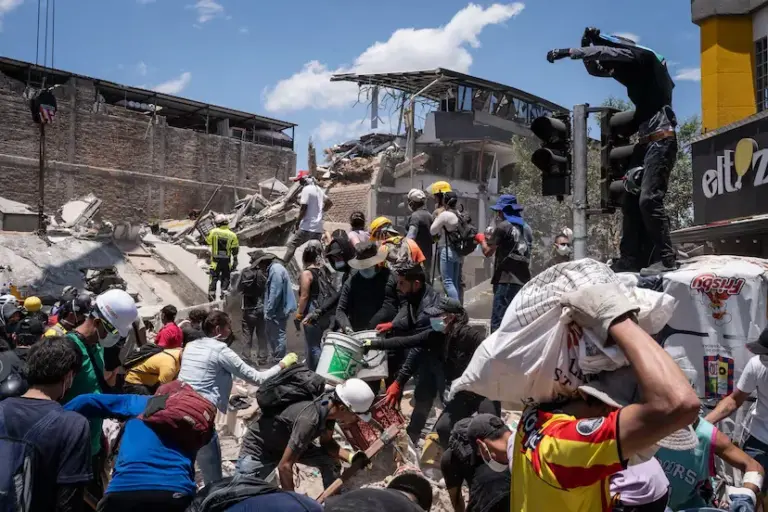
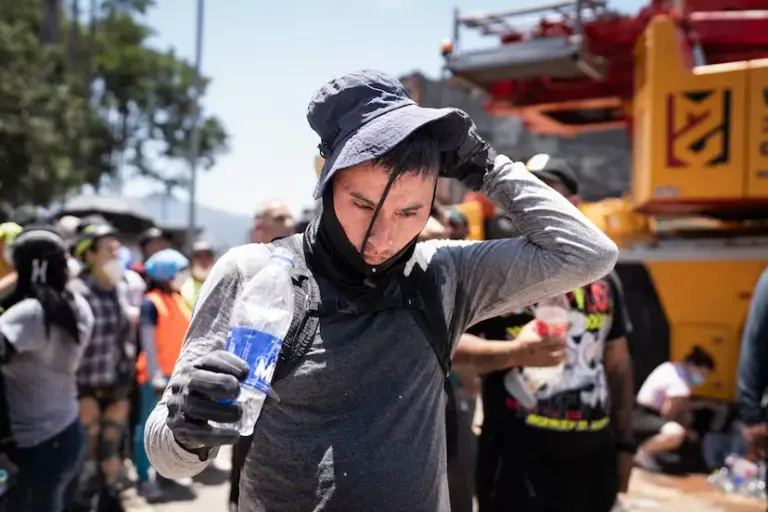
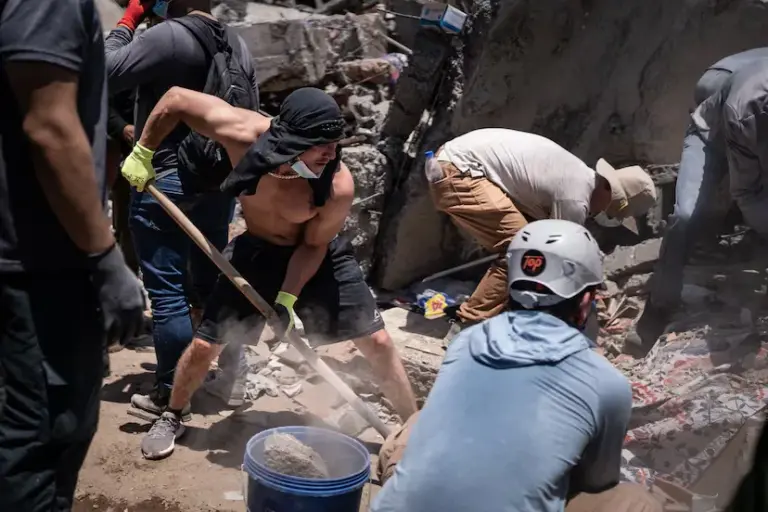
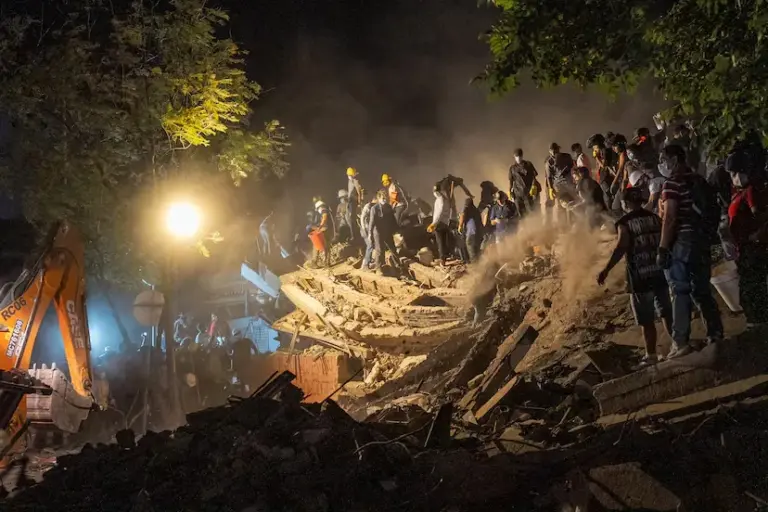
In an area that on a normal night would be frightening, this Tuesday dozens of men were searching for Luis Carlos Valera, the barber, 60 years old and without close family in the city. The place where he worked was crushed under the remains of a rundown hotel, costing 8,000 pesos or two euros per night. Among his rescuers are firefighters, neighbors, and small-time criminals from the neighborhood. “Silence!” they shout. They wait for any sound to know where to look. “Luis Carlos, knock if you hear us,” one of them asks. Something is heard, imperceptible, and they keep digging. “Give us instructions and we will follow them,” politely requests the leader of the improvised rescuers.
Fire Captain Luis Reyes walks around the area trying to organize efforts. “Don’t waste yourselves here, the only sign of life we have is on the other side of the building,” he pleads to a group of workers hired by an unknown man. They say the barber shouted something a few hours after being buried. Reyes is actually looking for the “pluma”—as he calls the sector leader, an equivalent authority who receives the same name as the head of a prison yard—the only one capable of coordinating and calming those bad men he needs on his side. “It’s a delicate environment,” explains the firefighter.
Despite the urgent deployment of heavy machinery and public forces, there are places in Pereira where more organization is still needed. “Police are needed here to organize this disorder. Do you know why? Because there is no institutional presence and we don’t want accidents,” warns Reyes, a local official, while two men navigate the ruined street with a washing machine full of clothes. He is not a novice: he attended the 1999 earthquake, which left more than 1,000 dead in the same region, has trained internationally in collapsed structure rescue, and has been an instructor in that specialty in other Latin American countries.
Normal life is paralyzed, but everyone is in motion. Including President Abelardo de La Espriella, who during his brief visit to Pereira on Tuesday morning said his heart ached seeing so many businesses destroyed in the city center. The president announced the exemption from public service payments for three months and subsidies for those who lost their homes. The Finance Minister announced shortly after that the Government will declare a state of economic emergency to address the tragedy.
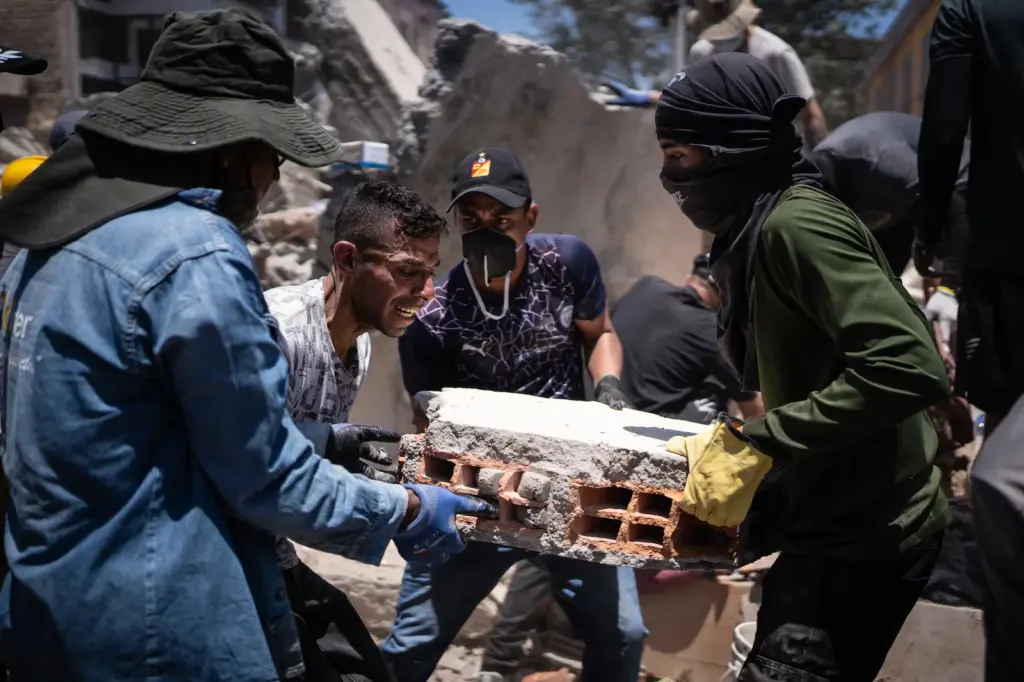
Meanwhile, the search for the missing continues on the street and on social networks. Messages multiply in WhatsApp groups. “Henry Palacio and Sonia de la Pava, two elderly people, are being searched for, there has been no communication with them. They were at the Verona I Residential Unit in Pereira.” “The Lozano Mora family is being sought in Cali, help us find them.” Among the people who have not been located after the earthquake are 164 Spaniards, according to the Minister of Foreign Affairs, José Manuel Albares.
In Cali, authorities are looking for at least 21 missing persons. Among them are Violeta, 7 years old, and her grandmother Amparo. There, as in Pereira, after the earthquake the city entered an emergency operation that mobilized thousands of people among rescue organizations, security forces, and citizens who spontaneously went out to help. With nearly two million inhabitants, its death toll approaches one hundred, according to the most recent data.
By around nine Monday morning, less than an hour and a half after the tremor, firefighters were already climbing the mountains of ruins. One of those who attended the emergency in La Alameda, a popular commercial area in the city center, said he arrived on his own as soon as he could. Many of the rescuers crowding there were volunteers, spontaneous people who mobilized organically. The scene was repeated in other places.
Marlene Carrillo, a 70-year-old woman, recounts how she experienced it in the Cuarto de Legua neighborhood, in the southwest and less than a kilometer from the auditorium where, the previous Friday, the president of Colombia, Abelardo de la Espriella, was sworn in. “The response has been very quick. Shortly after everything happened, people started arriving to help get those inside out,” she said about the collapsed buildings on the city’s slopes, the most affected area.
Read more Venezuela and Israel resume their consular services 17 years later
Rescue teams have organized the work, coordinating volunteers. Entire families have formed human chains to remove debris with their hands. It is a spontaneous cooperation that has relieved the inhabitants of the country’s third most populous city and goes beyond rescues. Amparo Olarte, in charge of regulating traffic at an intersection where a building collapsed, a veterinary clinic where apparently three people are trapped, explains it this way: “People’s solidarity is great. We have received food, water; there are plenty of hands to help.”
This is not an isolated voice. “The collection centers are full of food and water. There are many people willing to help, doctors, ordinary people like me who come to assist as best we can,” agrees Angie Osorio, a resident of the El Trébol neighborhood in the northwest of the capital of Valle del Cauca, reports Isabella Bernal Vega from Cali.
Meanwhile, in Chocó, the nearby but impoverished department where the earthquake’s epicenter was located, the search is progressing more slowly. A territory with connectivity difficulties, much more rural and sparsely populated, currently counts 13 fatalities. De la Espriella visited it on Tuesday and has left the Army commander there to coordinate efforts and serve as a liaison between the national Executive and local authorities.
This is the second major earthquake to shake the region in just over 50 days, after the double quake that left more than 6,300 dead in Venezuela. Comparisons between the two tragedies are multiplying on social networks. Some praise the efficiency of Colombian authorities compared to Venezuelan ones. Others recall that, just like in the neighboring country, here too it has been the people themselves who have pulled their own out with their hands and blame journalists for interpreting that neighborhood effort as a sign of indifference from Delcy Rodríguez’s Government, rather than as proof of a supportive and active society.
Both quakes are very different, both in nature and in the type of buildings affected and, consequently, in the number of victims. And also in the response of each State. In Venezuela, the magnitude of the earthquake overwhelmed everyone and access to the site was only possible via a single route that collapsed without authorities being able to prevent it. In Colombia, night curfews have been decreed in Pereira and Cali, and soldiers, police, firefighters, volunteers, and machinery have been quickly deployed, despite several devastated areas that are very distant from each other. Roads throughout the affected region face several blockages due to landslides and rockfalls; some bridges have collapsed or been damaged, and airports were closed, although they have been reopening as major damage is ruled out.
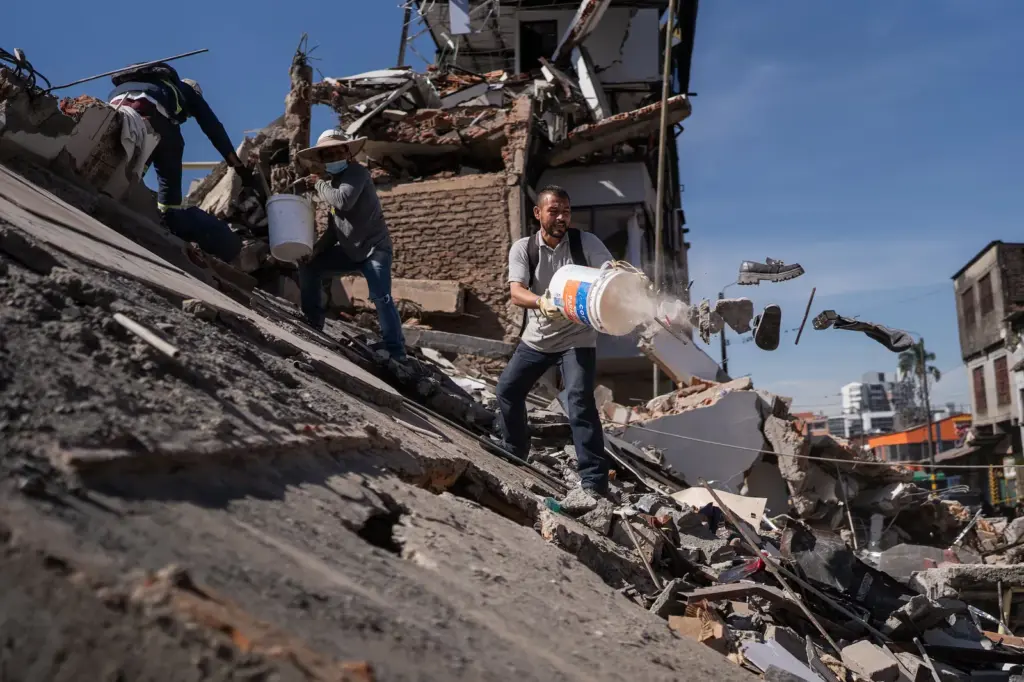
In Quibdó, the capital of the jungle department of Chocó where at least nine people died, the governor flies drones with the military in search of victims, although she requests machinery to remove debris. In Cali, perhaps the most affected city, more than 1,600 people gathered in the first hours including firefighters, Red Cross members, USAR teams (specialized in search and rescue), police, and military. Cranes, that unicorn so hard to find in La Guaira, the zero zone of the earthquake in Venezuela, have been in front of buildings just hours after the shake.
On the other hand, the international aid coordinated by the UN, which was fundamental in Venezuela, has not even been requested in Colombia. De la Espriella’s Government, which accuses the multilateral institution of being “globalist,” has not organized the reception. The Chinese ambassador has publicly asked to define a contact person for it. And Nayib Bukele, the president of El Salvador, whom the newly inaugurated Colombian president has shown to follow, explained that Colombia says it does not require aid for rescues. “We have been informed that their rescue teams, doctors, and other emergency bodies are deployed and attending the situation, so at this moment, they do not require personnel support,” he wrote on X early Tuesday afternoon. He reported that he is sending, then, 100 tons of humanitarian aid, supplies, and no experts.
Abelardo de la Espriella, who faced the earthquake on his third day as president, has found in the earthquake a perfect showcase to sell his new Government. The president coordinated with governors and mayors, distributed the strongmen of his cabinet to the most affected regions, and spent the day updating data on the dead, missing, injured, trapped, rescued, and damaged infrastructure. Despite this, there is no centralized and updated figure of the damage. If by late morning the president spoke of 181 dead, the Association of Capital Cities had that same figure earlier only in its affiliates, such as Pereira and Cali, while other authorities add dozens more in other places.
He also traveled: from Barranquilla to Bogotá to organize, then to Quibdó, and on Tuesday to Pereira. He did not miss the opportunity to deliver religious and propagandistic speeches, but he has been touring all the affected regions, part of his promise to govern in the territory and not at the desk. Late Monday night, when dozens of people were still searching for survivors with flashlights, former president Gustavo Petro recommended watching the second season of One Hundred Years of Solitude on Netflix.
Read more Luca Hoek transports to Spain the first world of speed