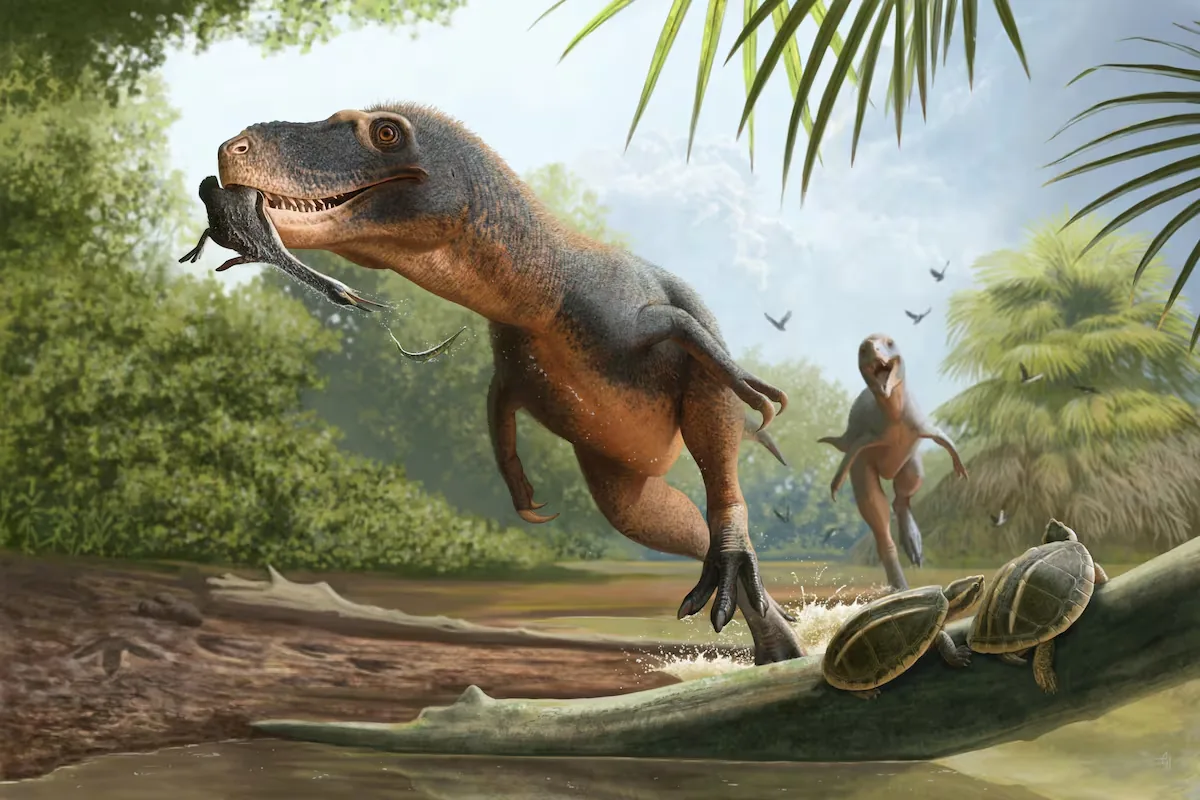









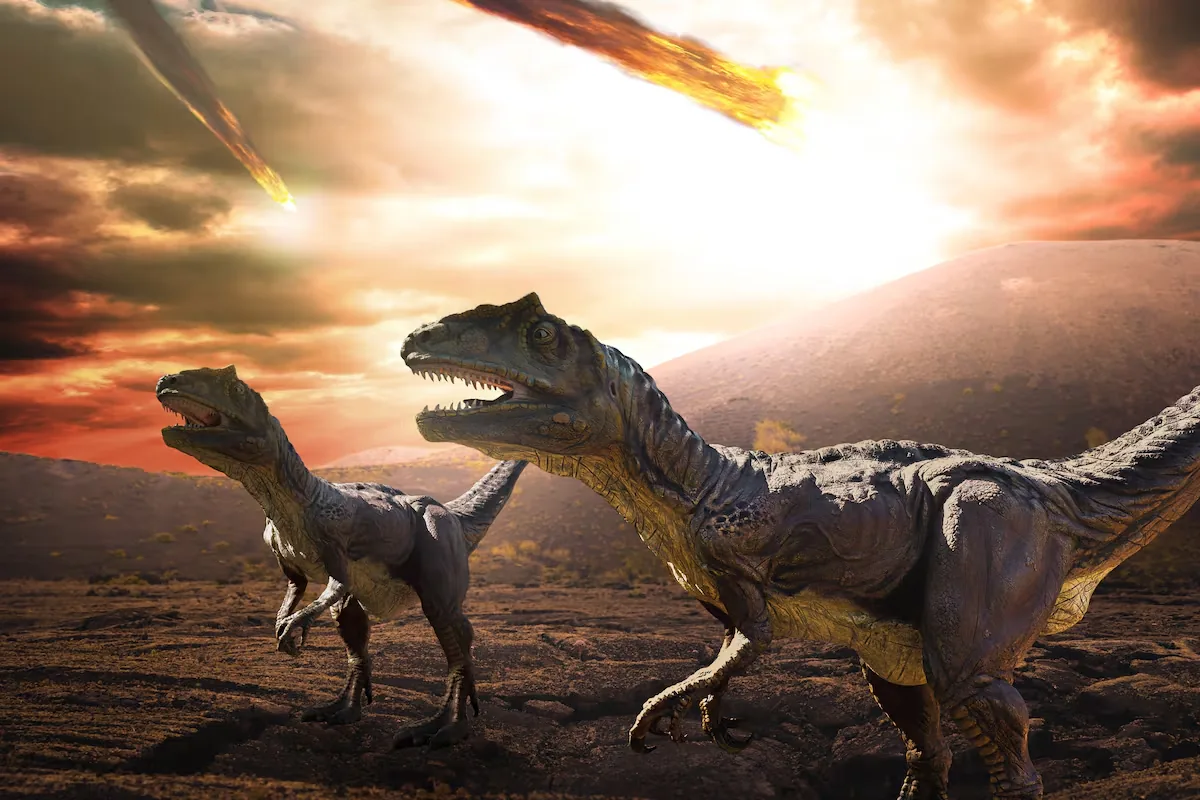
Dinosaurs, which dominated the planet for tens of millions of years, could have disappeared in hours. The asteroid impact about 66 million years ago turned the Earth into a hell on its very first day. But specialists in the cataclysm do not agree on what happened afterward. For some, the energy released by the collision caused a series of cataclysms around the planet (global fires, megatsunamis…) that wiped out most terrestrial life. For others, the atmosphere filled with dust that blocked sunlight, as happens with large volcanic eruptions, causing a decades-long winter. But a new study assigns this dust an immediate deadly role: it turned the planet’s surface into a grill where the dinosaurs were burned.
Read more The Popular Party attacks Pedro Sánchez’s «insulting triumphalism»
The impact near what is now the Yucatán Peninsula (Mexico) disintegrated the asteroid, a body about 12 kilometers in diameter, but also a huge portion of the impact zone. The authors of this new work, published in Journal of Geophysical Research: Biogeosciences, estimate that it vaporized more than 1,000 cubic kilometers of material, mainly composed of rock turned to vapor and soil particles, but also all the animals and plants in its path and the meteorite itself.
“Part of the rock vapor and spherules escaped into space and never fell back to Earth,” says Brandon Johnson, an expert in craters and planetary impacts at Purdue University (United States) and the study’s lead author, in an email. But most of both elements, which reached from thousands to tens of thousands of kilometers above the Earth’s surface, ended up returning to the surface. “The spherules can pass through the atmosphere and separate from the rock vapor as they are slowed down by drag forces”; this different behavior is key to what followed.
The spherules, no larger than a grain of sugar, generated heat through friction with the atmosphere during their descent, similar to what happens with the reentry of rockets and human capsules. Their presence in substrates worldwide has helped scientists determine the exact moment of the impact, as well as explain the global fires that occurred afterward. But much of the material, especially what remained of the asteroid, would not have behaved the same way: according to this study, it did not condense into spherules but remained as a very fine dust cloud that ended up enveloping the entire planet.
“All that enormous kinetic energy has to go somewhere and, in the end, it transforms into heat,” Johnson recalls. But the dust cloud, several millimeters thick, would have prevented it from dissipating upward in the atmosphere, reflecting the heat back toward the ground. The researchers estimated that the amount of radiation was 17 times higher than what is necessary to kill a human being. “That was what killed the dinosaurs and other animals. It was not the shockwave of the impact nor the fireball, because those effects do not reach very far,” the American researcher adds.
Read more Netanyahu meets with Trump amid efforts to return to negotiations with Iran
Alexandria Johnson, a professor in the Department of Earth, Atmospheric, and Planetary Sciences at Purdue and co-author of the study, analyzed the physical properties of individual dust particles and the cloud as a whole to determine their radiative properties. Her conclusion is dramatic: “We found that the dust layer was so impermeable to radiation that it trapped virtually all the heat generated by the fall of the spherules near the planet’s surface. It’s as if the dust acted like a pot lid.” Only animals that could take refuge underground, such as early mammals, fish in non-surface waters, or some avian dinosaurs, would have survived the hell.
But the dust not only intensified the lethal heat. Its effects continued long afterward, but in the opposite direction. Over time, the heat was lost, but sunlight would continue for years or decades without fully reaching the surface, causing a very long winter. Simulations in previous studies indicate that the global average temperature dropped 20 degrees and remained so for about 30 years. It must have been the final blow marking the end of an era, the Cretaceous, the age of the dinosaurs.
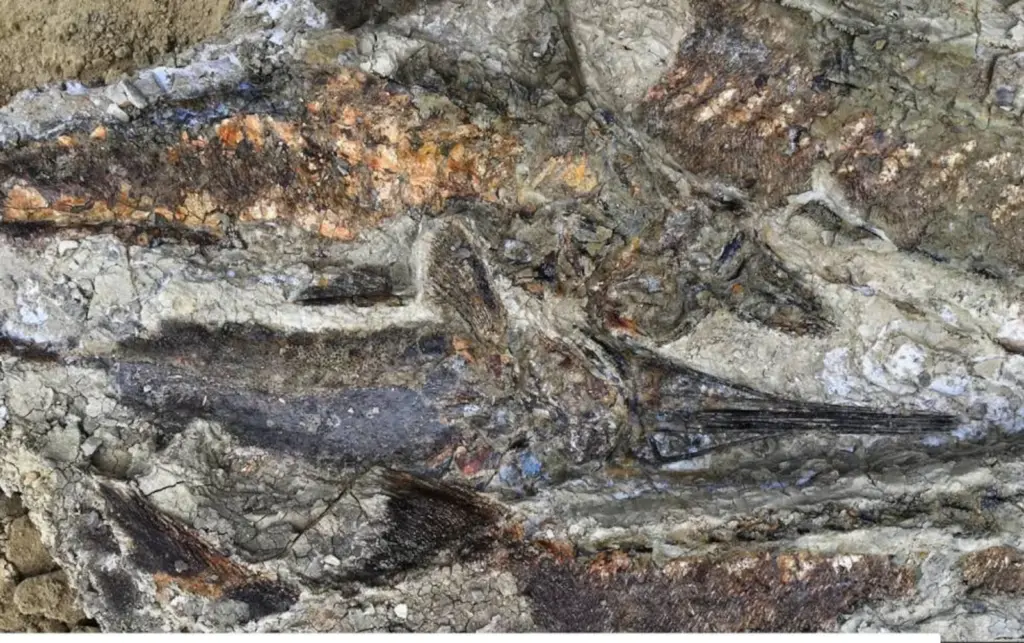
The Johnsons (Brandon and Alexandria) and other co-authors believe that global fires were the main cause of mortality, but acknowledge that they rely on only one major site, Tanis in North Dakota. There, 3,000 kilometers from the impact zone, they discovered the most consistent evidence of the event, with countless animals that died almost instantly, including many fish with spherules in their gills. The death layer lies beneath a thin layer of extraterrestrial dust, the one analyzed now.
“It is possible that, over time, we will end up finding evidence of truly global wildfires,” says Alfio Alessandro Chiarenza, a paleontologist at University College London, who did not participate in the study. “Simply, for now, we do not have them yet,” he adds in a statement. If found, generalizing the almost instantaneous deadly role of the dust layer could determine whether the great extinction at the end of the Cretaceous and the start of the Paleogene was a matter of hours (due to the scorching heat), years or decades (due to subsequent cooling), or a combination of both processes. “It would be fantastic to find out which animals managed to survive immediately after the impact and what their biological characteristics were. That could finally explain why some animals survived while others, like the dinosaurs, did not,” Chiarenza concludes.