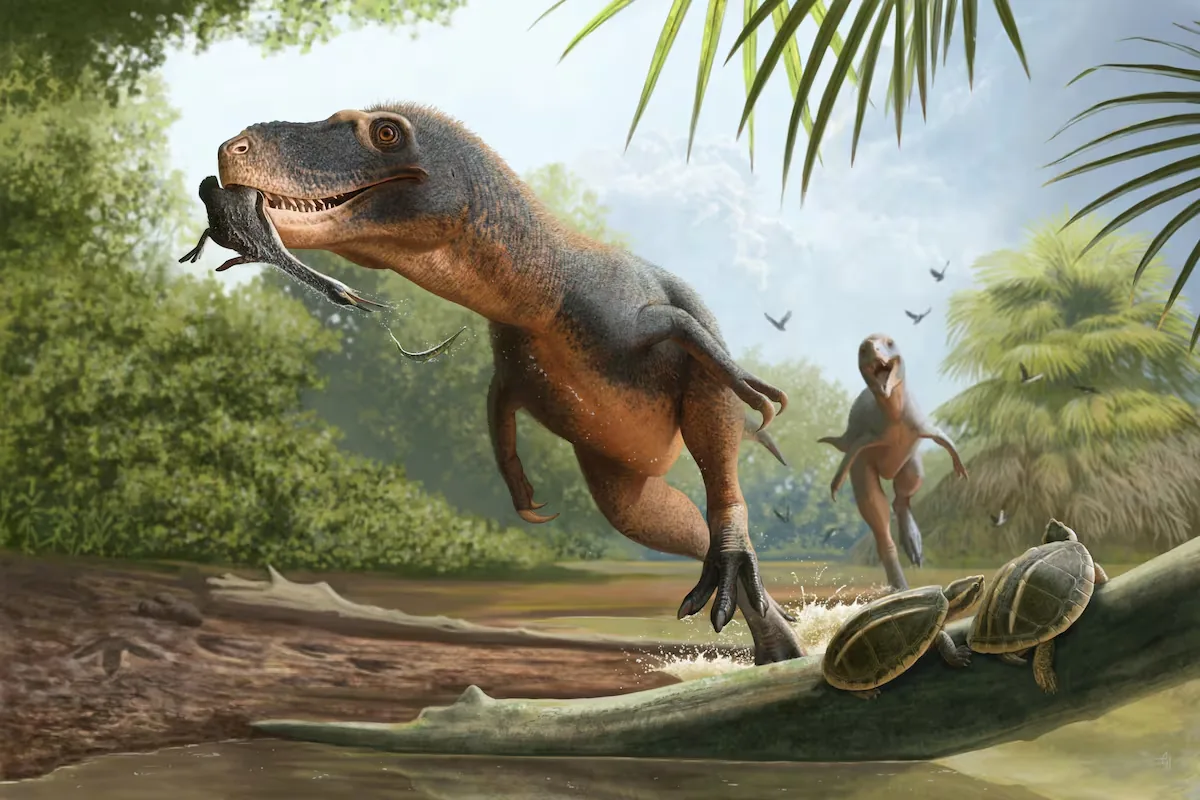
One day in 2016, paleontologist David DeMar got very lucky. While examining the ground at Hell Creek (Montana, USA), he found a fossil the size of a golf ball. It was a coprolite — fossilized feces — from a theropod (probably a young specimen of Tyrannosaurus rex or a Nanotyrannus). Inside, the coprolite contained a feather from a water bird (not related to modern birds) that, with high certainty, spent the last seconds of its life in the digestive system of a teenage T. Rex. That bad luck for the primitive bird, however, has allowed a team of paleontologists to reveal, in an article published this Thursday in the journal Current Biology, that anatomically modern feathers already existed 66 million years ago. This may provide new clues about why the ancestors of the birds we know today survived and why other lineages went extinct.
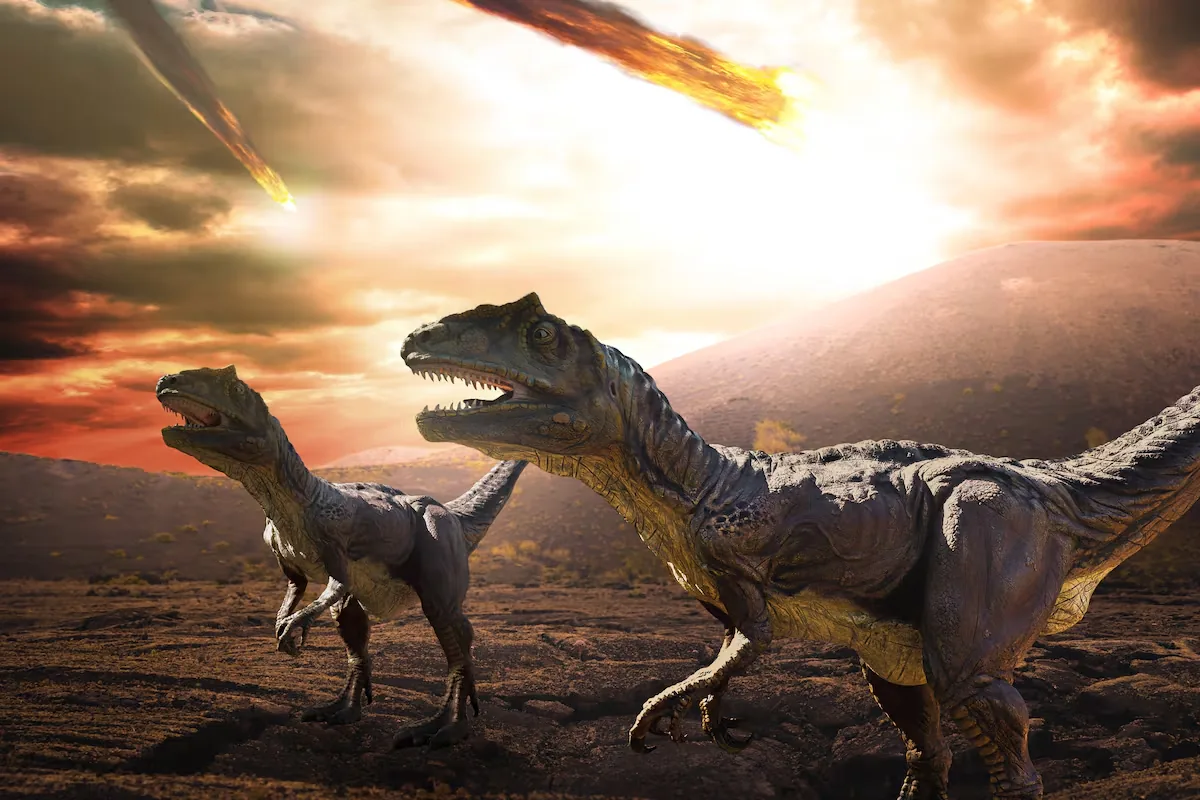
The key could be, according to the article, that modern feathers insulate better against the cold than primitive ones. A key element for surviving the “impact winter,” as the period following the meteorite collision with the planet is known, which is believed to have caused a global temperature drop. Jingmai O’Connor, lead researcher of the article, speaks enthusiastically about Cretaceous feathers while attending this newspaper via video call from an office decorated with dinosaurs. One of them watches the scene from the top of a shelf: it is the head of a T. Rex wearing a museum guard cap.
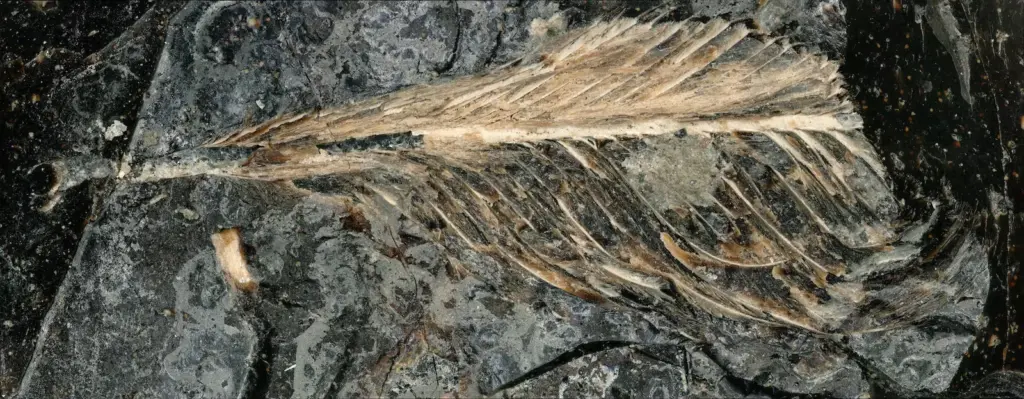
Thanks to computed tomography, O’Connor explains, they realized that there were also primitive feathers in the coprolite. This allowed the team of this paleontologist to infer that the bird had a combination of both types of feathers: the modern ones, probably located on the arms, and the primitive ones on the rest of the body. Despite having the modern feathers, having them located on the limbs meant the species was not prepared to withstand the cold that followed the meteorite impact. It had feathers suitable for enduring the frost, but in the wrong place.
The importance of coprolites
For O’Connor, who works at the Field Museum of Natural History in Chicago, another main discovery of her team is “the amount of information that can now be obtained from coprolites.” She is joined by Jesús Marugán, paleontologist and professor specializing in evolution at UAM — who did not participate in the research — who believes the study of these fossils opens the door to analyzing countless elements, from “aspects of diet to trophic interaction between different organisms.” Although coprolites have been known since the very beginning of paleontology, their usefulness was limited until recently because analyzing them “required breaking them,” Marugán points out over the phone.
Now, thanks to computed tomography and other available technologies, all the elements present in fossilized feces can be observed without needing to open them. “Anything with contrast will be visible,” continues the Spanish paleontologist. The feather found, moreover, belongs to a period in which it is particularly rare to find fossils of soft tissues — basically, any part of the body that is not a bone. O’Connor says this is probably the “only Upper Cretaceous feather” that can be analyzed in 3D. The other few feathers preserved from that period are usually in amber and can only be analyzed in 2D.
Additionally, the Upper Cretaceous is a period (spanning between 100 and 66 million years ago) from which it is particularly rare to find fossils of these tissues. O’Connor explains that this is because, for them to fossilize, the organism must be buried in aquatic environments without oxygen that prevent scavengers’ action and allow microbial fixation. These are very specific scenarios that in the Upper Cretaceous (when the mass extinction occurred) are incredibly difficult to find. This makes this feather a complete rarity.
A food chain
With the analysis of the feces, the team was able to identify a second victim. Along with the feathers and bones, they also came across some scales. Due to the size of the scales, the team considered that they were probably from a gar fish. The researchers thought it was unlikely that the theropod (i.e., the young T. Rex or nanotyrannus) had hunted those fish: it is simply a food source too small and difficult to catch. Most likely, the scientists considered, that fish was part of someone else’s diet.
And all the signs the researchers had in the fossilized excrement pointed to a single candidate: the owner of the feather. It is the picture of the food chain at that moment: the gar fish is eaten by the water bird which, in turn, is devoured by a theropod. The cycle of life. And all this was known thanks to the information contained in feces defecated more than 66 million years ago.