Rototom Sunsplash, the last great summer festival in the Valencian Community, kicks off this Monday in Benicàssim (Castellón) with the first of its six official days. It does so from the idiosyncrasy that has made it a place of global pilgrimage, not only for reggae audiences but also for those with a traveler, activist, or family profile. The multicultural event presents itself as more than just a music festival, with debates on the great challenges of contemporary times: from the climate emergency to the housing crisis, racism, human rights, and ecofeminism. Climate change is one of the issues that permeate not only the festival’s agenda, which runs until the 22nd, but also the very layout of the venue and the new actions implemented through its sustainability policy.
Read more Driverless trains of Metro de Madrid are already running in tests, at night and without passengers
“Music is the heart, but around it we have built a much broader cultural and social experience. Today a festival perhaps has the responsibility not to remain indifferent to the society of which it is a part,” the organizers say. To avoid high temperatures, schedules have been changed, postponing the opening of the concert venue to five in the afternoon and moving the activities with the highest attendance to sunset.
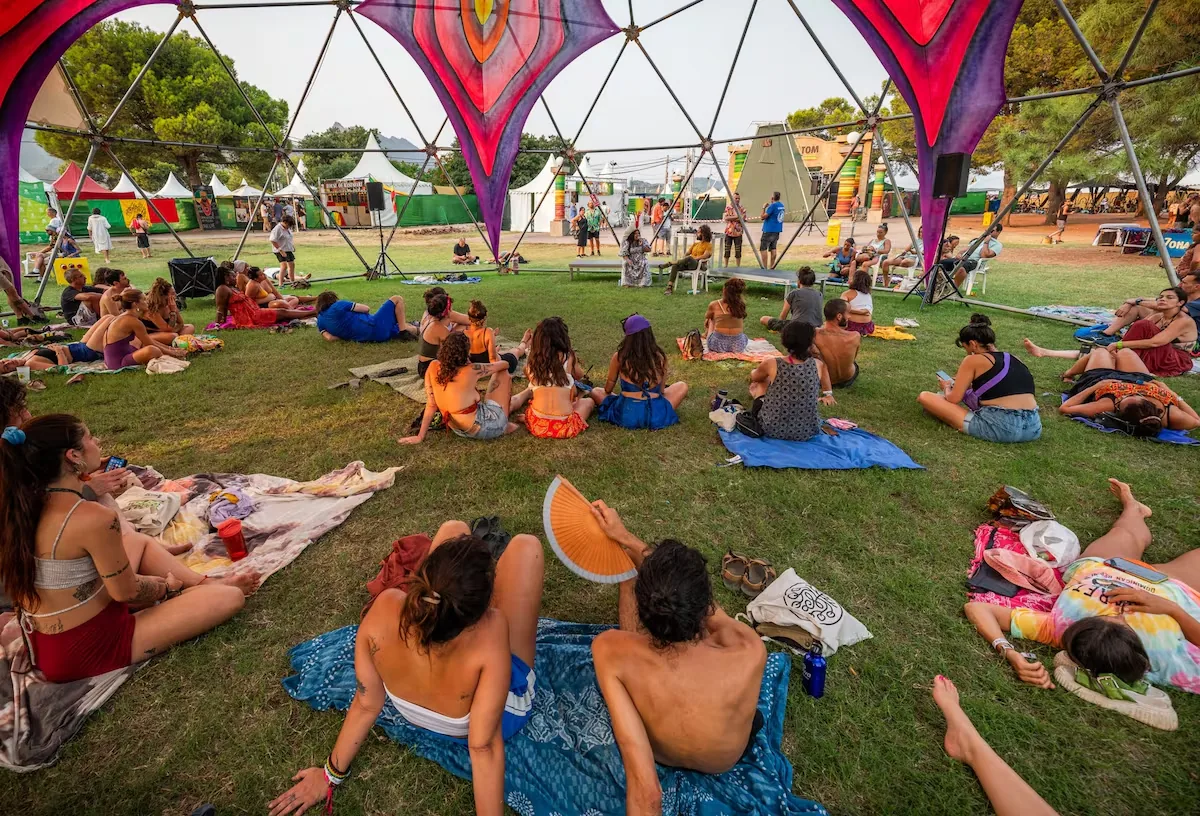
Another main line of action regarding climate change adaptation is reflected in the consolidation and enhancement of the traditional extramusical cultural areas as climate shelters, protected from the sun and high temperatures, and serving as shelter for cultural programming outside the stages.
Areas such as Pachamama, Jamkunda, or Magicomundo fulfill this function thanks to their ventilated tents, textile shade structures, or their privileged location in the wooded areas of the venue. In the specific case of Pachamama, a hexagonal flower-shaped structure with six petals providing shade to the most popular activities is being introduced. Magicomundo, the most family-friendly area, is located in a pine forest area and also has a tent.
Meanwhile, the colorful lycra tensile structure covering the Jamkunda area, with workshops and talks to highlight African cultures and realities, is coated with UV protection for the sun.
Originally conceived as social and community meeting points, these “lifelong” spaces acquire “more than ever a reinforced dimension as key places for well-being and climate adaptation, and the care of the audience that visits us,” the organizers point out.
Within its greensplash philosophy (ecological philosophy), Rototom debuts this year an innovative hybrid technology implemented together with GTECH – an energy company – that will save nearly 3,000 liters of fuel and avoid 7.7 tons of CO2 during the event week, making Rototom an example of decarbonization of major cultural events.
These actions add to an environmental strategy consolidated over decades that has positioned Rototom as one of the leading European festivals in ecological matters. Among its permanent measures are the comprehensive implementation of LED lighting; solar lighting for much of the camping area; massive recycling; reuse of water resources; promotion of local and zero-kilometer products in the gastronomic offer; and an agenda of activities focused on agroecology and ecological transition. Not to mention its plastic free label, free of plastic.
Read more The Government announces that it enables four spaces to accommodate 1,500 migrants in Ceuta
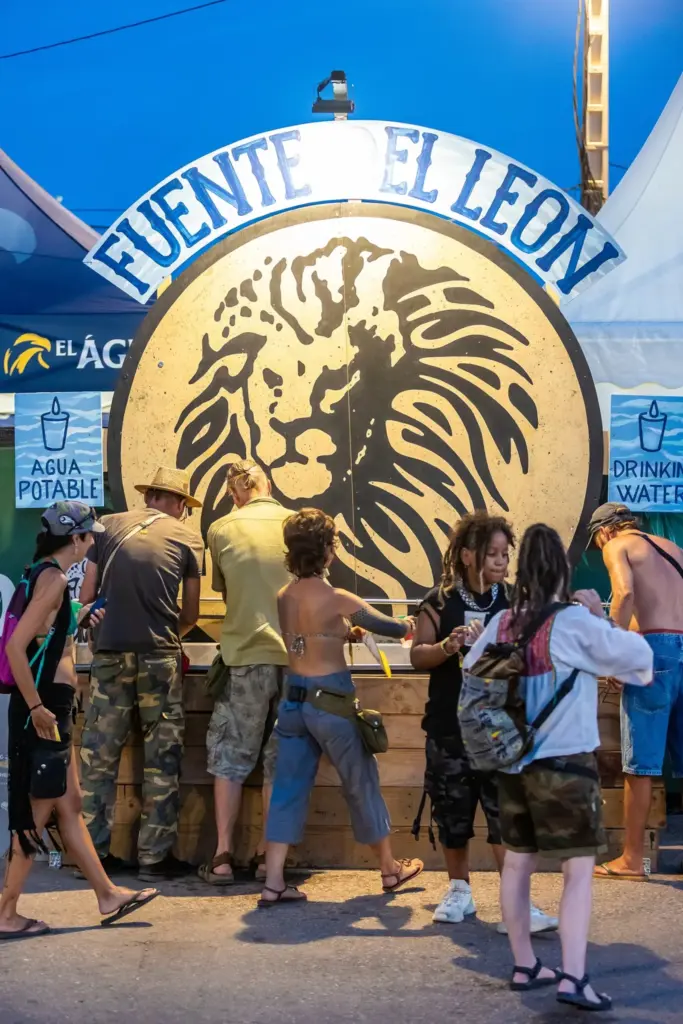
Precisely this Monday, Rototom and the company Tuawa presented the results of the campaign The drop that gives life to the forest. Through this collaboration, which began in 2021, 3.2 million plastic bottles have been saved for the planet in those five years, which would have required 13,500 trees to absorb the CO2 generated by their manufacture, transport, and recycling, the festival and Tuawa officials reported. For this edition, 54 water fountains have been installed between the venue and the camping area to continue replacing the usual model of bottled water sales and consumption.
This concept of “responsibility” and “facing the challenges of the society around us,” which the event champions, is especially embodied in the Social Forum, which this year again addresses issues uncommon in the context of a music festival. Among the sessions is one on housing as a right. A roundtable to analyze the causes of the housing crisis in Spain, evaluating the responsibilities of public administrations, market dynamics, and civil society proposals, taking over from the Forum’s inaugural talk this Monday: Culture, music, and well-being: tools to build hope, featuring the voices of Dr. Álvaro Pascual-Leone, neurologist and professor at Harvard Medical School, a world leader in non-invasive brain stimulation and neuro-rights, and Betty Roca Hubbauer, a community psychologist specializing in humanitarian emergencies and director of Psychologists Without Borders.
The climate emergency will also emerge again as a topic of reflection, with a session this Wednesday: Defending Pachamama: a global and collective challenge, which posits that the current climate crisis is already a cross-cutting issue of social justice, survival, and human rights, explain the Exodus Foundation, the festival’s social arm and organizer of the Forum. It will feature the star participation, in online format, of Vandana Shiva, Indian physicist, philosopher, and writer, a reference in the global environmental and ecofeminist movement, and recipient of the Right Livelihood Award in 1993. Alongside Vandana Shiva will be the young and influential Colombian activist Francisco Vera, founder of the Guardians for Life Movement.
In a summer marked by extreme temperatures and increasing environmental pressure from large events, the Rototom Sunsplash festival in Benicàssim thus faces its big week, the last of the active Valencian macrofestival season, as a small-scale test of how a festival model can change the planet. The forecast is to receive about 25,000 visitors daily.
Music remains the center, with a proposal that for six days embraces global urban and electronic rhythms with Major Lazer Soundsystem (August 18), Protoje (21), or dancehall star Shenseea (20), without forgetting the roots of the genre, with reggae roots references: the Ivorian Alpha Blondy, the mysticism of Luciano, and the foundational ska band Skatalites alongside Alpheus.
At the same time, the festival strengthens its commitment to fusion, with names like Greentea Peng (22) and Dub Inc (Wednesday 19), and, already on the national scene, with Kiko Veneno, El Canijo de Jerez, Muchachito Bombo Infierno, Tomasito, and Diego Ratón (19), the Barcelonan Lia Kali (August 22), or the Granadans Eskorzo (19).