






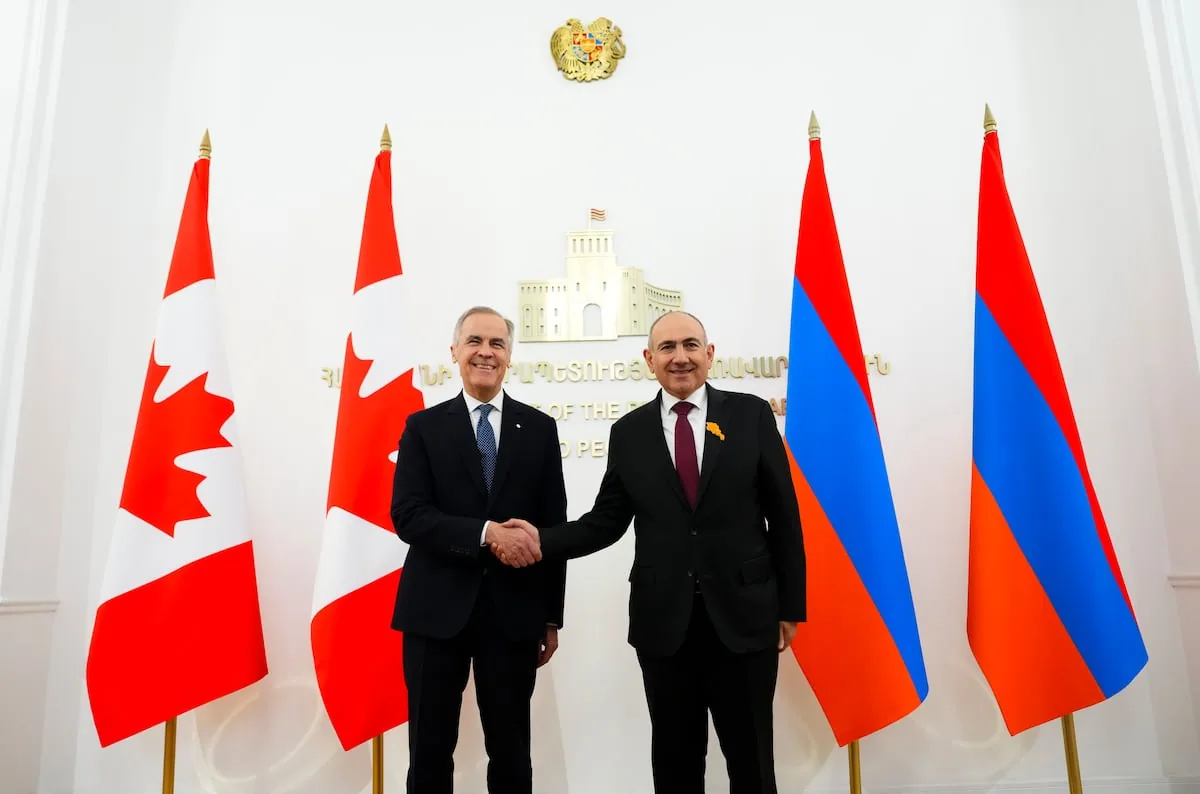
Two high-level political and diplomatic meetings are being held over three days in Yerevan, the capital of Armenia, starting this Sunday: the European Political Community and the first European Union-Armenia summit. “It is very significant,” emphasizes a European diplomatic source involved in organizing both events. The message is very clear: the European Union, the major EU capitals, and even Canada, support the path taken by the Armenian Government towards rapprochement with the West ―Moscow has already shown its displeasure― and the commitment to a complicated peace process seeking to resolve one of the major conflicts left open by the dissolution of the Soviet Union, that of Nagorno-Karabakh.
Read more Festival de EL PAIS, day 3: how to continue for at least 50 more years
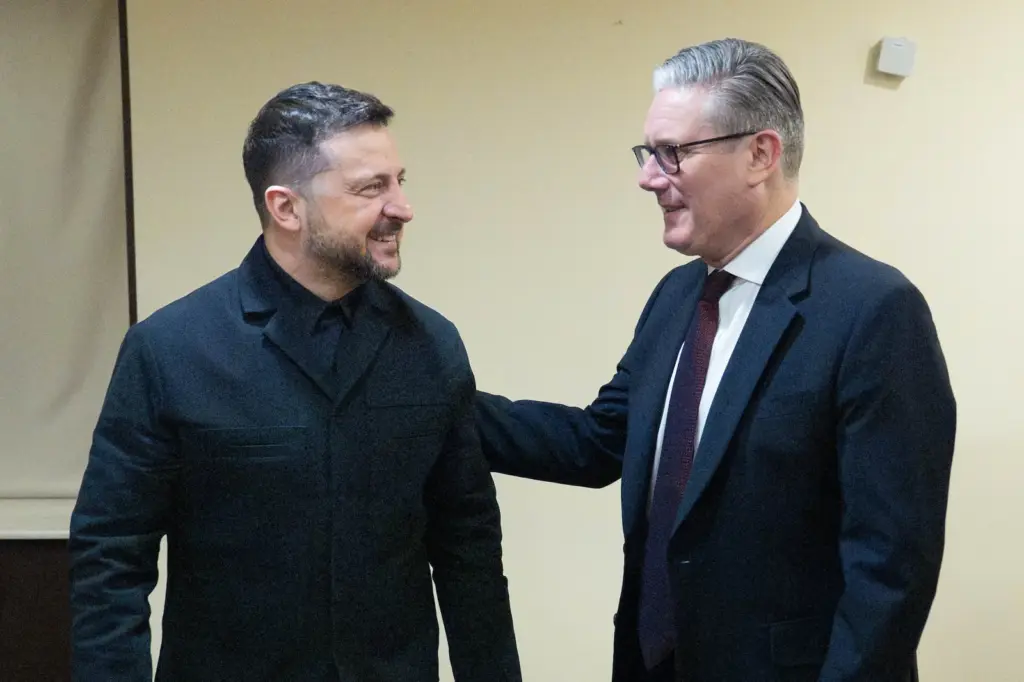
At the first summit of the European Political Community, an organization created to find a forum including the United Kingdom and countries aspiring to join the EU but still far from doing so, attend the President of the European Council, António Costa, and the President of the European Commission, Ursula von der Leyen. They are accompanied by the British Prime Minister, Keir Starmer; the Spanish Prime Minister, Pedro Sánchez; the Ukrainian Prime Minister, Volodymyr Zelensky; and the French Head of State, Emmanuel Macron.
The leader of the second largest European economy will have the opportunity to see many flags of his country decorating one of the main avenues of Yerevan, celebrating his visit. After all, France is one of the countries in the world that hosts the most Armenians from the diaspora (after Russia and the United States).
This is the first time the European Political Community meeting will be held in the South Caucasus, a region important to Europe since Russia invaded Ukraine and which, with the war in the Persian Gulf, has become key. Through there, crossing countries that were formerly Soviet republics (Georgia, Azerbaijan), gas and oil from the Caspian arrive. Therefore, expanding influence and stability in the region becomes critical. Also important is the number of corridors crossing the area between the Caspian and the Black Sea. It is not easy. There are old conflicts, but to the south is Iran, a country with which Armenia shares just over 30 kilometers of border.
Since Nikol Pashinyan came to power in 2018 after a revolution he promoted himself, Armenia has undertaken a series of reforms that led the country in March 2025 to request the start of the EU accession process. Additionally, it has become the most democratic country in the area. The serious setbacks in the rule of law in Georgia help support this claim. But the situation has not been easy. In 2020 and 2023, the long Nagorno-Karabakh conflict intensified and Azerbaijan prevailed in controlling that enclave within its borders but mostly populated by Armenians. The situation caused the exodus of about 125,000 Armenians from that enclave, now in Azerbaijani hands.
Pashinyan’s bet, despite Azerbaijani attacks, has been to end the conflict. He signed a principles agreement for peace with Azerbaijan in Washington in August 2025 (one of those eight pacts used by U.S. President Donald Trump to claim the Nobel Peace Prize), still to be implemented, which is costing him internal criticism and faces a major test in the legislative elections on June 6.
“A large part of Armenian society is tired of war and wants peace,” explains Marina Ohanjayan, an Armenian researcher at the Dutch think tank Clingendael. “On the other hand, the peace process is perceived by many Armenians as unequal, in which Armenia has ceded a lot and Azerbaijan, almost nothing.”
Read more The real Cannibal is Slovenian, beware of imitations
And a month before these summits arrive, full of firsts: first meeting of the European Political Community in the South Caucasus, first time Canada participates in them, first Armenia-EU summit… And this is noticeable as soon as you land in Yerevan, where there are stickers announcing the events on the luggage belts at the airport or on billboards. “It will be a signal and, I would even say, a celebration of the peace agreement with Azerbaijan,” points out that diplomatic source involved in organizing and negotiating the final communiqués.
This signal will be added to another very powerful one that took place in February: the visit of U.S. Vice President J. D. Vance to Yerevan. Washington is promoting a new corridor in the region that Trump intends to name after himself, and his Administration took the opportunity to sign a civil nuclear cooperation agreement with Armenia.
The EU, for its part, intends to help Armenia integrate into regional networks and connections. It is not only that Armenia has been in conflict with Azerbaijan since the fall of the USSR. There is also the hostility and suspicion with which it views Turkey (with the memory of the genocide always present). “We are trying to integrate Armenia into regional networks, to have all our work ready and underway for when the borders open,” says another European diplomatic source, referring to the imminent start of a railway line with Turkey. “Connectivity can play a role [in peace] in this region,” he trusts.
“What we are trying to do is reduce Armenia’s structural dependencies and help it become more resilient to external crises. This is achieved through mechanisms such as support for energy storage, helping, again through connectivity, to link Armenia with its neighbors and also supporting it in the energy transition in the digital field,” he adds explaining the plans they have been working on in Brussels.
None of this will be easy in a country with very strong historical ties to Russia, still very strong today despite the steps taken by its prime minister. For example, more than 40% of its exports go to the large northern neighbor and energy dependence is enormous, as Russian autocrat Vladimir Putin reminded Pashinyan during his last visit. And, if that were not enough, much of Armenia’s great economic growth in recent years is directly linked to attempts by Russian society to circumvent the international sanctions imposed by the international community. “Armenia was significantly affected by the arrival of migrants, trade, capital, and money transfers following the start of Russia’s invasion of Ukraine. This had a positive impact on the economy,” states the latest World Bank report on the country, which also mentions “the relocation of businesses, especially Telecommunications, and the redirection of trade routes.”
Read more Noemi Rüegg dons the red jersey in the premiere of La Vuelta a España Femenina