







The PP and the judiciary narrow the already limited room for maneuver of the Government to resolve the Ceuta crisis. While the National Court provisionally halts the use of the port to accommodate immigrants amid preparations to transfer nearly 2000 of them there to ease the problem on Ceuta’s beaches, the PP leadership made it very clear this Wednesday that it completely closes the door to any minor being transferred to the Peninsula even temporarily, while their cases are resolved and attempts are made to return them to Morocco. The Popular Party aligns with Vox in rejecting the transfers of minors, as evidenced by their vote in favor this Tuesday in Congress of an extreme right initiative opposing the relocation of children and youth.
The PP’s position is decisive because the competence over minors lies with Ceuta, and without the signature of Juan Jesús Vivas, from the PP, who has guardianship, it is very difficult to transfer any minor to the Peninsula despite there already being places allocated for them and the money available, as the Government has approved 90 million euros for the operation. According to the Government, Vivas continues to play coy in his talks with the Executive, but so far he has only authorized the departure of five minors under an agreement with Navarra, governed by the Socialists. Vox is radically opposed to sending them to the Peninsula, and the PP has joined this position.
Sources at the highest level of the Popular Party reaffirm their opposition to a single minor leaving Ceuta, arguing that a transfer, even if temporary, would trigger a pull effect causing new attempts at mass crossings to the autonomous city. The Popular Party demands that the Government send more resources to Ceuta to speed up all return procedures, including those of minors. The Executive insists there is no other way out because the repatriation of minors is a long process that could entrench the crisis in Ceuta if not alleviated by transfers.

The PP argues that the European Pact on Migration and Asylum could be applied in this case to speed up returns, as it contemplates special procedures when immigration is “instrumentalized” by third countries against an EU member state. Immigration is considered instrumentalized for the purposes of the European pact when “a third country or a hostile non-state actor promotes or facilitates the movement of nationals of third countries or stateless persons towards the external borders or towards a member state, with the aim of destabilizing the Union or a member state.”
To apply this clause, it would be necessary to prove that Morocco was behind organizing the large crossing with the intention of destabilizing Spain, something complex to prove. Moreover, although the agreement allows member states to apply exceptional procedures in cases of migration instrumentalization by third countries, it maintains the basic guarantees of the right to asylum, including the principle of non-refoulement.
The regulation also incorporates specific protections for minors and other vulnerable groups, such as the figure of a representative for minors throughout the entire process of managing their possible repatriation. The Executive recalls that if the procedures have not been expedited before, it is because it has been difficult to agree with the city on hiring those child defenders. Therefore, the European pact has so far not accelerated the procedures; it has slowed them down.

Until this crisis, Ceuta agreed with these transfers, and in fact in 2025, 700 minors from the autonomous city were sent to the Peninsula. But now the PP’s position has hardened, greatly reducing the Executive’s margin, also surrounded by judicial decisions such as the injunction that currently prevents the use of the port, although it will have to be resolved in the coming days.
The Government believes that the PP is closing all doors because it wants to prolong a crisis that wears down the Executive even though this blockade goes against the interests of the people of Ceuta, who need to ease the pressure, remove thousands of people still on the streets, including nearly a thousand minors, and try to recover some normality.
The Government has hardened its tone with Vivas, whom it previously always applauded because he maintained a much more collaborative position than other PP presidents, and Pedro Sánchez himself showed his anger with him in the corridors of Congress when he said that regarding the minors on the streets, one should ask Vivas because it is his responsibility.
Read more The Congress validates the royal decree-law of aid for Ceuta with the vote against from Vox
The national leadership of the PP assures that the president of Ceuta, Vivas, shares the rejection of transferring minors to the Peninsula, although he has never clearly expressed himself in those terms. “Vivas is defending Ceuta because he knows that if migrants are sent to the Peninsula, more will arrive,” says a leader from the inner circle, who assures that the Ceuta president opposes the transfers and assumes that “he has to endure like this for two or three more months.” “Taking them to the Peninsula is leaving Ceuta sold out. Tomorrow you would have the problem multiplied by five,” says this Popular Party leader.
The Ceuta president has responded to Sánchez admitting that “the reception of minors is Ceuta’s responsibility,” but defending that the competences are shared because “the registration and delivery of minors is the competence of the General State Administration.” Vivas, in an interview on Antena 3, complained that he finds Sánchez’s way of addressing him “unheard of.” “The autonomous city is making a titanic effort because it is hosting 2,000 unaccompanied minors, as a consequence of an event that is not the competence of the autonomous city of Ceuta, which was the violation of Spain’s territorial integrity,” he emphasized.
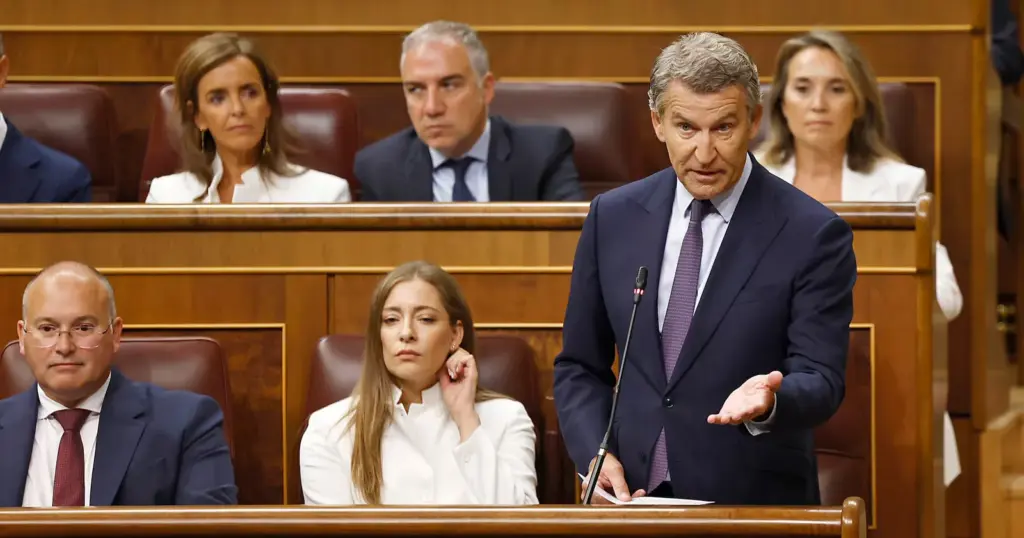
The PP leadership has hardened its position on minors to a total rejection of transfers even temporarily while return procedures are processed. Although in August Feijóo demanded the return of all migrants who had entered Ceuta, “adults and minors,” the PP leadership and the Popular autonomous presidents later admitted they would comply with the law and accept minors sent to their autonomous communities. Now the refusal is categorical.
Furthermore, the PP voted this Wednesday in favor of an initiative registered by the extreme right opposing the distribution throughout the rest of Spain of foreign children and adolescents who arrived in the autonomous city during the massive entry on July 30 and 31. “We refuse that Spaniards have to get used to the chaos [of Ceuta]. Minors, with their parents and adults, to their countries of origin,” defended Vox deputy Blanca Armario in the debate. The PP joined this thesis, also rejecting relocation in other communities, “as it endorses that minors can be instrumentalized as a pressure weapon at the borders and they will do it again,” said Popular deputy Ana Alós, who called for enforcing the 2007 return agreement with Morocco.
Despite this total rejection, the Government trusts that Vivas will end up yielding to the pressure he also faces in Ceuta and will accept the transfer of some minors. If not, the Executive points out that it will have to bear the cost of that rejection, which harms the people of Ceuta, according to several consulted ministers. The highest authority of the unified command in Ceuta, Ángel Víctor Torres, called on all autonomous communities to host minors as soon as the procedures are ready. “I ask for the support of the autonomous communities. I appeal to the rest of the communities so that the response is in line with the humanitarian drama,” he assured.
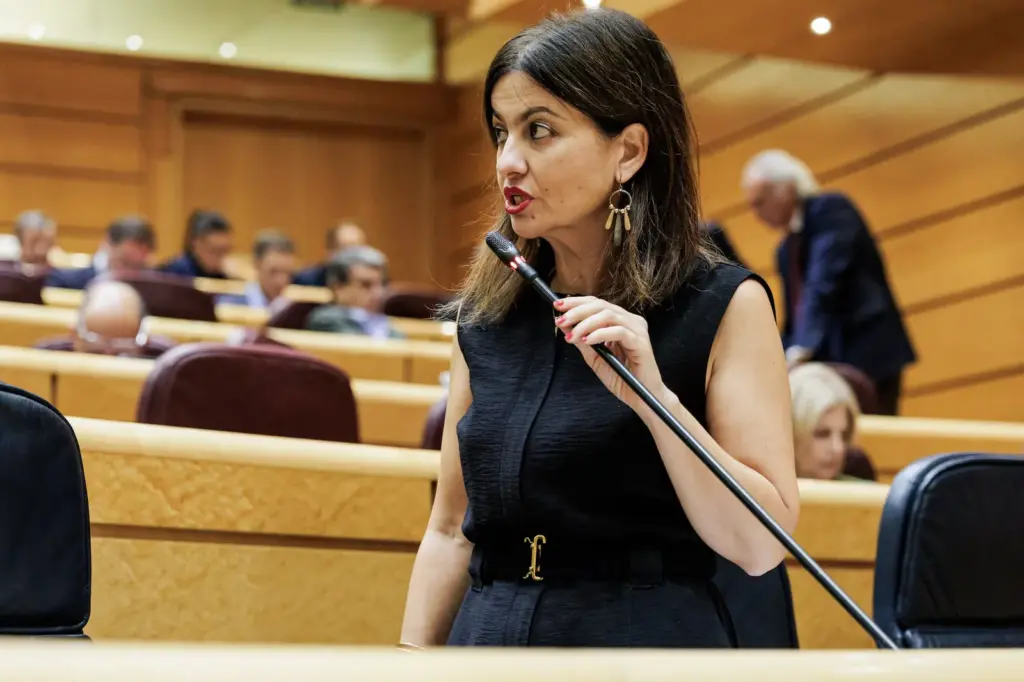
Meanwhile, from the Ministry of Childhood, led by Sira Rego of IU, they make it clear that temporary transfer to the Peninsula is the only viable way to ease pressure in Ceuta. “The competence over the guardianship of unaccompanied migrant children and adolescents lies exclusively with the autonomous city of Ceuta. Neither the ministry nor the Government can make decisions without the city’s approval,” they explain in Childhood. “The ministry has approved two budget items totaling nearly 90 million euros for Ceuta,” they recall. It has also proposed “the reception of 500 girls (as they are the most vulnerable profiles) on the peninsula by entities specialized in child care, with Ceuta maintaining guardianship and the entities assuming custody,” but they are awaiting Vivas’s signature. “These transfers would allow the procedures to continue regardless of where the children are, since the law is exactly the same in Ceuta as anywhere else in Spain,” they point out in Childhood, clarifying that the procedure is a long process and if they are not transferred, the pressure on Ceuta will be very strong for months.
“Every day that passes without these transfers happening is due to an evident lack of political will. While the PP demands a return to normality from the autonomous city, they prevent minors from being received on the Peninsula, the only possible solution to the crisis. After more than a month lying to the public and assuring that massive deportations of children had to be carried out, now Feijóo tries to evade the autonomous competences in the guardianship and protection of unaccompanied children with a single objective: to maintain his racist pacts with Vox and try to capitalize electorally on the situation in Ceuta,” they conclude in Childhood.