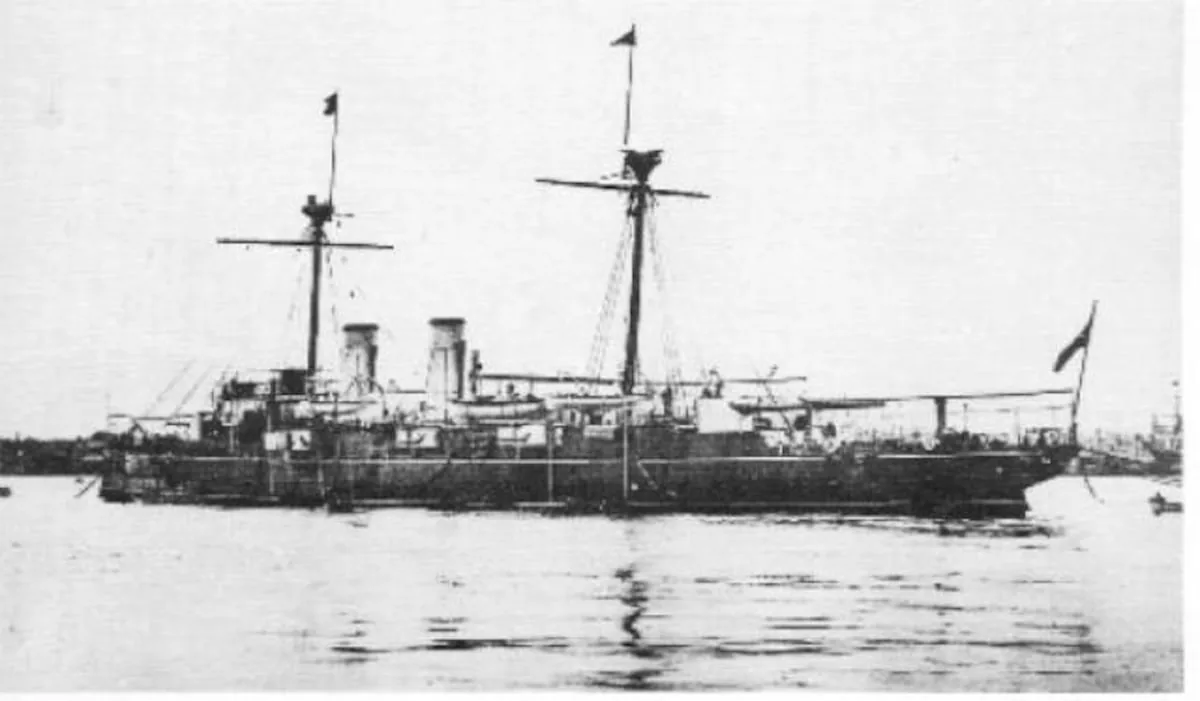








Sir Francis Drake was a pirate —according to the Spanish—, an honorable sailor —according to the English—, commanded by Elizabeth I of England to destroy the cities, fortresses, fields, farms or subjects of Philip II wherever they were. Drake distributed his attacks across both hemispheres without warning. He could attack Santo Domingo, the Canary Islands or Patagonia. There was no limit. One of the ports he attacked with great success was Cádiz in 1587. [This text is an excerpt from EL PAÍS’s weekly archaeology newsletter, ‘Cuatro piedras’. To receive the newsletter, you can sign up here].
Read more Salvador Illa denies that the Government hid the case against his chief of staff
In the Bay of Cádiz, Philip II was building part of the fleet with which he planned to attack England. For this reason, Elizabeth I ordered Drake to destroy those threatening armed galleons that endangered her kingdom. Thus, the English sailor, in a daring maneuver, entered the Andalusian port and sank between 30 and 35 Hispanic, Portuguese or allied ships.
Among them, the Italian San Giorgio e Sant’Elmo Buonaventura, whose holds were full of the most varied products. The dredging of the Bay of Cádiz has now allowed the recovery of the ship’s wreck. This is told in the multidisciplinary study Experimental sciences in underwater archaeology: Delta II wreck (San Giorgio y Sant’Elmo Buonaventura). Using genomics, dendroarchaeology, paleobiology, physicochemical, archaeological and archival techniques, experts have reconstructed the sinking. And much more.
Only about eight meters under the mud, the ship was almost intact. It was sent to the bottom on April 29, 1587. “The organic remains found were in an excellent state of preservation due to the great thickness of the layer of mud that the buried wreck had maintained, providing an anaerobic environment that prevented the deterioration of fragile material and, therefore, easily decomposable; which, on the other hand, has great heritage and scientific value.”
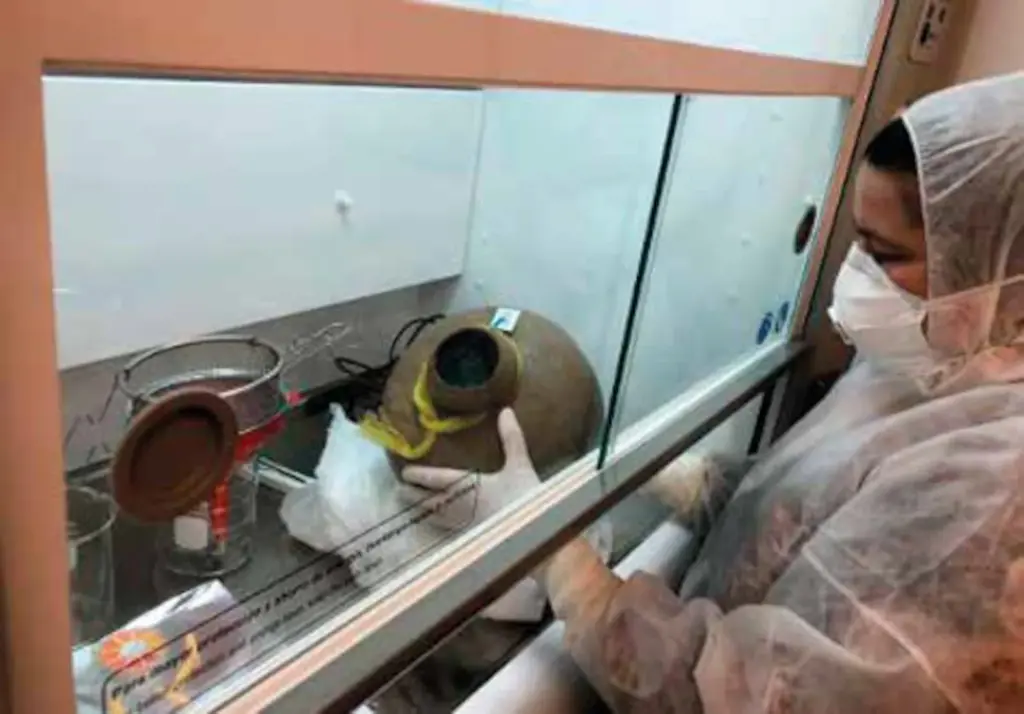
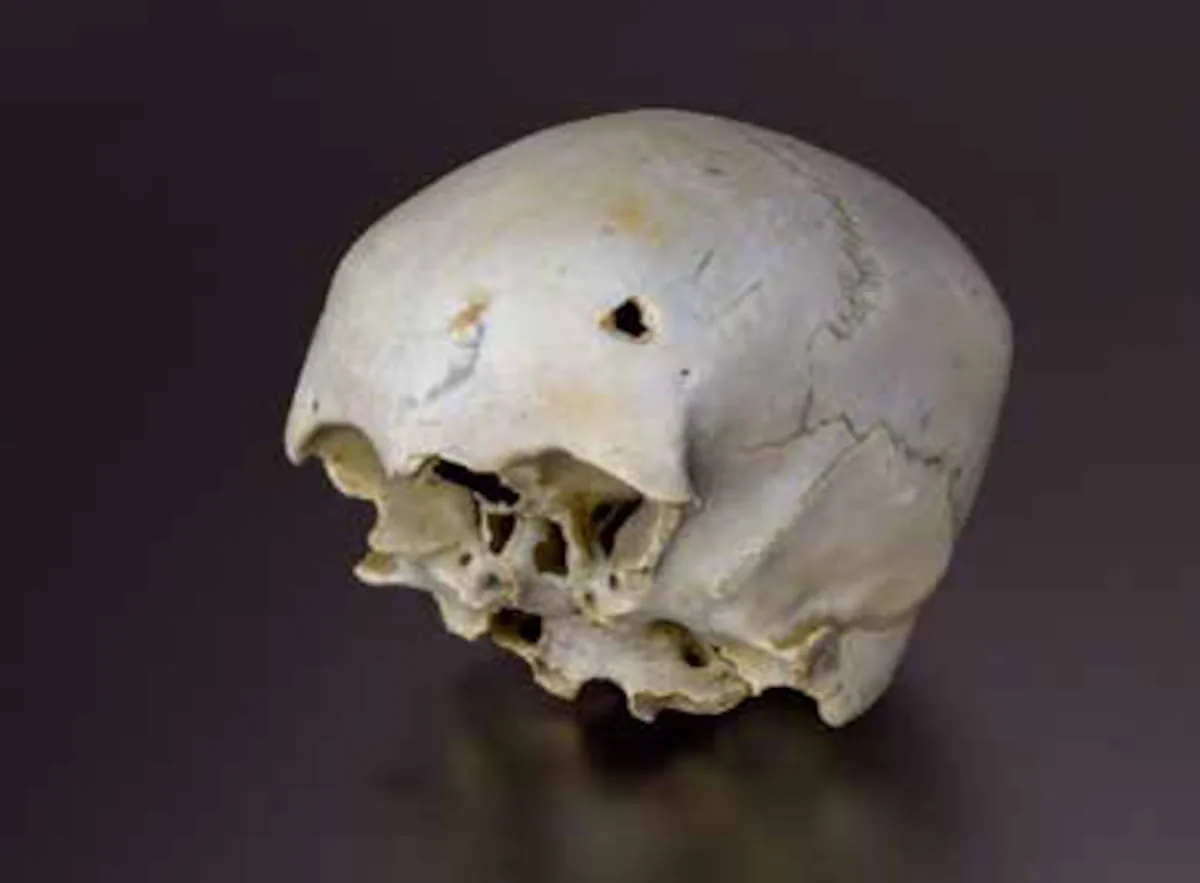
In addition to animal remains, the skull of a woman aged between 25 and 35 was found at the site, showing an impact on the forehead. The bones of the specimens correspond to cows, pigs, goats and gallinaceous birds. Small jugs or botijas, both complete and sealed, have also been located. Inside they contained gordal olives in brine with capers, bay leaf, rosemary and oregano.
The diseases suffered by the crew have also been determined by obtaining genomic deoxyribonucleic acid (DNA) inside the vessels: a pathogen causing pneumonia and Staphylococcus of the skin and respiratory system. The study is spectacular and is signed by 11 highly distinguished experts from the Andalusian Institute of Historical Heritage, the archaeological consulting firm Tanit Gestión Arqueológica, CSIC, DendroResearch Wageningen (Netherlands), Aranzadi Sciences Society, University of La Laguna and Doñana Biological Station.
Likewise, during the excavation process of the wreck, a series of wooden barrels were located containing a dense, red-colored element which, after analysis carried out at the University of La Laguna, has been identified as Dactylopius coccus costa. This is a dye derived from an insect, the cochineal. A dye that in the 16th century came from New Spain, specifically from the Oaxaca area, and which became the third most valuable product in America throughout the Modern Age. The barrels found – made of Baltic wood – were cut between 1586 and 1601, according to the analyses. They were spot on, because the ship sank in 1587.
“In short, the San Giorgio e Sant’Elmo Buonaventura, while anchored off the city of Cádiz, was sunk (between five and six in the afternoon on April 29, 1587) by the armada commanded by the privateer Francis Drake, following express orders from the English Queen Elizabeth I,” the study concludes.
Finally, the Spanish admiral Álvaro de Bazán went after Drake’s fleet, but did not arrive in time and the vice admiral managed to reach England where he disembarked an enormous fortune.
Vicente G. Olaya’s newsletter ‘Cuatro piedras’ is sent every Monday. If you want to be part of the ‘cuatropedreros’ community, sign up here.
Read more Petrol station strike during the May long weekend: these are the strike schedules across Spain