








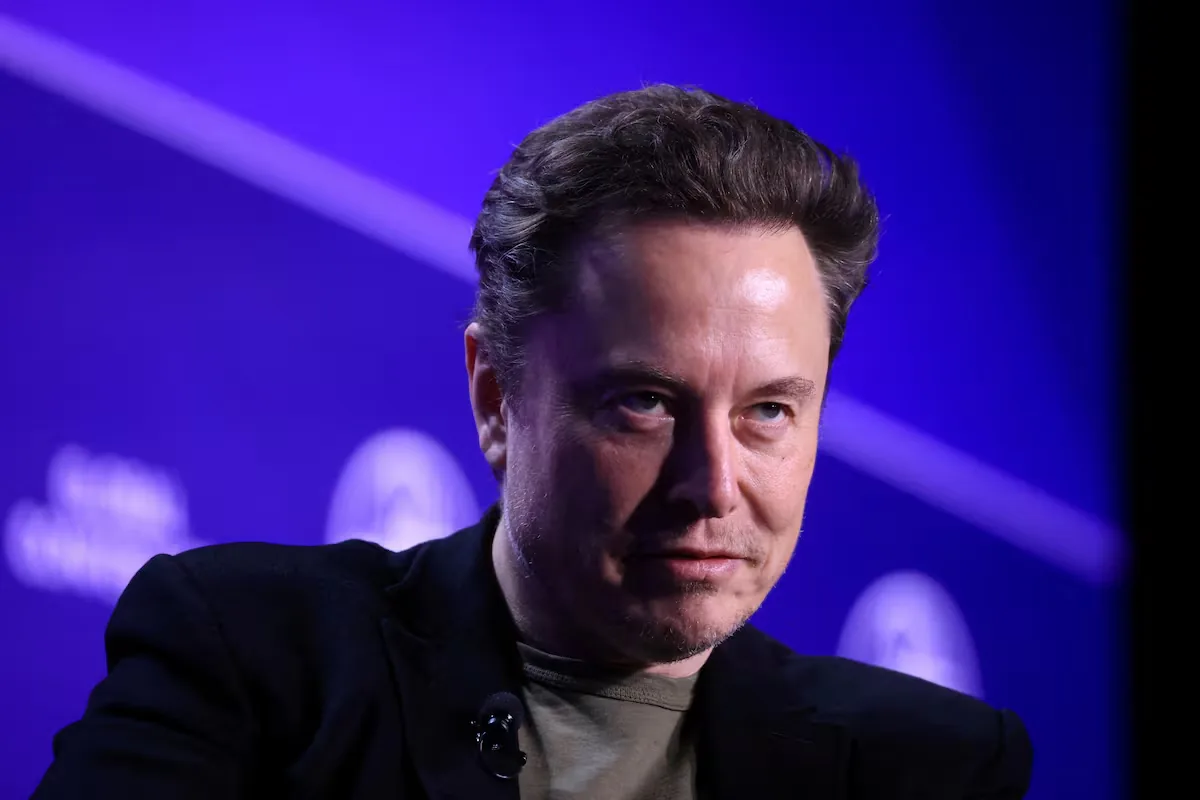
Today marks 20 years since the launch of Twitter. During this time, the platform has changed significantly, far beyond replacing the blue bird with the white X on a black background. After acquiring it in 2022 for 44 billion dollars, Elon Musk relaxed the rules, reinstated accounts that had been censored for breaking the rules, and fired the content moderators (along with half of the staff). He decided that the users themselves would do the work with the so-called community notes, which add context or nuance the falsehood of posts. That system has proven incapable of guaranteeing the circulation of truthful content. Everything fits in the jungle of X, where even child pornography circulates. Musk’s arrival marked the beginning of a profound transformation that includes the launch of a paid service and which, judging only by user numbers, has worked.
Read more The ‘not’ television failure of Marc Giró
X is today a platform that spreads misinformation, as several studies show; that gives more weight to far-right proclamations and has changed its algorithm to prioritize the most polarizing content. It is also Musk’s mass-reach toy, which he uses to incite racist persecutions, as recently happened in Belfast; to publicly attack whoever he deems fit; or to boost electoral careers, like the one that brought Donald Trump back to the White House. The only time the South African-born magnate had to backtrack was earlier this year, when he made X’s generative artificial intelligence (AI) tool, Grok, stop creating hyperrealistic nude images from real photos. And if he backtracked, it was because the whole world turned against him.
the bird is freed
— Elon Musk (@elonmusk) October 28, 2022
Despite this great mutation, X continues to attract 585 million unique monthly users. The figure, provided by the company itself, is much higher than when it was called Twitter: before Musk bought it, it had about 370 million users, although it had reached nearly 400 million. The numbers have improved.
Why do users continue to trust X despite its obvious transformation? The first reason is size, inertia. For a social network to be interesting, there has to be a community worth it. Everyone was on Twitter. When it mutated to X and the far-right turn became evident, many deserted. But others did not. “Governments and political parties have chosen, despite the degradation of this platform, to maintain their profiles on X to inform about their activities or express their opinions,” points out Carmela Ríos, a journalist expert in social networks and misinformation. “An important part of politics has stayed on X, which has generated a circle around which political conversation is then built, in which everyone participates, although perhaps not in a very civilized tone.” That, in turn, has had consequences. “The fact that X has consolidated its position has ended up elevating rude politicians, aggressive polemicists, and even liars. That is, those who know how to row in favor of the algorithm.”
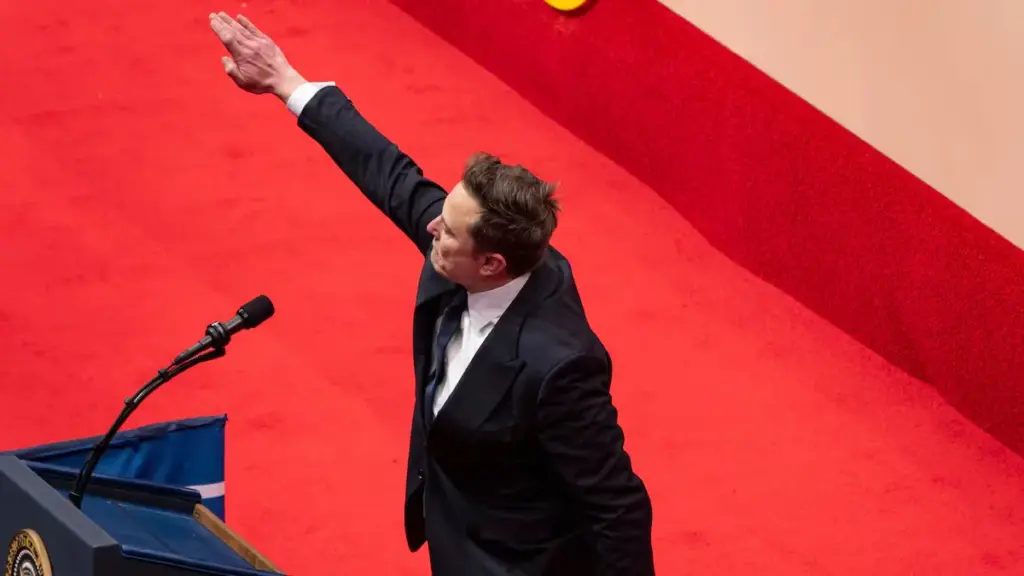
The difference between X and Twitter ten years ago is enormous, but we may also be unconsciously amplifying it. “One should first ask whether that Twitter we now miss ever really existed,” questions Ekaitz Cancela, economist and researcher at the Tecnopolítica group of the Universitat Oberta de Catalunya. “We have assumed that social networks represented the democratic promise that was in the Spanish squares in 2011 or in the Arab Springs. We forget that back then it also coexisted with harassment or the acceleration of life, and that it rested on the same business of cashing in on our data. What remains of that is mostly nostalgia.”
Ríos gives another key that may explain the success of the current X: “It is a highly ideological and very entertaining tool in which ultra and agitator content of all kinds have preferential access in any user’s timeline, whether they want it or not. It is no longer suitable for calm conversation, nor for orderly information gathering, nor for following the evolution of an emergency in real time, like large fires,” she describes. “And yet, X retains a journalistic DNA, mainly due to the absence of other social networks, where it is even more laborious to find good information.”
Read more Authorities investigate Taco Bell for its possible link to the cyclosporiasis outbreak
No other platform has managed to develop an environment like Twitter-X, reigning in the microblogging space or short text publishing (with images, videos, or audio). Meta, owner of the two largest social networks in the world (Facebook, with more than 3 billion active monthly users, and Instagram, which approaches 3 billion), tried with Threads, its version of Twitter, but it has not taken off. Bluesky, which grew a lot thanks to users exiled from X, has never surpassed the 40 million mark, 14 times less than Musk’s social network.
just setting up my twttr
— jack (@jack) March 21, 2006
It is not easy to overshadow X. “In the digital economy, inspiring is not enough. The important thing is to keep people connected as long as possible. When all social networks valorize hate and violence, the promise of a less biased alternative is not enough,” opines Cancela. “Bluesky reproduces Twitter’s architecture without breaking with its political economy of attention: it needs to grow, retain users, and sooner or later monetize the attention it accumulates.”
X’s algorithm has made it an important misinformation machine. And one liked by many autocratic leaders. Strange as it may seem, that can be positive for some groups. “X, unlike Signal, is little restricted worldwide. It is used by very heterogeneous profiles, raising fewer suspicions. There are still academics who use it to communicate in repressive environments, for example people affected by the Gaza genocide,” illustrates Lorena Jaume-Palasí, expert in ethics and philosophy of law applied to technology and founder of Algorithm Watch or The Ethical Society. The fact that it offers the possibility of accessing unfiltered information is a window for places where the media are controlled by the government.
A recent study by IAB, the largest global association of communication, advertising, and digital marketing, points out that many users still get their information from X; others do not leave because they do not want to give such an important space to voices from the ultra spectrum, and a third group stays because they enjoy attending or participating in political drama or fights over tweets. “X has made polarization a new form of entertainment, a kind of Old West saloon where one can choose to have a whiskey behind the pianist or grab a chair from the parlor and join the fight,” concludes Ríos.