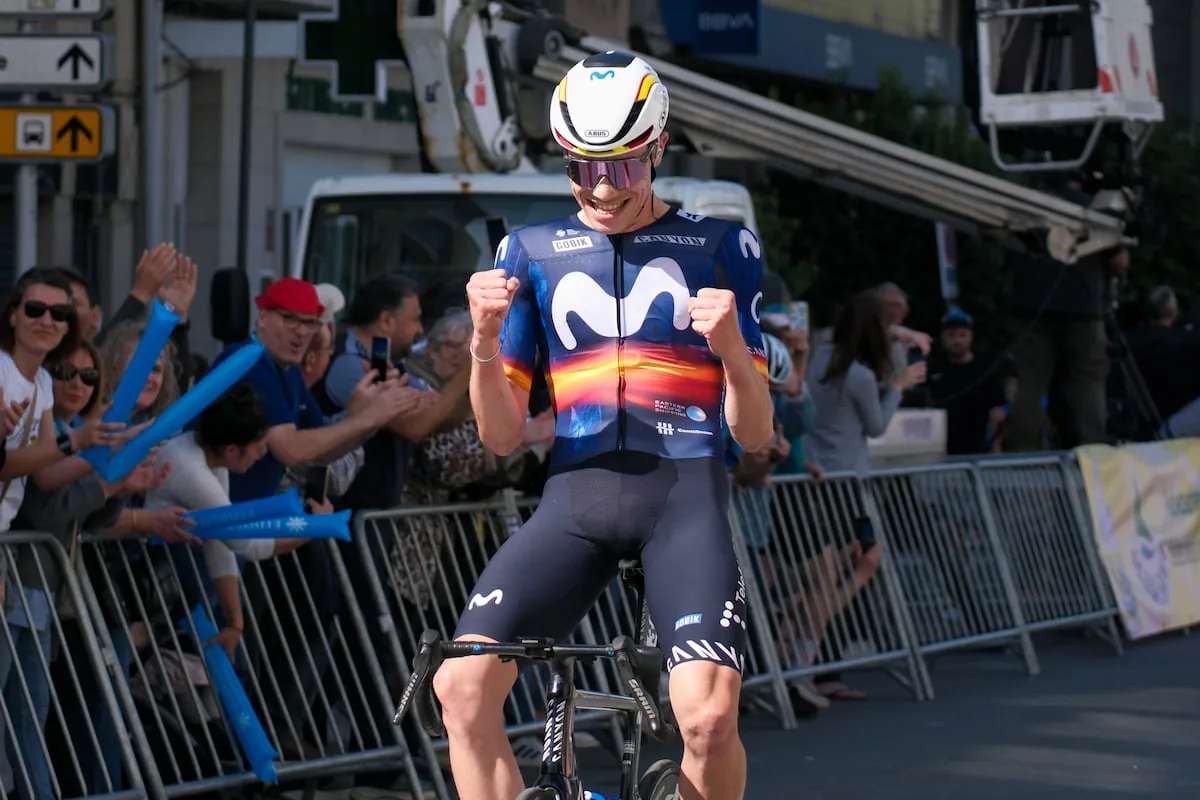
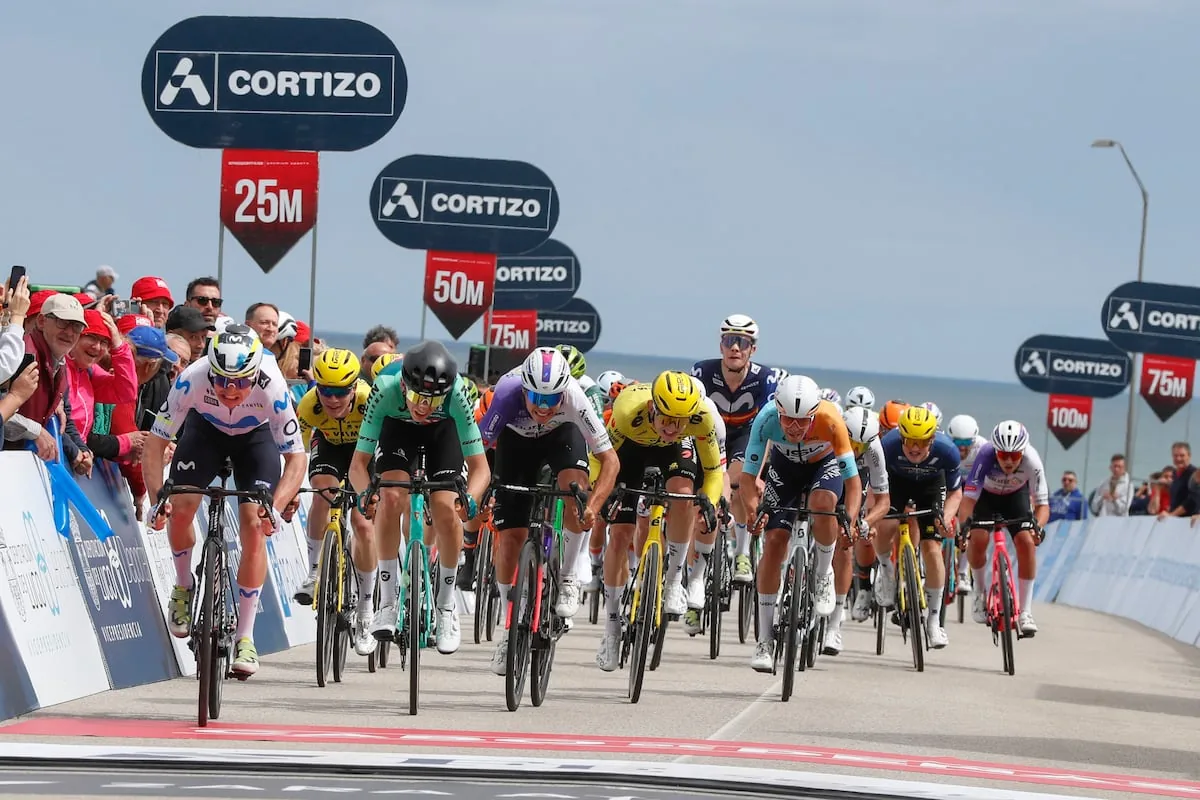
Cycling is horizontal, like the landscape, like the waves of the rough Cantabrian Sea that give speed —russsshhhhh, whispers the foam— the television drone when they crash against the coast of the Mariña lucense as if wanting to compete with the peloton —riiiiiinnnnggggg, screech the disc brakes—, which is not a snake, but a sea in rough waters in the last curve of the stage, when Carlos Canal, Galician from Xinzo de Limia, has already jumped, unstoppable, winning his first race as a professional next to the rough beach of Barreiros, and the tide is already rising and covering the sands that the race skirts from Viveiro, Xove, Burela, and Foz.
Read more Five minutes after the match ended
Canal crowns the teamwork, Movistar of Iván Romeo who punctured on Tuesday in the time trial because his front wheel got hungry and ate a manhole cover and who on Wednesday, crossing the eucalyptus forests towards the sea, past the Alto de Noceda, accelerates and breaks the peloton, and takes everyone with the hook, and Nelson Oliveira finishes preparing everything coolly, launching Canal, the first Galician to win the great Galician race. The Movistar acceleration is fatal for Julius Johansen, the Dane who won the time trial, who gets dropped and hands over the maillot yellow to another Portuguese, Rafael Reis.
“I finally reached my dream. It has been an endless path. I have hit the wall many times in the past,” says Canal. “I anticipated the sprint to avoid getting boxed in. I knew my teammates had given their all, that they no longer had the strength for that final rush, and since it was slightly uphill, I decided to launch from very far out, trusting that I was capable of sustaining a long sprint and that’s how it was.”
The cyclist from Ourense speaks emotionally, almost on the verge of happy tears like Van Aert, like a veteran on the edge of eternal frustration, since this is his sixth year as a professional, despite being only 24 years old and representing, in a way, the future of Spanish cycling, as Romeo does, Spanish champion at 22 years old.
The fans trust so much in the potential of the cyclist from Valladolid that they even reproach him for not diving into the world of cobbled classics, the real races, Paris-Roubaix, for example, with his huge stature, weight, and the power with which he accelerates when he wants, and is capable of attacking on a climb, as in last Dauphiné, leaving the chasing peloton frustrated, unable. “Paris-Roubaix? We’ll see,” he says, an introduction that does not convey much passion, dodging a race that even Álvaro Pino, the winner of the Vuelta a España 40 years ago, enjoyed with his small climber’s body.”. “It’s a very crazy race that doesn’t fit much with other goals I have. But, well, I’m sure I’ll be there, I don’t know when, but I’ll definitely be there in the future. I was there my first year as a professional and well, honestly, it looks better from home. You enjoy it more and suffer much less. I enjoy it a lot from home, not enough to go there to torture myself. Well, it’s a spectacular race and well, time will tell.”
Canal sprints to a home victory 🤩
— Cycling on TNT Sports (@cyclingontnt) April 15, 2026
Carlos Canal repays the tireless work of his teammates Nelson Oliveira and Iván Romeo as he wins the sprint on Stage 2 of O Gran Camiño 💪🏻 pic.twitter.com/rPjBzghWtQ
Romeo is a tall cyclist, over 1.90, who levels out, parallel to the asphalt, when he pulls the peloton at over 50 per hour, Adam Yates, Jorgen Nordhagen, the favorites watching his wheel. And Canal, whistling a little overwhelmed, and very admired. “Well, I’m young, but Romeo makes me look old next to him because he transmits ambition, the desire to fight until the last meter…”, says the Galician, dazzled. “Besides, we were together in the room. He’s a guy who makes me want to have at least half the ambition he has and that desire to conquer the world. This youth… After seeing how he gave his all for the team, how could we leave him halfway and disappoint him?”
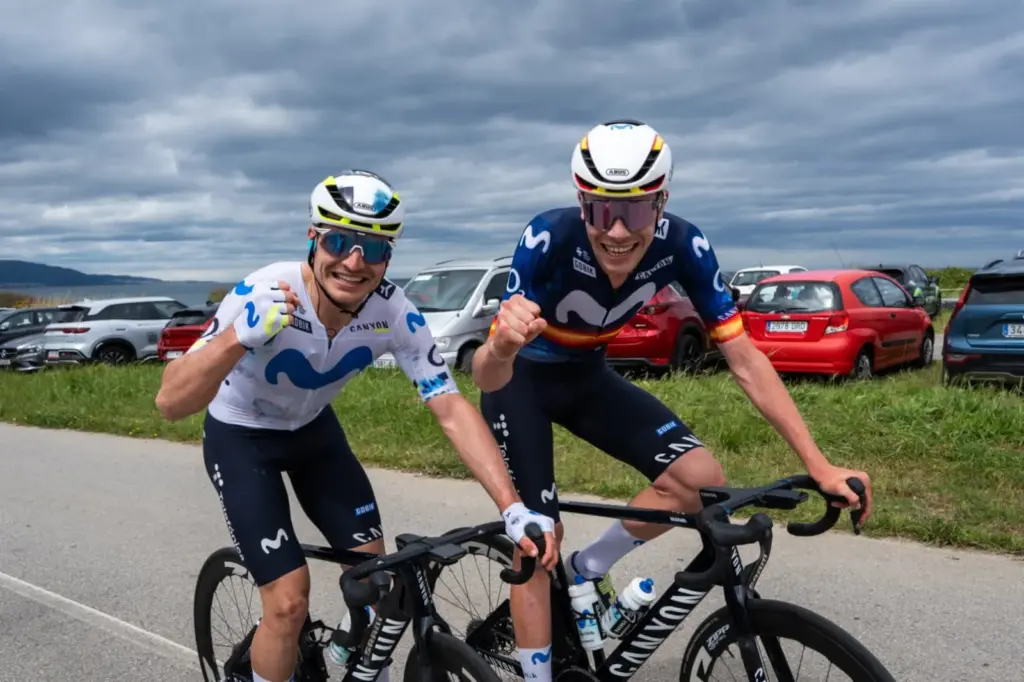
The portrait he makes of Romeo, who is preparing for the Dauphiné and the Tour, the races that give him worldwide fame, and the Tour in which he crashed in the decisive breakaway, frustration, is very different from the one drawn by the skeptical fan. It is the portrait of perfection. “We had a great time. He’s a guy we sometimes call overmotivated because it seems like he’s going to conquer the world but that’s better than giving up,” continues Canal, so emotional in his embrace with Ezequiel Mosquera, former Galician cyclist, inventor and organizer of O Gran Camiño, that only bagpipes and a song to Breogan can do him justice as background. “Romeo is a guy who, even when everything goes against him, gives his all and also the best thing is that when he has to compete himself, he does it and shows he is capable of being a leader, and he is also the leader to help others.”