

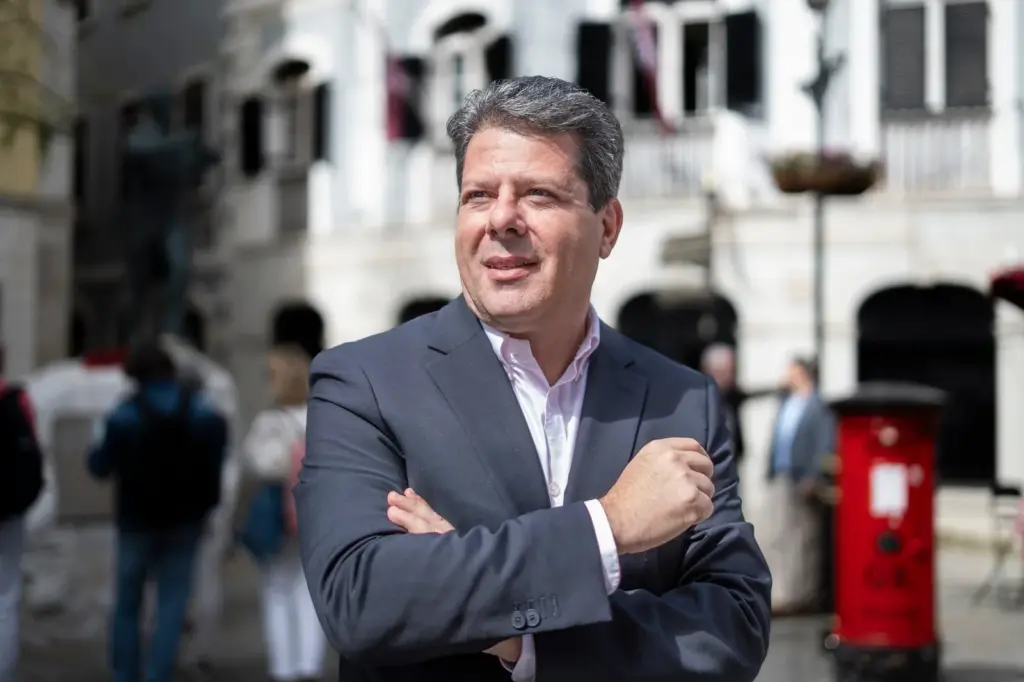
There are two ways to approach a report on Gibraltar. One is to take a stroll with the Chief Minister, the social democrat Fabian Picardo, along the bustling Main Street, the main commercial artery of the Rock, pressing him on the consequences of Brexit and the agreement between the United Kingdom and the EU, on the unresolved tension with Spain over sovereignty, on the formidable economic gap between that enclave and the Campo de Gibraltar: 93,700 euros of per capita income on this side of the Border, a figure that multiplies by five the GDP per inhabitant of the Campo de Gibraltar; ten unemployed — ten, this is not a typographical error, in a population nearing 40,000 inhabitants — and an unemployment rate below 1%, compared to more than 20% just behind the customs.
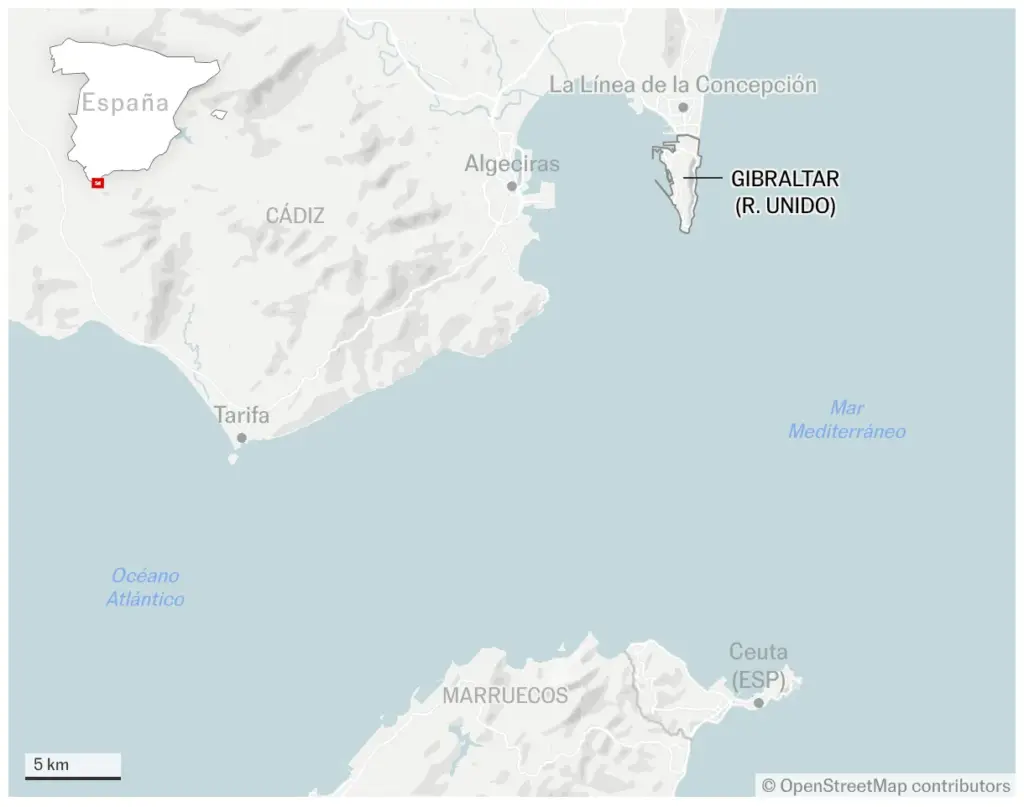
The second option is to offer a more general overview of Cádiz, a province that is a high-grade geopolitical concentrate. Ten percent of world trade passes through the Strait. On a clear day, Morocco can be glimpsed just 14 kilometers away, one of the main threats to Spain’s security, according to the CIS. On one side is the Rota base, key for the United States’ military deployment in the Mediterranean, en route to the Persian Gulf; on the other, Gibraltar, a fundamental military enclave for the United Kingdom in southern Europe and northern Africa.
This story begins back in 1713, with the Treaty of Utrecht, but records a sharp turn on the night of St. John in 2016. When the Brexit referendum count ends, it becomes clear that the majority of Britons want to leave the European Union; 96% of Gibraltarians voted to stay. It is one of the biggest setbacks of the European project since its foundation (and the same can be said of the United Kingdom, a historical mistake almost on par with the Suez disaster).
In Brexit, the frustration over the mediocre economic performance after the Great Recession is felt, a punishment to the establishment, nostalgia for a declining old empire, anxiety about migration, the discomfort — almost resentment — after half a century depending on distant and technocratic Brussels. That episode is the first major shock of ethno-nationalist populism, a phenomenon that has turned the world upside down, and the prelude to Donald Trump’s arrival at the White House. From there, there is a global retreat. Geopolitics hardens: an overload of armed conflicts emerges resembling a global civil war. More walls are built than ever, straits are blocked, borders sealed: the world closes in on itself. And yet Gibraltar opens up: a small enclave at the southern tip of Europe defies that general inertia.
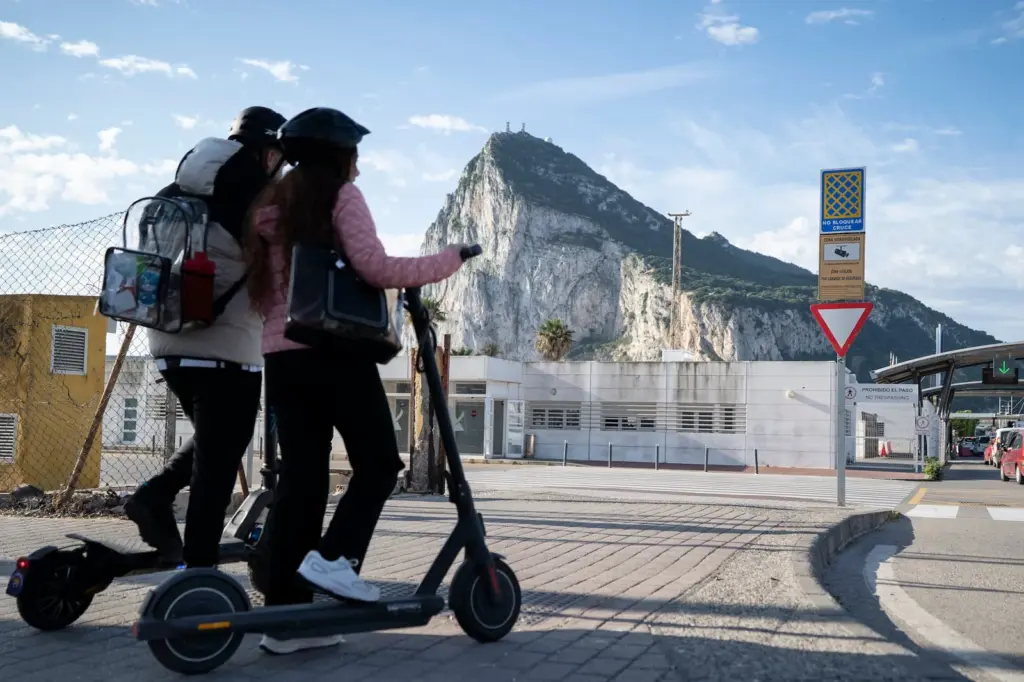
Since that first summer day in 2017, Gibraltar was left in a kind of limbo, subject to the United Kingdom’s exit from the Union and a future agreement between Europe and the United Kingdom that took seven years to arrive. The pact sealed in Brussels, a mammoth of more than 1,000 pages, will end the Border by mid-July, although demolition will begin in just a few weeks, sometime in June, according to sources from the Spanish Ministry of Foreign Affairs.
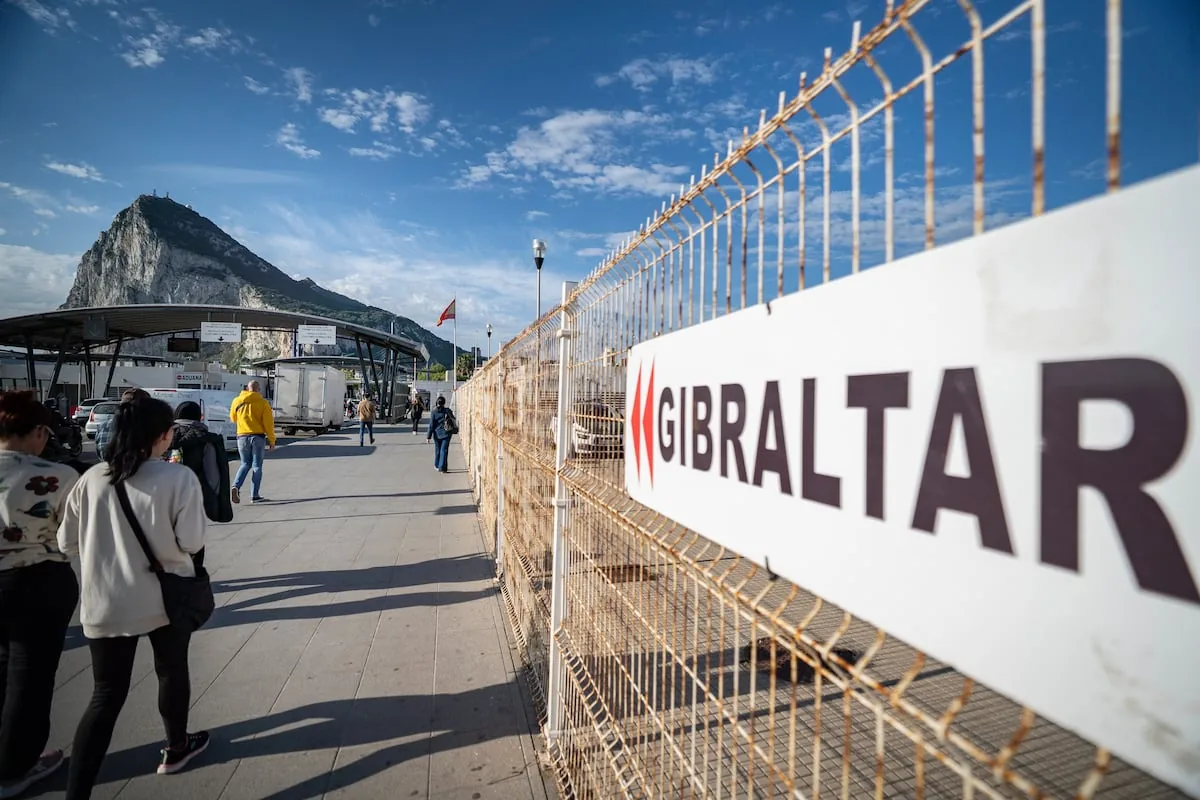
The border is practically located at the port and airport, under the control of British and Spanish agents: the boots of the Spanish police will be on British soil to the despair of the (very few) brexiteers of Gibraltar. The British colony joins Schengen and the customs union, and in exchange, fiscal harmonization is promoted with a tax similar to VAT that does not affect financial services or gambling, two pillars of the Rock’s economy. The more than 15,000 Spanish workers who cross the border daily will have the same conditions as employees with a British passport.
“A no-deal, a hard border, was a shot in the foot for Gibraltar, but a headshot for the Campo de Gibraltar,” explains Picardo during that walk with EL PAÍS. It might have been the other way around, as the PP suggests, arguing that it was time to talk about sovereignty: “London would have let Gibraltar rot before losing the Rock,” disagrees a senior EU source. Picardo is a pragmatist: “It is a pragmatic agreement, in which none of the parties gets everything they would like, but all can be reasonably satisfied,” says the Chief Minister. He certainly looks happier than a clam. “A very damaging uncertainty ends. Gibraltar and the United Kingdom retain the essentials, and our economy is definitively linked to the single market and Schengen, under Spain’s monitoring and under the British flag,” he says, now seated in a café with Spanish full of Anglophile turns of phrase (but not only: the dialect of the llanitos is mixed with terms from medieval Genoese, Maltese, Hebrew, and Portuguese).
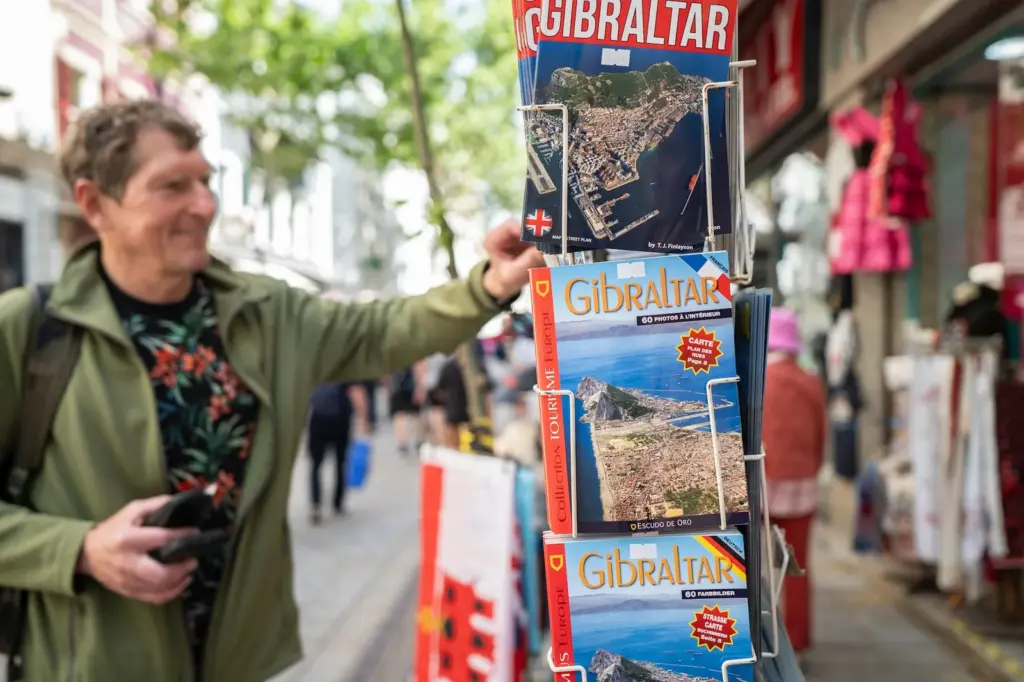
“The last wall of continental Europe falls,” Minister José Manuel Albares often repeats, although Foreign Affairs admits that this pact is only the beginning of a path. One of the chapters of the agreement is to generate “a space of shared prosperity,” but on the Spanish side of the Border, they frown at that phrase. In theory, it is about reducing the phenomenal gap between Gibraltar and the adjacent region.
Juan Franco, mayor of La Línea de la Concepción, is not convinced that this jingle shared prosperity will arrive: “A hard border has been avoided, which would have been a huge mistake. But there is a certain institutional vacuum after the agreement. With the pensions of the 15,500 Spaniards who work in Gibraltar. With the price of housing, which has skyrocketed because Gibraltarians, with very high purchasing power, are buying nonstop and that has raised purchase prices and rents. With fishing and the environment. With the State’s refusal to turn the Campo de Gibraltar into a special economic zone, unlike what it has done with Ceuta and Melilla. With a fund for convergence of which to this day we only know the name. And with lamentable infrastructure: there is no rail connection and the road entry and exit routes are very deficient.” “The economic geography of the area has already begun to change, with several sectors under strain from which state and regional institutions are completely absent to this day,” says the mayor, assertively.
Read more Sergio Scariolo, after falling in the Euroleague final: “It’s going to get harder and harder”
That tension is not seen on the other side of the Border. And certainly does not appear on Main Street during that walk with Picardo, who greets his fellow citizens and enters some shops without anyone, absolutely no one, making a single reproach in almost an hour of walking. “Prices may rise somewhat due to the tax increase, but it’s not a drama. We have done what we had to do,” says the owner of a pharmacy. “We are going to activate an adjustment package to avoid problems during the transition, but we are reasonably satisfied with the agreement,” Picardo concludes.
Foreign Affairs also shows satisfaction: “That pact changes the center of gravity of relations between Gibraltar and the EU, and therefore between Gibraltar and Spain. It ends the Border, which is very symbolic. And guarantees the viability of the whole area with more Spanish presence, with the police carrying out entry controls, or on goods destined for Gibraltar. The Rock looked more to the United Kingdom or even Morocco than to Spain. Inevitably, now it will look much more to Spain,” explains the Secretary General for the European Union of the Ministry of Foreign Affairs, Carlos Moreno.
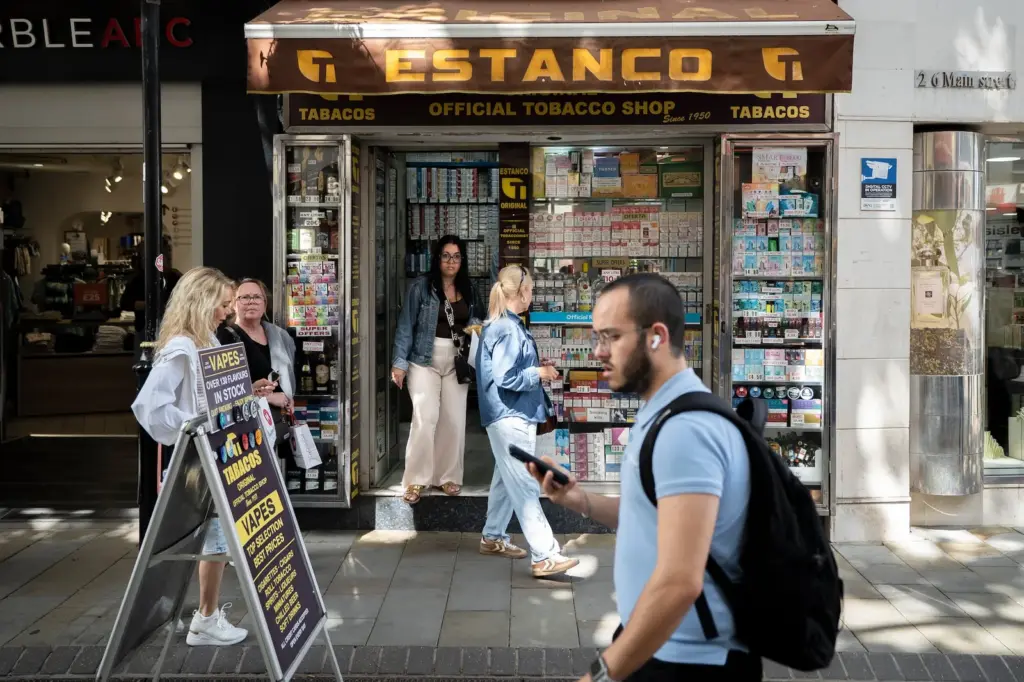
Along the way, the negotiation produced several moments of enormous tension. Spain, unlike Cyprus (an island crossed by another wall, this time with the Turks), decided that Gibraltar was a strictly bilateral matter and managed to make Brexit subject to London and Madrid reaching a pact on the Rock. That Spanish veto power provoked harsh criticism from Picardo, who once described Spain’s position of strength as “discriminatory and unfair.” To this day, he doesn’t even seem to remember that episode. Spain threatened to block the agreement on the Brexit transition period and generated frictions with the Brussels negotiator, the French Michel Barnier. And just before the summit where the UK withdrawal agreement was to be approved, the Spanish government protested angrily over a “surprise article” (184) that Madrid considered ambiguous.
Pedro Sánchez accused Barnier’s team of introducing last-minute changes that could allow London to negotiate directly with the EU the future of Gibraltar, bypassing Spain’s veto power. Spain even threatened to leave the seat empty at that summit, according to European sources, and secured in writing guarantees that none of that would happen. Foreign Affairs does not enter into those tensions. “That’s how a negotiation is,” Picardo downplays. “But never, ever was sovereignty discussed to reach that agreement, despite the PP’s criticism, which when it was in government never raised that issue either.”
In mid-May, the terraces around Main Street are packed. It smells of sausages and fish and chips. Prices in the shops in the commercial area may rise due to the new tax, but no one seems truly worried about it. The only question left is about the infamous sovereignty, a kind of elephant in the room. The llanitos say that in the eighties, when the shipyards still existed, there were separate bathrooms for Gibraltarians and for the British, but the sealing of Franco’s Border — and probably the economic advantages of being such a peculiar enclave — clearly tipped the sympathies of Gibraltarians towards the British passport.
The UN has recommended since 1965 to subject Gibraltar “to a period of decolonization.” After Brexit, Spain presented a proposal at the UN for joint sovereignty and a special status for Gibraltar in the EU, which was rejected by the Rock’s government. But the speeches of former minister José Manuel García Margallo — contacted without response for this report — have no traction in the Rock, nor in Brussels: “Talking about sovereignty would have ended any possibility of signing an agreement,” explains a senior EU source.
In 1967, 99.2% of Gibraltarians voted in a referendum to remain under British sovereignty. Thirty-five years later, in 2002, that figure dropped to 98.9%. “If we vote every 35 years, the next would be in 2037, and by then the percentage might drop to 97%,” jokes Picardo in a bar on Main Street, in front of a coffee heavily loaded with geopolitics.
Read more Protests intensify in Bolivia and those mobilized against Paz report one dead from gunfire