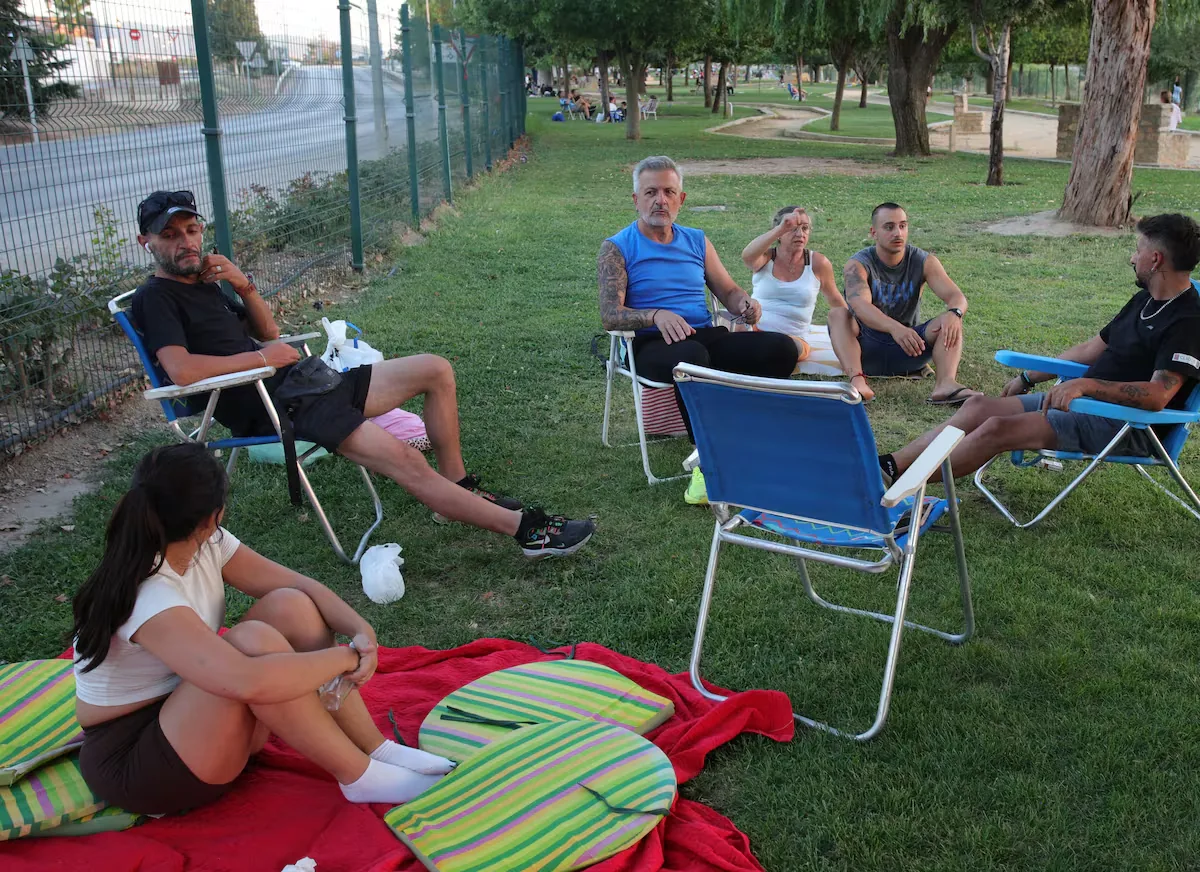
Several beach chairs, a camping tent, fabrics on the ground, Mercadona bags, and water bottles. On an improvised table, a handful of churros for breakfast. “We slept terribly,” said Encarna Narváez with a tired face, who, along with her family, spent the night in Virgilio Castilla Carmona park in Armilla (Granada, 25,300 inhabitants), south of the capital. They did so in an improvised camp and “a bit scared” at the possibility of new aftershocks following the magnitude 4.8 earthquake that shook the Granada metropolitan area this Tuesday. “I was paralyzed and had an anxiety attack,” said Encarna’s son, Carlos Morales. “You hear any noise or bang and think everything is going to shake again. You’re tense all the time,” added his father, Antonio Morales. Nearby, around a hundred people who also slept under the trees of this garden were greeting each other good morning still with fear in their bodies.
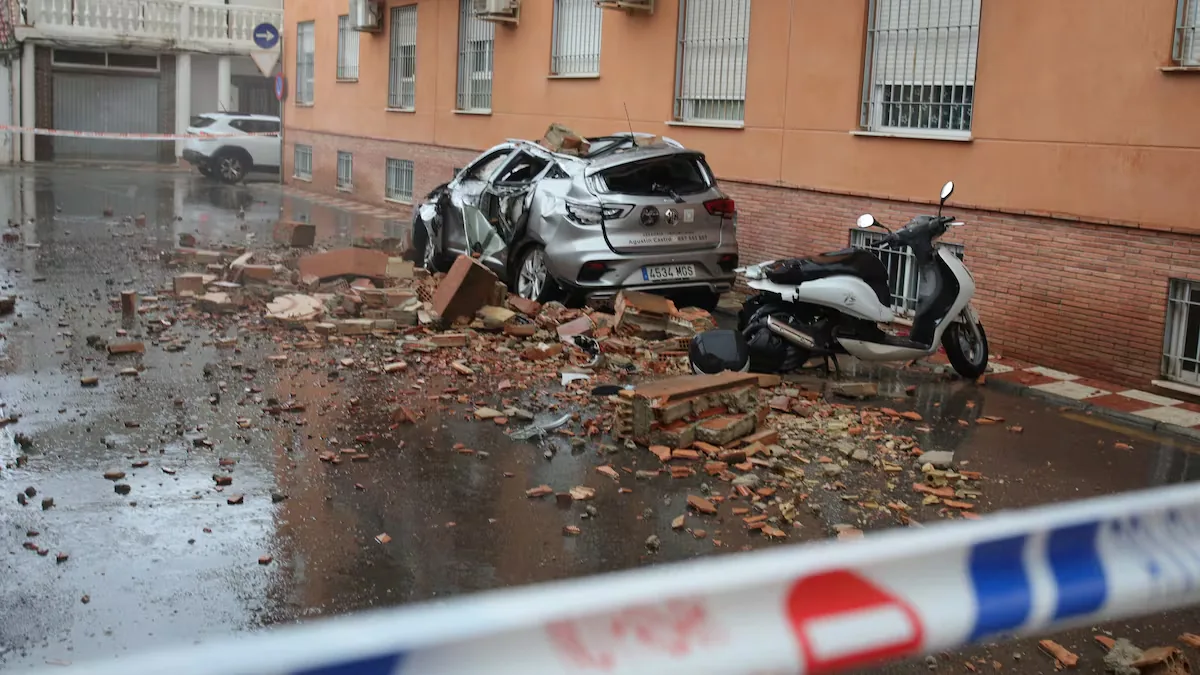
The earthquake that shook Granada this Tuesday morning, just three days after another of the same magnitude, had more than fifty aftershocks throughout the day. Thousands of people took to the streets looking for open areas for safety. The town halls are still assessing the damage to numerous public and private buildings, although structural damage is currently ruled out, meaning no demolition is necessary due to irreparable damage. The most affected are the approximately 600 residents in 371 homes in Las Gabias, who were evacuated after damage was detected in their blocks. Another 71 dependent people were also evacuated from the Reina Sofía Psychopedagogical Center, managed by the provincial council, due to cracks.
In other towns such as Gójar, Ogíjares, or Alhendín, buildings are still being inspected. Also in La Zubia, the most affected neighborhood of the capital. There, Tico Medina park, next to the City of Sciences, also hosted an improvised camp like other green areas of the city. Meanwhile, normality gradually returned with the reopening of La Alhambra — which was closed all Tuesday afternoon — with routes adapted for the possibility of a quick evacuation. The same has happened with closed public buildings. The shopping centers that were evacuated by the Civil Guard as a precaution, Nevada Shopping and Serrallo, have also reopened.
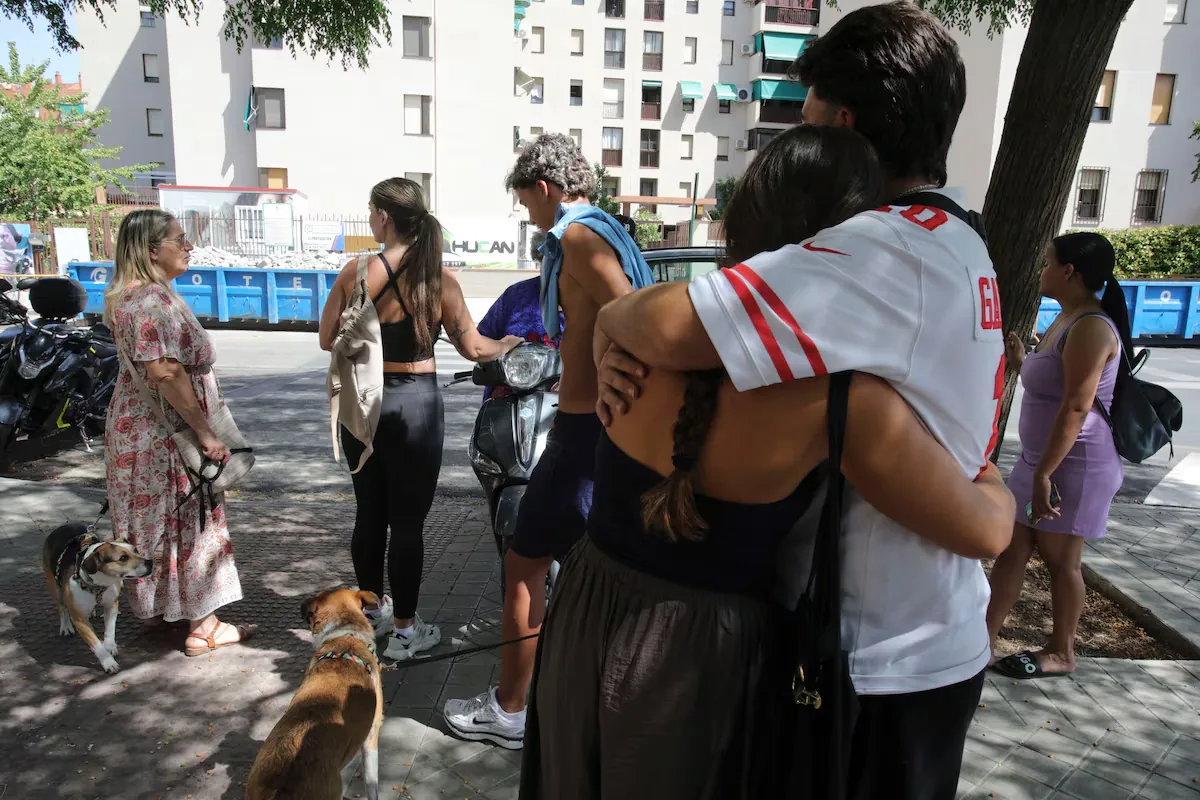
The situation this Wednesday is similar in all towns. The return to routine mixes with the main conversation topic: where and how each person experienced the new earthquake. Some were at the physiotherapist’s clinic, others in a bar, some at home or work. Some of them took to the streets and spent the night sleeping in cars, sidewalks, or gardens. In Armilla, one of the municipalities where the seismic movement was most felt on Tuesday morning, many people have also decided to take refuge in open spaces such as football fields, the airbase, or Virgilio Castilla Carmona park, which the town hall enabled so that anyone who wanted could camp there.
“The day was very hard and very complicated,” said the mayor of this municipality, Loli Cañavate, late Tuesday. Her neighbors confirm it. “We left as soon as it happened. I have three children, I’m also with my grandchildren, and I already had everything ready in case we had to run away,” explains Indira Almuedo, a Colombian who has been living in the area for three years and is around 50. “We live on the second floor, which is filling with cracks. Here I feel clearer because nothing can fall on me,” she said while sweeping the grassy area where they spent a night in which the National Geographic Institute recorded up to 13 aftershocks with magnitudes of up to 2.5 degrees, two of them with epicenter in Armilla. Their data indicate that in the last four days there have been more than 400, the vast majority imperceptible to the population.
Neighborhood collaboration
“They are just a few seconds, but they seem like an eternity,” said Mónica Sánchez, 40, who went to the same park this Tuesday afternoon. She lives in a nearby ground floor, but has a partition wall with a large X-shaped crack, the sink has separated from the wall, and the joints of the pillars have opened. That’s why she left home with her girls and prefers, for now, not to return. “On Saturday they told me it wasn’t dangerous, but now I’m waiting for an expert to reassess it because the second shake was felt more,” the woman says. “This is very scary. I haven’t slept at all all night,” she said alongside Carlos Flores, 42, her neighbor. He was having breakfast with coworkers and, startled by the new tremor, got up and spilled coffee on one of them. “And the worst was thinking about what I might find at home, although it hasn’t suffered damage,” says the man who managed to rest about four hours and points out that it is a comfortable place because there are bathrooms, cleaning, and cooperation among everyone. “Mónica and I have been neighbors for many years and simply greeted each other on the stairs. After this, we are family,” he emphasized.
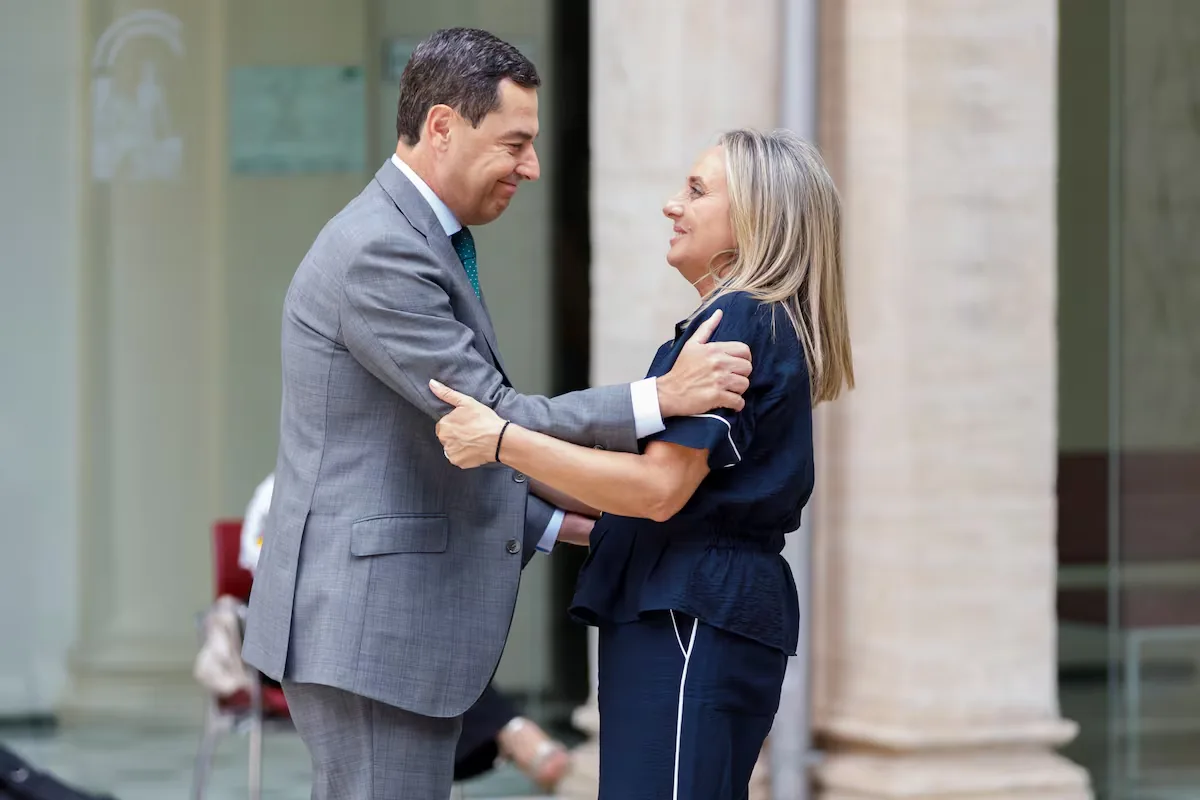
The Andalusian Government met again this Tuesday — as it did on Saturday morning — with the Advisory Committee of the Emergency Plan for Seismic Risk in Andalusia to analyze the evolution of the series of tremors recorded in Granada, as well as to assess incidents and coordinate scientific and operational monitoring, according to the Minister of the Presidency, Antonio Sanz, who sent “a message of calm, safety, and control.” He also asked “that the instructions of the emergency services be followed” and to heed the advice of the 112 Andalusia Emergency Service, which has already managed more than 5,000 calls and almost 2,300 incidents related to the earthquakes since last Saturday. Sanz highlighted that the Group of Volunteer Architects (GAVE) in Emergencies, along with firefighters, police, and municipal architects, are classifying homes according to damage using a color system: green for those with no damage; yellow for those with minor damage; and red for those with situations requiring attention, of which, for now, there are only four.