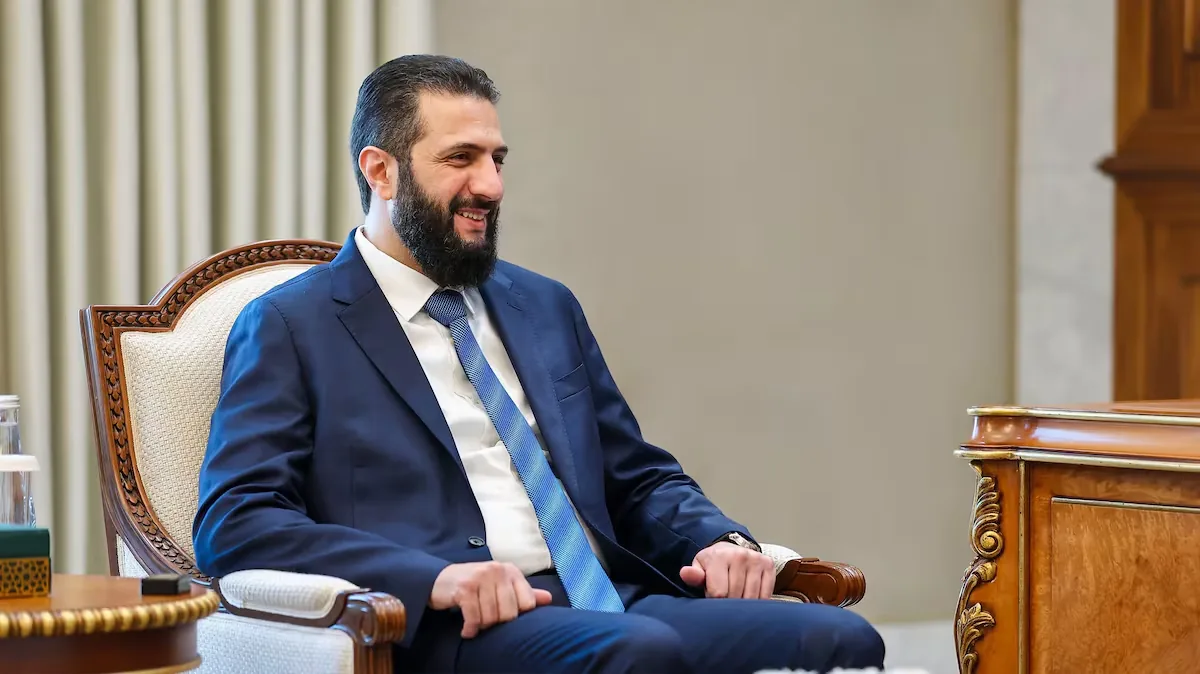






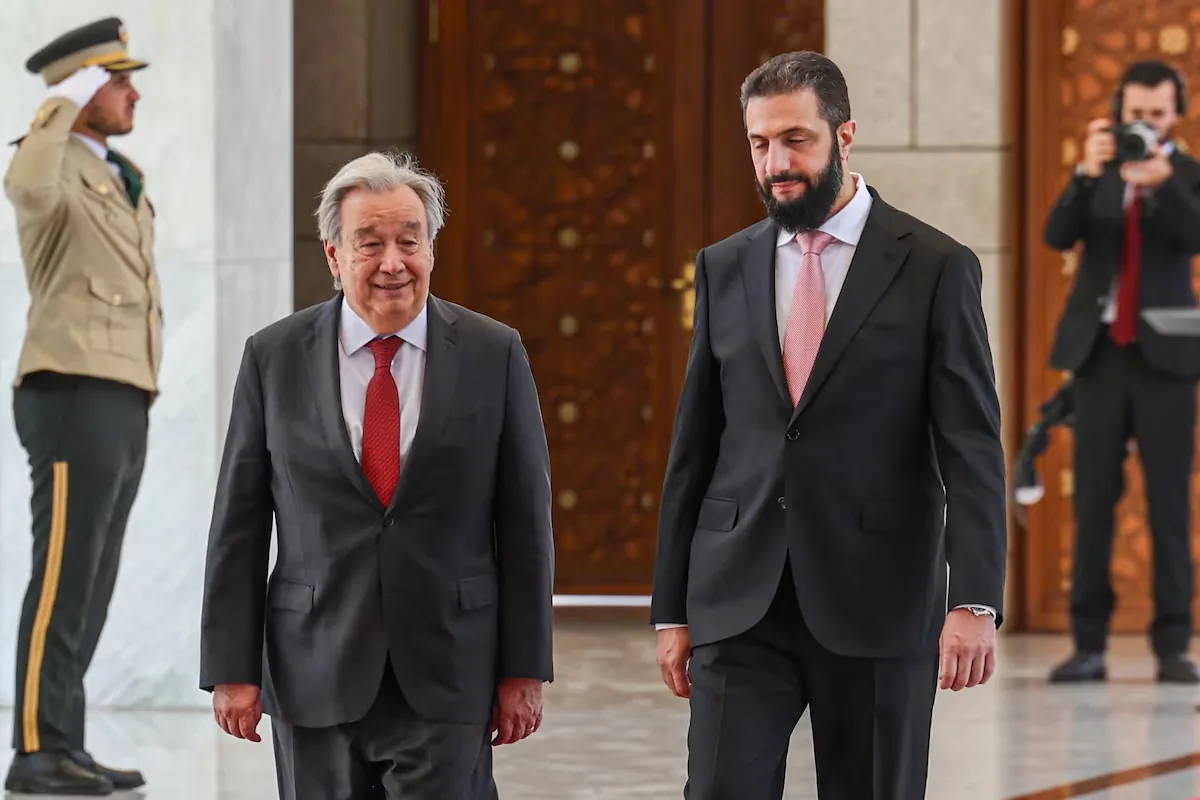
On his first visit to Syria, United Nations Secretary-General António Guterres this Sunday joined the international support that has embraced the Damascus government in recent weeks. “I have no doubt that the transition is going in the right direction and that is why the international community must support Syria,” Guterres said at a press conference held at the Sheraton hotel in the Syrian capital amid strong security measures. It has been 19 months since President Ahmed al Shara took power after ending almost half a century of the Al-Assad family’s dictatorship and 14 years of civil war.
Read more Morocco dedicates the new thousand-kilometer highway linking with the Sahara to Trump
The UN Secretary-General praised the determination of Syrian civil society, with several of whose representatives he met, and wanted to convey optimism about the country’s progress at a time when the entire region seems to be in flames. Guterres firmly condemned “Israel’s violations of Syria’s sovereignty and territorial integrity.” In this regard, he recalled that “the Golan Heights [where Israeli troops continue to expand the occupied zone] are part of Syrian territory.” On Saturday, he met with President Al Shara and Foreign Minister Asaad al Chaibani at the presidential palace in Damascus.
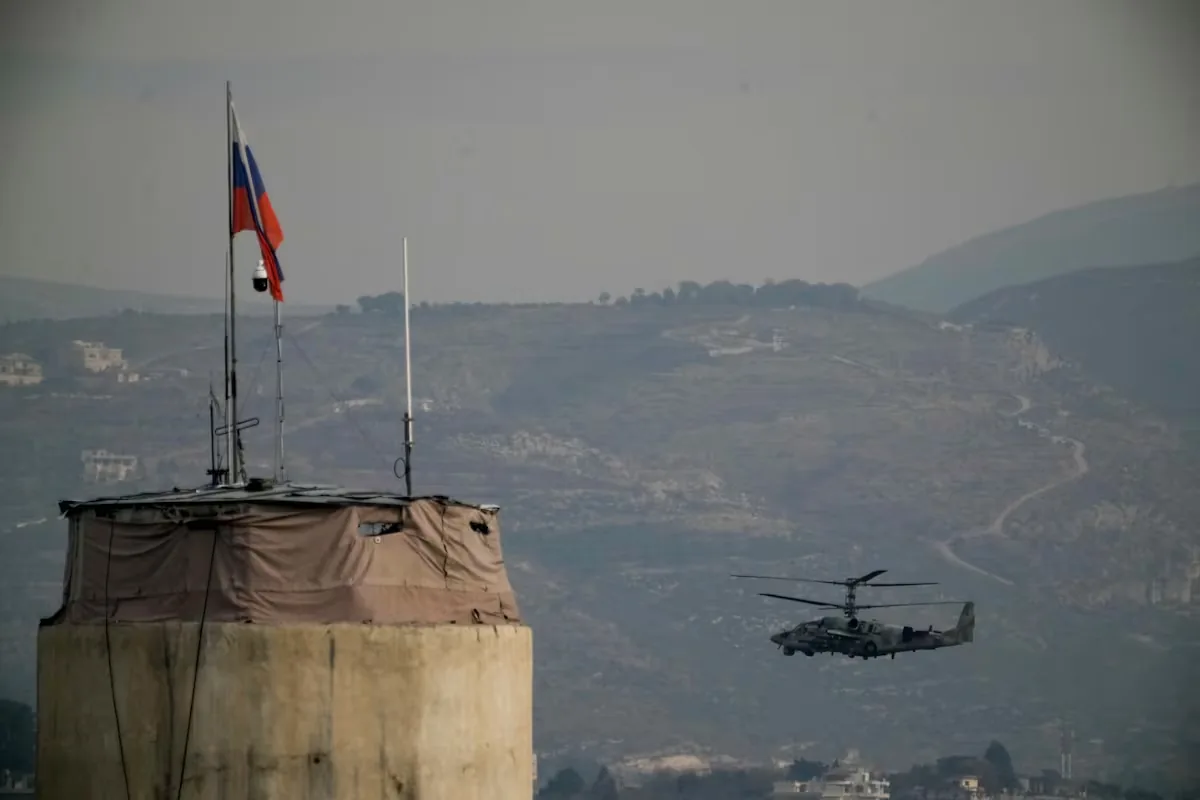
This is one of the last visits the Portuguese diplomat will make, as his mandate at the head of the UN concludes at the end of this year. His trip to Syria was expected to last several days, but in the end, it was reduced to just one and a half due to multiple security alerts in the Arab country. Among the planned stops on an agenda that has been kept secret, the one that would have taken him to a position of the United Nations Disengagement Observer Force (UNDOF) in the south of the country, where a thousand peacekeepers remain deployed to supervise the neutral zone between Syria and Israel in the Golan Heights, has been canceled.
The Secretary-General arrived in the country just weeks after two bombs exploded near a hotel in Damascus where French President Emmanuel Macron spent the night, overshadowing the first visit to Syria by a European Union head of state since the overthrow of Bashar al-Assad.
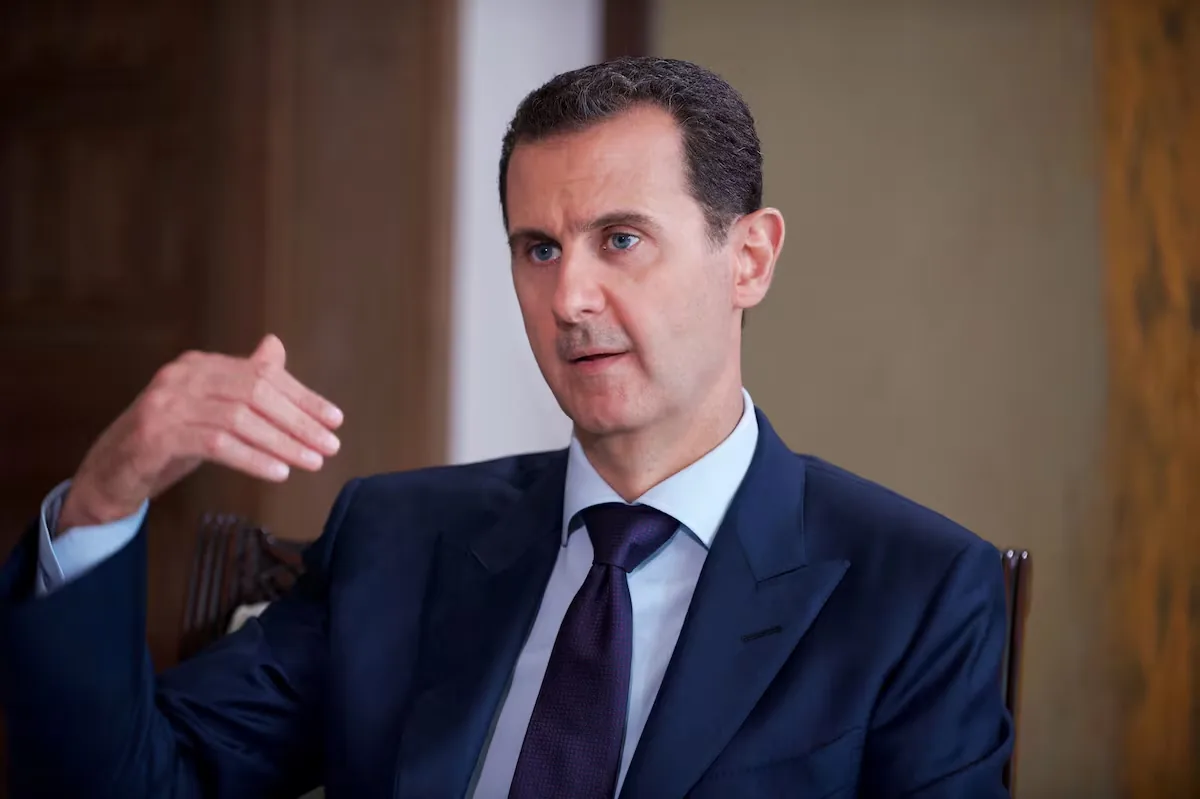
Among the messages of support for the country, Guterres also launched a harsh criticism against the regime of the fallen dictator, and said he was “horrified” after his visit to the “already sadly famous Saidnaya prison, where dozens of people were murdered.”
After listing the different work fronts to which the UN can provide support, ranging from reconstruction to revitalizing the investment sector, he said that the United Nations wants to “support its political transition, including its efforts to ensure transitional justice, draft a permanent Constitution, and hold free and fair elections.”
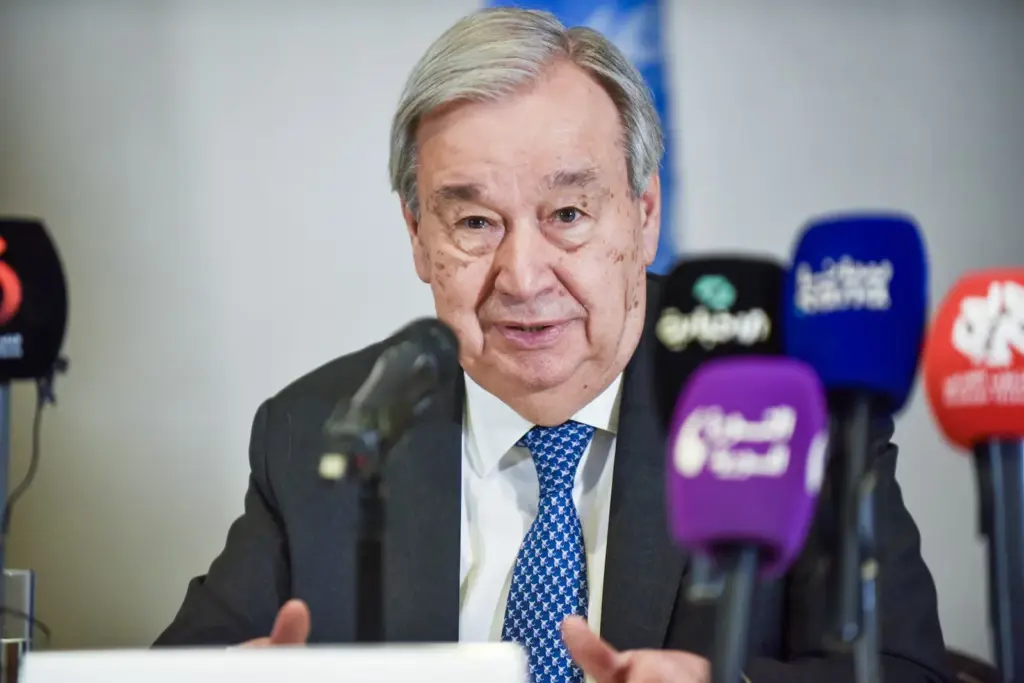
Guterres’s words are directed at the new government, whose leader has gone from leading a Syrian militia affiliated with Al Qaeda to donning a suit and tie and becoming the first Syrian president to be received at the White House in six decades. And yet, that honeymoon that Syria seems to be experiencing vanishes as soon as one steps onto the streets of Damascus, where many neighborhoods are plunged into darkness at nightfall.
Read more Mexico falls in love with Isaac del Toro’s feat
“Prices have skyrocketed and now we can no longer make it to the end of the month,” summarizes Muna, a mother of three, at the entrance of a shop in the central Souq Sarouja neighborhood of Damascus. She prefers not to give her last name and says that her husband, who works as an accountant in a company, receives a salary of barely 130 euros per month. The numbers don’t add up for her, she argues, adding up the cost of water, transport, electricity, and gas with her fingers, totaling more than 150 euros per month.
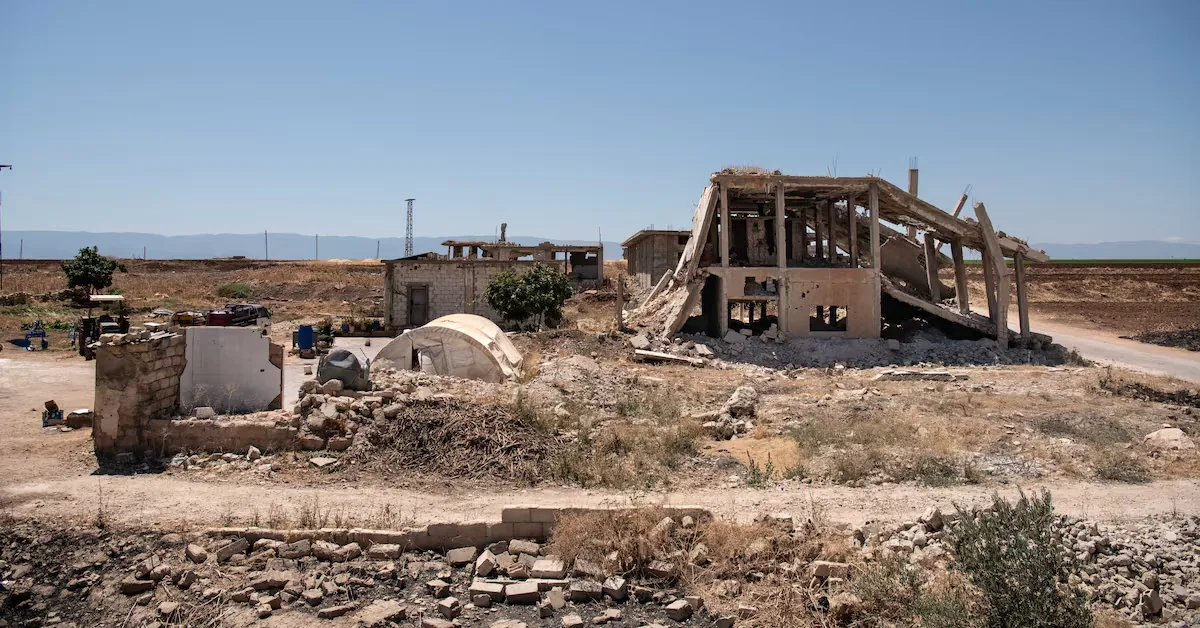
The woman admits that there are now more hours of daylight per day and more services in general, but with the withdrawal of state subsidies, these services are out of reach for most citizens, where the middle class has been erased after almost three lustrums of conflict. Those who have to pay rent, or for medicines, she says, “can no longer even eat.” And that is the situation for nine out of ten Syrians living in poverty, according to UN data.
Among Syrians, frustration replaces initial enthusiasm as promises of external aid do not materialize, the cost of living skyrockets, and reconstruction efforts remain stalled. “With the visits of Arab leaders, Syrians expected money to flow from the Gulf and for Syria to become a new Dubai. The government has not known how to manage expectations,” considers a European diplomatic source in Damascus. “Hence, the Secretary-General’s visit is so relevant for the authorities now, because they have realized that they will need all possible help,” she states.
Delegates from different agencies – such as UNICEF, which funded this newspaper’s trip to Syria to visit its projects – and humanitarian aid NGOs also celebrate the visit and the new phase of collaboration opening with the Damascus government. “Cautious optimism” is the most repeated term among the international community and returning Syrians regarding the country’s direction, which alternates between reforms and rising insecurity hotspots in the northern and southern regions, along with an increase in unclaimed attacks in the capital.
The obstacles are of various kinds, explain aid workers, from the heavy administrative bureaucracy inherited from the previous regime that slows everything down, to the difficulty of receiving bank transfers in the country until all economic sanctions are lifted. The lack of liquidity of a central bank without the capacity to issue more banknotes means that the old currency with Bashar al-Assad’s face coexists with shiny new banknotes, while international aid arrives in suitcases full of dollars.
While the pragmatic Al Shara has skillfully pulled the country out of the international ostracism into which his predecessor plunged it, UN officials warn that donor countries are drastically cutting international aid as needs multiply with the destruction in Gaza, Lebanon, Iran, and add to those already existing in Yemen or Libya.
Read more A minor dies as a result of a multiple traffic accident in Mataró