








That an adult man rapes a girl is legal in Afghanistan since May 14. On that day, the Taliban enacted Decree No. 18 or the “Judicial Separation Code of Spouses,” a rule that legalizes child marriage without even needing to stage supposed consent from the minor; her silence is enough. What this decree sanctions is “that girls can be married at six, seven years old or younger under the pretext that these minors can theoretically request a divorce upon turning nine,” that is if they are still virgins and dare to confront an adult husband and Taliban judges, summarizes Afghan activist Zubaida Akbar. It is at that age of nine that the radical Hanafi Islamic jurisprudence — followed by the Taliban — arbitrarily places female puberty.
Read more Florentino Pérez: “No one can doubt me. I don’t need the money”
The normalization of pedophilia is not the only provision of this new law that further closes the cage in which the Taliban have locked women and girls since their return to power on August 15, 2021. Akbar, director of the Afghanistan program at the organization Femena, explains from the United States that this decree reduces to almost nothing the chances of an Afghan woman obtaining a divorce. It also prevents a woman from requesting that her husband be declared dead, even if he has been missing for decades, “until all the man’s contemporaries have died.”
Decree No. 18 is a “particularly disheartening” law, laments the activist. It is also just another misogynistic measure, she points out. In their nearly five years in power, the Taliban have enacted around 140 rules, decrees, or simple freedom-restricting orders against women. Femena had already counted 134 last summer. These rules are the pillars of what Akbar calls “a hell on earth”; an abyss that grows deeper while, at the same time, the international community takes steps to legitimize the fundamentalists as rulers of Afghanistan.
In 2025, Russia became the first state to officially recognize the Taliban government. On the same day the decree legalizing child marriage in the Asian country was enacted, May 14, it was revealed that the European Union had invited a delegation of fundamentalists to Brussels in June to discuss new ways to expel Afghans (both men and women), at the instigation of about twenty member countries, among which Spain is not included.
“A red carpet that that Europe, which presents itself as a defender of human rights, lays out for the Taliban, thereby conferring legitimacy on them,” summarizes Afghan journalist exiled in Spain Khadija Amin.
Pretexts
One of the first decisions of the Taliban upon returning to power was to suspend the Constitution which, among other safeguards, established a minimum age of 16 to marry. That law was not respected in many cases, recalls Rachel Reid from London, of the Afghan Analysts Network (AAN), but at least it existed, as did “female judges, prosecutors, lawyers, and shelters for victims,” details the analyst.
The so-called “Taliban 2.0” — a term used since 2020 by the United States, partly to justify the abrupt withdrawal of its troops from the country — were not much more moderate than those who ruled the country between 1996 and 2001. They were more cunning; more aware that the pariah status before an international community whose reaction they probably wanted to test was not convenient. Perhaps for that reason, at first the fundamentalists proceeded cautiously. With pretexts.
For example, in September 2021, when they closed female secondary schools and claimed it was a “temporary” closure while guaranteeing sex segregation in education that, in reality, already existed. By then, they had already urged Afghan women not to go to work, using the excuse that their militants were not used to dealing with women.
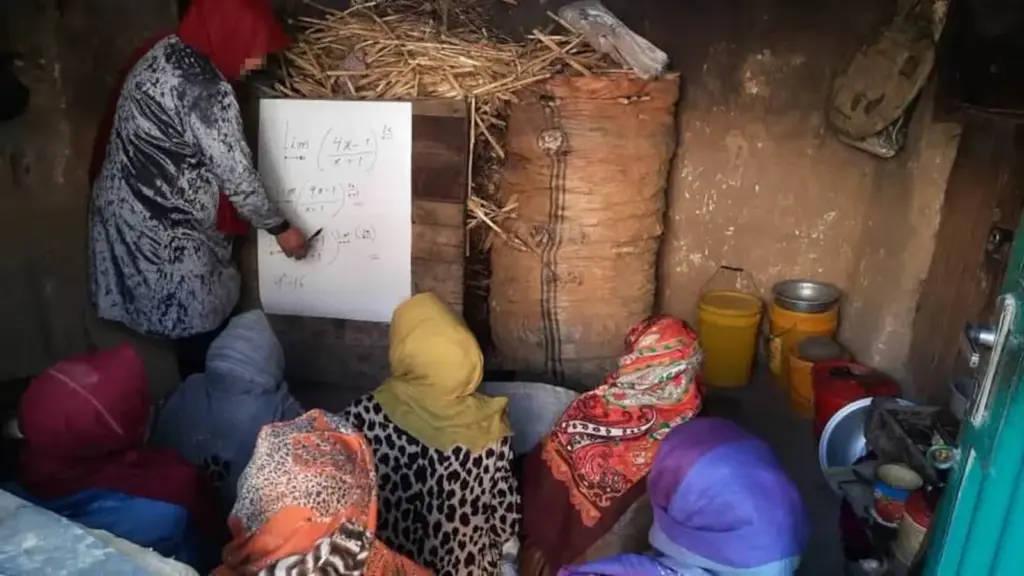
First, they banned secondary education. Then, in December 2022, university, making Afghanistan the only country in the world where girls are banned from studying from age 12. Since then, the Taliban have been shutting down all alternatives Afghan women sought to continue their education, such as private language academies or vocational schools run by humanitarian organizations. The fundamentalists particularly persecute clandestine schools that some girls still attend, risking their lives. Rachel Reid thinks this shows their “courage, tenacity, and desire to learn.”
In the nearly five years of Taliban rule, 80% of Afghan women have been expelled from the labor market, according to a UN Women report. Afghan women are banned from working in the administration, security forces, banks, NGOs, and United Nations humanitarian agencies. Nor can they work as prosecutors, judges, or deputies, and they cannot even run beauty salons, which the radicals closed in July 2023, depriving them of one of the few places where they could still earn a living and socialize.
The few who still have a job are required to be accompanied by a male relative — the mahram or guardian, father, husband, or brother — on the way to and from work. If a woman dispenses with or lacks that guardian and dares to venture out on the street, she can be imprisoned and tortured. Afghan women also cannot obtain a passport, go to a hospital, or travel without that rifle.
Leisure is also forbidden. In addition to the general ban on listening to music, there is a ban on entering parks, gardens, gyms, public baths, restaurants, and cafes. They are also banned from practicing sports and driving, and even their mere presence alone on the street without a defined purpose is considered “loitering,” even though most beggars now seen on the streets of Afghan cities are women and children, something directly related to the work ban.
Sealed windows
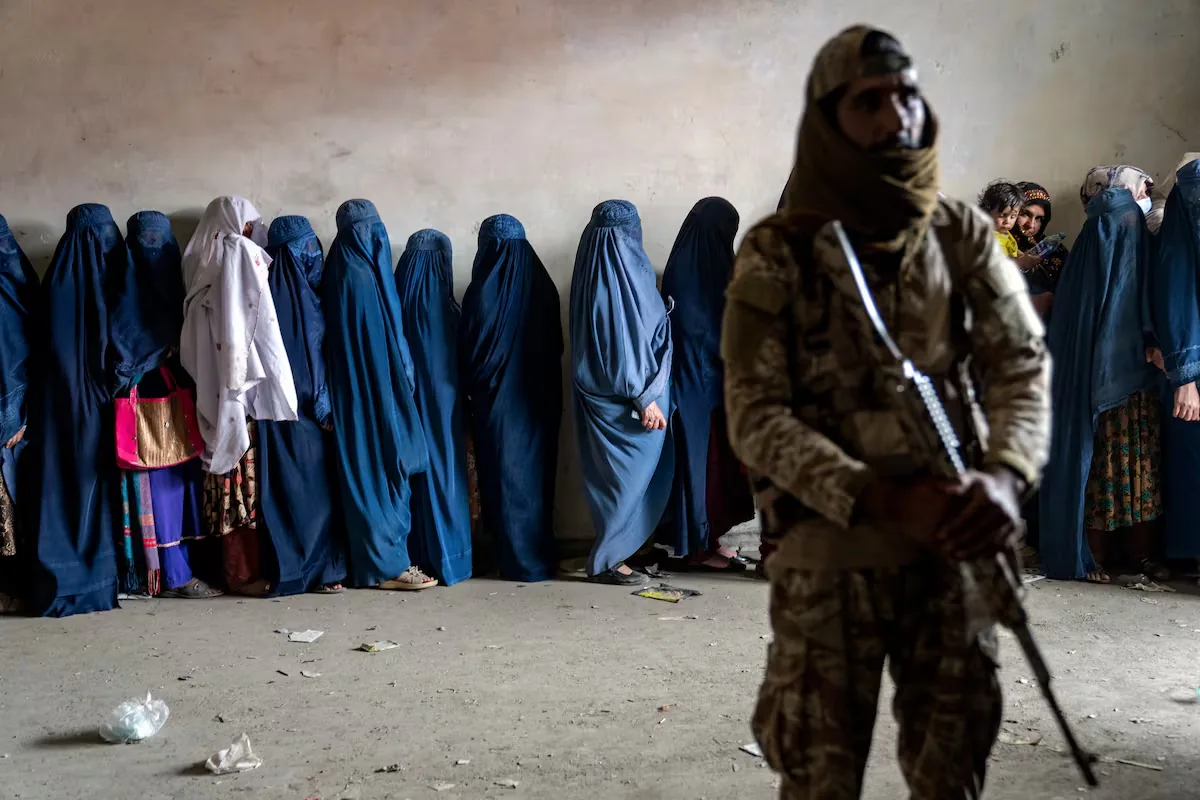
In 2024, the Taliban took another step in their desire to turn Afghan women into shadows by approving a morality law that prohibits them from showing their faces, looking at men, and speaking in public, equating their voice to something that must be hidden like genitals. Previously, they had forced them to cover from head to toe — the burqa is not yet mandatory — and banned the use of perfume, high heels, and brightly colored clothes. Afghan women cannot even peek out a window. The fundamentalists have ordered all openings that allow them to be seen from the street or neighboring homes to be sealed.
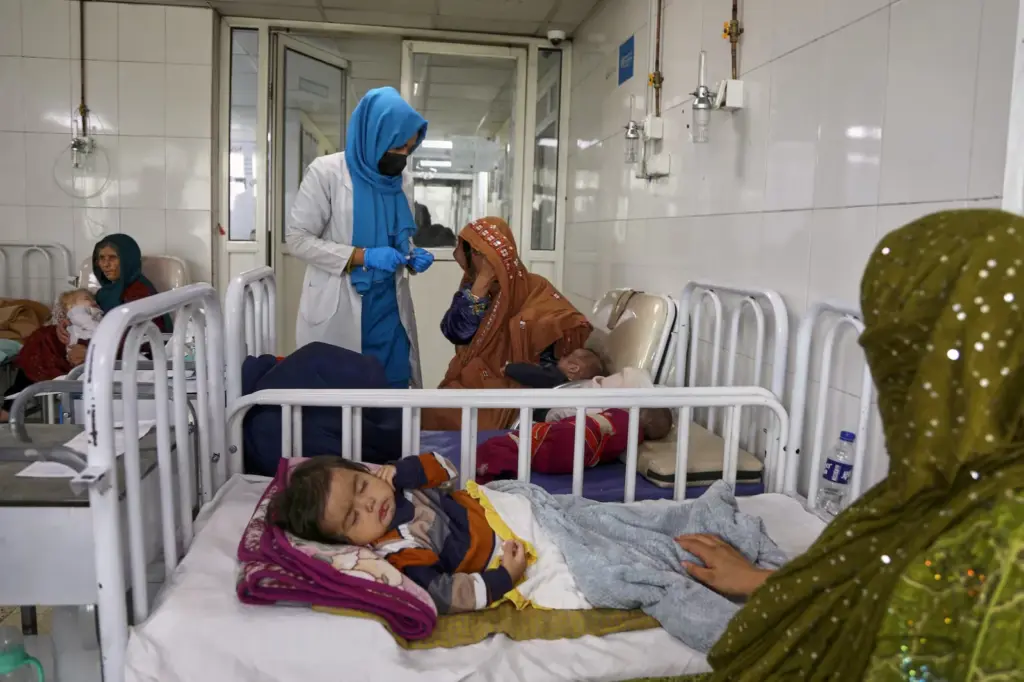
Even more serious is that Afghan women cannot be attended by male doctors, not even in life-threatening situations, when the country suffers a severe shortage of female healthcare workers that will only worsen. In December 2024, the fundamentalists eliminated the exception that until then allowed Afghan women to study medicine, nursing, or train as midwives. That decision is a deferred death sentence for many women in the country.
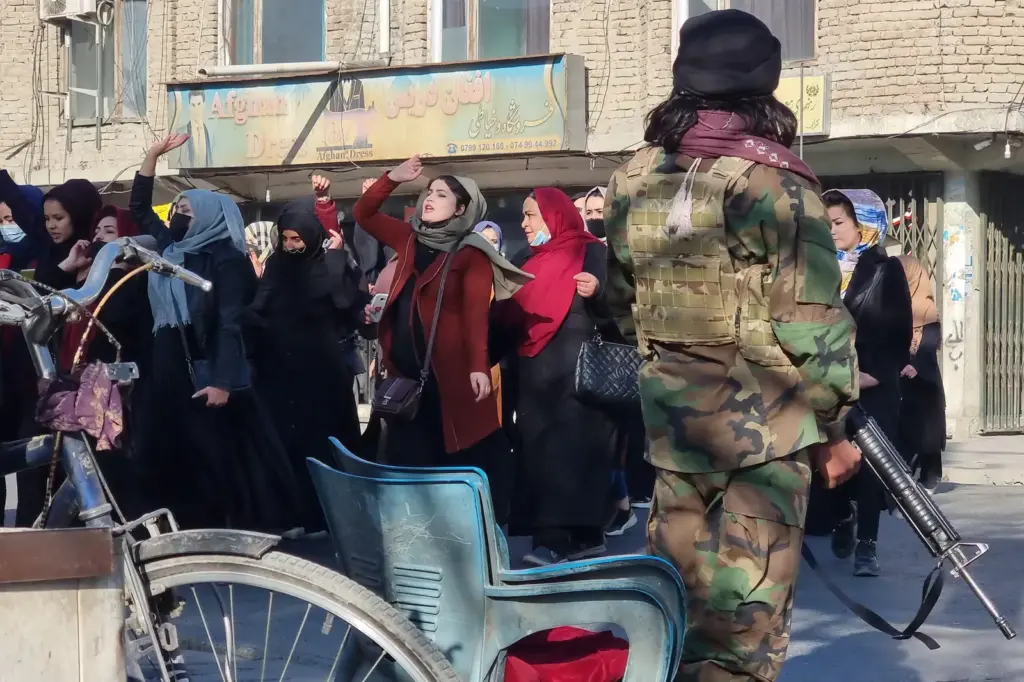
That long list of measures to curtail the rights of women and girls demonstrates, Reid assures, “the systemic nature of discrimination that affects all facets of Afghan women’s lives”; what the United Nations defines as a “gender apartheid” against which Afghan women, progressively forgotten by the international community, continue to protest. Amnesty International has documented dozens of cases of protesters subjected to enforced disappearance, imprisonment, beatings, electric shocks, and all kinds of torture.
Misery
So far, the most decisive international action against the Taliban has come from the International Criminal Court (ICC), which last year issued arrest warrants against Haibatullah Akhundzada, their supreme leader, and Abdul Hakim Haqqani, president of the Afghan Supreme Court. Several senior officials of the fundamentalist government also face financial sanctions and travel bans from the Security Council and various countries. However, in 2024, the UN executive body temporarily lifted those sanctions so that four Taliban leaders could make a pilgrimage to Mecca. Before that, they had traveled to the United Arab Emirates without anyone disturbing them.
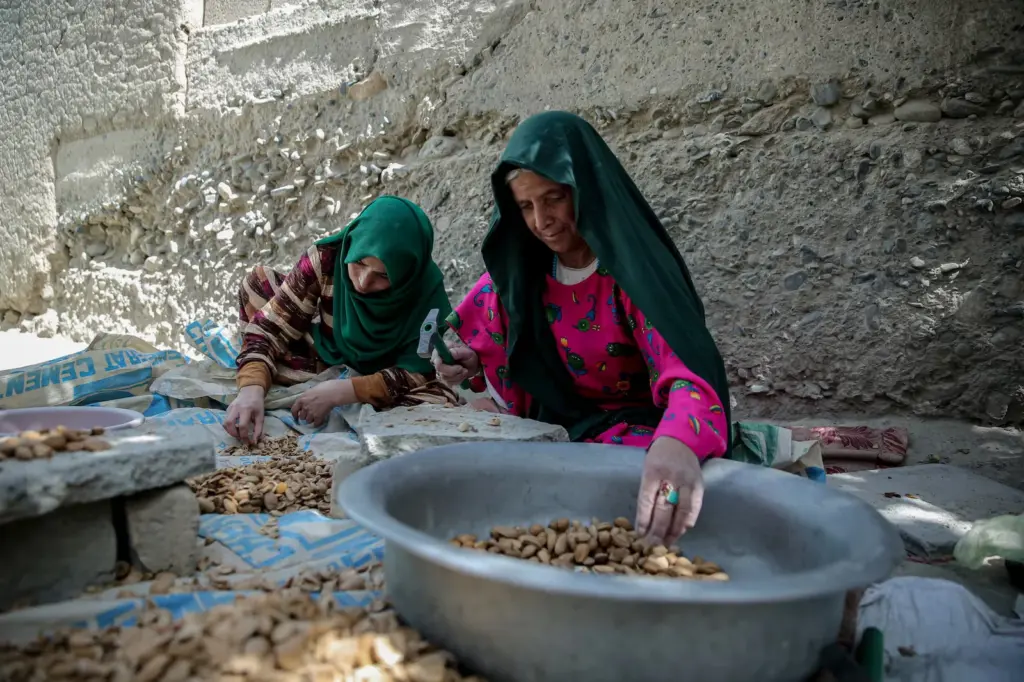
The misery in which Afghans live has also turned out to be a bargaining chip in the hands of the fundamentalists. Almost 23 million of the approximately 44 million citizens needed humanitarian aid in 2025. Faced with the dilemma of abandoning these people to their fate or collaborating with the Taliban, the international community has opted for the latter. Afghanistan is not under a trade embargo, and the country continues to receive humanitarian aid partly controlled by the Taliban. Almost five years after the fundamentalists’ return, the international reaction to each new violation of the rights of women and girls in their country is usually limited to empty statements of condemnation.
Amid this impunity, the Taliban accelerated in 2024 the codification of their “gender apartheid,” gathering more than a hundred edicts against women under the umbrella of the morality law and thus giving them the status of legal norms. Last January, the legal architecture of oppression was further consolidated when the fundamentalists enacted a rule that acts as a Penal Code and legalizes gender-based violence.
That law not only allows the husband to “punish” his wife — or rape her — whenever he deems fit, while the wife is even prohibited from seeking refuge in her family’s home. It equates women to property whose value is less than that of a camel or a dog. The law provides a prison sentence of only 15 days if a man causes “a fracture, an open wound, or a bruise” to his wife. That only if the woman manages to prove it before a judge to whom she cannot show even a centimeter of skin. The penalty for organizing a dog fight can be up to five months in jail.
That code exposes Afghan women to violence from literally anyone. The text states that any Muslim “who witnesses what is considered a ‘sin’ is authorized to impose a corrective punishment on the spot to ‘prevent vice’” or prohibited acts, when Afghan women are already banned from almost everything. Except “breathing, which is not the same as living,” says one of them in a Femena report.
“It is not surprising,” reflects Zubaida Akbar, “that there is not a day without news of Afghan women’s suicides or femicides committed for the most trivial reasons.”
The entire “Taliban system offers impunity and legalizes violence against women, who can be beaten, imprisoned, and humiliated by the Taliban, by fathers, husbands, or brothers,” says the activist. Or by simple passersby. If you kill a woman, “nothing happens.” And “it is not just about erasing Afghan women from the workforce and public space, as has been said,” emphasizes the Femena activist, but the goal is “to physically eliminate them.”
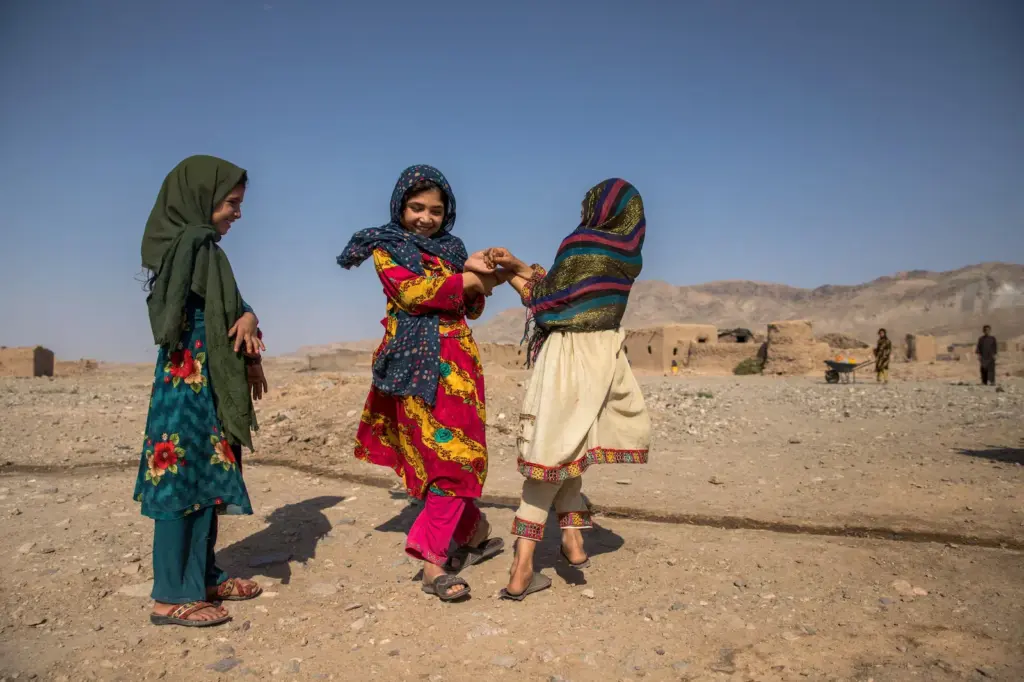
Sold
Karishma, 24, was a Computer Science student who was prevented from graduating by the university closures. Now, she says from an undisclosed location in Afghanistan, she survives more than lives “without plans or a future.”
Unable to study or work, many families are giving their daughters in marriage because they think “at least they will be safe,” explains the young woman. Then she sends a photo of another girl. Her name was Fajunda and she was 17. In the image, the teenager smiles with one hand over her heart.
Last August, Karishma recalls, Fajunda’s husband “killed her near the Gulhabar market in Kabul, a month and a half after getting married.”
Karishma then recounts the case of a six-year-old girl who was married to a 45-year-old man in Helmand, in the southwest of the country. An Afghan girl is right now “the most defenseless human being” one can conceive, laments Rachel Reid.
She is also a commodity. Karishma knows several cases of fathers who, plunged into misery, have sold their daughters to adult men. This young woman is struck that this trade, which condemns girls to sexual violence, “early pregnancies that put their lives at risk,” and buries them alive, sometimes has as a counterpart “very small amounts of money.” UNICEF mentions cases where that payment has been less than 2,000 euros. International NGOs estimate that child marriage has increased by 500% in Afghanistan in the nearly five years of Taliban rule.
Some Afghan women escape, but most have no way to do so. This newspaper wrote to Zahra, a girl from Kabul who taught English to other young women online. A man answered instead. Zahra now lives and studies in Bangladesh.
Leila Bassim set up the last women’s bookstore in Kabul. The Taliban closed it and beat her. She was threatened with death. This week she responded to EL PAÍS from a Western city. She lives free and has become a mother to a girl.
Read more Barcelona — Valencia Basket: schedule of the Basketball match of Matchday 33 of the ACB League