








That the 1990 Education Law (Logse) included 0-3 was seen as a promise. This Law a) made it clear that education starts from birth, b) focused early childhood education on integral development (emotional, social, cognitive, motor), c) recognized 0-3 as key for social equity; d) established early detection of special educational needs; e) ordered educational administrations to intervene “as soon as possible by adopting measures for adequate care from the first moment.” Additionally, f) established the obligation that those working in this cycle have the appropriate training and qualifications, and g) considered collaboration with families and tutorial action essential.
Read more This is how the transition from mutual insurance to Social Security will be
Professionals in the 0-3 cycle met the requirement and hold the degree certifying their professional qualification. However, to this day, almost all the conditions that the Ministry of Education or the autonomous educational administrations were supposed to fulfill remain pending. The disappointment has grown, and now a major protest is emerging throughout the state.
Debts with 0-3
Five educational laws followed the Logse. All have insisted on the same attributions and responsibilities for the 0-3 cycle. After almost forty years, no law or budget has implemented concrete resources to enable them.
I will comment on essential aspects:
Conditions of the centers
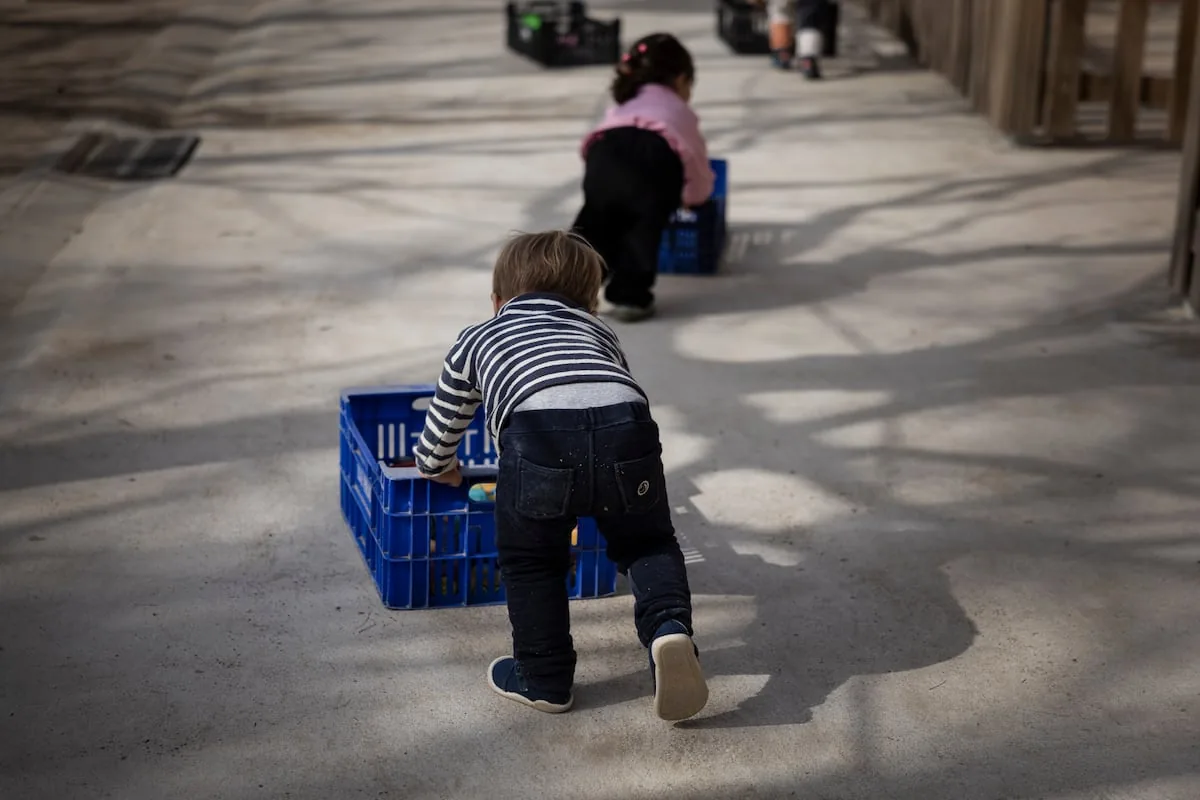
RD 1004/91 established a minimum of 2m2 per child for 0-3 (minimum 30m2 per classroom). Who can imagine children under three spending six or seven hours a day in 2m2? In some autonomous communities, public centers have somewhat more space. However, most private centers and many public ones maintain these very limiting conditions.
Detection and adequate attention to special educational needs
Scientific knowledge and regulations emphasize the importance of early detection and inclusion measures. Still, while in the second cycle of early childhood and in primary schools, in compliance with the law, human resources for these needs have multiplied, in 0-3 this is not the case: educational administrations maintain very insufficient resources for detection and inclusion.
Evaluation of educational processes
By legal imperative, the ministry and all communities have Institutes for the Evaluation of the Quality of the Educational System to detect system deficiencies and guide decision-making. In 40 years, not a single evaluation has been carried out on what happens in 0-3, nor have criteria been established on the quality of its educational functioning. Maybe they don’t care, or perhaps they don’t want it to be known what happens. Or they simply do not consider it an educational cycle.
Ratios
Since ratios were established for all educational centers in 1991, the number of students per teacher has been halved throughout the educational system except in 0-3. Thus, a professional must care for eight babies for six or seven hours a day. Educational sciences and laws increasingly insist on personalization and quality of treatment for students. With eight babies? With twelve one-year-old children?
Read more Fear and Opportunity: Immigration Scams Surge During Trump Raids
Schedules
Teachers with students over three years old have seen their schedule reduced to 25 hours of teaching and 5 hours for family attention, meetings, etc. However, in many centers, 0-3 educators work 38 hours a week without allocated time to perform tasks required by law: family interviews, planning, etc.
And the management of nursery schools?
It is the only public educational cycle with mass outsourced management, with the lack of transparency and precariousness this entails for children and professionals.
And the salaries?
It is a provocative grievance that many 0-3 professionals earn half or a third of what their colleagues in the 3-6 cycle earn despite having similar obligations and responsibilities.
How can there be so much accumulated debt? Are we facing a mortgaged 0-3?
Perhaps it has to do with the labyrinth to which education and 0-3 people have been sent.
Yesterday I dreamed that an Ethical Tribunal of Educational Debt with 0-3 had been created that invited those responsible for 0-3 policies to a retreat to reflect. At the end, many of them, suddenly lucid, publicly apologized to families for the harm caused to some children, for not having guaranteed detection at the right time nor the immediate necessary support established by law. Many also thanked 0-3 professionals for the enthusiasm, commitment, and generosity with which they try to make up for what educational administrations do not provide. One of the several advisors approached and whispered to me: “We are very clear that it must improve a lot. We will change it!”