EL PAÍS offers the América Futura section openly for its daily and global informative contribution on sustainable development. If you want to support our journalism, subscribe here.
Read more Orphan and mother of four siblings at 18: the life of Heidy Rojas after the earthquake in Chocó
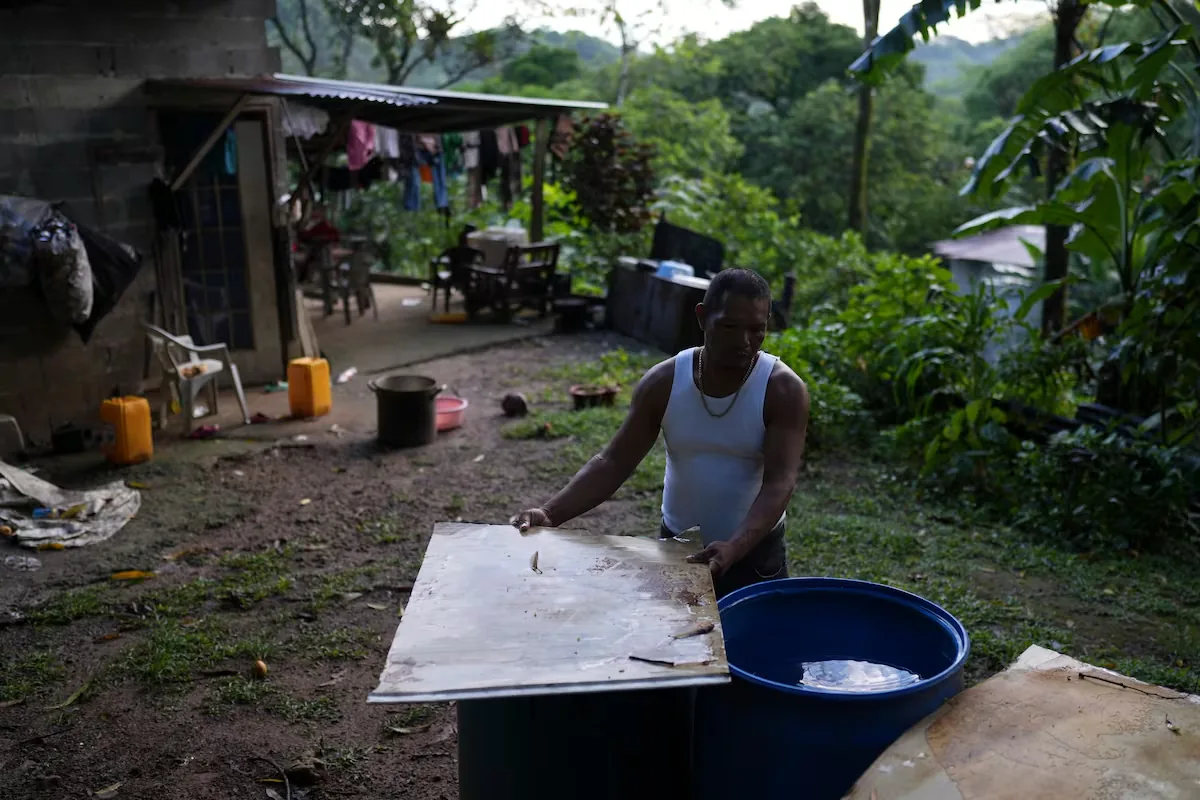
It is seven in the morning and, for the second time today, Rodolfo Carrión starts the noisy engine of his old white pick-up. In the back, he carries an empty thousand-liter tank to supply neighbors who have no water in their homes. He travels two kilometers in the La Represa area, a small neighborhood in the Cativá district, in the province of Colón, to a public faucet installed at the National Institute of Aqueducts and Sewers (Idaan), the public agency responsible for much of the country’s water network. He has just received a call from a neighbor. Not a drop comes out of the faucet in her house. For two years, this route has been part of Carrión’s routine. He repeats it two to three times a week to distribute water to dozens of families in his community, which has just a few hundred inhabitants and has gone more than ten years without continuous access to drinking water.
For many families without access, rain can become an emergency reserve. But now another threat adds to this structural problem: the El Niño phenomenon. On July 29, the Meteorology and Hydrology Institute of Panama (Imhpa) confirmed that the phenomenon will persist throughout 2026, with a possible decrease in rainfall on the Pacific slope. In fact, for those who currently depend on a tanker truck, a community pump, or a rain tank, less precipitation can mean waiting even longer for water to come out of the faucet again.
La Represa is far from being an isolated case. In Panama, numerous communities and cities have lost count of the years they have been waiting for a continuous supply of drinking water. The isthmus, located between the Pacific and the Caribbean Sea, receives rain for eight months a year and has one of the largest freshwater availabilities in the region.
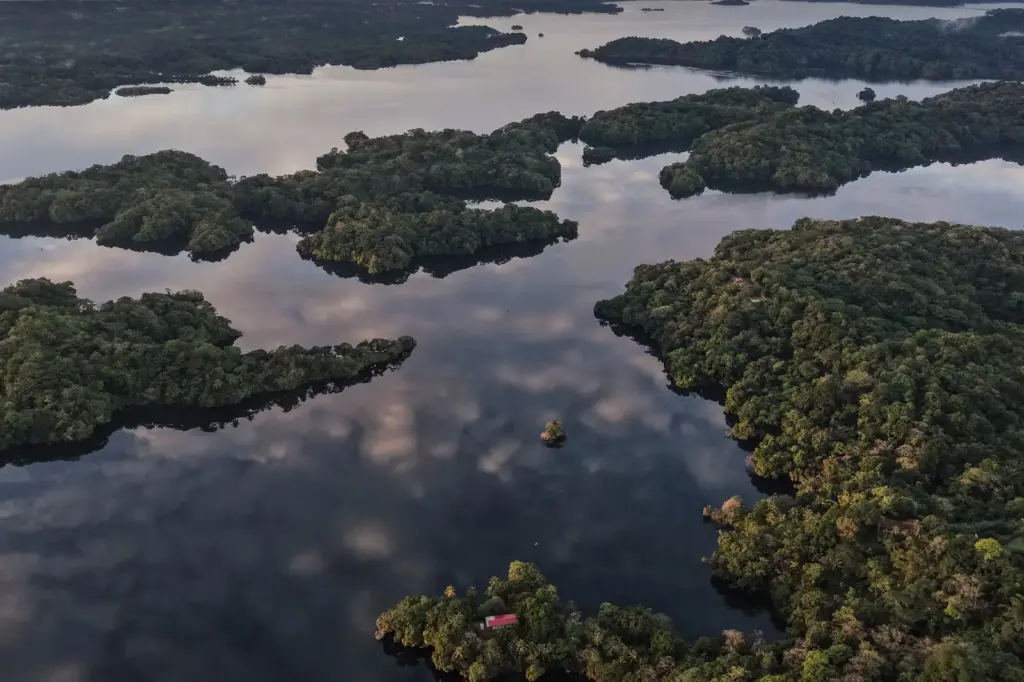
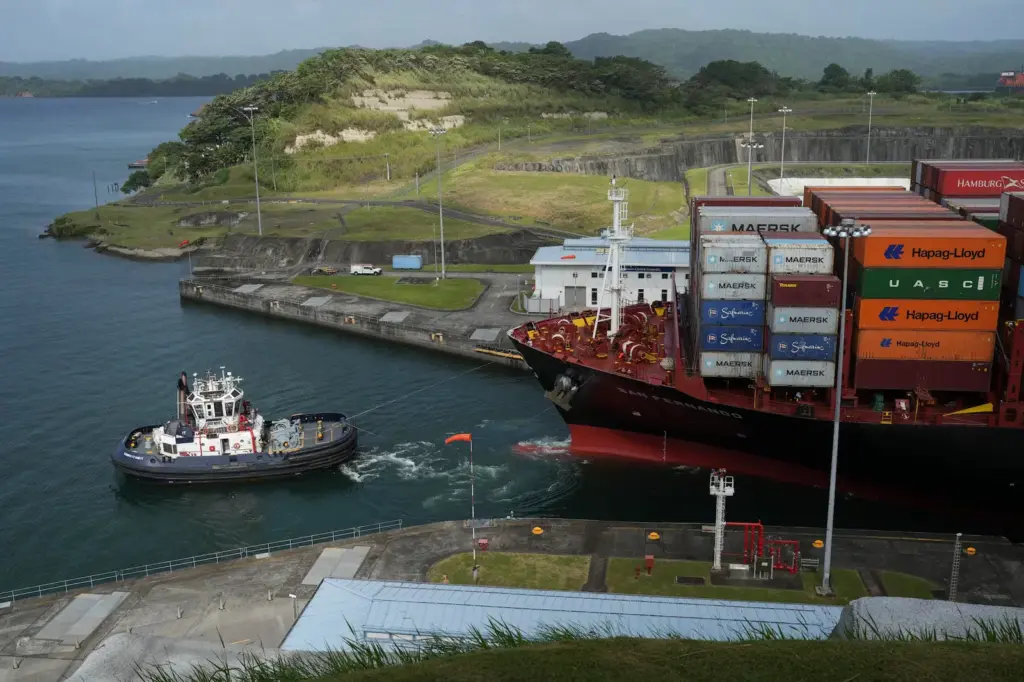
However, according to the National Institute of Statistics and Census (INEC), more than 240,000 Panamanians lack regular access to drinking water. Many of them, as in La Represa, live in the Panama Canal basin, the interoceanic route that guarantees the passage of dozens of ships thanks to that same resource. The basin represents a territory of 550,000 hectares crossed by dozens of rivers that feed Gatún and Alajuela lakes, essential both for the transit of the interoceanic route and to supply water to more than half of the Panamanian population.
But that natural abundance contrasts with a distribution system affected by numerous deficiencies. Although water is omnipresent, the country’s water services and infrastructure present many failures. Much of the supply networks are old, suffer constant breakdowns, or never reached the most remote communities. Added to this, according to Idaan officials like Eduardo de Gracia, regional director of Panama Oeste, is the rapid demographic growth the country has experienced in recent decades. It turns out that the infrastructure has not kept pace with an urban expansion that, in many cases, occurred with little planning.
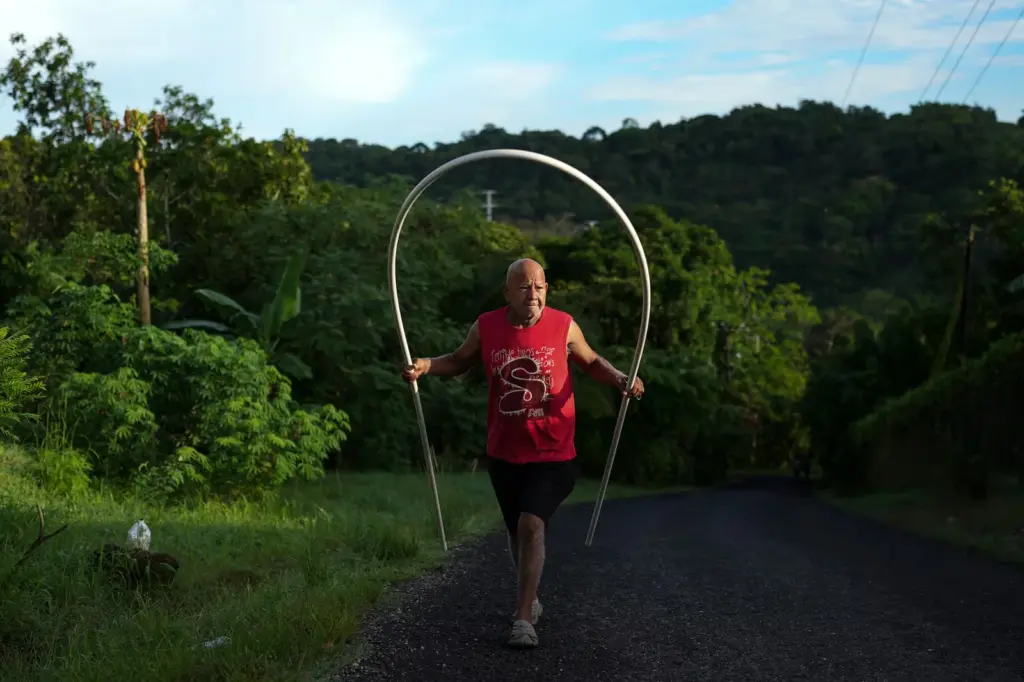
Faced with this reality, communities have had to organize on their own. In La Represa, Carrión, since his retirement, has become an indispensable figure for many households in the area.
“Since the people in the community know I do this, they call me to also bring them water. They give me a ten-dollar help to fill their tanks because carrying this hill with the full tank is not easy. My truck doesn’t even have four-wheel drive, so it’s quite hard,” explains Carrión.
If this retiree and former employee of the Colón Free Zone dedicates much of his time supplying his area, it is because, two years ago, the tanker trucks that supplied La Represa stopped coming overnight. The service, managed by private companies contracted by the previous government, was interrupted without known reasons. Carrión suspects that behind the suspension there were “deals,” a term he uses to refer to possible irregular agreements or private interests around the service management. In any case, he assures that the water they distributed was far from potable: “It came very dirty, mixed with dirt and sometimes even with worms. We didn’t use it for drinking. It was only good for bathing and washing clothes. We never drank the water brought by the tanker trucks. In fact, there was a time when several children got sick from that water.” Until the closing of this edition, neither the national Idaan nor the Colón office responded to EL PAÍS’s interview requests.
Read more Why dermatologists recommend introducing a retinol night cream into the routine at the end of summer
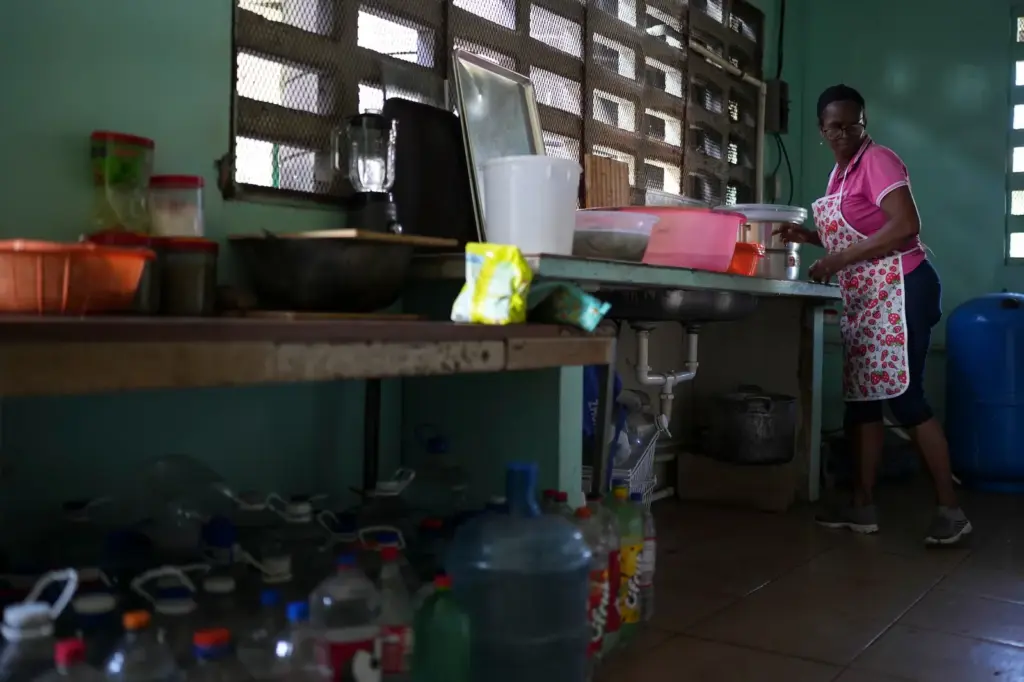
Six kilometers from La Represa, in the same district, the Barriada Kuna school faces the same supply problems as the rest of the community. The water supply is intermittent and can be missing up to three days a week. Although the center has its own pump, it only supplies the bathrooms. As for the kitchen and the rest of the facilities, the situation is complicated. The school depends on Idaan and must call them every time it runs out of water, as happened the day EL PAÍS visited the school.
When the vehicles are busy attending other areas, the staff has to manage to prepare the cafeteria meals. “When there is no water, the children bring their bottles or gallons from home so we can cook because they like to eat,” says the school’s volunteer cook, Maria Salazar, laughing. “But sometimes they forget, so we have to remind them every day.”
The lack of water is so severe that the school had to reduce the children’s hours. As Mireya Betegon, the school principal, explains, students only have two hours of classes per day instead of five.
Egni Pérez, secretary of the community cooperative office, explains that although water arrives only three times a week, the situation has improved. For years, residents observed that the frequency of supply seemed to depend on changes in local officials. Based on Idaan’s explanations, Pérez maintains that the problem is not due to local decisions but to pressure difficulties that prevent water from properly reaching homes located in higher areas. But among neighbors, doubts persist about the true causes of the problem.
“As a cooperative, we are working on two alternatives to solve it. The first is the construction of a reserve tank to pump water from the lower areas to that tank to distribute it to higher sectors. The second option is to install larger diameter pipes to improve water circulation,” explains the local official.
Dependence on the rains
“Years, years and years!” replies Berta when asked how long the water problems have persisted. In Puerto Corotú, a community located on the shores of Lake Alajuela, a forested area of Panama province, the problems are similar. Berta, a 44-year-old Emberá woman, lives with eight other family members in a concrete block house, still under renovation, where access to water is a daily struggle.
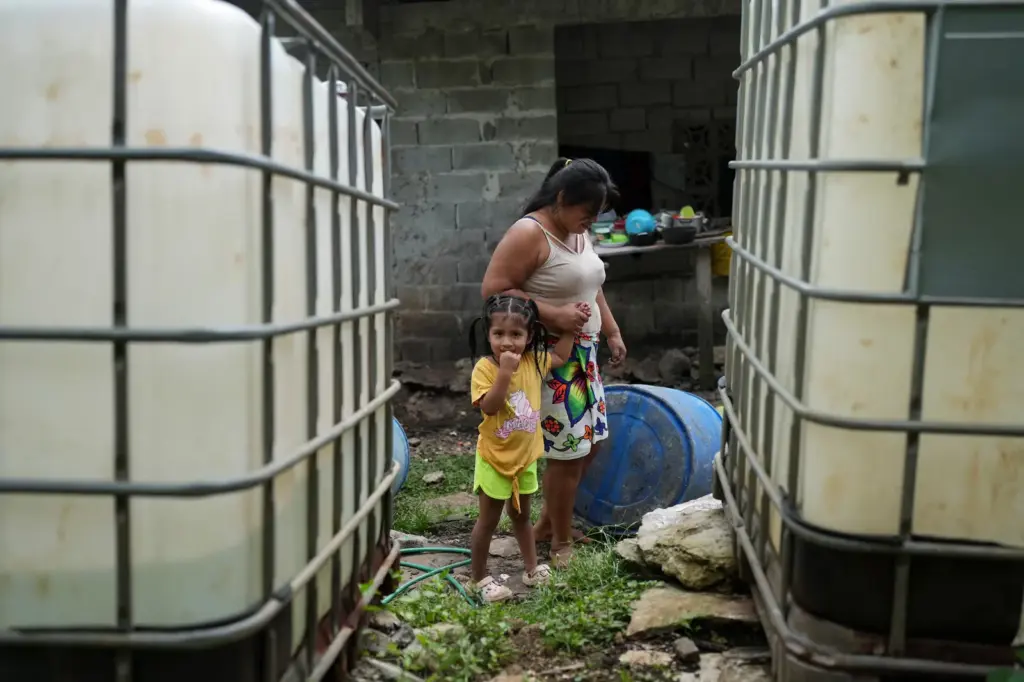
To have water, Berta and the rest of her neighbors depend primarily on the rains. The water that falls on the roof is stored in a large collection tank, more than one and a half meters high. Before consuming it, she purifies it with chlorine tablets and distributes it through her piping system to the house faucet. But when it rains little, the family depends on Idaan’s tanker trucks, which should fill four other thousand-liter tanks. A service that, according to the mother, is marked by constant irregularities.
“Now we don’t have water because it hasn’t rained. An Idaan tanker truck should come every 15 days to fill our tanks, but sometimes it takes up to a month. Today, it’s been 13 days since they came. Of the four tanks, only one has water and it’s already half full,” says Berta, while bathing her 5-year-old daughter.
Read more Bombing is not governing: state violence weakens democracy