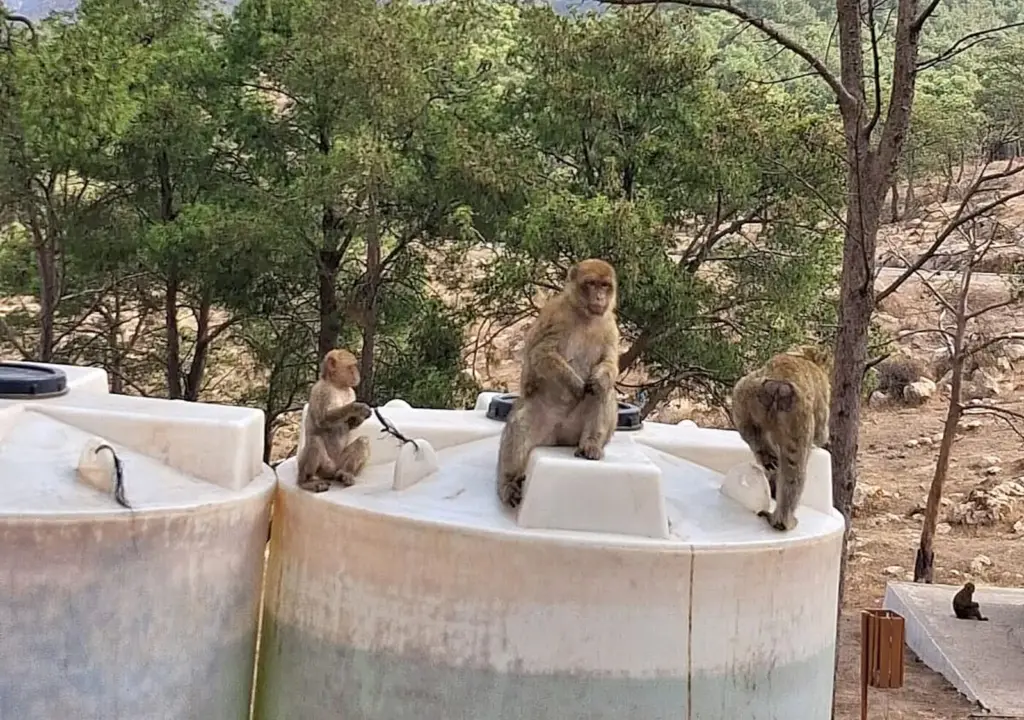
A mother violently shakes her baby and makes a gesture as if to bite him. A family watches the scene and laughs without anyone reproaching them. The mother and the son of the scuffle are Barbary macaques, of the same species as the famous monkeys of Gibraltar, and the family happily witnessing the abuse are neighbors from nearby Nador (161,726 inhabitants, Morocco, about 15 kilometers south of Melilla), who are escaping the sticky heat. They have avoided the coastal humidity to take refuge in the shade of holm oaks on a summit that rises 900 meters above the Alboran Sea.
Read more Daniela dies, the woman rescued in Pereira after 36 hours under the rubble
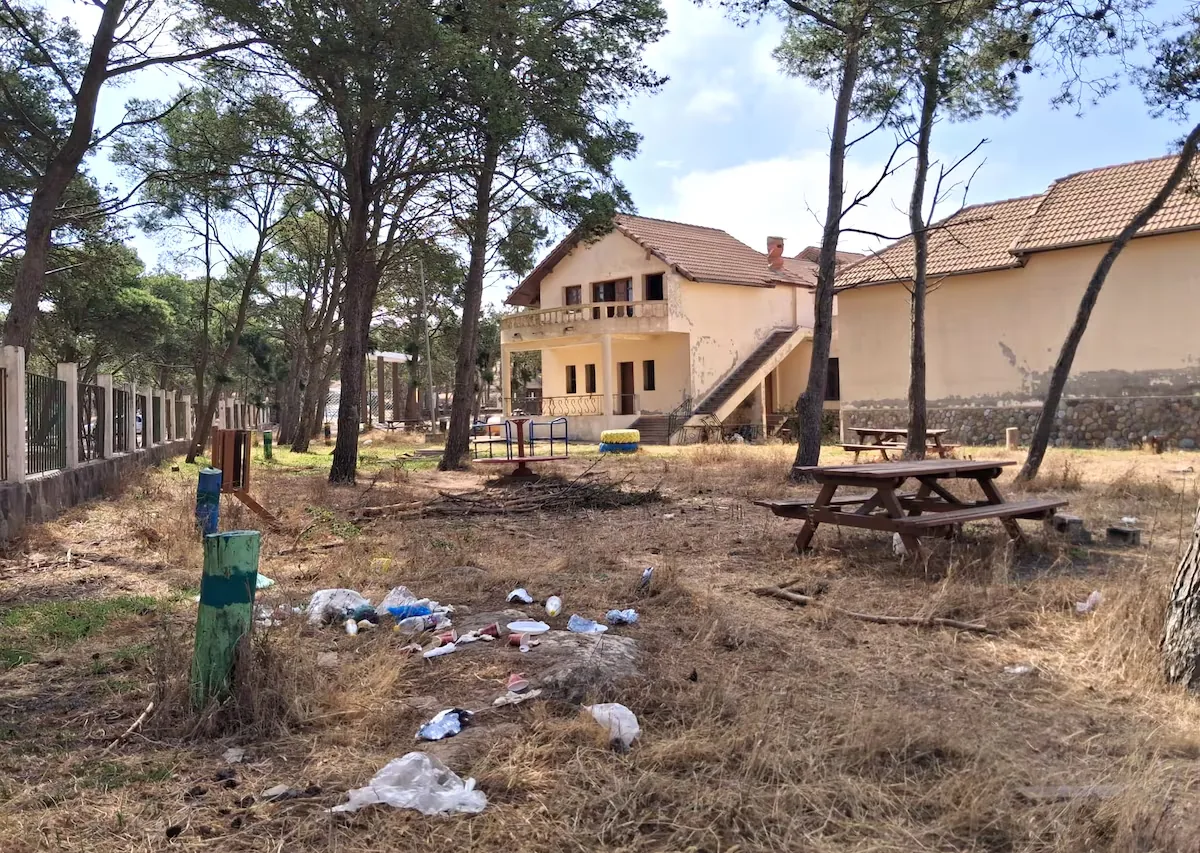
This Saturday, while at the foot of Mount Gurugú the Moroccan police and army are deployed everywhere to prevent a possible assault on the Melilla fence by irregular migrants, near the summit the air is fresh and there is no trace of the sub-Saharan migrant camps that for years turned this mountain, clearly visible from Melilla, into an open-air waiting room to await the day of fortune and manage to sneak into Spanish soil.
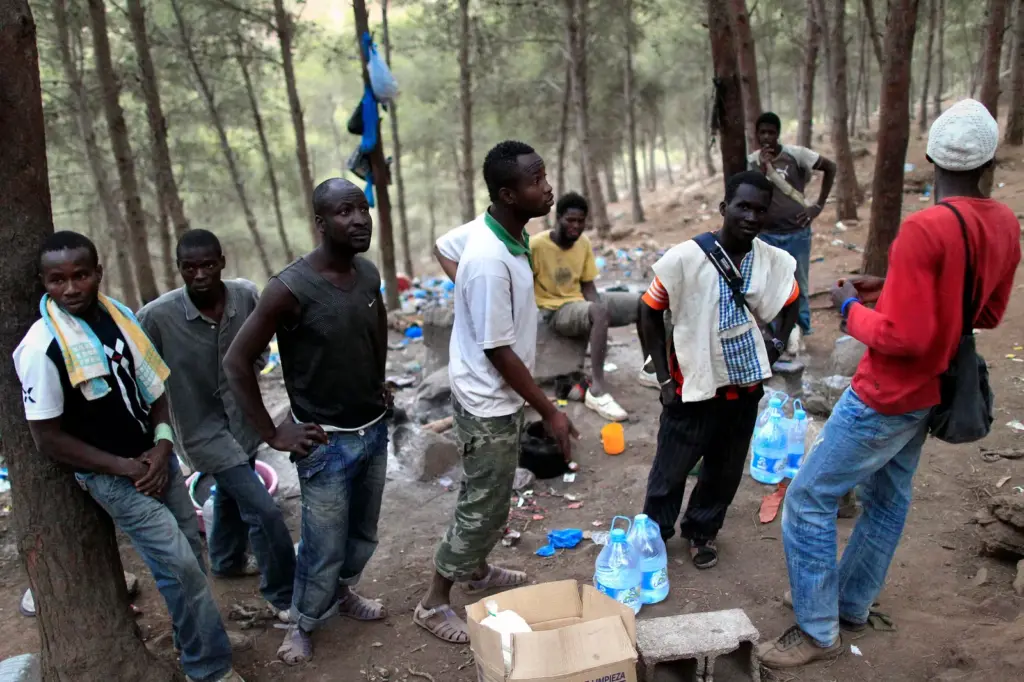
That iconic landscape during some of the episodes of greatest pressure on the border is now a mere recreational space guarded by the army. The Moroccan Association for Human Rights (AMDH) of Nador, which claims to have been monitoring the situation of migrants and asylum seekers on the route to Melilla since 2010, places the last large camp in the Nador area, a Moroccan province bordering the autonomous city, in 2022. The last migrants from outside Morocco who camped en masse were Sudanese and settled in the forests south of the famous mountain. “There are no longer sub-Saharan migrants in the forests of Nador,” says Omar Naji, a member of the AMDH. The association tells this newspaper that Morocco has been expelling them to inland areas of the country.
“No harraga,” says a passerby from Nador city, the main city near Melilla, with about 158,000 inhabitants. He uses the Maghreb term used to refer to those who try to migrate irregularly to Europe. But not seeing them does not mean they are not there. The Catholic church of Santiago el Mayor in the old city of the Spanish Protectorate is tightly closed; in a room adjacent to the parish, a kind of dim garage, six women are learning to read and write in French this morning. One of them has a baby beside her. All six are sub-Saharan and show a frightened expression at the unexpected presence of the press. They prefer not to speak and those attending them also do not want them to speak.
“They are in absolute danger. A simple photo can put them at risk,” explains the French nun who acts as a teacher and does not want to give her name. She recounts the conditions in which some of the migrants who pass through the diocesan service arrive and the care they receive. They treat the wounded and also shelter women who have given birth or are about to do so in unsanitary conditions. Many have suffered trafficking and require protection, the nun points out. The parish has maintained for years a migrant assistance service that offers medical consultation, psychological and social assistance, emergency accommodation, and support with administrative procedures and asylum applications. People from various sub-Saharan African countries and also Palestinians pass through there.
Santiago el Mayor has also not been immune to the entry attempts into Melilla at the end of July, when more than 1,300 people tried to bypass the border vigilance and sneak into Spain. This month, the service has attended to 18 Senegalese who were part of a larger group and who, the nun says, had tried to reach the Spanish border. The Moroccan forces prevented them. Some arrived injured and hungry. Most of the migrants attended live with friends in small apartments in Nador itself, which the nun describes as “totally unsanitary and miserable.” There are no longer, she confirms, people living in the forests like those who for years were part of the migratory landscape around the city. Like in Gurugú. “The police do not allow camps.”
Outside those parish premises, however, the migrant presence is difficult to detect. “There are fewer now,” says Tafik, 78, in impeccable Spanish while having a coffee in a cup in downtown Nador. An art teacher graduated from the School of Fine Arts of Seville, he follows with concern the massive entries into Ceuta and Melilla. This Saturday, a day when social networks were buzzing about a new attempt, at least in Nador “things are quite calm.”
Read more The Mossos arrest a convict in Italy for sexual exploitation
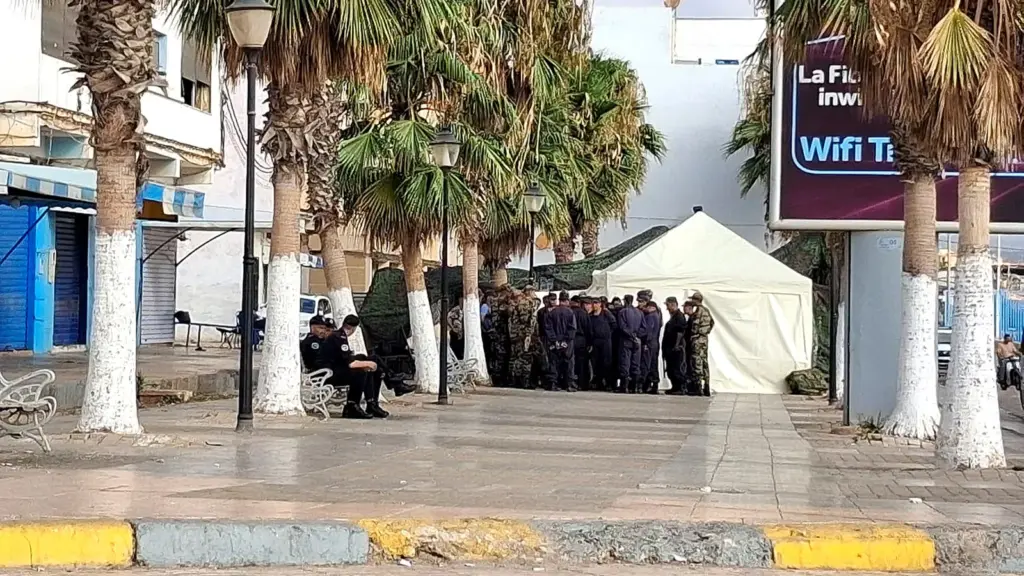
But that calm in Nador begins to change on the approximately 14-kilometer route to Beni Enzar, near the border with Melilla. The road is lined with police and security forces vehicles and there are checkpoints involving plainclothes agents. As one approaches the border crossing, the huge deployment of police, auxiliary, and Moroccan military forces becomes much more visible.
In the border environment, with the heat intensifying a smell of poorly combusted gasoline, the usual children selling gum for one dirham (9 euro cents) with the Spanish fence in the background are no longer there this Saturday. An official sign of the Opération Marhaba (“welcome” in Arabic) greets Moroccans who want to return to their country: expatriates in Europe returning for holidays.
On the side of the avenue leading to Spain, between 60 and 70 soldiers and police remain, according to a visual estimate on site. Some wear camouflage uniforms and others are dressed entirely in black. There are signs they spent the night there. Under four tents, about fifty cots are arranged and, next to them, dozens of semicircular shields and helmets with protective mesh used in riot interventions wait neatly on the ground. Adam, an 18-year-old waiter from one of the cafes near the border, says the police presence has become especially intense over the last two days.
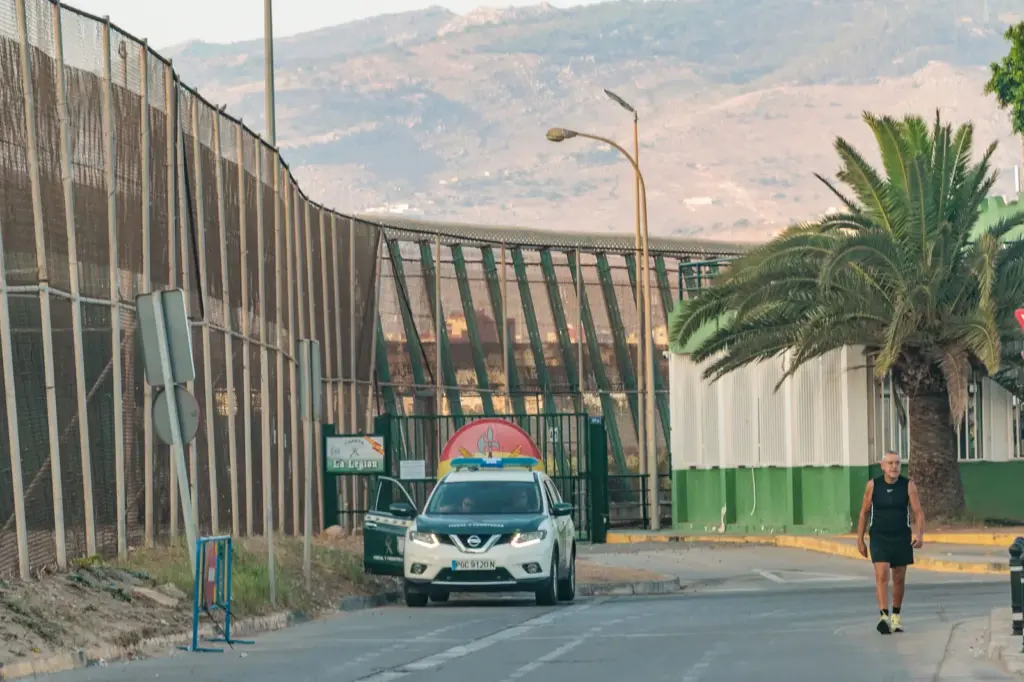
The deployment coincides with a day when a new massive entry was feared on both sides of the border, encouraged by calls spread on social networks. This Saturday, however, no attempt occurred. Melilla woke up in dead calm, with the Civil Guard present at various points of the border perimeter and especially around the South Dock, the main but not the only scene of the entries at the end of July.
The AMDH maintains that the Moroccan deployment extends far beyond Beni Enzar. Its head speaks of checkpoints on roads coming from Oujda (about 149 kilometers east) and Fez (about 300 kilometers southwest), intended, he says, “to arrest young people who want to go north” of the country, towards Ceuta and Melilla. He specifies that these are no longer sub-Saharan migrants, but Moroccans who “have every right to move wherever they want within their country.” The organization also estimates that more than 80 young Moroccans have been detained since August 1 in Nador and Beni Enzar, including 18 minors and two girls, and emphasizes that the arrests continue. According to its head, the authorities use cameras and drone recordings to later identify young people and arrest them even at their homes. “They recognize them, they are going to arrest them and take them to court.” They are convicted of assaulting authority, property damage, public disorder…
The association, which is assisting in the judicial processes, states that 26 of those detained were sentenced on Wednesday to four months of firm imprisonment and that some young people declared before the judge that they suffered police mistreatment during their arrest. It also denounces transfers to the interior of the country of Moroccans intercepted in Nador or on roads leading north, as happened with sub-Saharan migrants. The estimate is two or three buses each night, “sometimes more,” with about 30 or 40 people, to places even hundreds of kilometers away such as Beni Mellal (southwest of Beni Enzar), Ouarzazate (south of the country), the road to Fez or Er-Rachidia (also south). “They are dumped there just like that, with a bottle of water, no further help.”
Read more Spain seeks its opportunity in a «terrifying» marathon through the center of Birmingham