






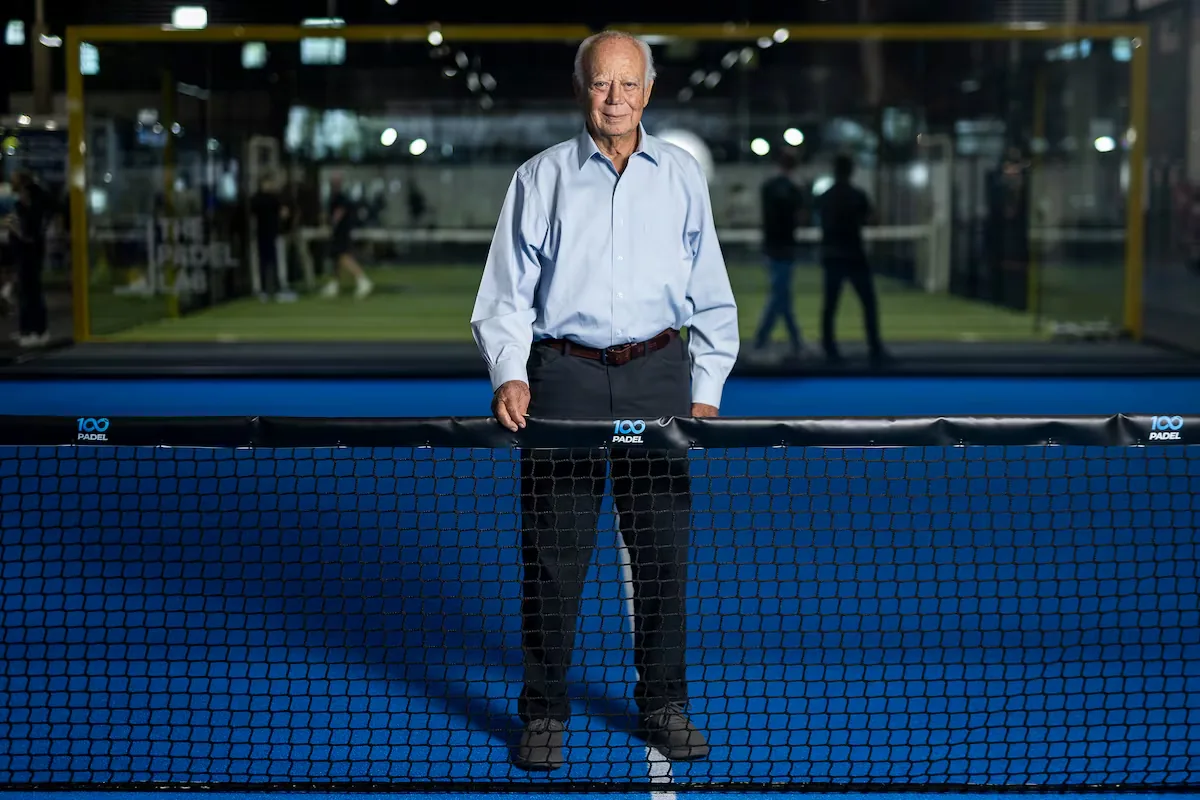
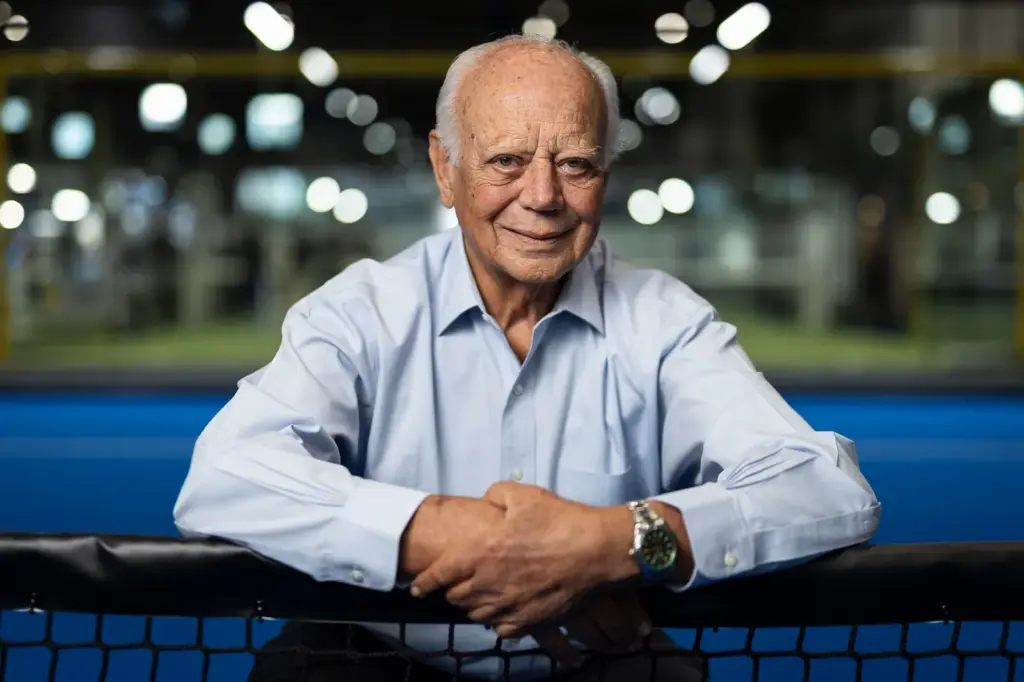
Ignacio Soto Borja, an 81-year-old Mexican notary who uses a wheelchair due to spinal problems associated with spending too much time sitting, is not the person one would immediately identify with padel. But this patrician-looking, cultured, and composed man is a living history of today’s popular short-racket sport. A renowned co-creator of the game and a fundamental figure in its modern formulation and regulation, as well as in its promotion and historical research, Soto Borja has been in Barcelona for the Padel World Summit, held at Fira. Kind and passionate about his work, it is clear that he is used to being in charge, even without a racket in his hand.
Read more Is it possible to die of grief? Science confirms that intense grief increases the risk of death
Question. You state in your revealing booklet La historia oficial del pádel (Tirant Humanidades, 2024), that one of the precedents for this sport was the Mesoamerican ball game.
Answer. That’s right.
Q. But didn’t they decapitate the players there?
A. There were many varieties, but it is true that in what was called tlachtli by the Aztecs and pok ta pok by the Mayans, and which was more of a ritual than a game, the winners were sacrificed, which was considered a great honor.
Q. Wow, I don’t know if that would be understood today at the Real Club de Polo de Barcelona or the Club de Pádel de la Moraleja.
A. Of course, it would be very unpopular to decapitate padel winners. But I explain about the Mexica ball game so that it is understood that padel is a sport of syncretism, with influences from other earlier games from English, French, and pre-Hispanic cultures. From pre-Columbian games, it has elements such as the court or the dynamism of the ball, which was made of rubber.
Q. You also mention English real tennis and jeau de paume, the French palm game, with medieval roots.
A. Indeed, it was played with the palm of the hand and a cord that served as a net.
Q. It’s curious that it was on the court of that game in Versailles where the deputies of the Third Estate, the people, met on June 20, 1789, to conspire to achieve a Constitution and that the so-called Juramento del Juego de Pelota was a key revolutionary date. Padel is not normally associated with revolution.
A. At first, it was associated with the right-wing and the elites, because Aznar or Alfonso de Hohenlohe, who brought it to Marbella, played it. The game took on an aspirational character and was considered for snobs. It still needs to shake off a bit of that stigma of being a sport for the well-to-do, but it’s no longer just for the rich, and there are many public courts.
Q. You claim the Mexican origin of padel.
A. It is a proudly Mexican sport, born in 1969. Its creator was the businessman Enrique Corcuera, a fan of fronton and Basque pelota, who adapted a frontenis court at his home in Acapulco to play with his family. He experimented with the idea and introduced the elements we associate with padel. For him, the rebound effect and not having to go far to retrieve the ball were important.
Q. Your role was decisive.
A. It fascinated me from the beginning; I have helped turn it into what it is now, from the struggle for the name, padel versus rebotenis, paddle tennis, and paddle, to the creation of the official glass court, the specific racket, and the current regulations. There was tremendous disorder. In 1992, we regulated it and transformed it into a true sport, and then came the boom.
Q. Some think that padel is a diminished, minor, undemanding form of tennis.
A. Whoever says that doesn’t know it. In part, it’s the tennis players’ anger at having their place taken away, envy. Just watch the professionals play. No sport should belittle another. And let me add that tennis is beautiful.
Q. What is the secret to padel’s success?
A. One of them is that it brings family and friends together; it’s a very social game. And it’s very attractive to women. More than 30% of the 36 million practitioners worldwide are women.
Q. Any tips for playing?
A. I recommend taking lessons, don’t think that just by stepping onto the court you’ll know how to play at a high level. Many people don’t get trained, and then injuries occur, although the mat has greatly reduced knee injuries. You have to seek that training.
Q. Come on, tell us a secret to win. Better to play volleys or off the walls?
A. The volley, but mastering the walls is important.
Q. Padel is not, alas, an Olympic sport.
A. It will be soon, we are working on it.
Q. Bird lovers complain that there are many collisions with the glass walls.
A. There are ways to prevent them; large tall buildings with a lot of glass are worse.
Q. Since you are Mexican, do you think Spain has to apologize for the Conquest?
A. I don’t see why. Cortés went with very few men and won thanks to local alliances. And besides, that Spain was nothing like it is now.
Read more Interactive agenda of Pope Leo XIV’s visit to Spain by days and cities