







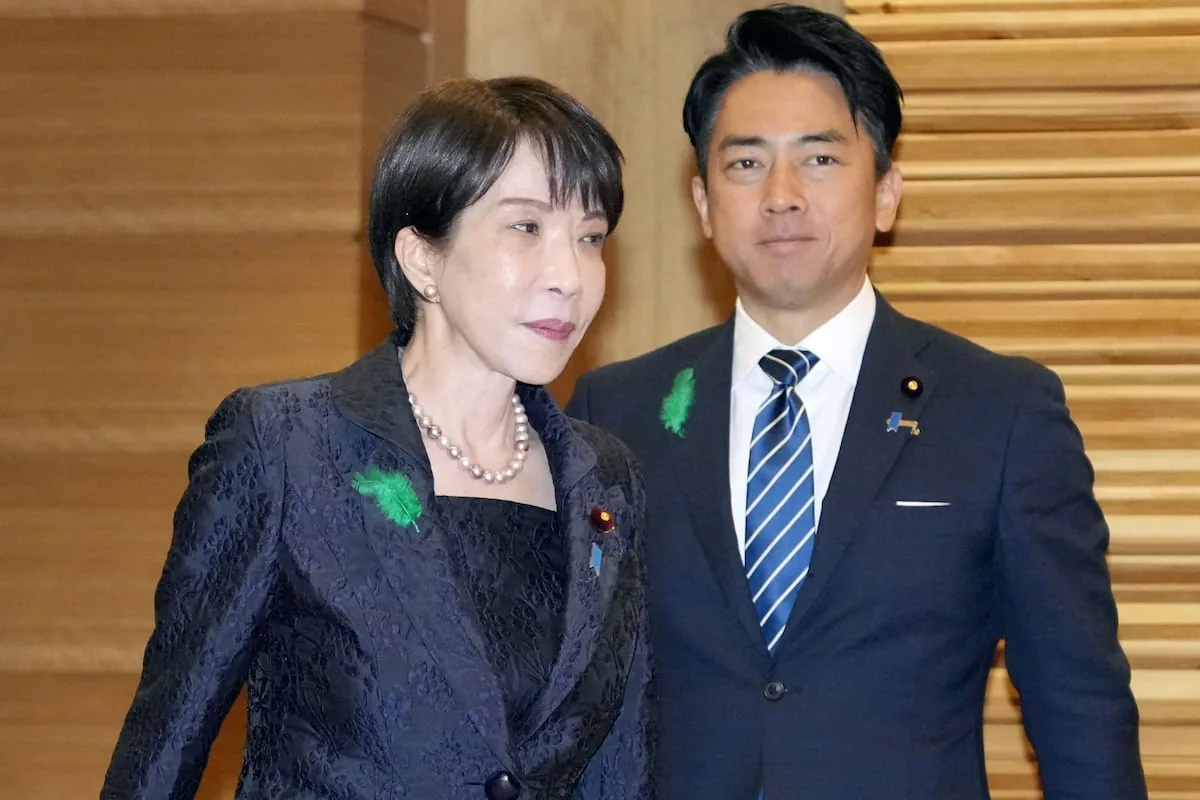
Japan made a historic shift this Tuesday by authorizing the export of lethal weaponry, something unprecedented since the end of World War II. It thus breaks with the pacifist principles that have governed the country for decades. The change, through which the Asian archipelago aims to position itself as one of the global leaders in weaponry, responds to the “increasingly severe security environment,” Prime Minister Sanae Takaichi, the ultraconservative who swept the last Japanese elections after precisely advocating for a Japan with greater military presence, assured on social media.
Read more Vox promises to bring to Andalusia the “national priority” agreed with the PP in Extremadura
Critical and opposition voices have expressed concern over what they consider the abandonment of Japan’s pacifist tradition, enshrined in the Constitution, and over the possibility that the new direction could exacerbate conflicts and fuel a regional arms race, especially with China.
Tensions between Beijing and Tokyo have intensified since Takaichi came to power in October, with the Asian giant accusing her of devising an expansive militaristic policy similar to what it already suffered in the first half of the 20th century. “China is seriously concerned,” reiterated Guo Jiakun, Chinese Foreign Ministry spokesperson, when questioned this Tuesday about the new direction. “Japan’s recent and dangerous actions in the military and security spheres have called into question its self-proclaimed status as a peaceful nation and exclusively defensive,” he added.
“There is absolutely no change in our commitment to maintain the path taken and the basic ideology as a peaceful nation for more than 80 years since the postwar period,” Takaichi, however, assured in a statement on social media. The idea, according to the head of the Executive, is to continue developing products intended for “self-defense” and to trade with countries considered “partners,” which will improve the defense capabilities of these nations and help prevent conflicts, according to her reasoning.
The initiative was adopted this Tuesday during a meeting of Takaichi’s cabinet with the National Security Council, where the principles and guidelines limiting exports were reviewed. Under the previous regime, from 2014, the possibility of selling abroad was restricted only to non-military products intended for tasks such as rescue, surveillance, and demining. Previously, for decades, a policy of total embargo was followed.
From now on, Japanese companies will be allowed to export almost any military equipment, provided the buyer meets strict criteria and is not involved in an active conflict.
Weapon exports to countries in conflict will also be exceptionally allowed in cases of “special circumstances,” according to the Kyodo agency. The objective, as explained by this media outlet, is to strengthen deterrence capabilities alongside the United States and its allies, as well as to strengthen the national defense industry.
Under the new rules, defense products are classified into two: “weapons” and those that are not “weapons,” depending on whether they possess lethal or destructive capability. Exports of the first category, such as missiles, fighter jets, or warships, will be limited to countries that have signed agreements with Japan regarding the protection of classified information: currently there are 17, including the United States, the United Kingdom, and other European nations. Exports of those that are not weapons, such as bulletproof vests and warning radars, will have no limitation.
At a time of growing warlike impulse across the planet, and with Western arsenals being used in hot conflicts such as the war in Ukraine and Iran, the measure places large Japanese corporations like Mitsubishi and Kawasaki in the race to become major suppliers of missiles, aircraft, and warships to friendly G-7 countries and other nearby nations in Southeast Asia and the Pacific. Already on Saturday, before the adoption of this measure, Japan signed a contract with Australia for the delivery of three Mitsubishi frigates and the joint manufacture of eight others.
New Times
This Tuesday’s change of course moves with the country’s new times. Among the flagship initiatives of the Takaichi Executive are the intention to amend the Magna Carta to eliminate antimilitarist constraints, the approval of a record defense budget, and a proposal to revise the so-called three noes, the trio of principles sculpted in Japan’s anti-nuclear doctrine: not to possess, not to produce, and not to permit atomic weapons in Japan, which remains the only country in the world to have suffered an atomic bombing.
Fearing that the old pacifist principles would be abandoned, some 36,000 people, according to organizers, gathered this weekend in Tokyo in front of the National Diet (Parliament) under the slogan: “No to war! Do not change the Constitution!”
The Asahi Shimbun published a survey this Monday in which 75% of respondents supported maintaining the anti-nuclear three noes and 67% opposed arms exports.