







The Government approved this Tuesday the State Housing Plan 2026-2030, with which it intends to face the sector’s crisis over the next four years. The plan ― which does not require approval in Congress and has a record allocation of 7,000 million euros, triple the previous project ― has received definitive backing from the Council of Ministers, where it arrived seven months after its main lines were announced in September 2025. The project includes two important novelties: the safeguarding of all protected housing that receives state funds as public (i.e., they cannot be declassified after a few years) and the increase in aid for the construction of public housing, which will be mostly allocated to rent with a maximum price of 900 euros per month.
Read more Japan authorizes the sale of weapons for the first time since World War II
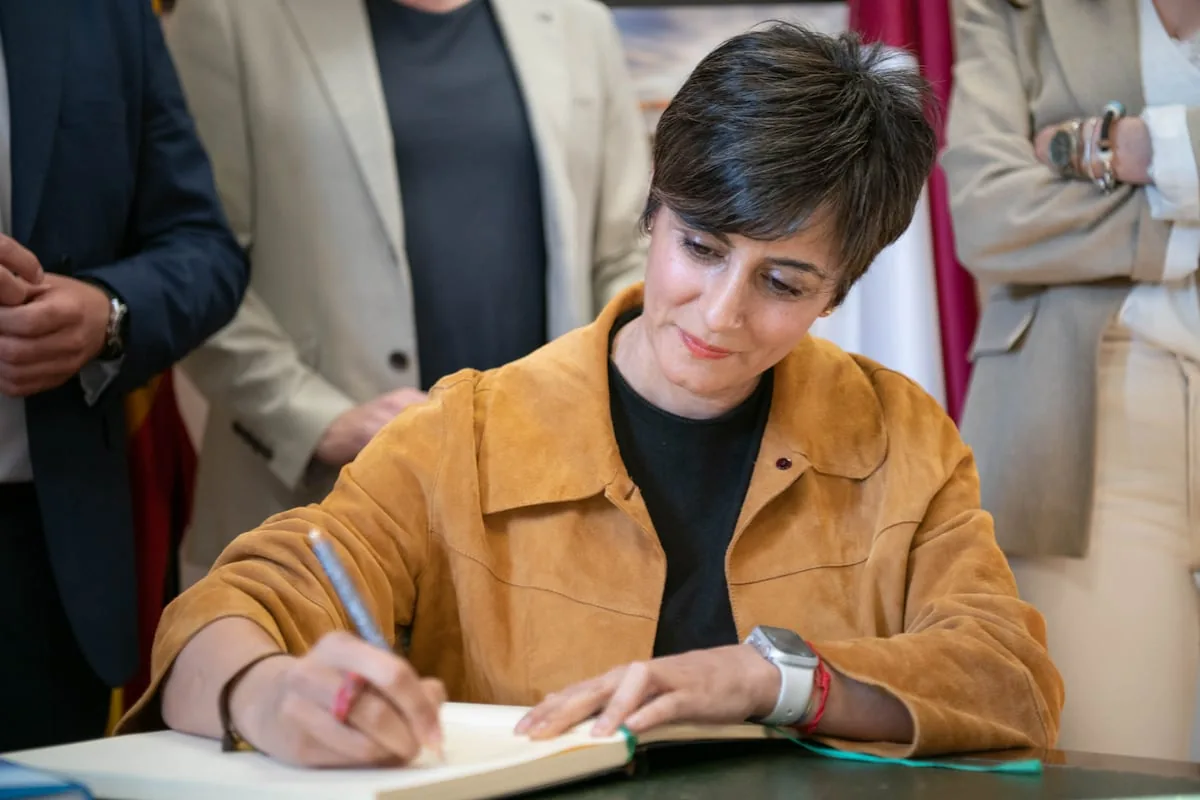
“It is a plan born with the vocation of responding to a demand. Citizens are demanding an agreement to respond to the main problem they suffer,” Rodríguez said at the press conference after the Council of Ministers. The head of Housing indicated that this plan comes to “form the fifth pillar of the Welfare State,” and that it is “an important step in this solution for the housing problem today and forever,” to prevent “it from being a recurring crisis.” Despite having been approved today, the relevant collaboration agreements between the State and the autonomous communities still need to be established, so the definitive deployment of the plan will not arrive until July.
The regulatory framework of the State Housing Plan 2026-2030 maintains the announced allocation of 7,000 million euros, as well as the origin of this amount, of which 60% will come from the State and the remaining 40% from the communities. The territorial distribution of the funds ― which will be consolidated after the signing of specific agreements ― will be carried out with a triple purpose: to build new homes, rehabilitate the existing stock, and protect the right of citizens to housing above speculation and profit, as established in the regulatory corpus.
The new plan for the next four years introduces a profound shift in public housing policies by strengthening control, transparency, and permanent protection mechanisms for the residential stock financed with public resources. The Government presents this new framework as a structural response to past errors and the historical weakness of the public sector in the Spanish real estate market.
One of the pillars of the new framework is the safeguarding of public and protected housing to prevent any future disqualification process. The Ministry emphasizes that, in the last four decades, Spain built nearly 2.7 million protected homes that ended up being incorporated into the free market. Had their social character been maintained, the country would today have a public housing stock comparable to that of other European partners. From now on, state funding is conditional on the properties permanently fulfilling a social function. “We guarantee that not a single euro of this funding will be directed towards speculation, but to guarantee the right,” Rodríguez reaffirmed.
The plan also strengthens controls in allocation processes, with the introduction of an anti-fraud clause that requires the application of objective, measurable, and traceable criteria. All homes built or acquired with plan funds must be allocated under these parameters, while the ministry reserves a double supervision system to ensure compliance and prevent irregularities such as those recently detected in some territories, like Alicante.
Another major change is the commitment to public data as an instrument to provide transparency to the rental market. Within one year, the autonomous communities must create a register of rental deposits, fundable under the plan itself. This database will allow real-time knowledge of the number of active contracts, effective prices, tenant turnover, and supply evolution, with reliable and verifiable information. The objective is to combat opacity and dismantle discourses based on empirically unsupported estimates.
In the area of governance, the Executive proposes a constant evaluation of the plan through a working group integrated into the Housing Advisory Council. This body will receive annual information on policy execution and may issue recommendations, although non-binding, to improve its effectiveness.
The plan articulates its measures in three main blocks: construction, rehabilitation, and protection. In the first, the substantial increase in aid for building new public or protected homes stands out, with subsidies of up to 85,000 euros per unit, double that of the previous plan. These homes will be mostly allocated to rent, with a maximum price of 900 euros per month, and will be protected indefinitely. In small municipalities, sale is also permitted, always under a protection regime.
Read more Vox promises to bring to Andalusia the “national priority” agreed with the PP in Extremadura
The program also incentivizes the industrialization of construction, with additional aid of up to 8,500 euros per home when advanced building methods are used, and provides for specific supplements for projects located in areas of strained markets. In these cases, public funding per home can reach 102,000 euros.
To rapidly expand the public housing stock, funds are made available for the acquisition of existing homes, covering up to 70% of the cost, a percentage that rises to 85% in strained areas. The transfer of private homes to the Administration for management as affordable rental is also encouraged, with direct aid and financing for renovations, a measure especially designed to mobilize vacant housing in rural areas.
Vulnerable groups
In the rehabilitation chapter, the plan includes aid for structural improvements, accessibility, and energy efficiency, with amounts that can exceed 20,000 euros per home. Specific incentives are introduced for historic centers and for homes that have been vacant for more than two years, provided they are subsequently incorporated into affordable rental.
The protection block reinforces aid for young people, with monthly rental subsidies and support for home purchases in small municipalities, and significantly expands coverage for women victims of gender violence and people in vulnerable situations, guaranteeing immediate and dignified housing solutions. “Patches are not enough, and there is no magic wand. This plan concentrates structural reform up to regulation to prevent the market from eating into family incomes,” Rodríguez defended.
The calendar foresees that, after its approval in April 2026, agreements with the communities and the definitive distribution of funds will be finalized in spring, so that the effective deployment of the plan begins in the second half of the year.
After months of meetings and a total of 28 meetings held with the autonomous communities, in addition to meetings with entities, social agents, and experts, the definitive text of the plan incorporates 365 contributions resulting from these conversations. The desire for the new framework to have majority support has led to delays in the initial timelines managed by Housing ― it had even announced that it would be resolved before the end of 2025.
If you have questions, suggestions, or simply want to tell us your case, you can send us an email at vivienda@elpais.es.
The data you provide will be processed by EDICIONES EL PAÍS, S.L.U., (C/ Miguel Yuste, 40, 28037-Madrid), for the purpose of managing your questions and/or testimonies and preparing informative content. You may exercise your recognized data protection rights through the address dpo@prisa.com by proving your identity and identifying the right you wish to exercise. For more information, consult the Privacy Policy.