









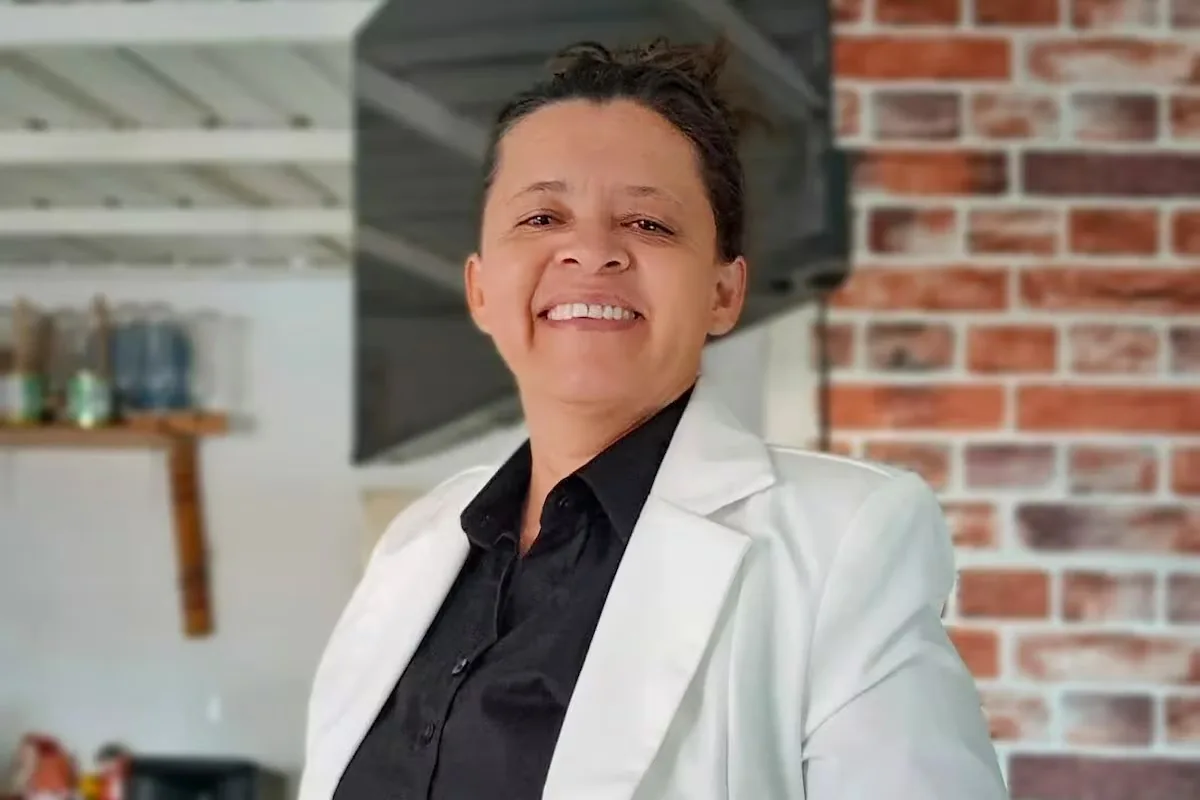
Around 10:30 p.m. on January 30, 2012, a gunshot rang out in the El Hueco area, in the Siloé neighborhood of Cali. The shot woke Norma Jimena Cangrejo (48 years old, Cali), something that almost never happened. “Normally I never got up because it was normal, it was the daily bread, with the Police or with the gangs,” she says. And how could she not feel that way, if according to figures from the Valle del Cauca Government, only between 2011 and 2012 Comuna 20, to which Siloé belongs, recorded more than 83 murders amid disputes between criminal gangs.
Read more Julia Salvi, the woman from Cali who put Colombia on the international classical music scene
But that time she felt something different, “it was as if my body was warning me that something was going to happen.” Her premonition came true because her 12-year-old cousin died. “I felt like my soul was shattered,” says Cangrejo. In a surprise operation by the Metropolitan Police, a patrol officer accidentally fired his weapon and the bullet ended the life of Michelle Alexandra Villán.
At first, she rebelled, complained about life and God. She didn’t understand why, among so many criminals, her girl had to pay the price. But that tragedy, far from extinguishing her, took away the cloak of indifference that had covered her since she was young. “I couldn’t normalize it anymore, I had to get out of the comfort zone, this couldn’t continue like this, we had been at war for 27 years,” she thought.
She quit her job and began her social work. First, she met with her neighbors and they all agreed to erect metal fences on the invisible borders to stop the killings. “The community contributed 1,000, 2,000 pesos each. We installed a speaker in the Belén area asking people for money,” she says. The measure worked. They also painted the houses, gradually fixed the parks, and even painted a mural to reflect the beauty of “the Branch of Heaven.”
Her work gained so much momentum that in 2013 she created the Fundación Momentos Mágicos Colombia, to improve the well-being of the disabled population in that area of Cali. In fact, it has already benefited more than 60 children with its Eco Tod@S School of Values.
But there was one pending task, the most important one. After a year and after establishing several community kitchens and soup kitchens, Jimena decided to tackle the violence in her commune at its root by supporting and facilitating dialogue among the main opposing groups. After all, she had known their leaders since childhood, Nelson Quintero and Nelson Buenaventura. They touched their hearts by reminding them of their childhood exploits, like when in the afternoons they would slide down the hill on boards with wheels and tallow candles. “That was like Disney World for us,” she says.
With patience and empathy, little by little everything improved: since February 2019 there have been no murders in El Hueco. That streak was not broken by a shooting in 2023, the first the community had heard in years. “We had already forgotten that noise,” recalls the leader. Thanks to that, she was able to focus on her community work, expand the number of soup kitchens, and continue supporting her cousin and adopted daughter Erica Marcela – on the autism spectrum – sister of Michelle, whom her aunt left one afternoon with a farewell letter. Cangrejo was only 17 years old.
Read more Manuela Álvarez and the ‘MAZ Effect’ with which she conquered the world
Over time came the pandemic and the so-called “social outbreak,” which once again tested Cangrejo’s resolve. Cali felt the phenomenon more than other cities, in an economic context where monetary poverty was close to 37% and youth unemployment near 20%, according to data from the Chamber of Commerce.
In those days, private initiatives like Compromiso Valle began promoting spaces for dialogue to build trust and opportunities in vulnerable populations. In one of those sessions, Jhon Eyder Viáfara, another social leader, called Cangrejo to talk with the businesspeople involved in the project. It didn’t go very well, as she had a negative image of companies. “They told me she said those oligarchs had given her Covid,” recalls Pedro Carvajal, president of Organización Carvajal.
However, 20 days later, when young people from the community and the group of businesspeople toured the area, Carvajal invited her to join that collective effort to change the face of Siloé, and she accepted. “That’s how I met her. She is a person who combines transparency, firmness, and sincerity. I greatly value her honesty and authenticity,” he says.
Cangrejo already had in mind the idea of making the neighborhoods a tourist destination and convinced them to create the Isabel Pérez route, her great project named in honor of one of the first social leaders of Siloé. Launched on July 25, 2022, on the 486th birthday of the Valle del Cauca capital, the route benefits 350 families and provides direct employment to 4 people and produces at least 10 more indirect jobs. In addition, its income also finances repairs for homes in need, which already number more than 30. “My house had a damaged roof because a ravine slid behind it and broke it. She helped me with the complete repair,” says Mayra Alexandra González Buitrón. Beyond that, the intangible benefits are enormous.
Jimena began doing that tour in 2017 with the children from her foundation. The route, certified by Fontur as a Peace Destination, covers eight neighborhoods and three housing developments, from La Nave to El Hueco, for a total of 4 kilometers. More than 5,000 visitors, 80% of them foreigners, have heard stories that, in the founder’s words, deserve to be told. They do so while enjoying five murals and sculptures of hummingbirds, guacharacas, and opossums by the Cali master Wilmer Ramírez Escudero.
Cangrejo inherited her character from her grandmother, Rosalba Marulanda, a community mother for 25 years who always kept her doors open for more children because, as she taught her, “you have to add a little water to the pot for whoever arrives.” She raised Jimena while her mother struggled with an addiction that kept her absent her whole life; she died in December 2021 without the daughter managing to reconcile that relationship. Perhaps that is why, she maintains, her goal has always been “to open the way so that drugs would stop being the main source of money” in her territory. “It was a personal dream that became collective,” she says.