





Magistrate on leave, Professor of Law at the University of Seville and Doctor from Bologna, lawyer at the Court of Justice of the European Union, partner in prestigious law firms… No one, not even university colleagues with vastly different ideologies, questions the career and legal knowledge of José María Sánchez García. The curriculum of the Vox deputy shines, especially when some blemish is expunged, such as a fleeting and unsuccessful stint in Aznar’s first government in 1996, hand in hand with a PP he now mercilessly attacks.
Read more Lucía Prieto Godino, the scientist who has transferred a behavior from one species to another
As irrefutable as the career of the parliamentarian born in Madrid 63 years ago is his leading role in the worst altercations in recent history in a Congress where brawling and brutal language have become commonplace. A much less lustrous and more quarrelsome biography, ranging from two expulsions from the plenary session to derogatory comments against female deputies from across the political spectrum.
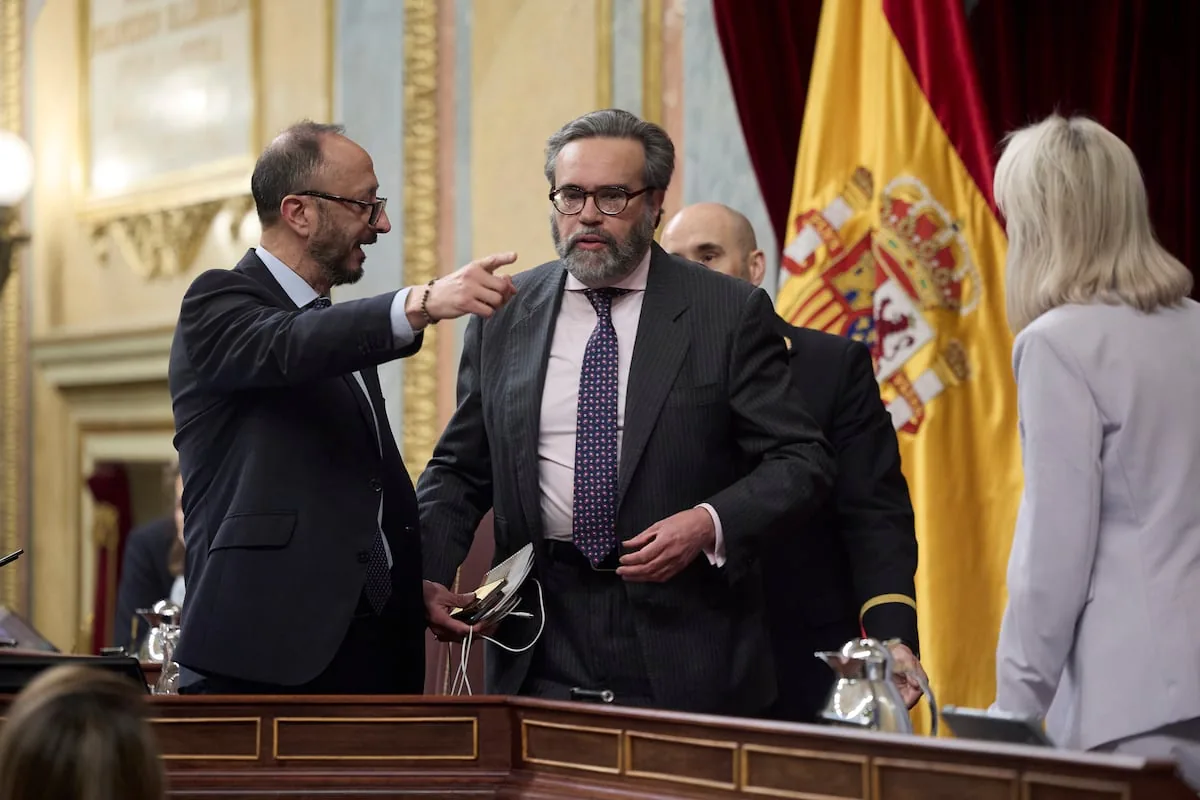
José María Sánchez and his bombastic dialectic, a mixture of legal jargon and idioms from other eras, left an indelible mark last Tuesday on the worst history of Spanish parliamentarism. No one in the Palacio de San Jerónimo remembered such a scene: a deputy bursting onto the rostrum occupied by the Bureau and confronting, face to face, a few centimeters away, the person who was presiding at that moment, representing the third authority of the State: the first vice-president, the socialist Alfonso Rodríguez Gómez de Celis. Minutes earlier, Sánchez had already shouted at him from his seat: “You don’t know how to preside!” And he had climbed for the first time into the area reserved for the Chamber’s governing body to harass a “señora letrado” (in his vocabulary, positions do not have a feminine form). After being expelled — to the ovation of the entire Chamber, except Vox and PP — he went to the office of the president, Francina Armengol, to continue the protest. And before the press he proclaimed: “I am the injured and offended party.”
Sánchez, according to deputies from other groups, usually interjects from his seat when others speak from the tribune. This time, a non-legislative motion by the PSOE on the destruction of books by Francoists was being debated. The ultra parliamentarian began to murmur that the Republic also burned books. A member of ERC who sits very close, Jordi Salvador, retorted. And both engaged in an angry discussion. The Vox representative claims that Salvador called him “criminal” and “murderer,” words inaudible from the distance of the Bureau. And the same man who once called the Prime Minister a “führer” and whose leader, Santiago Abascal, often calls the head of the Executive “criminal” from the same speaker’s tribune, became so indignant that he tried to stop the plenary session to have his protests addressed. He ended up expelled after ignoring up to three calls to order.
The Vox deputy had old scores to settle with Gómez de Celis. He also happened to be temporarily presiding over the session during Sánchez’s other serious altercation. On September 21, 2021, he shouted “witch” at a young socialist, Laura Berja, who was speaking in a debate on abortion. This did resonate throughout the hemicycle, and Gómez de Celis expelled him. The Vox group, with the now repudiated Iván Espinosa de los Monteros as captain general, mutinied to prevent their colleague from leaving the chamber. The plenary session was suspended until Sánchez agreed to retract with the following formula: “I withdraw that I called her a witch.”
His image with a cigar in hand in the Congress courtyard has become familiar since he arrived in 2019, after a long professional career. Many years ago, he had a fleeting stint in politics with the PP, although it is omitted from his official curriculum. In 1996, the Popular Party was new to power, and Isabel Tocino, then Minister of Environment, recruited him as chief of staff. He was 32 years old and had experience as a lawyer in the Supreme Court and as a professor at the University of Seville and the Pontifical University of Comillas. He lasted no more than a month and a half. The minister fired him because “he was not fit for the position,” according to the official explanation.
He then joined the judiciary, which he accessed in 1997 within the quota reserved for jurists with more than six years of experience, reports Reyes Rincón. He didn’t last long either. In 1998, after a brief stint at the court of Balaguer (Lleida), he requested a leave of absence and returned to the University of Seville, where he would rise to professor, specializing in ecclesiastical law. His writings and academic interventions bear witness to his ideas. Like the 2010 conference at a congress of Catholic jurists, where he repudiated same-sex marriage and ventured to predict that the next step would be the legalization of polygamy.
Read more Feijóo is the far-right
In Parliament, he stood out from the beginning for his invectives against female deputies. He compared the speech of then Vice President Calvo to the sentimental advice column of Mrs. Francis, famous during the Franco regime. Women from the PP were not spared, a party that has now refused to condemn his harassment of the presidency. He sarcastically referred to Cuca Gamarra as “Doña Cuca.” “Doña Cuca, we prefer Doña Cayetana [Álvarez de Toledo],” he snapped at her on one occasion. To another PP representative, Ana Vázquez, he referred to as “that shrill Galician deputy.”
Last Tuesday, hours before his spectacle in the plenary session, he had already caused a stir in the smaller Justice Committee. A PP motion calling for more judicial resources against gender violence was being debated. Sánchez launched into equating socialists and populars: “You are the strange ones… Strange, strange, strange!” Amid murmurs of disapproval, he continued to rant that in the EU, only Spain and Sweden have specific laws against sexist violence. And he added: “It must be because they like Swedish women.” The murmurs turned into a clamor. He became emboldened: “Yes, yes, sexist, I know… You are the sexists!”
The previous week, on April 9, in another committee, he had again slipped in his recurring taunts that subtly alluded to the height of the Minister of Foreign Affairs, José Manuel Albares: “I usually refer to you as microminister because your intellectual and political stature — understand me, I mean these — is truly minimal.” He then displayed that superior moral and intellectual authority with which he usually invests himself: “You have made gross errors in matters of European law that I will now explain to you, as if I had to teach a student at university or perhaps a child at school.”
The deputy possesses extensive real estate, according to his declaration of assets. He owns — wholly or 50% — three apartments, a studio, two commercial premises, and three parking spaces in Madrid; a house and another apartment in A Coruña, and a rustic property in Huelva. In 2023, he declared having 694,413.48 euros in “current and financial accounts.”
EL PAÍS contacted the Vox parliamentary group to gather Sánchez’s opinion but received no response.