









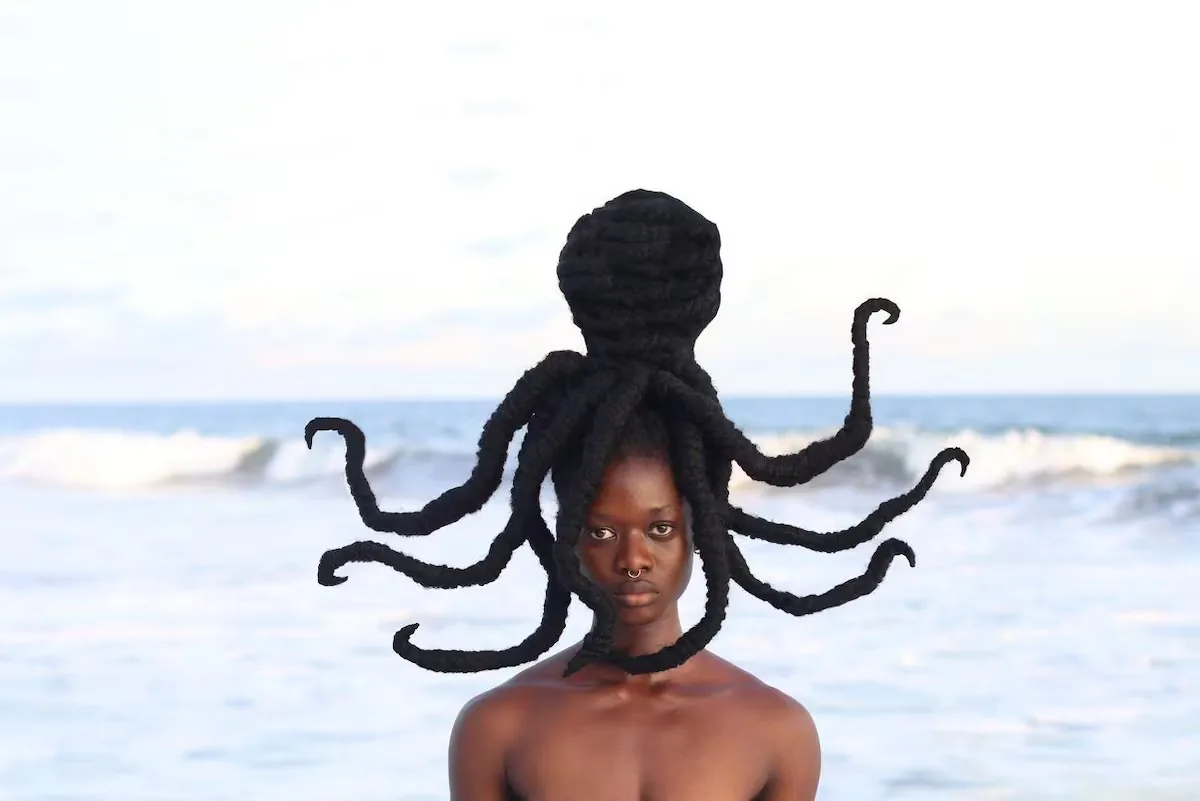
The first time Laetitia Ky (30 years old, Abidjan, Ivory Coast) applied hair relaxer was when she was 5 years old. Her mother taught her to do it from a very young age, every three weeks before her natural roots started to grow out. She did this for years because it was a very common practice among women in her country. But at 16, she had an accident: the product burned the front part of her head and she had to cut all her hair off.
Read more May Aristotle not do our homework for us
Ky considers this event the origin of her creative awakening. “When my natural hair started to grow, I didn’t know how to contain or care for it. It was like an existential crisis not knowing how to deal with it,” recalls the artist who is now known for her photography, painting, sculpture, performance, and acting. It was during one of her internet searches that she came across Black women who wore their natural hair. From that moment, Ky began to question everything: “Discovering this community (mainly in the United States) was like falling into an infinite hole. I didn’t know someone with hair like mine could be happy,” she says in a video call. Ky remembers that since then there was no turning back; she only wanted to learn everything about Blackness, history, discrimination, and colonialism.
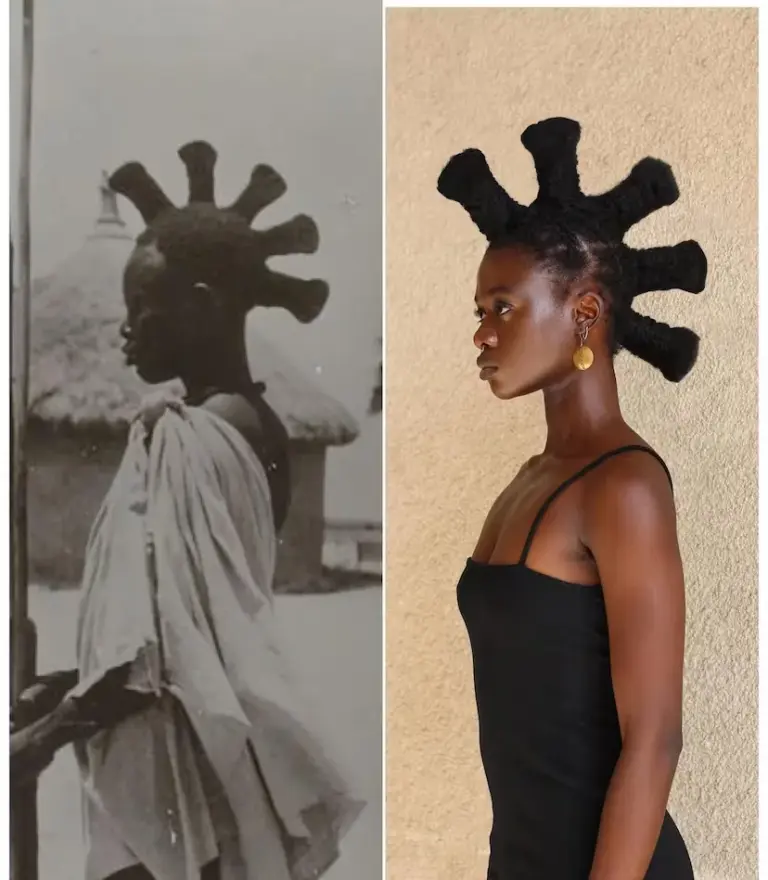
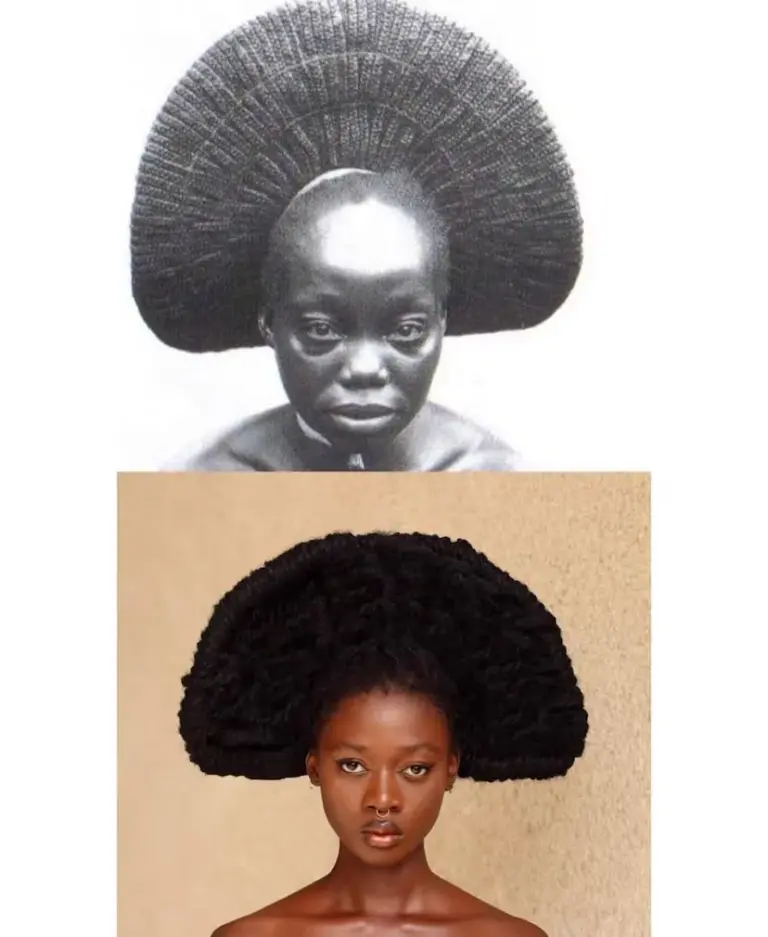
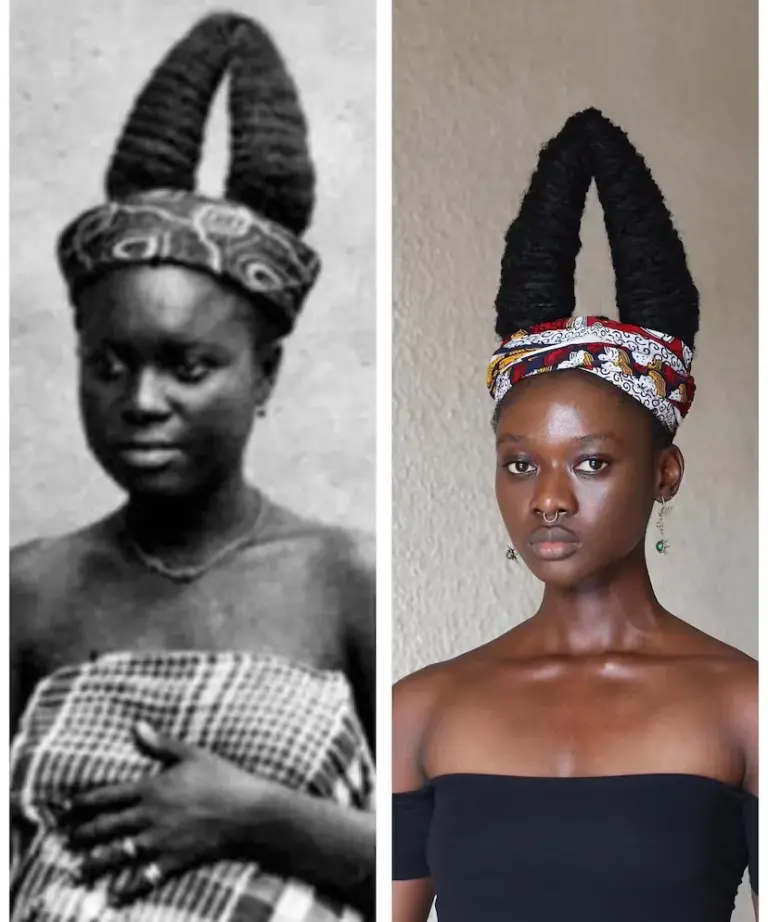
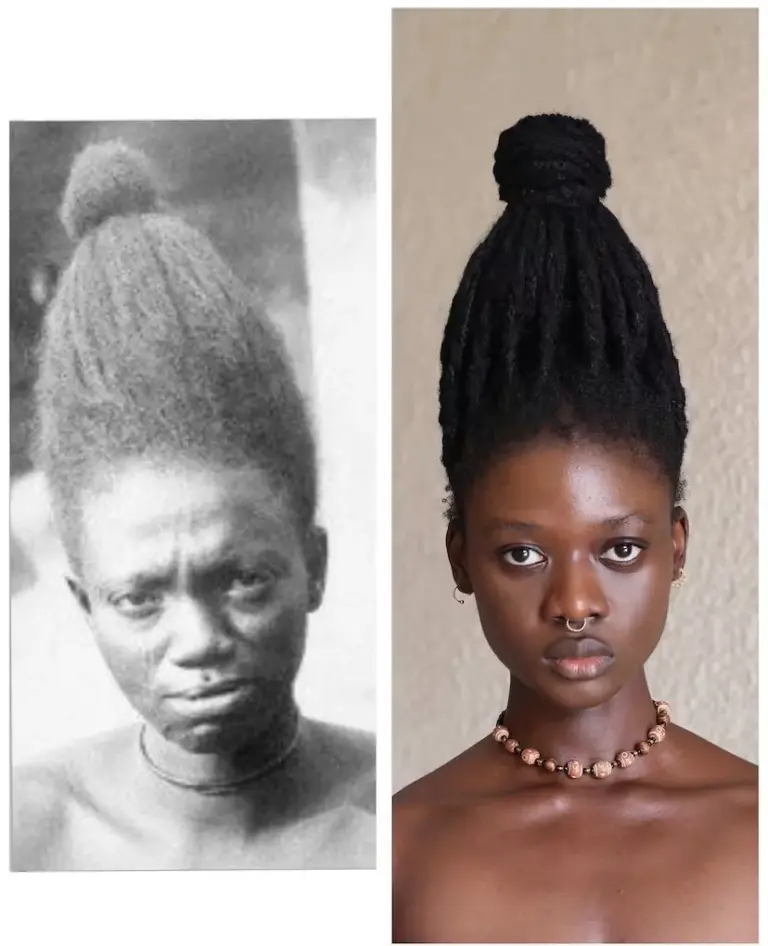
Hair has since been the common thread of her work published on social media, which has gained her a large audience: almost six million followers on TikTok and another half a million on Instagram. Her photographs began to attract attention in Ivory Coast, but it was when she recreated a series of portraits of what was supposed to be pre-colonial hair in West Africa that she jumped onto the international scene. “They were impressive, provocative, large, and striking hairstyles, and they helped me get an idea of what the world was like before Ivory Coast became a French colony.” Then she began styling her hair differently, making geometric buns that later turned into much more elaborate sculptures: “Hair played a very important role in precolonial societies. They used hairstyles to represent their religion, age, social class, ethnic identity, marital status, and wealth. It was a superpower, and I wanted to reclaim it.”
It has been almost 10 years since Ky began monetizing her work after captivating the fashion world and starting to receive offers from agencies, photographers, and galleries. Five years ago, she became an exhibitor in various places around the world, not only in photography but also in painting. She also writes and acts, and now lives in New York. She arrived with an artist visa, but in December 2025, the United States announced a partial immigration ban on 39 countries, 26 of them African—including Ivory Coast—citing national security reasons. “Everything has been very complicated. I want to be here because New York is the most important arts center in the world, but I also want to return home to see my mother, my sister, and my friends, and I don’t know when I will be able to do so.”
Ky finds it inevitable to convey what she feels in her pieces. When she was in Ivory Coast, for example, everything she painted was an immediate response to sexist behaviors she observed. “I remember feeling an inhuman urgency to paint. It was unbearable if I didn’t get the ideas out of my body,” she says emotionally in the video call with this newspaper. When she studied in Monaco, however, her creative stimuli changed a lot. “I didn’t feel any kind of anguish or urge. Everything around me was beautiful, and I wanted to experiment,” she says laughing. Now she feels a creative block: “When things get tough and you’re in survival mode, it’s very hard to create. The current politics are scary, insecurity is felt, and then there is the loneliness that all of us who migrate feel.”
Read more Calpe, renewing itself in the shadow of the Peñón
Hair played a very important role in precolonial societies. They used hairstyles to represent their religion, age, social class, ethnic identity, marital status, and wealth. It was a superpower, and I wanted to reclaim it
Throughout her career, many people have contacted her to thank her for trying to redefine Blackness, hair, slavery, and racism. Others have threatened her with death and tried to diagnose her with mental problems and traumatic experiences. “I read messages accusing me of being a demon and being unhinged.” Sharing her art labeled her as an activist, which at times she wishes she could shed. “Sometimes I want to be seen as an artist and nothing more. Also because, as someone trying to make a living from her work, she wants to avoid being pigeonholed.” Ky believes she entered social media too young and was not prepared to face everything that came after exposing herself to the real world, especially, she says, because her tool is her body. “I was 20 years old, trying to find my place in the world through art, and on the internet, I was already identified as someone with an important political opinion.”
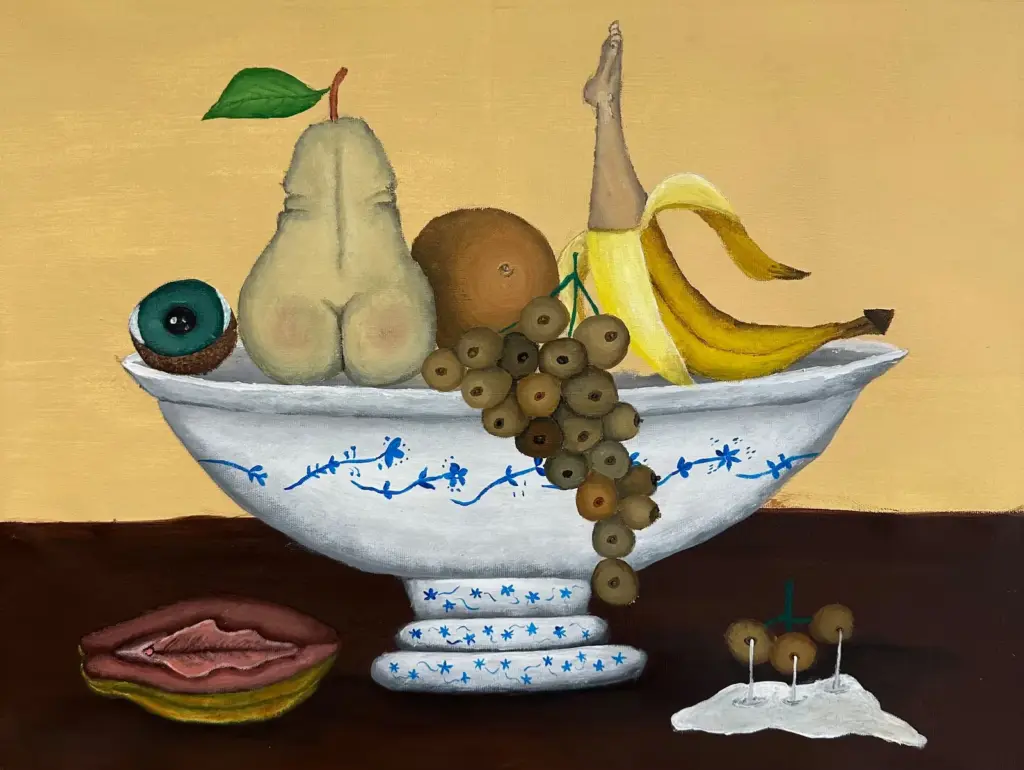
In one of her paintings, a woman stands at the edge of a bathtub surrounded by pink tiles. Her partner is sitting in the water, and she pours her blood over him. In the description of the piece, which has been exhibited in several galleries, Ky reflects on menstruation and purity, “What title would you give it?” she writes in a post on her Instagram account. The comments take various directions: “I love this,” or, “Is everything okay at home?” “I know they are provocative. I don’t know what to tell you. These are the images I have in my head, and never sharing them was never an option,” the artist concludes. “I work a lot with women’s bodies and their bodily functions, and I have a very clear and radical idea of what it means to be a woman—which I attribute to coming from where I come from—where girls have their clitoris cut at one year old. All my experience as an African woman is rooted in my body, and that is a conversation not everyone wants to have,” Ky states.
In the near future, she would like to publish a book she has been working on, which would be her second after debuting with Love and Justice in 2022. It is an action comic inspired by a comment one of her followers left on one of the first photo series she shared, in which she appeared with a hairstyle shaped like hands: “Someone said I looked like a superheroine, and I loved that. I remembered that when the movie Black Panther premiered a few years ago, we were all happy that Africa was finally being represented. I was happy too, but I thought it was still a distant representation, not something one hundred percent made by us.” Ky wants to tell the story of an African woman, super powerful, who uses her hair to fight crime in Abidjan, her city: “I want to do something that didn’t exist when I was younger. It would be amazing for girls who look like me to have something like that.”
Read more With hands stained by catastrophe