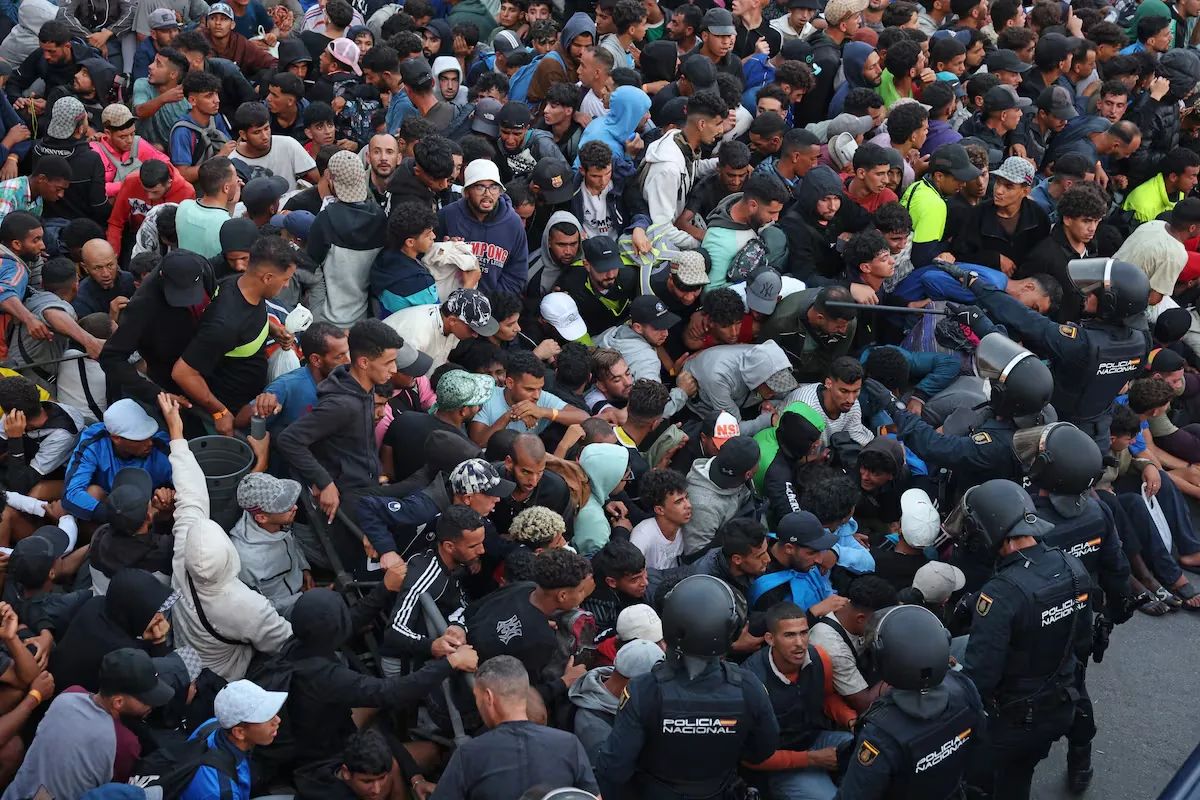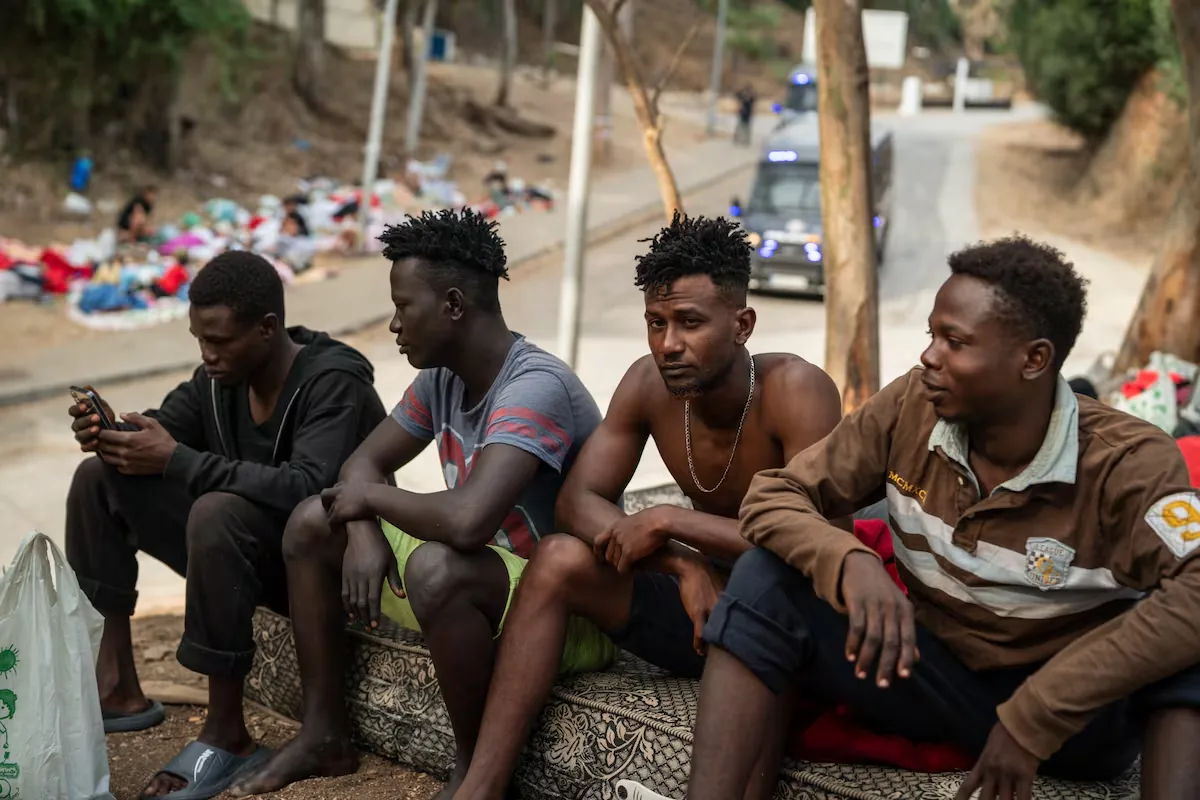
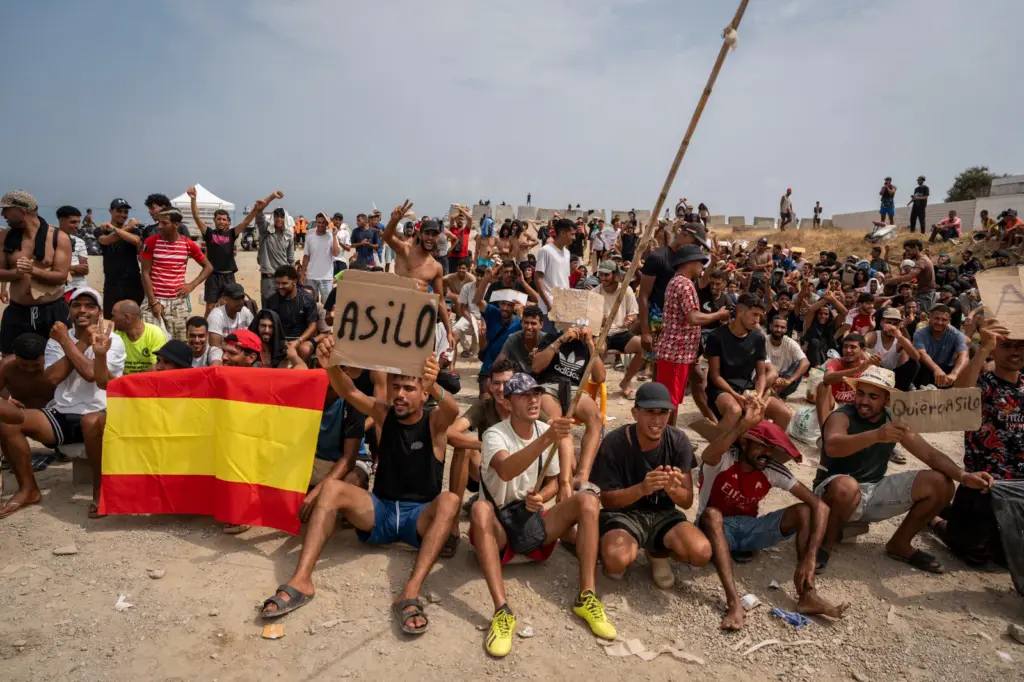
The President of the Government, Pedro Sánchez, will hold a videoconference with his ministers this Monday to analyze the evolution of the crisis triggered in Ceuta by the avalanche entry of 72,000 irregular immigrants at the end of July. This will be the second such meeting that Sánchez holds on the Ceuta crisis while spending his summer holidays at the La Mareta Palace in Lanzarote. Sánchez has called the meeting for 9:00 in the morning with seven of his ministers. In addition, the Minister of Inclusion, Social Security and Migrations, Elma Saiz, will visit Ceuta this Monday to see firsthand the humanitarian care device deployed in the city and to meet with the president, Juan Jesús Vivas. Saiz, who is also the Government spokesperson, will meet at 10:30 a.m. on Monday, August 17 with Vivas to “analyze the humanitarian situation, assess its evolution and address the needs of the city,” according to the ministry’s statement this Friday.
Read more Two serious hit-and-runs at dawn in Madrid
EL PAÍS offers the latest on the migration crisis free of charge. If you want to support our journalism, subscribe.

Migration crisis
Spain will maintain its strategy with Morocco intact despite criticism over the Ceuta crisis
The Spanish Government continues to gather data on the jump of 80,000 migrants to Ceuta and on Morocco’s role in that crisis. And it continues to treat the neighboring country with kid gloves despite the increasingly widespread feeling that Rabat looked the other way at critical moments. Neither La Moncloa nor the concerned ministries foresee a shift in the relationship with Rabat, despite internal criticism — with varying degrees of severity among the opposition, the diplomatic corps, and analysts — and external, mainly European. The Executive does not contemplate a change in strategy, not even a change in tone, especially when there are still thousands of migrants in Ceuta who must return to Morocco and this weekend has been extremely intense at the border. According to sources consulted, Spain will keep the keys of relations with the neighboring country intact, the approach to migration policy, and the general tone of its foreign policy “with its own identity,” despite the setback that Ceuta represents and the angry reaction of the EU in the early stages, which has left a residue of some irritation in several capitals.
Read more “Actually, I’m doing the laundry”: when ‘sexting’ becomes the new way to fake and please
You can read the full information here
Good morning. The head of Government, Pedro Sánchez, presides today Monday by videoconference a coordination meeting on the current situation in Ceuta, in which several ministers of his cabinet will participate. The telematic meeting will be attended alongside Sánchez by the first vice president and Minister of Economy, Trade and Business, Carlos Cuerpo; the Minister of Foreign Affairs, European Union and Cooperation, José Manuel Albares, and the Minister of Defense, Margarita Robles. Also the Minister of the Interior, Fernando Grande-Marlaska; the Minister of Territorial Policy and Democratic Memory, Ángel Víctor Torres; the Minister of Inclusion, Social Security and Migrations, Elma Saiz, and the Minister of Youth and Childhood, Sira Rego.
In addition, the Minister of Inclusion, Social Security and Migrations, Elma Saiz, will visit Ceuta this Monday to see firsthand the humanitarian care device deployed in the city and to meet with the president, Juan Jesús Vivas.
Read more Susana Delgado, microbiota expert: “The first 1,000 days of life are a critical period”