Key moments
- Yolanda Díaz attacks the PP: “They break every ethical line, they are arsonists of hate”
- About 40 declassified documents will be available from tomorrow on the La Moncloa website
- Tolón admits at the start of the school year that “some centers work perfectly, others less so”
- Albares says he “cannot certify” who is behind the entry of migrants and points to misinformation on social networks
The Council of Ministers approved this Tuesday the declassification of “all situation and alert reports” prepared by the National Intelligence Center (CNI), military intelligence, the National Police, the Civil Guard, and other competent bodies that the Government received between July 1 and August 1 regarding migratory pressure in Ceuta, which culminated with the massive entry of irregular immigrants on July 30 and 31. The documents, about 40, will not be available until Wednesday. “We are taking a further step in our commitment to transparency,” said the spokesperson minister, Elma Saiz. Meanwhile, the president of Ceuta, Juan Jesús Vivas, has requested support from Brussels in a statement from the European Parliament. “Ceuta is experiencing an unsustainable situation that can no longer be endured. That is why we ask for the support of European institutions,” he said, also insisting that Morocco is behind the massive entry of migrants. Meanwhile, the school year has started in Ceuta with an attendance of around 70%, according to the Government, and with reinforced security in the centers, although not in all.
EL PAÍS offers the latest on the migration crisis free of charge. If you want to support our journalism, subscribe.

Yolanda Díaz attacks the PP: “They break every ethical line, they are arsonists of hate”
The second vice president of the Government and Minister of Labor, Yolanda Díaz, has attacked the PP, accusing it of being “willing to do anything,” of “breaking every ethical line,” and of not respecting international law, in relation to the Ceuta crisis, which she described as “one of the greatest humanitarian crises of recent decades.” In her first statements about the crisis, she said that the PP “has broken absolutely everything, they are arsonists of hate.” “When the Popular Party, breaking all ethical lines, calls boys and girls invaders, it means they are willing to do anything, it’s not that they don’t respect international law, they are absolutely violating everything,” she insisted. “I would like to see the Popular Party once in my life helping, helping international law, the fulfillment of human rights,” she said, calling on the popular communities to facilitate the transfer to the peninsula of more than 700 vulnerable women who arrived in Ceuta.
About 40 declassified documents on Ceuta will be available from tomorrow on the La Moncloa website
About 40 declassified documents on Ceuta will be available from tomorrow Wednesday on the La Moncloa website, according to spokesperson minister Elma Saiz at the press conference following the Council of Ministers on Tuesday.
“The Spanish Government’s intention is for citizens to access the information available, because we have nothing to hide, because we act with transparency,” she added. The documents will be available “throughout the day.”
“If other documents appear that are also relevant, of course, they will be shared and informed if they affect national security,” Saiz explained.
The spokesperson minister also asked the popular president, Alberto Núñez Feijóo, to behave “like a true leader of the opposition, a statesman” and to stand by the Government “with responsibility and prudence,” stopping embracing “conspiracy theories or misinformation.” “The time horizon to return Ceuta to normality and to solve this crisis involves collaboration between administrations,” she concluded. “I demand that he act with responsibility and prudence.”
The Government estimates 2,004 immigrant minors in Ceuta and will proceed with their family reunification
The Minister of Territorial Policy and head of the unified command, Ángel Víctor Torres, has estimated 2,004 immigrant minors in Ceuta after the massive entry on July 30 and 31. He stated at the Council of Ministers that what they want is “to proceed as soon as possible with individual files for family reunification.”
Torres raises to 3,400 the places enabled in temporary migrant reception centers in Ceuta
The Minister of Territorial Policy and Democratic Memory, Ángel Víctor Torres, has reported that 3,400 places have already been enabled in migrant reception centers set up at various points in Ceuta to register those who entered the city on July 30 and 31 and proceed, if applicable, with their return to Morocco. Torres criticized the city government for “surprisingly” opposing the installation of one of these points at the port, after it had been agreed upon in the National Security Council, which forced the central government to take control of the infrastructure. Torres assured that the goal remains to reach 6,000 places in this type of provisional camps. “An enormous effort is being made,” he said.
“At first, the works were halted, then they continued, but that agreement of the Port Administration Council [controlled by the city] logically meant that we had to submit a report for the public interest and according to the law, which was signed by the competent minister that same night, Friday to Saturday, so that the actions could continue and, therefore, we will complete those works,” he said about the dispute with Ceuta over the port camp.
Student attendance at the start of the school year in Ceuta approaches 70%, according to the Government
The Minister of Territorial Policy, Ángel Víctor Torres, assured this Tuesday that teacher attendance in 35 public and charter primary and secondary schools in Ceuta is complete. “About 70% of students attended class today and we hope this percentage will increase in the coming days,” he said at the press conference following the Council of Ministers.
López (PSOE): “We make policy autonomously without being conditioned by what Morocco thinks”
The PSOE spokesperson, Patxi López, declared at the press conference of the Congress of Deputies that his party acts independently of Rabat’s reaction: “We make policy autonomously without being conditioned by what Morocco thinks.”
He also expressed skepticism towards Judge María Tardón, who is investigating the massive entry of migrants in Ceuta on July 30 and 31 at the National Court: “What happened is that a report that denied it could be given to the Government was leaked the day before the Government’s appearance in Congress. I won’t say more.” “Movement is proven by walking, and what has been done so far makes us reflect like this,” he stated.

The judge accepts the appearance of the city of Ceuta in the case about the massive entry in July
Judge María Tardón, instructor of the National Court, has accepted the appearance of the city of Ceuta in the investigation opened about the massive entry of migrants that occurred on July 30 and 31. The judge takes this step considering the autonomous city as harmed. It is one of Tardón’s first moves after deciding this Monday to take over the case after considering, with the support of the Prosecutor’s Office, that the National Court has jurisdiction to lead this summary, appreciating indications of crimes that compromise the peace or independence of the State and against the rights of foreign citizens, in connection with reckless homicide, as well as criminal organization.
The Council of Ministers approves the declassification of the reports it received about Ceuta between July 1 and August 1
Spokesperson minister Elma Saiz assured that the Government “has worked and continues to do so from day one in Ceuta, with transparency and responsibility over an extraordinary situation that has required and continues to require an extraordinary response.”
“This Tuesday we take a further step in our commitment to transparency and the right of citizens to know all the information,” she said at the press conference following the Council of Ministers this Tuesday.
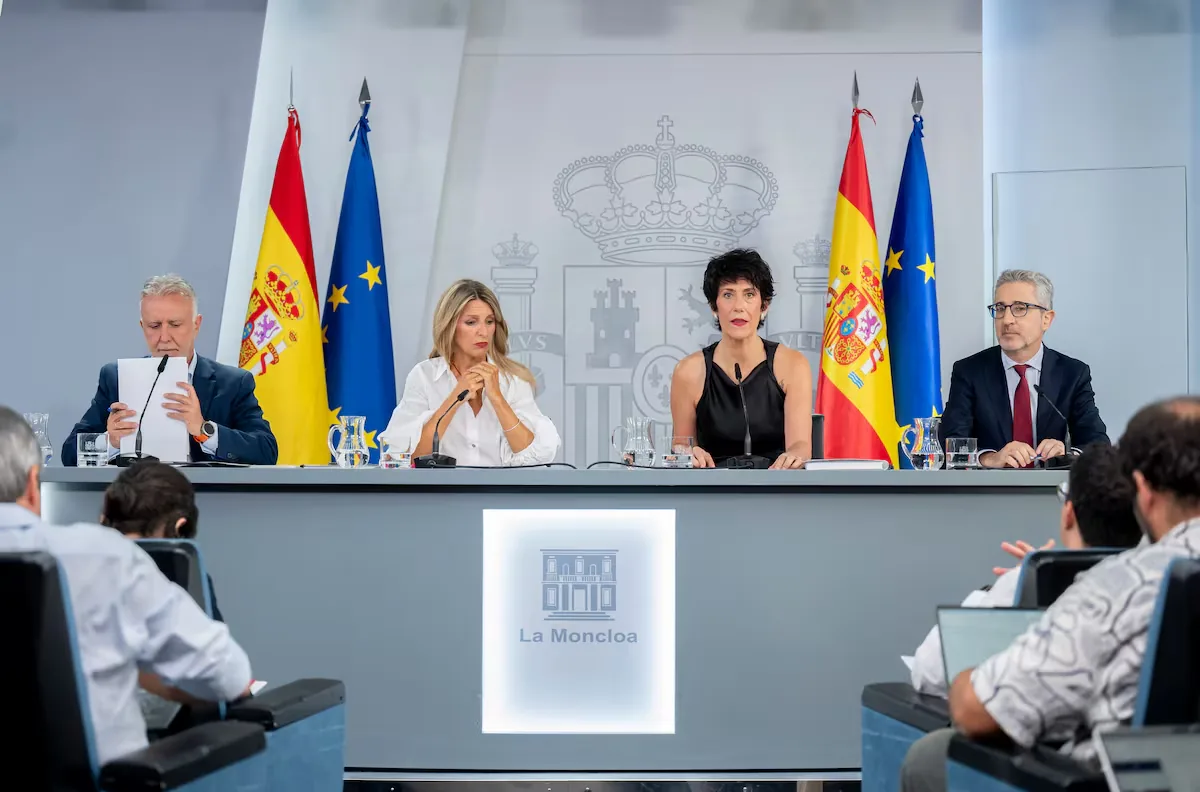
The press conference following the Council of Ministers begins
The Council of Ministers approved this Tuesday the declassification of “all situation and alert reports” prepared by the National Intelligence Center (CNI), military intelligence, the National Police, the Civil Guard, and other competent bodies that the Government received between July 1 and August 1 regarding migratory pressure in Ceuta, which culminated with the massive entry of irregular immigrants on July 30 and 31. The documents will not be available until Wednesday.
The Minister of Inclusion, Social Security and Migration and Government spokesperson, Elma Saiz; the second vice president and Minister of Labor and Social Economy, Yolanda Díaz; the Minister of Finance, Arcadi España; and the Minister of Territorial Policy and Democratic Memory, Ángel Víctor Torres, appear to explain the agreements adopted.

Ibáñez demands the declassification of information about the Green March
On the same day the Executive publishes intelligence service documents about the situation in Ceuta between July 1 and 30 to clarify the crisis, the deputy spokesperson of Sumar and Compromís deputy, Alberto Ibáñez, submits a request to the Government for the Council of Ministers to declassify “all information related to Western Sahara, the Green March, and the Spanish withdrawal in 1975,” which remains secret.
Also, the spokesperson of Sumar, Verónica Babero, pressured the PP this Tuesday to vote in favor next Thursday of the law granting Spanish nationality to Sahrawis born in the territory when it was a Spanish colony and to their descendants. Although she supported the consideration of the law, she abstained in the vote in the Justice Commission last July. “The PP’s only obligation this Thursday is to keep its word, to respect its own word. Therefore, it should go one step further and not abstain. It should vote in favor of Sahrawi nationality. The PP cannot keep saying it supports Sahrawis and then abstain on the nationality law,” she said at a press conference.

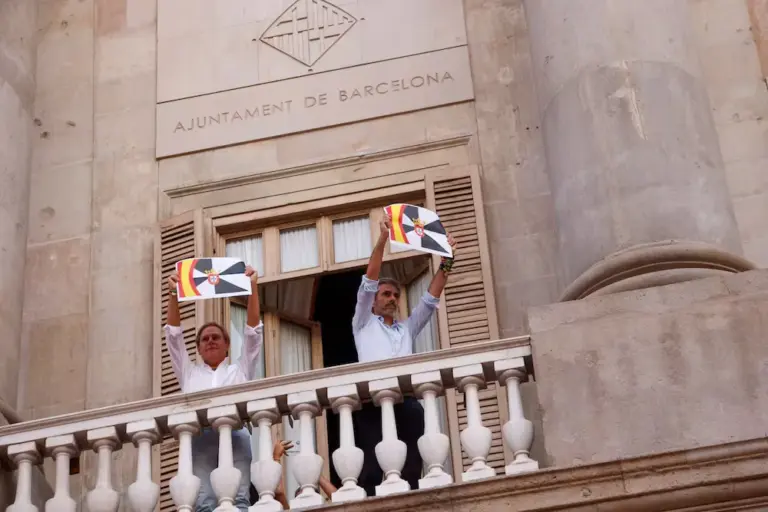
Vox deputy Joan Garriga and the party councilor Gonzalo de Oro display the Ceuta flag from the balcony of the Barcelona City Hall during the rally in support of the people of Ceuta, last Wednesday at Sant Jaume square in Barcelona. / Quique García / EFE
File opened in Barcelona against Vox for going out on the City Hall balcony with Ceuta flags
The Barcelona City Hall Government, at the request of the municipal groups PSC, Junts, ERC, BComú, and PP gathered this Tuesday in the Board of Spokespersons, has decided to open a file against the president of the Vox municipal group, Gonzalo de Oro, for having gone out on the balcony of the City Hall last September 2 during the rally in support of Ceuta held at Sant Jaume square (where the City Hall is located).
The Vox spokesperson in the Parliament, Joan Garriga, and the party leader in Barcelona displayed posters with a Ceuta flag with a stripe with the Spanish flag. The file, which is yet to see if it results in a sanction, considers that they made “improper use” of the balcony.
In a statement, Vox considered it “a political persecution maneuver.” “What we did was an act of support for the people of Ceuta, who need all the love and solidarity at this time, which we do not regret and would do again,” they reported.
Sumar criticizes that the PP disrupts public order by rejecting the reception of minors on the peninsula
The spokesperson of Sumar, Verónica Martínez Barbero, declared at the press conference of the Congress of Deputies that an important aspect to solve the crisis in Ceuta is “to transfer migrant minors to the peninsula.” “Public order and humanitarian law are not incompatible,” she detailed, then criticizing the rejection by PP and Vox to host minors in the autonomous communities they govern: “Breaking a law is disrupting public order, for Ceuta and for the rest of the State,” she asserted.

Vivas: the migratory wave was possible thanks to the “participation or consent” of Morocco
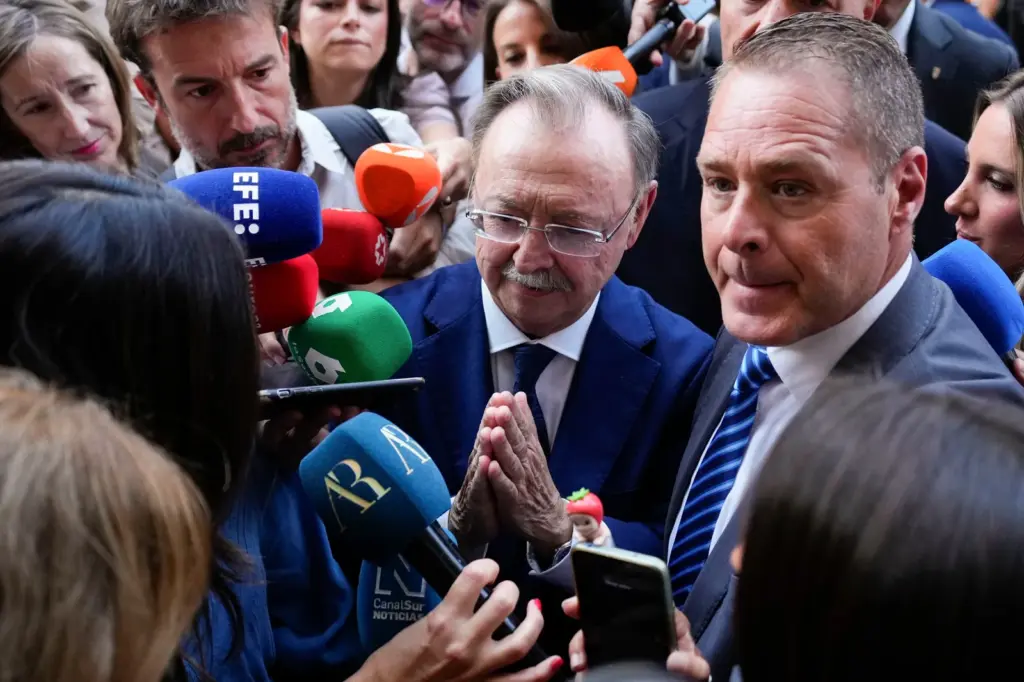
The president of Ceuta, Juan Jesús Vivas, reiterated in the European Parliament in Brussels his statement that behind the “massive” wave of immigrants to the autonomous city was the hand of Morocco and considered that if this is proven, Europe should not maintain its “cooperation policy” with Rabat.
The entry into Ceuta “was possible thanks to the participation of Morocco or the consent of Morocco,” Vivas said in a press meeting at the Eurochamber, at the start of a visit to Brussels where he plans to meet with the Commissioner for Interior and Migration, Magnus Brunners, and his counterpart for the Mediterranean, Dubravka Suica, among others.
Vivas said he is aware of the “great seriousness” of his statement about Morocco, and demanded that the autonomous city needs the “support of the EU” because, he emphasized, “if Ceuta sinks, Spain sinks and Europe sinks.”
“Borders must be respected (…) if they are not respected, then a cooperation policy with Europe cannot be maintained if borders are not respected.”
“Reality cannot be denied: twice, Morocco has used migratory pressure to challenge the territorial integrity of Europe, this cannot be allowed and must have a strong response from Europe telling Morocco that if we want a fruitful and beneficial cooperation policy, we must maintain respect, and that starts with respecting our borders and territorial integrity,” he insisted.
Vivas asks for EU support from Brussels: “Ceuta is experiencing an unsustainable situation”
The president of Ceuta, Juan Jesús Vivas, requested this Tuesday support from Brussels in a statement from the European Parliament.
“Ceuta is experiencing an unsustainable situation that can no longer be endured. That is why we ask for the support of European institutions,” he said. “There must be a categorical unequivocal statement from the European Parliament, highlighting that our southern borders, the only two land borders Europe has in Africa, are European borders, both Ceuta’s and Melilla’s, emphasizing that borders must be respected and that if borders are not respected, Europe is not being respected.”
Ceuta crisis
The minutes show that Vivas supported the use of the port in his meetings with Sánchez before backing down
The minutes of two consecutive meetings in which the president of Ceuta, Juan Jesús Vivas, participated with the president of the Government, Pedro Sánchez, and the ministers involved in the Ceuta crisis, clearly show that the leader of the autonomous city supported without a doubt the use of the port that he now rejects. The Government is outraged by this change of attitude that Minister Óscar Puente has described as “sabotage” and that led it to take control of the port to install 1,000 immigrants there and be able to remove them from the streets.
You can read the full information here
Vox accuses the Government of spreading a smokescreen with the declassification of reports
The Vox spokesperson in Congress, Pepa Millán, accused this Tuesday the Government of spreading “a smokescreen” with the declassification of intelligence reports on the massive arrival of migrants to Ceuta that the Council of Ministers will adopt today.
The Government has announced it will declassify this Tuesday the reports it received about Ceuta between July 1 and August 1 from the CNI, the Police, and the Civil Guard, although they will not be available until Wednesday.
The Vox spokesperson, who held a press conference in Congress this morning, called President Pedro Sánchez a “Moroccan agent” and the situation a “war,” in which “the Government is with Morocco.” Thus, she said she expects “nothing” from this declassification.
“Can anyone believe that the Government will declassify documents that expose it? What they will do is build a smokescreen to divert their possible criminal responsibility before the National Court,” she said. “You have to be very naive” to think that an executive that “possibly ordered the Civil Guard commanders to manipulate their reports to exclude Morocco” will declassify reports that prove it, she said.
All the international policy actions “of Sánchez go against the interests of Spaniards. The Government is aligned with Morocco, we are at war and the Government is with Morocco.”
Read more Planifica Madrid had an empty office of 478 square meters when it bought the penthouse
Millán announced that her group will request the appearance before the chamber of the Minister of Education, Milagros Tolón, to explain why there are schools in Ceuta that are not being used for Spanish children. “Today schools start in Ceuta and girls have to go with pepper spray and alarms. Children go to school afraid, surrounded by military and with private security in the centers,” she denounced. “There are schools occupied or vandalized or used to house immigrants, but Spanish schools are for children, not for immigrants, who should have been returned to their country. But the ministers, who take their children to school calmly, have no problem,” she also said.
“What does Pedro Sánchez have from Moroccan intelligence? He is a victim of blackmail and makes us victims,” she said, before pointing out that without the answer to that question “it is not explained why this Government wants to blame the police and judges” and make the situation in Ceuta chronic. (Efe)
Compromís requests the transfer of minors in Ceuta to the peninsula and calls the arrival of immigrants a “hybrid attack”
Alberto Ibáñez, spokesperson of Compromís, acknowledged that the return to classes of children in Ceuta “does not start normally.” He consequently requested that children in Ceuta be transferred “urgently” after their arrival on July 30 and 31, “as we did with Ukrainian children who started the school year in our schools.”
He also described the arrival of immigrants to the autonomous city as a “hybrid attack by Morocco with support from the United States and Israel.”
Tolón admits at the start of the school year in Ceuta that “some centers work perfectly, others less so”
The Minister of Education, Milagros Tolón, admitted that the start of the school year in Ceuta this Tuesday is uneven depending on the educational centers, but insisted that schools are “safe” places and called for calm.
“Some centers are working perfectly, others less so,” Tolón acknowledged in an interview on Cadena Ser in which she declined to provide more information due to lack of data on the functioning of the schools.
She stressed the importance of children “returning to routine,” because “that routine brings back the normality that has not existed in this city during the last month.” Therefore, she emphasized that “classrooms and schools are safe and calm must be conveyed so that normality increases.” (EP)
Belarra states that “a judicial investigation is not needed” to know who is behind the Ceuta crisis
The leader of Podemos, Ione Belarra, again blamed Morocco for the massive jump to Ceuta on July 30 and 31 and stated that a judicial investigation is not necessary. “It is evident that the only actor with interests in controlling the Strait of Gibraltar through Ceuta and who has had expansionist ambitions for a very long time in Ceuta and Melilla is Morocco. So, a judicial investigation is not needed. The Government needs to tell the truth, explain why it is protecting Morocco, which is the question from the appearance that went unanswered, and from there we can give a diplomatic response and in terms of commercial consequences,” she said at a press conference this Tuesday in Congress.
“It is unacceptable that Morocco will get away with this crisis,” she also said in the lower chamber.

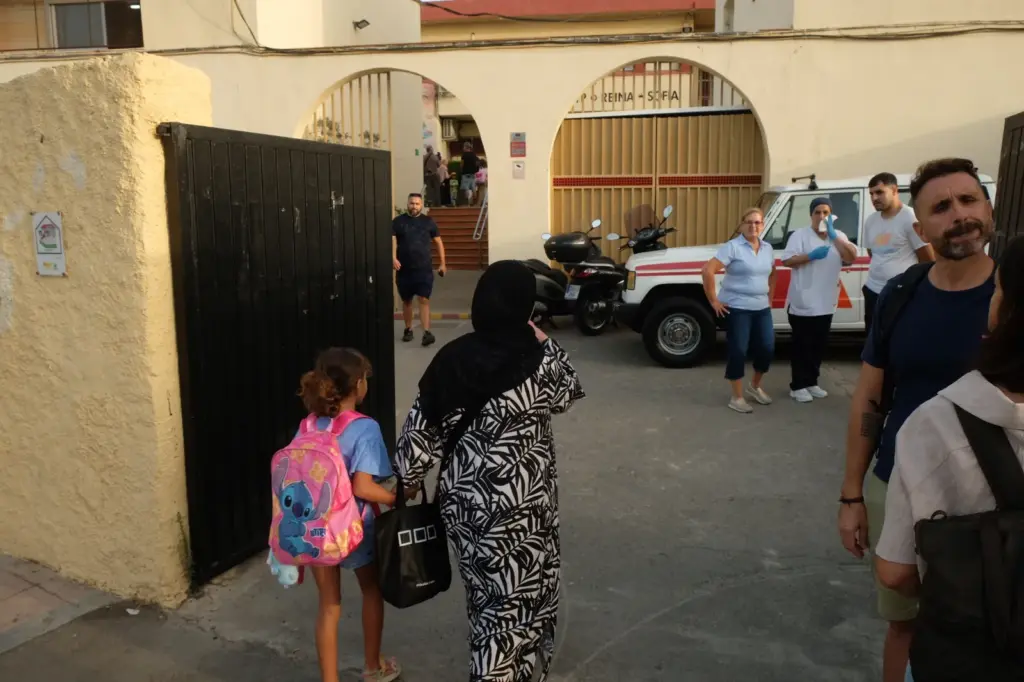
Back to school at Reina Sofía School in the Príncipe Alfonso neighborhood, in Ceuta. / Ariadna Roig Ripoll
The start of school in Ceuta begins unevenly
The first day of school for Ceuta’s children will not be remembered with excitement. The city had assured it would reinforce security and protection of the centers, and this has been true only in part. In the more central ones, such as the charter Severo Ochoa or Juan Morejón, various military Army patrols waited from early on nearby, watching to prevent migrant flow around them. But in the schools in the more peripheral neighborhoods, closer to the provisional encampments, the reality was different. At the Reina Sofía Center, only two local police officers guarded the crosswalk access to the premises, the same agents usually there. The surroundings had not been cleaned, but still most mothers took their children to the centers. There are no attendance figures yet, and the school directors explained they will apply “flexibility” with absences, given the exceptional situation.
The PSOE expresses doubts about the judge of the Ceuta crisis: “She starts a bit shaky”
The PSOE spokesperson, Montse Mínguez, expressed this Tuesday her doubts about the National Court judge María Tardón, who has opened a criminal investigation into the massive entry of migrants in Ceuta on July 30 and 31, because in her opinion “she starts a bit shaky.” “If she requests a report that is not passed to the Government and that report is passed to a media outlet with a right-wing bias, then for me she already starts a bit shaky,” she said in an interview on RNE about the report from the National Immigration and Borders Center (CENIF) of the National Police that El Español revealed last week.
The PSOE spokesperson defended judicial independence but pointed out that this judge “has the past she has,” referring to Tardón’s election as councilor in Madrid City Hall after appearing as an independent on the PP lists in 1999 with José María Álvarez del Manzano as mayor.
Mínguez trusted that Tardón’s work as a judge will be “impeccable” but raised her doubts, as Transport and Sustainable Mobility Minister Óscar Puente did this Monday. “Let me have my doubt because she starts like this (with the report). If you start like this, I don’t know how we will end,” she declared. (EFE)
Feijóo, on Ceuta: “I have never seen a worse managed crisis. I have never seen a president with such a lack of rigor”
The PP president, Alberto Núñez Feijóo, again criticized this Tuesday the Government’s management of the migratory crisis in Ceuta. “I have never seen a worse managed crisis. I have never seen a president with such a lack of rigor,” he said in an interview on Antena3.
“Ceuta has had a multifactorial crisis for 40 days, there is an evident crisis of security and territorial integrity of the city and therefore, of Europe and Spain. There is a public order crisis, a public health crisis, and a huge economic crisis. Ceuta’s reputation from an economic, tourist, etc. point of view is very affected,” he lamented.
The popular leader insisted that the massive entry of migrants to the autonomous city was ordered from Morocco.
On the other hand, he supported the management of the city president, Juan Jesús Vivas, criticizing the use of the port for migrant reception. “They put camps next to a port. At the port are the ferries that take us to the peninsula and, therefore, with an extreme risk of people who want, as stowaways, to get on those boats,” he said.
Migratory crisis
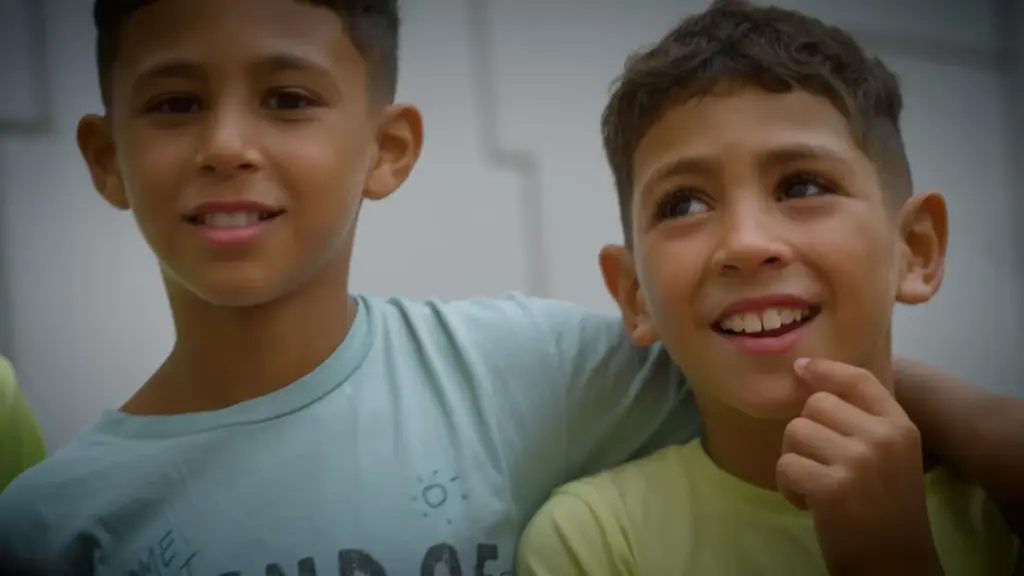
Video | Ángela and Sulaiman: not all children return to school in Ceuta
Ángela and Hugo do not have the same eagerness to return to school, although it is just a few meters from their home, in the center of Ceuta. She, the younger of the siblings, 10 years old, counts down the hours to sit back at the desk; he, 12, is a bit more reluctant: it will be his first year in high school. But this school year is a special challenge especially for their parents, who have faced the challenge of explaining to their children the harsh reality their city has lived for a month after the massive entry of immigrants from Morocco. “We tell them honestly and we don’t want to fall into the discourse of hate,” says their mother, Tamara Iglesias, in the video report of this news. She feels privileged to live in the center and not in the periphery, much more tense in this crisis. “On the first day I told my son: ‘I am seeing children your age or younger passing by here, barefoot, in swimwear and who knows if they have eaten.’” From this Tuesday they will live a return to classrooms marked by strong security measures.
You can watch the full video here
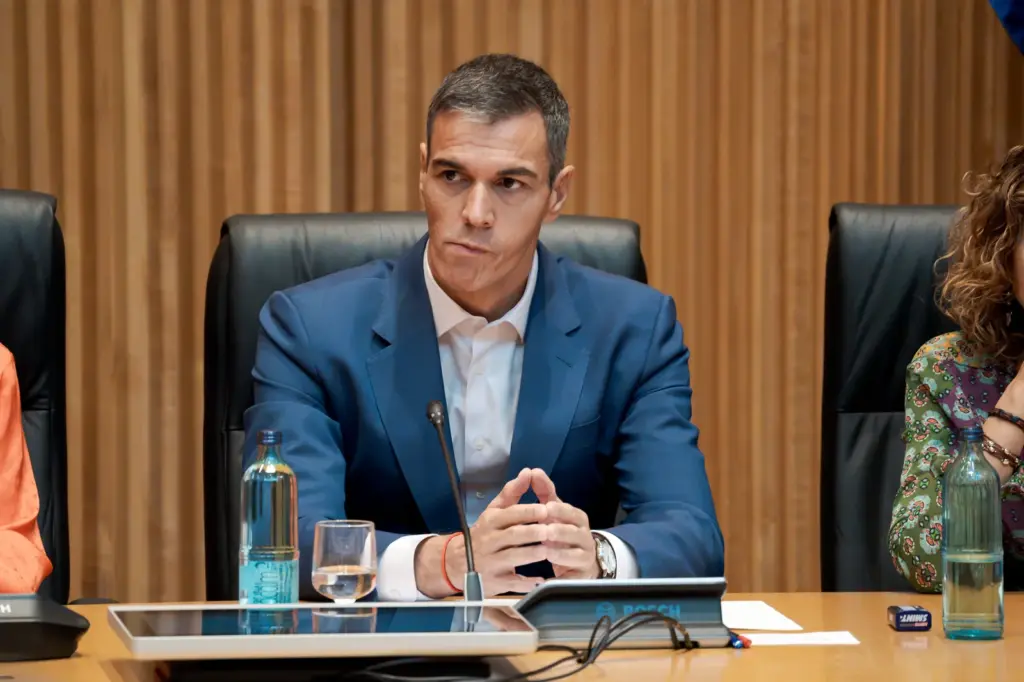
MIGRATORY CRISIS IN CEUTA
The Government will declassify this Tuesday the reports it received about Ceuta between July 1 and August 1
The Council of Ministers will declassify this Tuesday “all situation and alert reports” prepared by the National Intelligence Center (CNI), military intelligence, the National Police, the Civil Guard, and other competent bodies that the Government received between July 1 and August 1 regarding migratory pressure in Ceuta, which culminated with the massive entry of irregular immigrants on July 30 and 31. Government sources downplay the validity of the report from the National Immigration and Borders Center (CENIF), which points out that Moroccan agents “guided” immigrants in the assault on Ceuta, but the Interior Minister, Fernando Grande-Marlaska, was not informed after Judge María Tardón of the National Court asked its authors for “maximum confidentiality.”
You can read the full information here
Albares says he “cannot certify” who is behind the entry of migrants to Ceuta and points to misinformation on social networks
The Minister of Foreign Affairs, José Manuel Albares, insisted this Tuesday that “it cannot be certified who is behind” the massive entry of migrants in Ceuta on July 30 and 31, according to an interview on La1. “We know there was an absolutely unusual movement on social networks that day,” he explained. “The reactionary international acted to amplify misinformation.”
“The key is social networks. Those are the things that are already clear. From there, investigations are underway and what we want are certainties to make the right decisions,” he said. “Ceuta and Melilla are Europe’s border and as important as the eastern borders.” On the day of the massive entry, he called his Moroccan counterpart: “He told me they had nothing to do with it.”
He insisted that Ceuta and Melilla are Spanish: “I will not tolerate any doubt or comment about our territorial integrity.”
Albares travels this Tuesday to Brussels to meet with European authorities to “advance a better fit of Ceuta and Melilla in the various instruments and institutions of the European Union.” He does so on the same day the Ceuta president, Juan Jesús Vivas, travels to Brussels, where he will meet with the Commissioner for Interior and Migration, Magnus Brunner; the Mediterranean Commissioner, Dubravka Šuica; and the President of the Eurochamber, Roberta Metsola.
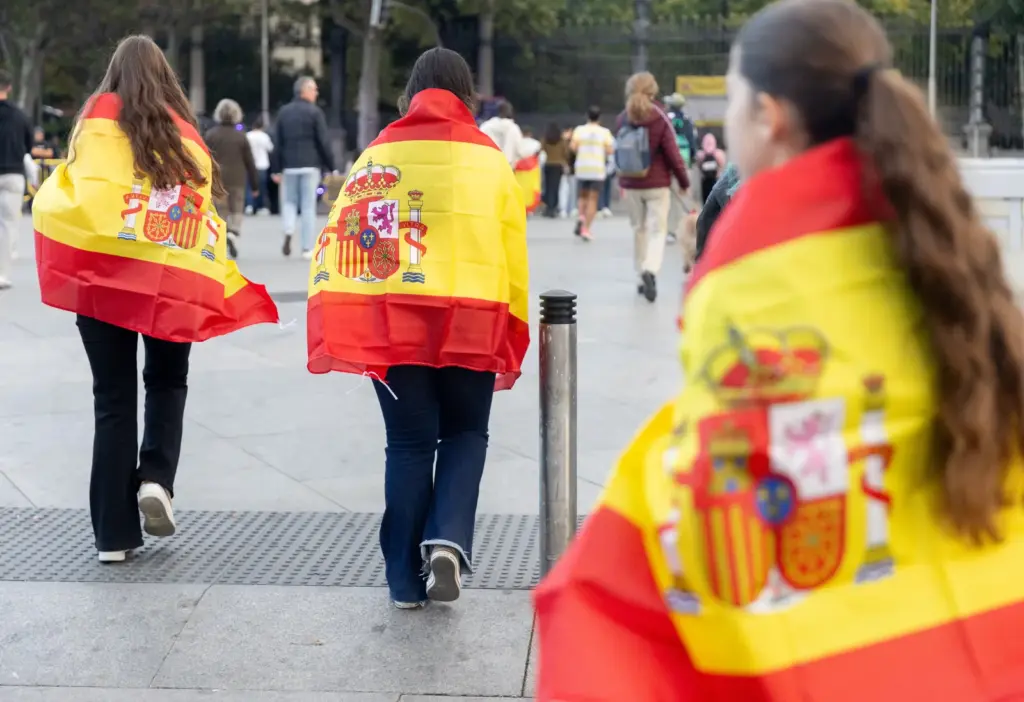
Column
Spain, of the Spaniards
A society so thriving that its inhabitants display cosmopolitan collections of magnets stuck on the outside of refrigerators full inside of fresh food has the responsibility to sympathize with those who have nothing to eat. A society so prosperous that it can choose between drinking tap or bottled water must worry if someone dies of thirst. A society so advanced that it can place devices at its borders that recognize its inhabitants by the inside of their eyes has the task of ensuring that skin is never a reason for discrimination. A society so prosperous that many of its members could collect airplane menu salt shakers as if they were thimbles has the moral obligation not to be xenophobic. A society so plurinational that it is part of a parliament that recognizes 24 official languages has the task of respecting the power of dialogue. A society so plural that is on the list of 29 countries that have completely torn down their barriers to allow members of nations that in the past could not even look each other in the face for ethnic or religious reasons to circulate has the duty to repudiate hate. A society so flourishing that all its members know how to read has the task of not succumbing to hysteria.
You can read the full column here
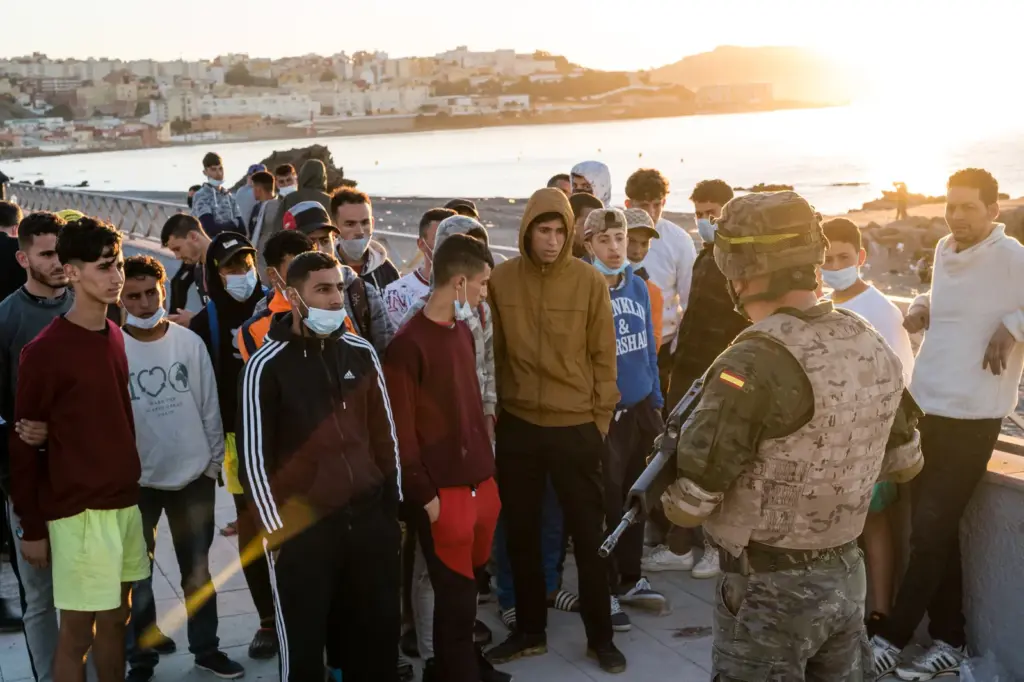
Tribune
Ceuta: what is different this time
The previous crisis of 2021 not only showed similar images but the sequence of events was very similar. It would seem like a déjà vu if it were not because the differences are also important and say a lot about the moment we are in.
You can read the full tribune here
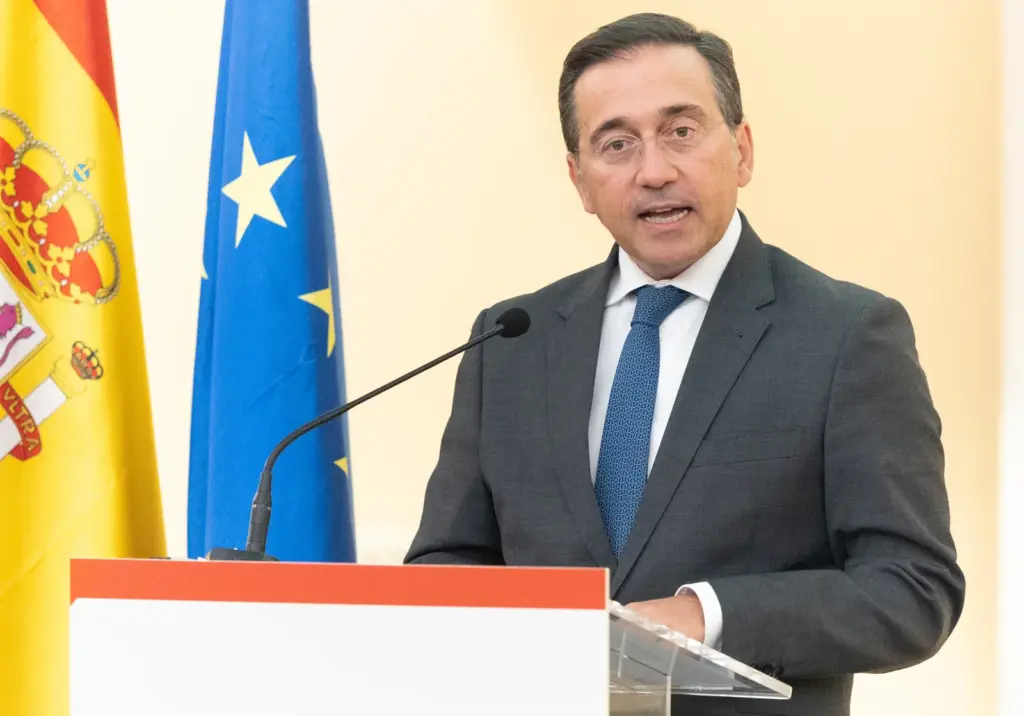
AUTONOMOUS CITIES
Albares explores the “Europeanization” of Ceuta and Melilla in a trip to Brussels
With the Ceuta crisis turned into the huge crack that swallows everything and clouds everything at this start of the political year, the Minister of Foreign Affairs, José Manuel Albares, travels this Tuesday to Brussels with the task of “Europeanizing” the Spanish autonomous cities in North Africa, Ceuta and Melilla.
You can read the full information here
Column
‘Moroccofobia’
Just as football commentators no longer say “make a pass,” but prefer to use the expression “filter balls,” we could say that racism has definitively filtered into the conception of Spain. The humanitarian crisis in Ceuta has been the opposite, naturalizing dehumanization. By applauding ourselves so much, we have ended up not seeing others. Especially the neighbors from Morocco. We have always had problems managing the relationship with the closest countries. With Portugal, also turned into a tourist nation, we maintain a dispassionate contempt, as if ignoring each other were just another way of coexisting. There are couples who do something like that, and when you visit them at home you come out disgusted. The other case is France. After spending the last years of Francoism sighing to be like them, democracy arrived and we swallowed the North American cultural colonization to the point that young people today don’t even study French, as if there was nothing there, in its overwhelming cultural richness, that would enamor them. And when love dies, the desert arrives.
You can read the full column here

Migratory crisis
Assaults on journalists in Ceuta: from “traitors!” to “I hope you get raped!”
Sometimes it is for reporting for a specific media, other times for skin color, also for carrying a camera and sometimes for not carrying one. There are blows, insults, and intimidation. Assaults on journalists reporting on the situation in Ceuta occur daily, particularly in the many demonstrations the autonomous city has experienced since the massive migrant passage. Some of them have been recorded by the reporters themselves because they occurred when they were live on television and demonstrators interrupted the camera to prevent them from doing their job. The protesting neighbors accuse journalists of being “manipulators” or “sellouts,” claiming that, in their opinion, they are not reflecting the reality of Ceuta.
You can read the full information here
Migratory crisis in Ceuta
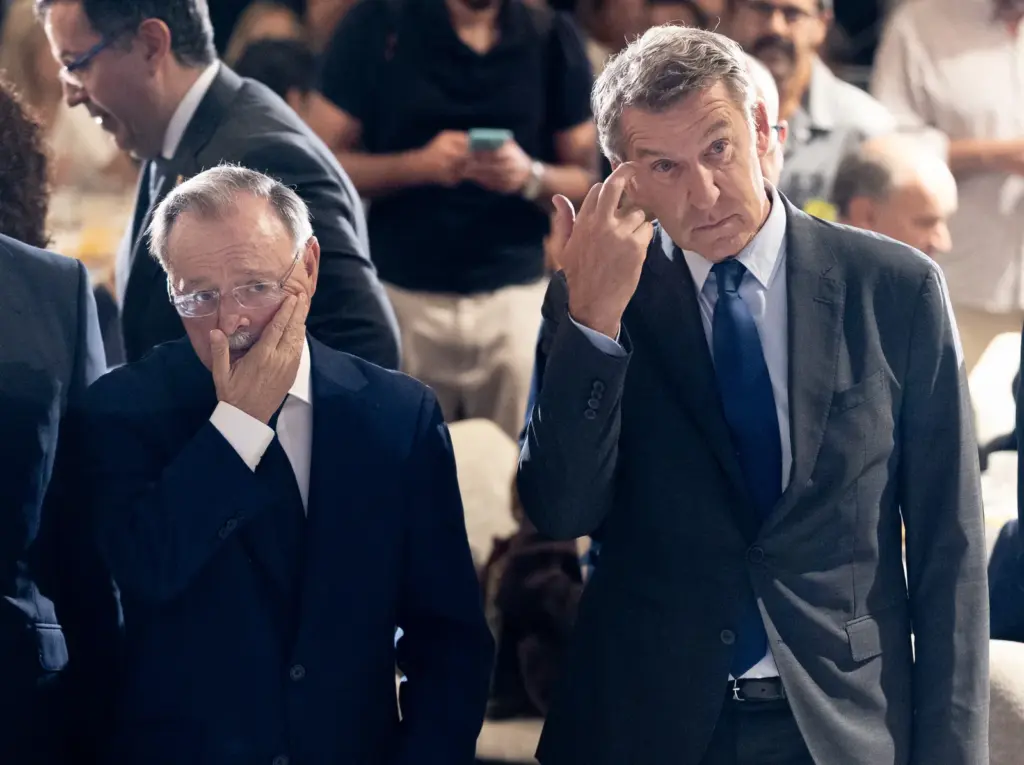
The PP notes a strong social reaction for Ceuta, but its barons warn: “The beneficiary could be Vox”
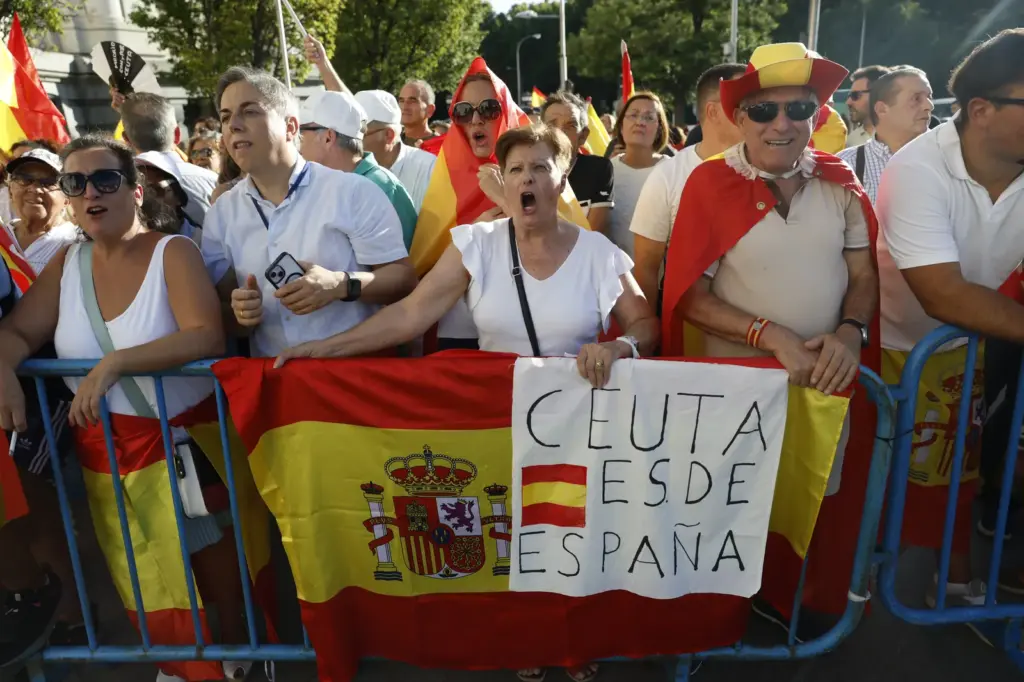
A paradox traps the Popular Party with the Ceuta crisis. On one hand, the populars note an important social mobilization not seen for a long time. “I had not seen so many people in the streets since the protests for Miguel Ángel Blanco,” says a PP regional president reviewing last Wednesday’s rallies in all Spanish cities in support of Ceuta. “It reminds me of the spirit of Ermua,” points out another PP baron referring to the massive civic movement that arose in the nineties as a rejection precisely of the kidnapping and murder of Miguel Ángel Blanco, councilor of Ermua (Bizkaia), by ETA. With the Ceuta crisis, the PP sees a wave of indignation it tries to capitalize on and use electorally as a wear-down weapon against Pedro Sánchez’s Government. But the risk, warned also by several popular barons, is that feeding that social protest gives wings to its competitor on the right. “This benefits Vox,” warns a PP regional president in private.
You can read the full information here
Tolón opens the school year in Ceuta with private security in all schools
The Minister of Education, Milagros Tolón, presides this Tuesday the opening of the school year in Ceuta, a city that lives with concern and important security measures the return to classrooms of almost 13,000 students, after the arrival at the end of July of tens of thousands of people from Morocco.
A total of 12,870 students are expected to return to classrooms: 1,998 preschool students, 5,337 primary, 4,501 secondary, and 1,034 high school students face the return to the thirteen public centers (CEIP) of the city, the six public-charter schools, and the six institutes.
All of them resume teaching activity amid the crisis affecting the autonomous city due to the presence of about 9,000 migrants — according to data provided to EFE by the Ceuta Government — who are spread throughout the city.
Security in the schools is guaranteed, as “there will be private security in all schools, even the charter ones,” a measure that, according to the minister, is implemented at the request of the educational community: “We have listened to them and provided solutions, which will be expanded if necessary.”
Tolón asserted that “Ceuta’s schools are safe centers” and that this measure will allow reaching “normality.” Education has held meetings with parents’ associations, unions, the Education Forum for Ceuta, management teams, and teachers to prepare the return to schools with security.
From CSIF, its head in the autonomous city, Lola Cuadra, assured that the “absolute” priority is to protect Ceuta’s students and guarantee a “safe” return to school. “The school year has started with the educational system at its limit. The centers lack sufficient staff, in precarious conditions and without specialists and necessary resources to attend all students,” she denounced.
Regarding unaccompanied minors, the union leader warned that the 1,500 minors attended by the protection system exceed the capacity of the educational system and that if their schooling in Ceuta is finally carried out, this “cannot become a new overload for teachers or centers,” which already have “quite tight and high ratios.” (Efe)
Good morning. We start the live narration of the latest on the migratory crisis in Ceuta, this Tuesday, September 8.
The return to classrooms in Ceuta will be deeply affected today by the migratory crisis the city has suffered since the end of July. The Minister of Education, Milagros Tolón, presides over the opening of the school year.
Meanwhile, the president of the autonomous city, Juan Jesús Vivas, will travel to Brussels to meet with the Commissioner for Interior and Migration, Magnus Brunner; the Commissioner for the Mediterranean, Dubravka Šuica; and the President of the Eurochamber, Roberta Metsola, to explain to European authorities the situation in Ceuta.
The Minister of Foreign Affairs, José Manuel Albares, will also fly to the European capital to “advance a better fit of Ceuta and Melilla in the various instruments and institutions of the European Union.”
On the other hand, the Council of Ministers plans to declassify CNI documents related to the massive entry of immigrants in the autonomous city, before the Government makes them public in a dossier tomorrow Wednesday.