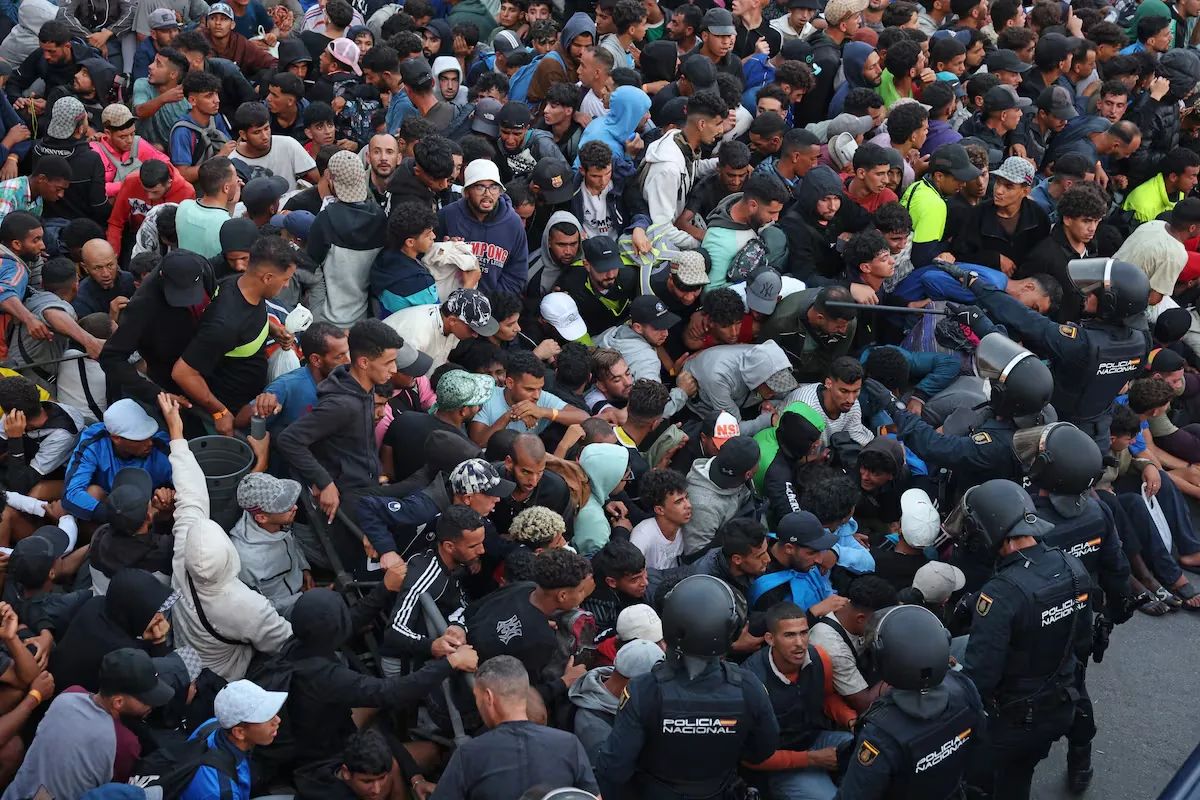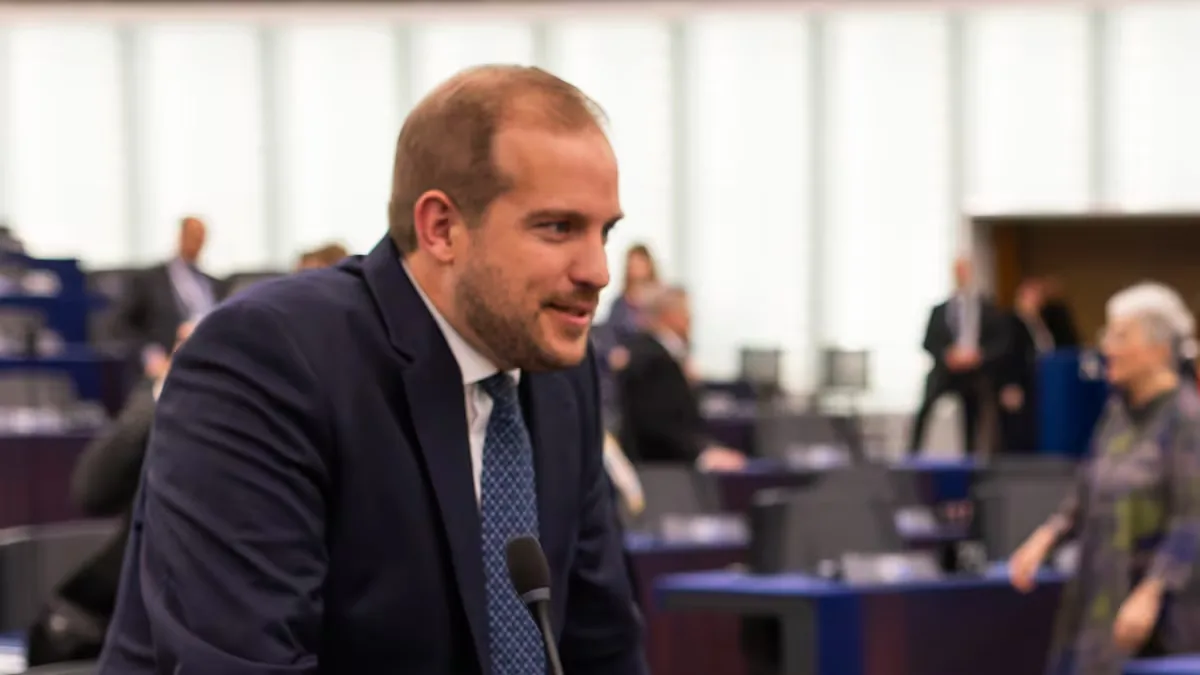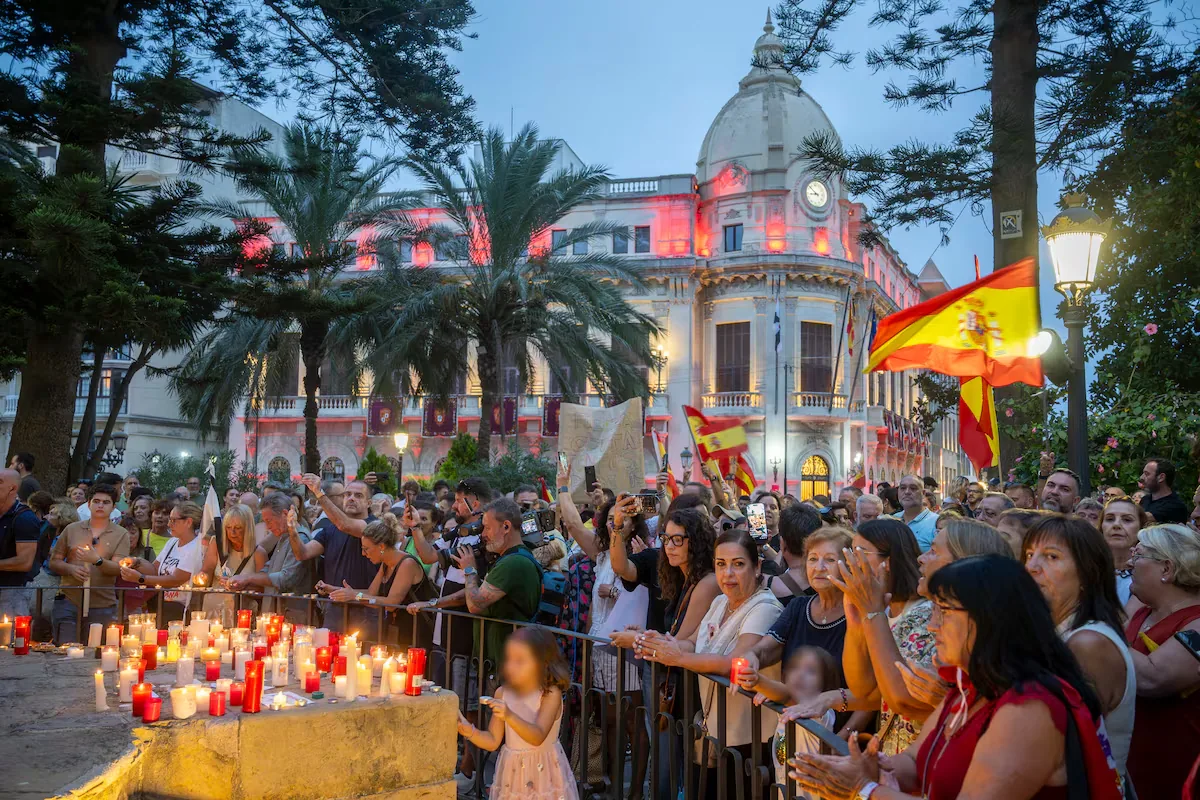
The Minister of Territorial Policy, Ángel Víctor Torres, has committed to not making “conjectures” about the police report that would point to Morocco’s responsibility in the massive entry of migrants at the end of July in Ceuta, while awaiting all the details of it. In an interview on RNE, Torres highlighted that the Minister of the Interior, Fernando Grande-Marlaska, acted “immediately” after learning of its existence through the press, requesting the Director General of the Police, Francisco Pardo, to clarify the terms of the document that the National Immigration and Borders Center (Cenif) would have sent to the judge of the National Court, María Tardón, in charge of investigating the events. This happens on the very day Ceuta Day is celebrated, which this year coincides with the unprecedented migratory crisis the autonomous city is experiencing. In response to this situation, municipalities throughout Spain have called for gatherings in support of the people of Ceuta, an initiative from which the PSOE leadership has distanced itself. Torres will also preside over a new meeting of the Crisis Monitoring Committee from Ceuta, all after the president of the autonomous city, Juan Jesús Vivas, insisted this Tuesday on the need to return the migrants who remain in Ceuta to restore normality.
EL PAÍS offers the latest on the migratory crisis free of charge. If you want to support our journalism, subscribe.

Feijóo accuses the Government of “sabotaging” the support gatherings for Ceuta and calls “everyone to Cibeles” at 8:00 PM
The leader of the PP, Alberto Núñez Feijóo, has posted on the social network X a message accusing the Government of “lying and abandoning” the people of Ceuta and “trying to sabotage” the support gatherings planned for today. “I will defend the borders of my country. I will stand by my compatriots. I strongly defend the Spanishness of the autonomous cities. And I will show my support for the Ceuta cause at this afternoon’s gathering,” Feijóo wrote, who has called his followers “despite the Government’s boycott” at 8 PM in Madrid’s Cibeles square under the slogan “Everyone with Ceuta.”

migratory crisis
“The reaction of the Moroccan authorities on Ceuta seems vile to me”
The migratory crisis in Ceuta also raises many questions on the other side of the border. Many Moroccans miss that their authorities explain how tens of thousands of people could enter Spain in such a short time.
We spoke with Fouad Abdelmoumni, economist and veteran human rights activist, from Switzerland, where he has lived for two years after suffering, according to his claims, sexual blackmail from the Moroccan security apparatus. He has also been sentenced in the first instance to six months in prison for stating that Morocco used Pegasus and says his environment advises him not to return to his country.
You can listen to the full information here.

Torres asks not to make “conjectures” about the report pointing to Morocco for the massive entry in Ceuta
The Minister of Territorial Policy, Ángel Víctor Torres, has committed to not making “conjectures” about the police report that would point to Morocco’s responsibility in the massive entry of migrants at the end of July in Ceuta, while awaiting all the details of it. In an interview on RNE, Torres highlighted that the Minister of the Interior, Fernando Grande-Marlaska, acted “immediately” after learning of its existence through the press, requesting the Director General of the Police, Francisco Pardo, to clarify the terms of the document that the National Immigration and Borders Center (Cenif) would have sent to the judge of the National Court, María Tardón, in charge of investigating the events.
Torres emphasized that for now it is not known “if it is a particular report from an agent, if that report was requested by whom, and therefore at this moment we are waiting for everything to be clarified, because that is what the citizens also deserve.” Thus, he stressed, “if we want to speak rigorously, undoubtedly we must have that report on the table.”
Asked if, if confirmed what El Español advanced, that Moroccan agents orchestrated the entry of more than 70,000 migrants to Ceuta, the Government would act, the minister defended that “talking about it now is making conjectures.” “Let’s wait for that report to be available and then with absolute transparency we will all know what that report says,” he added. Regarding whether explanations would be requested from Morocco, he stated that if the report confirms what was published “logically there would be responsibility, and the Spanish Government has never denied it, on the contrary, it has been absolutely clear,” pointing out that the Spanishness of Ceuta and Melilla has been defended against the claims of Moroccan ministers.

Torres states that citizens ask to “put aside opportunism” and work for normality in Ceuta
The Minister of Territorial Policy, in charge of the unified command of the crisis, Ángel Víctor Torres, assured on Las Mañanas de RNE that “citizens ask to put aside political quarrels and opportunism and work hand in hand, there will be time for that political quarrel.” Regarding the return of migrants, he pointed out that “there are those in the opposition who say they can be returned overnight but they know that is not the case,” since “there will be those entitled to asylum and minors who cannot be reunited.” Regarding the economic measures approved by the Executive, he assured that the aid is something “immediate,” and recalled that Ceuta “has to respond at this moment to a proper competence,” which is the care of unaccompanied minors.
Torres criticizes PP and Vox for voting against the distribution of unaccompanied minors before July 30
The Minister of Territorial Policy, Ángel Víctor Torres, has responded to criticism about the call for gatherings by the Spanish Federation of Municipalities and Provinces (FEMP), assuring that he does not accuse its leadership, but that eight political organizations present in the Federation have told him that the call was unilateral and was not agreed upon within that body. The minister also reproached the PP and Vox for voting against the distribution of unaccompanied minors across the rest of Spanish territory before July 30, despite social pressure in Ceuta and the express request of the city’s president, Juan Jesús Vivas, of the PP itself, which then distanced itself from its party.
Asked about the people of Ceuta who demand an immediate solution, Torres said he understands “the anxiety” of the population, recalling similar situations experienced in the past. He insisted that today, Ceuta Day, he will accompany President Vivas in the demonstrations in support of the city, and defended that Ceuta knows how to protest and demand “within channels of respect.”
Migratory crisis
Leaving Ceuta on their own: “I can’t take it anymore, I’m leaving. I still don’t know why I came”
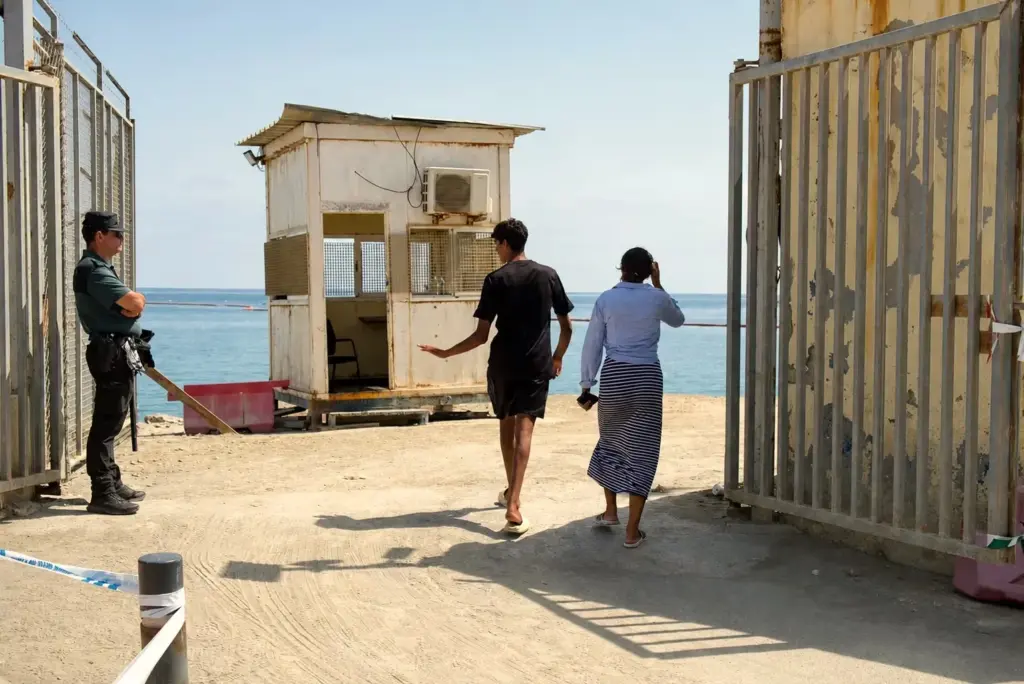
Tarek and his sister Salma arrive looking down and dragging their feet. They came to Ceuta with nothing and leave with nothing through the border. Not a tear nor a glance back when they leave Ceuta. Both describe the last month as “the worst” of their lives. However, broadening the view, their adventure has broken a city, is framed in a crisis with international ramifications, with Russia, Israel, and Italy in the spotlight, and has put Pedro Sánchez’s Government facing its greatest migratory emergency. “I can’t take it anymore, I’m leaving. I still don’t know why I came,” says Tarek, 20 years old, before leaving Ceuta towards Morocco by a dirt road — the only one enabled for those who entered illegally and decide to return — beside the passport control. “I want to go back to school,” adds his sister Salma, 17 years old, who decided to join the caravan to enter Spain without really knowing why. Tarek and Salma have spent a month together protecting each other and start their return to Oued Laou this Monday, two hours by car from Ceuta and five from Melilla along the coast.
Half an hour later, Karim Molahid appears. He is 20 years old, alone, and limps when walking. Someone hit him at night with a stick and his ankle is swollen. “This is not life. I have been living like a rat for a month. Sleeping on the street, eating what I can or what they give me. My body hurts and my phone has been broken,” he says showing a phone with a cracked screen. “My mother has gotten sick and I want to go back,” he says crying before starting the journey to his village near Casablanca.
You can read the full information here.
Marlaska asks the Police Director to clarify if there is a report pointing to Morocco in the massive assault on Ceuta
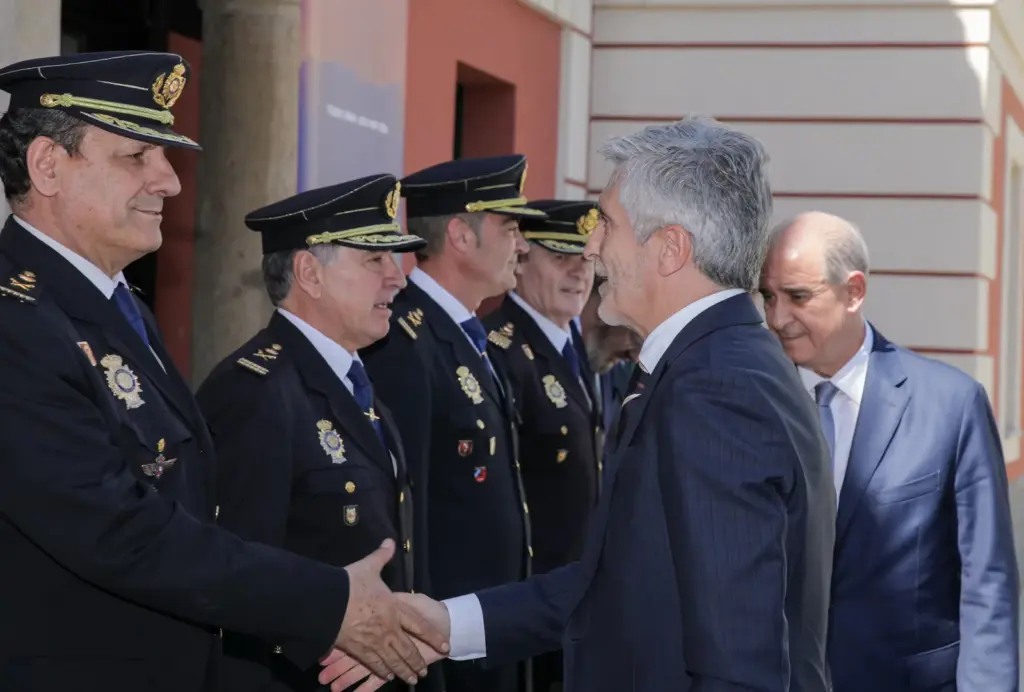
The Spanish Interior Minister, Fernando Grande-Marlaska, has asked this Wednesday the Director General of the Police to inform him, “if true,” since when the police force had reports pointing out that Moroccan agents directed the massive entry of people into Ceuta with a purpose other than migration, after the media outlet El Español published that the Spanish police had that information.
In the letter, accessed by EFE, Grande-Marlaska asks Francisco Pardo: “If what this digital outlet publishes is true, I need to know since when the National Police had that information, absolutely essential so that, regardless of the judicial proceedings that may be carried out, I, as Minister of the Interior, can exercise my responsibility and, ultimately, the Government can make the appropriate decisions regarding the migratory crisis in Ceuta, in the exercise of its constitutional functions of directing internal and external policy and defending the State.”
You can read the full information here.
President Vivas will award the Autonomy Medal at the institutional act of Ceuta Day amid the migratory crisis
The Autonomous City commemorates this Wednesday, September 2, Ceuta Day with an institutional act held at the Revellín Theater Auditorium starting at 12:00. During the ceremony, the City’s president, Juan Vivas, will award the Autonomy Medal to the Palliative Care Team of Ingesa; to Adil Mohamed, and posthumously to Mustafa Mizzian.
The event, which RTVCE will broadcast live both on DTT and on its web platforms, will begin with a performance by Ana Founoud’s ballet, followed by the reading of the plenary agreement granting the medals. Then the awards will be presented to the honorees, who may say a few words, after which María José Lesmes’ ballet will perform. The president will close the event with the institutional speech and the performance of the anthems of Ceuta and Spain.
Migratory crisis
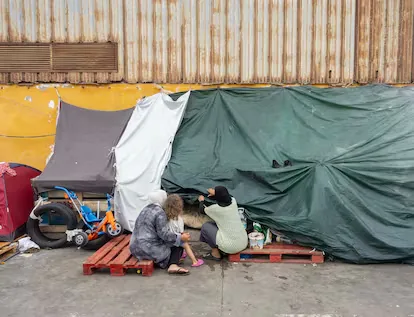
Nerves and fear among migrant families camping in the streets of Ceuta: “We wander around looking for somewhere to sleep”
“I wish they hadn’t told us.” On Tuesday at seven in the morning, a group of migrant women showed up at one of the warehouses in the El Tarajal Industrial Estate in Ceuta where National Police agents were working to tell them that a security employee had warned them that on Thursday at noon they could no longer camp in their streets. They were told to calm down and sit, but they say they were not given any explanation. When they saw they were not attended to, they started wandering around the autonomous city to see where they could settle. Farah Dayay and Nihad, two Moroccan migrant women aged 40 and 26 with children aged 14 and four in their care, were among them. “We have been wandering around looking for somewhere to sleep, we asked in Príncipe, in Sidi Embarek [where neighbors have camps for women and children] but nothing, we are afraid of what will happen to us,” said Dayay. Government sources assure EL PAÍS that no eviction operation is planned in this area for that day.
You can read the full information here.
Ceuta crisis
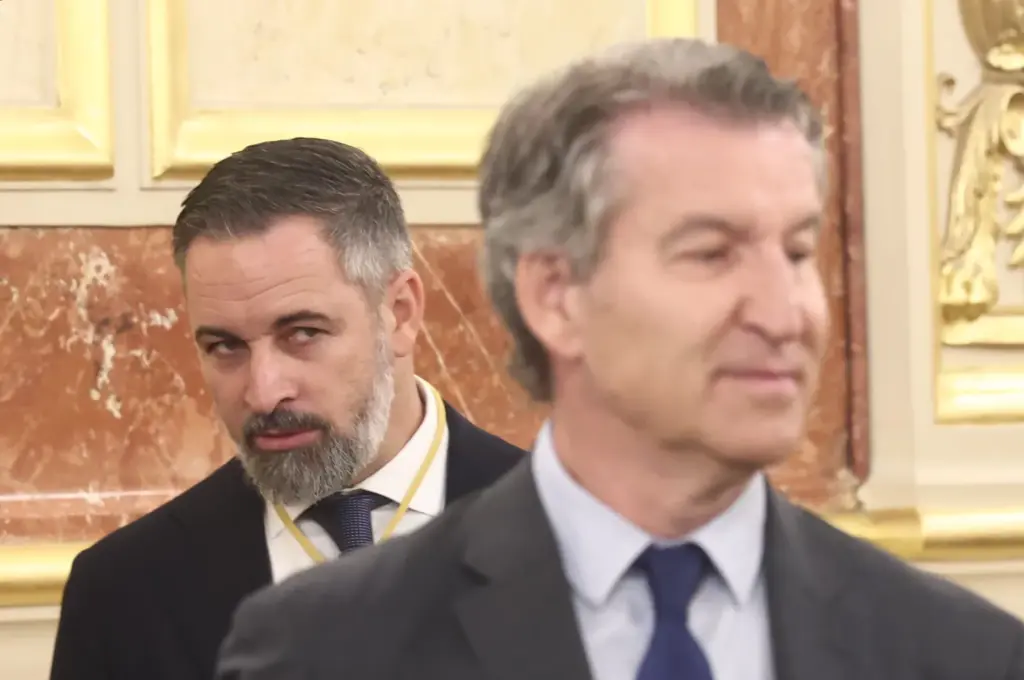
Feijóo and Abascal join forces in a protest they expect to be massive over the Ceuta crisis
The right-wing parties join forces at the start of the political season to mobilize the street in a protest they predict will be “massive” over the Ceuta crisis and with which they hope to increase pressure on the Government on the eve of Pedro Sánchez’s appearance on Thursday in Congress. The PP, through the Spanish Federation of Municipalities and Provinces (FEMP), which it presides over, has called for gatherings this Wednesday at eight in the evening in front of all the town halls in the country coinciding with Ceuta Day, presenting them as “non-partisan” mobilizations to express support for the autonomous city. Meanwhile, Vox, which has joined the call, calls to support them “against the traitorous Government.” The leaders of the PP and Vox, Alberto Núñez Feijóo and Santiago Abascal, will show unity coinciding at the gathering in front of Madrid City Hall. The Government, which asks that the protests take place without violence, accuses the PP of “instrumentalizing” the FEMP and presenting as neutral protests that were actually conceived as a “partisan use” of the Ceuta crisis.
You can read the full information here.
Good morning. Here begins the live narration of the latest news this Wednesday, September 2, about the migratory crisis. The day is marked by Ceuta Day and by the support gatherings called throughout Spain, from which the PSOE leadership has distanced itself, against the mobilizations of left-wing parties, unions, and social organizations under slogans such as “Let’s stop racism.” Added to this is the meeting of the Monitoring Committee chaired in Ceuta by Minister Ángel Víctor Torres, and the letter sent early this morning by the Minister of the Interior, Fernando Grande-Marlaska, to the Director General of the Police, to clarify if the force was aware that the massive entry of people into the city on July 30 and 31 was guided by Moroccan gendarmes with a purpose other than migration.
Read more Two women die after a car falls into the sea at the port of Algeciras (Cádiz)