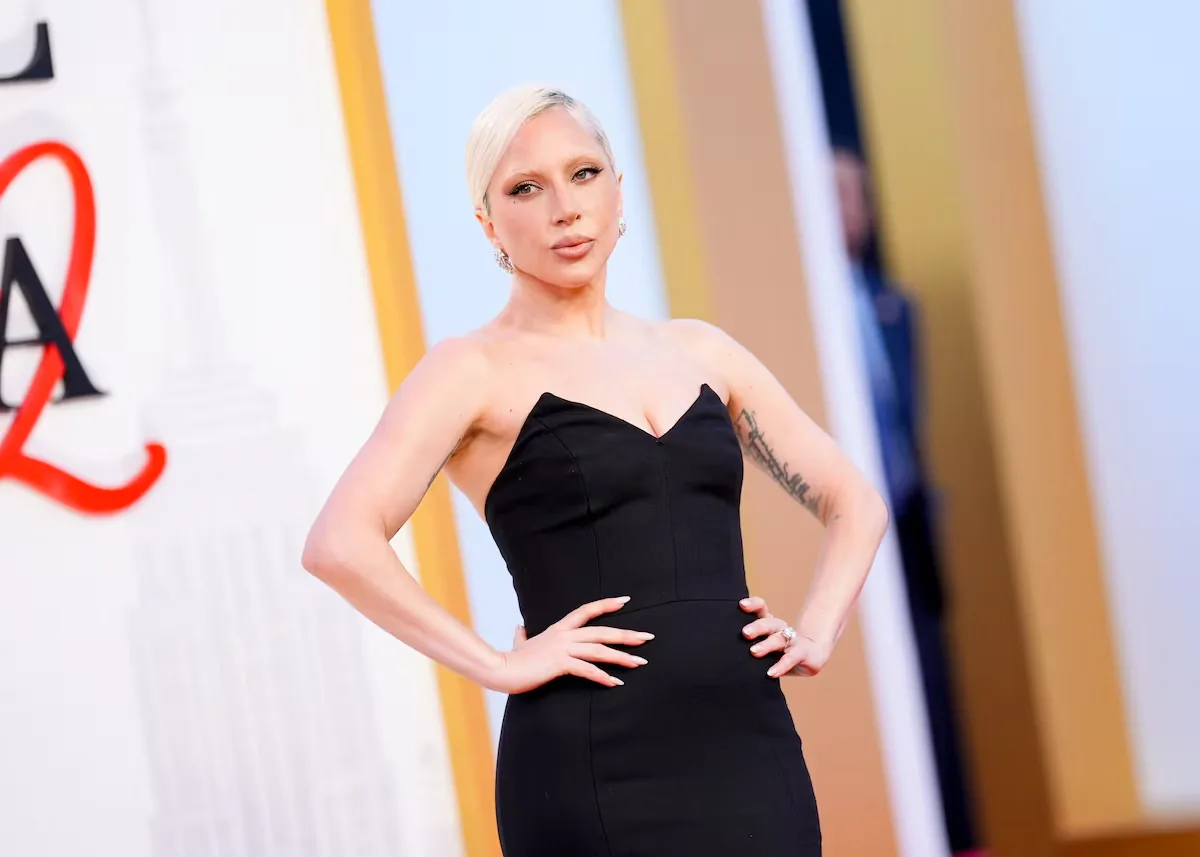
“What if a measure being sold to us as feminist was actually deeply sexist?”. With this bold statement, Spanish athlete Ana Peleteiro begins a video on her Instagram account in which she criticizes the plan of the Royal Spanish Football Federation to support the vitrification of eggs of the national team players, revealed by EL PAÍS. “Does this measure aim to make it easier for women to become mothers or to make it easier for them not to be while they are playing? Because those are two very different things,” continues the jumper in a post summarized in the phrase: “Don’t let them sell you this news as feminist progress, because the reality is far from it.” Peleteiro also has a very significant biography in this regard: she has had two children without ending her sports career, a decision she has strongly defended.
Read more Two women die after a car falls into the sea at the port of Algeciras (Cádiz)
“If we really want to reconcile motherhood and professional sport, let’s talk about protecting contracts during pregnancy, guaranteeing reintegration, respecting recovery and postpartum times, facilitating childcare, and ultimately ensuring that being a mother does not professionally penalize any footballer or athlete in general,” demands the athlete.
Peleteiro is the mother of two children with the French athlete Benjamin Compaoré. Her first daughter, Lúa, was born in December 2022. In 2026 she gave birth to her second child, León. After Lúa’s birth, she returned to high-level international competition and in 2024 she again became Spanish champion and qualified for major international events. In an interview in these pages, she claimed she was coming back “stronger than ever.”
View this post on Instagram
The athlete points out in the video that there is something that worries her especially, “a huge problem”: that the athlete does not get pregnant when she wants, but at the end of her career because she feels obliged. “A measure that apparently expands a woman’s freedom can generate pressure on a decision that should belong exclusively to her,” criticizes the athlete.
“The question should not be how we get an athlete to delay her motherhood, but rather how we get motherhood not to penalize an athlete’s career,” she suggests. And she concludes: “Because one thing is to offer a woman more options to decide when she wants to be a mother and quite another is to build a system in which the most convenient option for the institution is that she is not yet.”
Her own experience could serve as an example: as a member of Team Spain, at that time she had the help of the High Council for Sports to hire a nanny while she and her husband train and compete. “There are many women athletes who maybe don’t dare to be mothers because of their economic situation, because they couldn’t afford to have a caregiver at home and pay her a thousand euros a month to take care of their children,” Peleteiro told EL PAÍS more than a year after her first childbirth.
Furthermore, she defended the reconciliation of all women: “Being an athlete and being a mother is very difficult, yes, but it is also very difficult to be a worker in a normal job and be a mother, and that happens to all women. Motherhood is complicated, reconciling is very difficult.” She also criticized the double demand on women athletes. “Women are required a lot aesthetically during pregnancy, and athletes who decide to be mothers even more,” she lamented in Women’s Health. “Making it visible and talking about it seems very important to me,” she said.
Support among footballers
As explained in this newspaper in two reports following the news advance, the decision to freeze eggs can be a solution, but it has significant drawbacks. Some are biological (sometimes the treatment does not work) or economic (it is very expensive) and others more social, with Peleteiro’s reivindicative charge: it is problematic to present it as a universal solution, especially in contexts where the biggest beneficiary is the employer.
However, the news has been received positively by the footballers, at least for now. “It is wonderful news,” summarized the president of the players’ union FUTPRO, Marta Perarnau. “It is a project to help players, it is a very positive initiative. If the RFEF achieves that agreement with private or public companies, it would be interesting for internationals. It is positive as long as the footballer has any method available so that she decides when she wants to do it,” she said in statements collected by Europa Press.
More nuanced was the comment of Larraitz Lucas, former captain of Real Sociedad and mother of two daughters: “It is great news, but I would also like there to be more options to be mothers at times, like when you are in your twenties, and then continue with your professional activity, but well, it is a very important advance.” In statements to SER, she did acknowledge “that it comes a little late”: “Until the great Alexia Putellas raised the issue, it seemed that in Spain it was, I don’t know if a taboo or a matter of women always being at the bottom rung of everything.”
Larraitz Lucas refers to the fact that the push for the RFEF initiative came precisely from the national team players, especially Putellas, captain and one of the team’s stars.
The case of this footballer represents many of her lesbian teammates. “I was immensely fortunate that my wife was the one who carried the girl, but the eggs were mine,” Lucas explains. “We decided to do it practically 14 years ago that way, but we didn’t have the club’s permission nor did it occur to me to ask for permission because we didn’t know what it would all mean.”
Former footballer Eba Ferreira called the proposal “wonderful”: “I think it’s very good and all clubs should do it with their players too.” “We are talking about women having to stop their sports career while men don’t, since their partner has it. There are cases where, if you want to be a mother, you have to leave the sport or you can’t be one,” she added on SER’s microphones.
On Peleteiro’s side, we could find other great athletes, such as Allyson Felix or Serena Williams. The American runner won a battle against Nike for reducing her contract after she became pregnant: after Felix’s public complaint, the multinational agreed to abandon that policy of discrimination against athletes who decided to be mothers in the middle of their careers. The tennis player, for her part, became a global symbol because she won the 2017 Australian Open while pregnant and then returned to the elite after childbirth. In Spain, a notable example was swimmer and former synchronized team captain Ona Carbonell.