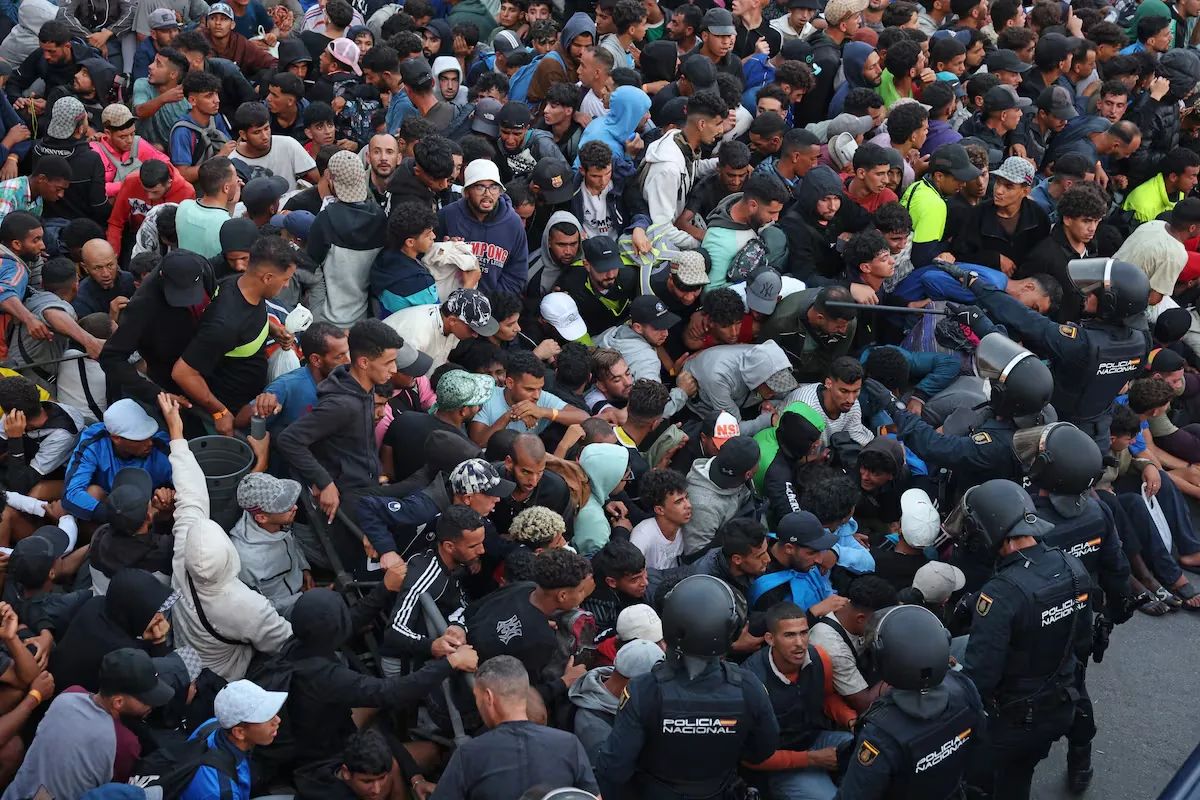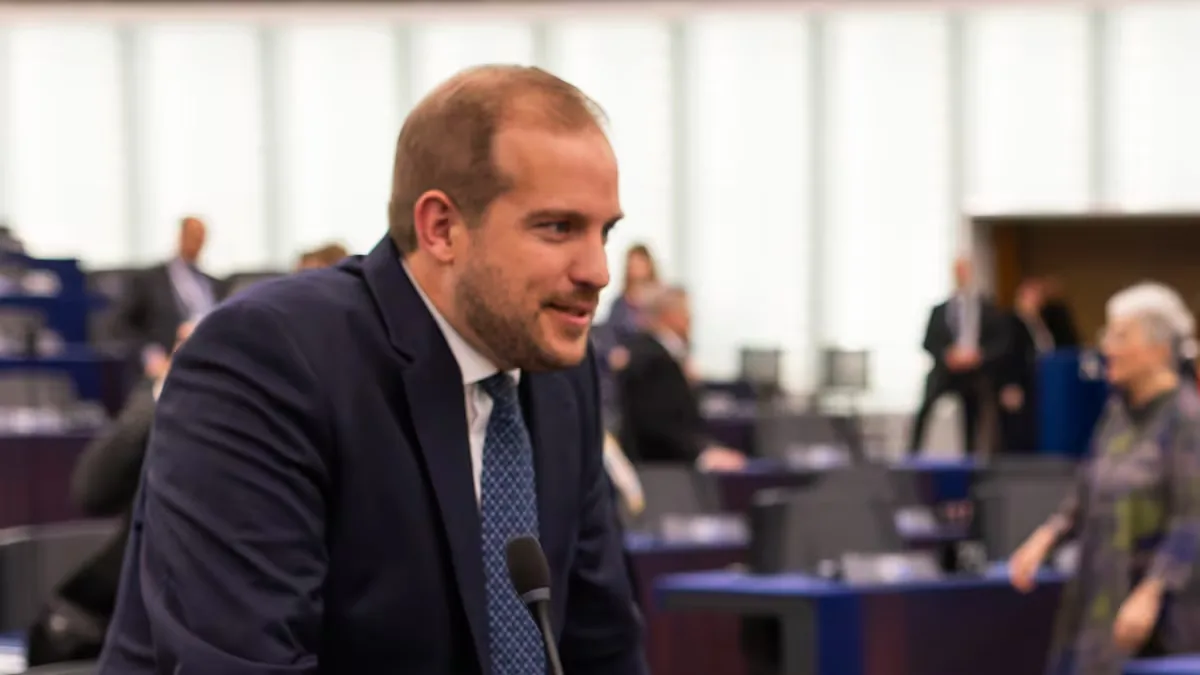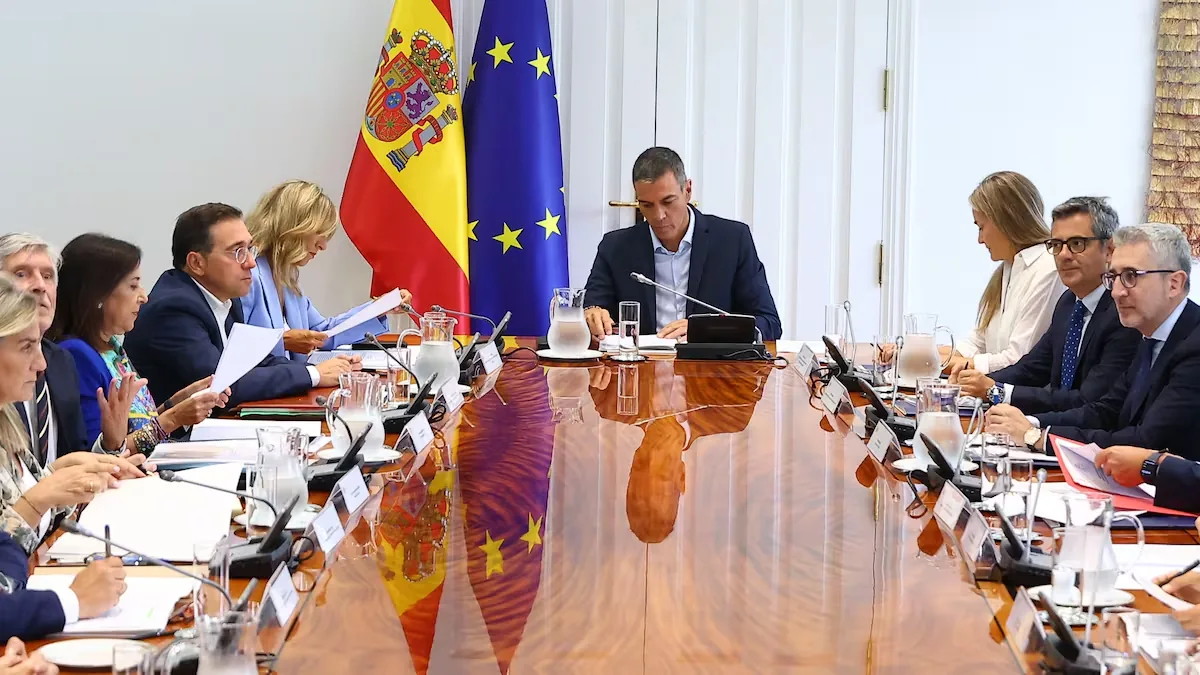
Pedro Sánchez has requested to appear before the Plenary of the Congress to report on the Government’s management in Ceuta, minutes after Minister Ángel Víctor Torres announced that the Government was going to file that request. Torres has also supported Fernando Grande-Marlaska’s version regarding the CNI warnings, stating that he too did not receive any communication this summer about the magnitude of the crisis. Meanwhile, the president of the PP, Alberto Núñez Feijóo, has demanded the convening of the Official Secrets Commission so that the CNI clarifies the Government’s “versions,” in light of the “disarray” between the Minister of Defense, Margarita Robles, and Marlaska, and has reproached the Government that “someone is lying.” Additionally, this Wednesday the Minister of Inclusion, Social Security and Migrations, Elma Saiz, returns to Ceuta to continue the work of expanding temporary reception resources, where more than a thousand people who had been camping on El Trampolín beach have already been relocated.
Read more We tested the best sports sunglasses
EL PAÍS offers the latest news on the migration crisis free of charge. If you want to support our journalism, subscribe.

The single command in Ceuta is extended until December 31, with the possibility of extension
The Official State Gazette (BOE) has confirmed that the “single command” over Ceuta will be extended until December 31, 2026 “considering it a reasonable period to achieve the described objectives,” although it includes mechanisms for its extension or “early termination” depending on the evolution of events. The royal decree, approved on Tuesday at the Council of Ministers, states that the “situation of interest for National Security” extends to the territory of Ceuta, its land border, border posts, coasts, ports, and adjacent waters where Spain exercises sovereignty or jurisdiction. It will be President Pedro Sánchez, after a report from the National Security Council, who decides the extension, termination, or modification of the scope of this situation. The decree justifies the measure due to the effects derived from the indefinite temporary stay of a large number of migrants in irregular status following the massive entry on July 30, which is “disrupting the normal functioning of public administrations” and “exceeding the ordinary capacities of management, reception, assistance, and citizen security” in the city. (Europa Press)
The Government holds a specific meeting today to prepare for the start of the school year in Ceuta
The Minister of Territorial Policy, Ángel Víctor Torres, has announced that this Wednesday a specific meeting will be held to prepare for the start of the school year in Ceuta, within the collegiate body that brings together the ministries involved, the Government Delegation in Ceuta, and the Government of the autonomous city, created after the extraordinary meeting of the National Security Council on Tuesday. Ceuta’s educational competences depend on the central Government and, according to the Ministry of Education, classes will begin on September 8 for students in Early Childhood, Primary, Secondary Education, and Baccalaureate. The Secretary of State for Education, Abelardo de la Rosa Díaz, and the Director General of Educational Planning and Management, Javier Rodríguez Torres, will travel this Wednesday and Thursday to Ceuta, where they will attend a Local Security Board and De la Rosa will meet on Thursday with all educational leaders, including management teams. (Europa Press)
The Government officially registers Sánchez’s request to appear before the Plenary of the Congress for Ceuta
The Government has formally registered the request for President Pedro Sánchez to appear before the Plenary of the Congress of Deputies, under article 203 of the Chamber’s Regulations, with the aim of reporting on the Government’s management regarding the events that occurred in Ceuta since last July 30.
Torres asks “that there be no opposition and Government” and demands a single response to the Ceuta crisis
Minister Ángel Víctor Torres has defended that “there should be no opposition and Government” in managing the Ceuta migration crisis, but “a single response,” and has called for action “without political biases.” The minister cited other migration crises, such as those in the Canary Islands, where, he said, “the opposition also stood alongside the Government.” Torres has assured that he will work “with the utmost loyalty” to the president of Ceuta, Juan Jesús Vivas, and emphasized that in the current situation “we all have responsibilities,” so he has asked not to look for culprits but to collaborate to “get the best out of this situation.”
Torres supports Marlaska’s version about the CNI and rules out that he received any warning about the magnitude of the crisis
Minister Ángel Víctor Torres has supported the version of the Interior Minister, Fernando Grande-Marlaska, regarding the CNI warnings before the massive entry of migrants in Ceuta. “The situation is reported every day. There had been an increase of about 1,000 people in seven days […] but in no case was there any communication that we were going to have an arrival of tens of thousands of people in Ceuta,” Torres explained, describing Marlaska’s response as “clear.” Asked if he received any clue or warning this summer, the minister was categorical: “no.” “If we had been aware that tens of thousands of people were going to arrive, the response would have had to be different,” he added, citing as an example that there would have been “direct communication to the president and actions by all Government commands.”
Torres announces that the Government will register Sánchez’s request today to appear in Congress for Ceuta
Minister Ángel Víctor Torres has announced that this Wednesday the request from Pedro Sánchez himself to appear before the Congress of Deputies for the Ceuta crisis will be registered, and later the Chamber’s Board will decide the date. Torres has insisted that the people who have entered irregularly “must be confined” in enclosed spaces, as only then can they be identified and their asylum or return files processed, and has defended that this is also “humanitarian” compared to sleeping outdoors. The minister recalled that returns must respect legal procedures, citing as an example that in 2021 a vice president of the City of Ceuta and a Government delegate were convicted for not respecting them. Torres acknowledged that there are no definitive data yet on asylum or expulsion files processed, and referred that information to his appearance tomorrow in Congress.

Torres acknowledges that neither the Government nor Ceuta yet know how many migrants or minors remain unidentified in the city
Minister Ángel Víctor Torres has acknowledged that neither the Government nor the city of Ceuta can precisely determine how many people remain unconfined, including minors, of whom only 1,410 have been identified so far. Torres also could not specify how many asylum requests or expulsion files have been processed, and referred those data to his appearance tomorrow in Congress. The minister defended that it was “a success” of the Government to achieve that within the first 48 hours between 90 and 95% of the more than 70,000 people who entered on July 30 and 31 voluntarily returned to Morocco, and emphasized that the management of minors is a regional competence and that of adults, state, although both administrations must collaborate. Torres compared the situation with that experienced in the Canary Islands and asked for understanding from the residents of Ceuta, insisting that the Government has come “to solve this situation” and that everyone must “pull together.”
Ángel Víctor Torres states that the “fundamental” priority of the single command is to identify migrants who are not yet in confined spaces
Read more The Iran war drives the fuel bill for importing countries to 282 billion
The Minister of Territorial Policy and Democratic Memory, Ángel Víctor Torres, single command of the migration crisis since yesterday, explained in an interview on Cadena SER that his “fundamental” priority in Ceuta is to be able to identify the people who are still not in confined spaces, a “key and fundamental” step to then determine if they have the right to asylum or proceed with return files, as well as to apply the steps required by law with minors. Torres explained that he arrived yesterday in the autonomous city, where he held a meeting with President Juan Jesús Vivas, and that today he will meet with him again in addition to constituting the collegiate body of the single command. The minister announced that this Thursday he will appear before Congress, after which his intention is to return to Ceuta.
The Government enables five sports centers and state infrastructures in Ceuta to host migrants
The Official State Gazette (BOE) has published the royal decree declaring the “situation of interest for national security” in Ceuta, with new spaces enabled to host migrants who remain in the autonomous city almost a month after the massive entry. From Moncloa, it has been indicated that various infrastructures dependent on the city Government will be enabled, including five covered sports centers (Santa Amelia, La Libertad, Antonio Campoamor, and the Guillermo Molina and Díaz Flor sports complexes), as well as the Loma Colmenar parking lot and the space of the Military Hospital ceded by the Ministry of Defense. The Government has also enabled other necessary state infrastructures to guarantee essential services and logistical support, including Defense lands in Loma Margarita, the Equestrian Center, the flour factory, and the Coronel Fiscer Barracks, as well as the Guano esplanade and the sports center of the Puertas del Campo institute. (Europa Press)
Feijóo demands convening the Official Secrets Commission so that the CNI clarifies the Government’s “versions” on Ceuta
The president of the PP, Alberto Núñez Feijóo, has demanded this Wednesday that the Congress convene the Official Secrets Commission, where deputies exercise parliamentary control over the CNI and the use of reserved funds, in light of the “disarray of versions” from the Minister of Defense, Margarita Robles, and the Interior Minister, Fernando Grande-Marlaska, in the Ceuta migration crisis. For Feijóo, the contradiction within the Government “makes the immediate convening” of that commission “essential,” which the PP already requested on August 5. The PP leader also reproached the Government that “someone is lying” about the management of the crisis and lamented that a “single command” has now been promised while an “internal war” has broken out within the Government. (Europa Press)
MIGRATION CRISIS
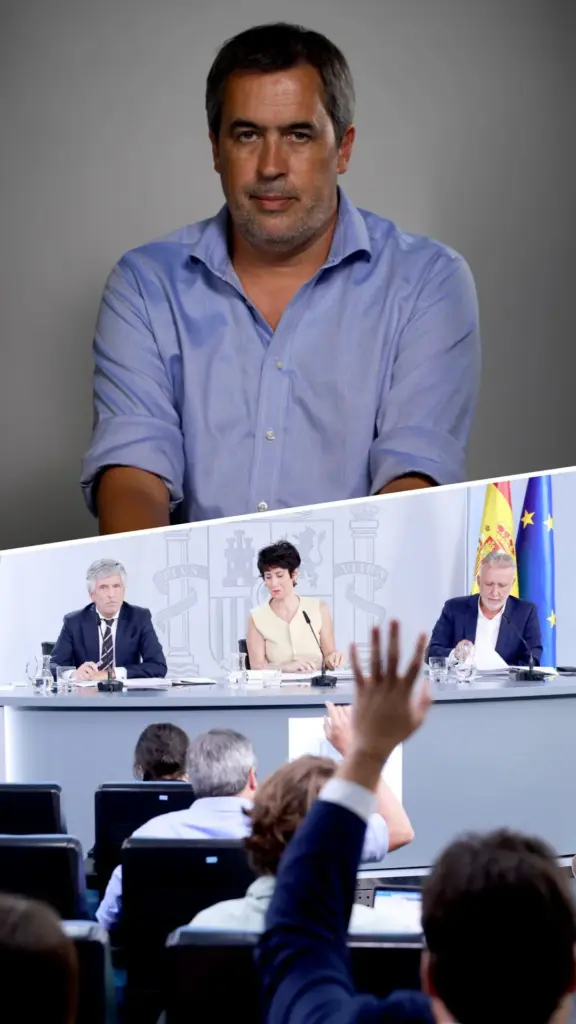
Immigration will be the key issue to win the next elections
The final political battle of the legislature focuses on Ceuta and on how political forces and the government act in the face of the migration challenge, which so far has been one of the executive’s success flags.
You can watch the full video here.
Islamophobia
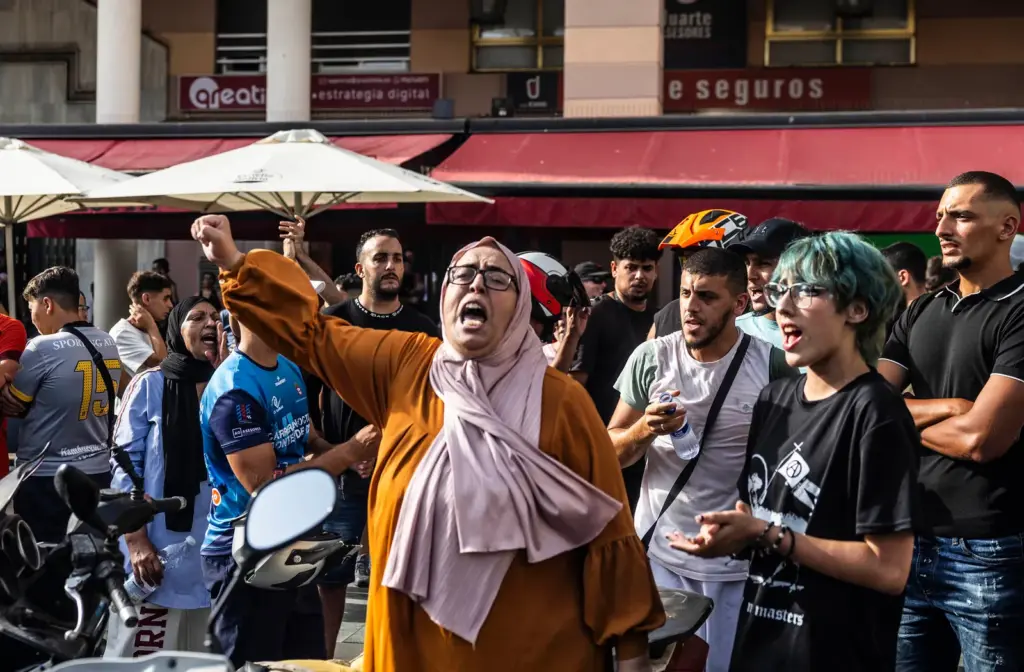
From the veil to the halal menu, this is how Islam has burst into the political battle
Some politicians who promote “national priority” say that Spain is losing its identity. They criticize the construction of mosques, call for banning the use of the niqab and burka or, as is happening now with the crisis in Ceuta, take advantage of the border debate to talk about a supposed “Islamization of Spain.” The latest has been attempting to ban halal menus (those that strictly comply with the dietary rules of the Islamic religion) in school cafeterias. “Goodbye to the halal menu in our house. We decide the menu, not the guests,” said Vox spokesperson in Les Corts of Valencia, José María Llanos. This is not new rhetoric. Increasingly, parties incorporate anti-Muslim discourse into their agenda. For years, various far-right parties in Europe have turned Islam into a symbol of threat to national identity. “We want to stop the growing Islamization process that we are suffering uncontrollably due to massive invasion,” said Javier Cortés, Vox spokesperson in Andalusia, a few weeks ago, expressing his opposition to the project of a mosque in Seville.
You can read the full information here.
Migration crisis
Resisting in Ceuta until obtaining asylum
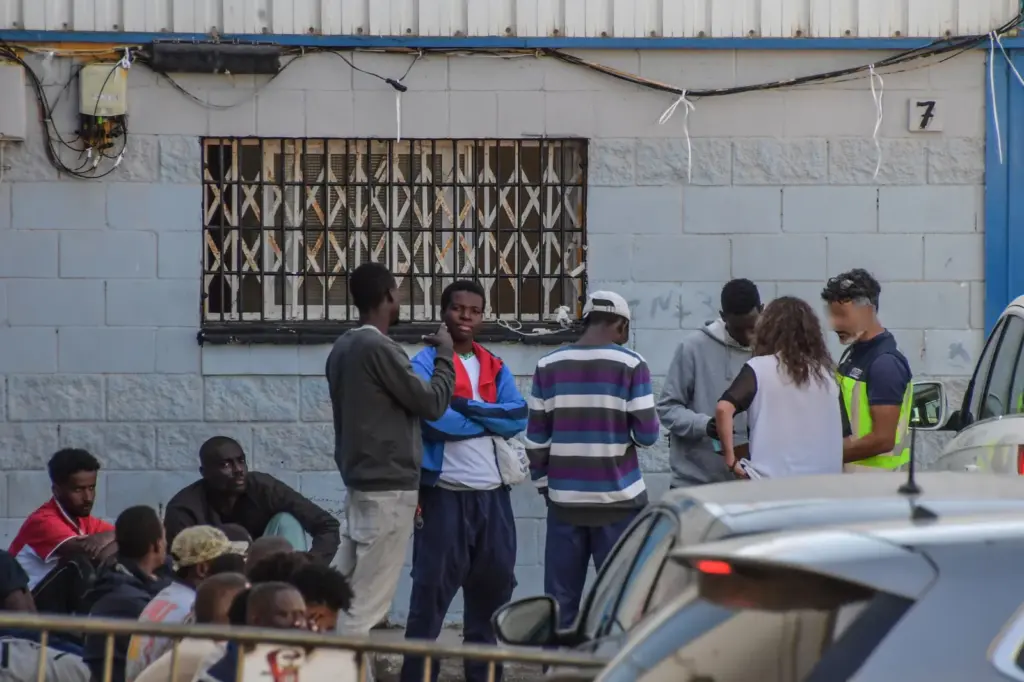
Since about 80,000 people entered Ceuta on July 30 and 31, the streets leading to the Loma Margarita facilities, in the west of the city, are a perfect review of all the wars, famines, and fundamentalisms that strike the Sahel, the strip of countries from the Sahara to the Red Sea, where all unimaginable misfortunes occur.
Thrown on the sidewalks, looking at their phones or walking aimlessly, hours pass by teenagers like wardrobes who escaped wielding a weapon in Mali. Others fled jihadist groups in Niger and others simply ran out of food when armed groups in Burkina Faso filled the village gardens with glyphosate to starve them. If there was any faceless crisis left, it can be found at the doors of the Temporary Stay Center for Immigrants (CETI), where most boys from Chad, Mauritania, or Sudan spend their hours. After many months of hardship, all of them sleep in a bed and eat three times a day.
You can read the full information here.
Congress votes today on whether to force Sánchez to give explanations about Ceuta
The Permanent Deputation of the Congress will debate and vote this Wednesday on the PP’s proposal for President Pedro Sánchez to be urgently called to appear in a plenary session to give explanations about the Ceuta migration crisis. The Popular Party will also demand that ten other ministers be summoned, including the eight who already have scheduled appointments to give explanations in committee in the Lower House.
Specifically, the PP demands the urgent appearance of Sánchez to report on the very serious situation Ceuta is going through as a result of the increase in illegal entries of immigrants by sea through Morocco due to the impossibility of applying border rejections in that area, on the measures he plans to adopt to guarantee the integrity of Spanish and European Union borders and the effective exercise of national sovereignty, as well as to give explanations about the Government’s cooperation policy with Morocco on migration control. (Europa Press)

COUNCIL OF MINISTERS
The new immigration and asylum laws contemplate confinements and distribution of immigrants
The draft bills announced by the Government this Tuesday, almost a month after the start of the Ceuta migration crisis, to approve a new asylum law to replace the current one and reform the current immigration law represent a mixed bag for migrants. The texts, accessed by EL PAÍS, increase guarantees for minors and other vulnerable groups, such as LGTBI+ or women victims of gender violence, but on the other hand introduce restrictions on the right to asylum, contemplate the possibility of confining applicants in zones and even buildings, and accelerate the expulsion deadlines for irregular migrants, in line with the hardline policy that the European Union (EU) has adopted in recent years. Interior Minister Fernando Grande-Marlaska emphasized in the press conference after the Council of Ministers on Tuesday that the projects aim precisely to adapt Spanish legislation to the European Pact on Migration and Asylum, which seeks, above all, to establish a fast system to differentiate who has the right to seek asylum and who does not and, from there, accelerate the expulsion of irregular migrants for economic reasons.
You can read the full information here.
Migration crisis
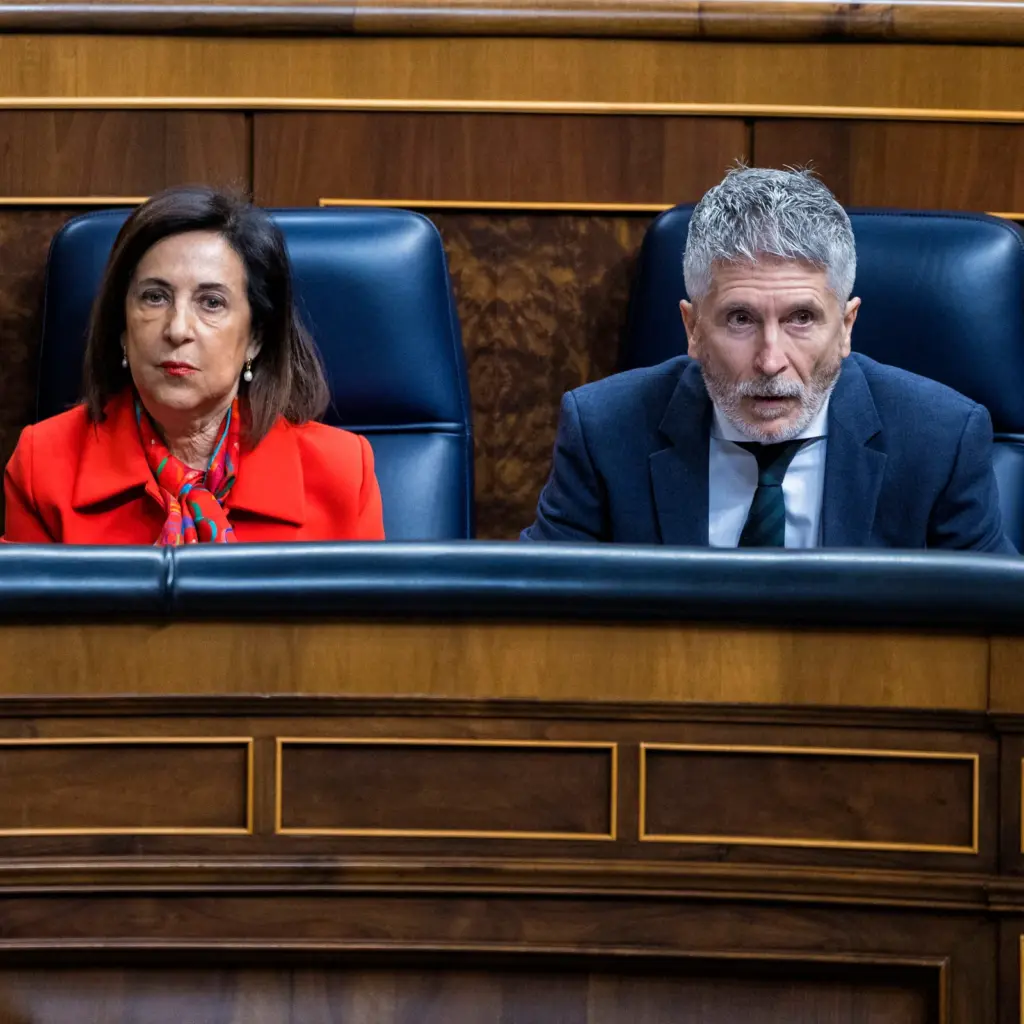
Robles outrages the rest of the Government by clashing with Marlaska and suggesting that the CNI did warn of a big jump in Ceuta
Defense Minister Margarita Robles caused notable discomfort in the rest of the Government this Tuesday, especially in the core closest to Pedro Sánchez, by clashing with Interior Minister Fernando Grande-Marlaska. Both protagonized an evident war of versions that citizens could follow live in two almost simultaneous appearances in Congress and La Moncloa. Robles repeatedly stated from Congress that the CNI, which has 25 agents deployed in Ceuta as revealed, did warn that there was a lot of movement at the border with the risk of a massive jump, something that finally occurred unprecedentedly, with 80,000 people in two days. And Marlaska, who would have had to take measures if he had known the dimensions of what was coming, radically contradicted her: “There was no report that foresaw that on July 30 what happened would occur. Can anyone understand that if something like that had been foreseen, with what happened in 2021 [another jump of 10,000 people], it would not have been elevated to the highest levels to take extraordinary measures?” he pointed out. Marlaska’s message was very clear: while Robles tried to pass the responsibility to him or the Government delegation for not acting despite having reports warning ―later explained as “verbal”― the Interior Minister was emphatic: no one warned.
You can read the full information here.
Good morning. Here begins the live narration of the latest news this Wednesday, August 26, about the migration crisis in Ceuta. The day comes one day after the clash of versions between Defense Minister Margarita Robles and Interior Minister Fernando Grande-Marlaska about the CNI reports that would have warned of the massive entry of migrants. While Robles has maintained that the intelligence services did warn that there was a risk of a massive jump at the border, Marlaska has flatly denied that there was any report “neither from the CNI nor from any friendly country’s center,” a version also supported by the Government Delegation in Ceuta with a statement that denies the minister. Additionally, this Wednesday the Minister of Inclusion, Social Security and Migrations, Elma Saiz, will return to Ceuta to continue the work of expanding temporary reception resources, where more than a thousand people who had been camping on El Trampolín beach have already been relocated. The visit takes place one day after the Minister of Territorial Policy, Ángel Víctor Torres, assumed the single command of the crisis.