









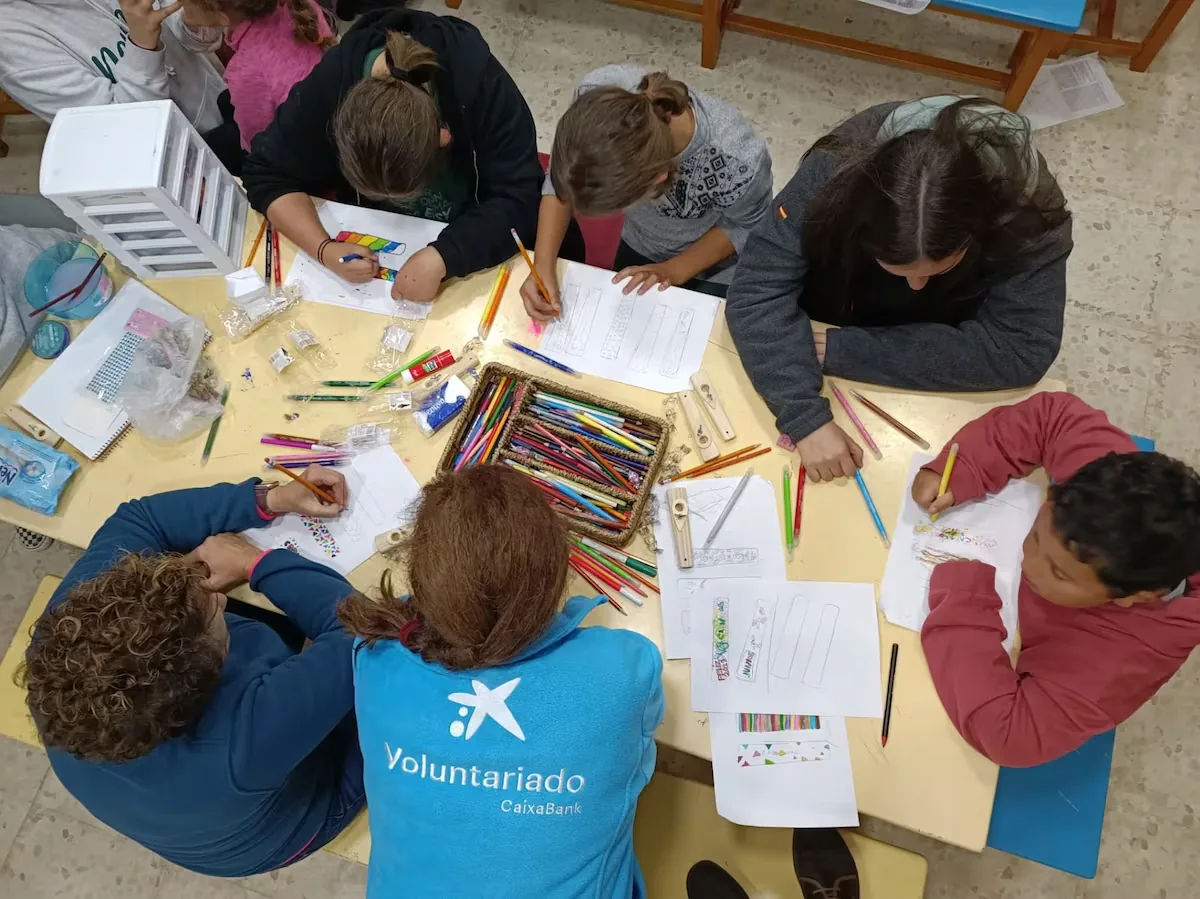
“These are basic issues that can change a person’s life.” This is how Pepi Solano (San Fernando, Cádiz, 58 years old) sums up what it means to learn concepts and be able to adopt basic economy habits among young people. Solano, through Voluntariado CaixaBank, has been participating since 2015 in various social programs in Cádiz, from school support to accompanying elderly people, and she gives this type of advice to 4th-year ESO students. For example, that saving starts if they keep two of the five euros of their allowance, or that “cards are not lent to anyone.” “Some look at you like: ‘What?’. Others directly justify themselves: ‘Well, it’s because he’s my friend…’. And you quickly have to tell them that this is not done,” she describes.
Read more NATO briefly deploys fighter jets due to a new drone incursion into Estonian airspace
The vision of volunteering that Solano gives is one of the mirrors of CaixaBank’s social purpose: to get each person to transform their reality with some help. The bank, since its beginnings in 1904 as Caja de Pensiones para la Vejez y de Ahorros de Cataluña y Baleares, was created with the goal that the population could save, and today it maintains its social commitment updated. Among its main actions are adapting to the needs of people in vulnerable situations (channeling aid to more than 5,000 social entities throughout the country through collaboration with the “la Caixa” Foundation), facilitating money management for the elderly, reaching the most isolated rural areas, or helping to boost entrepreneurs who need it. As the entity itself states, its financial products are designed to offer opportunities, promote integration, and strengthen collective well-being.

The pillars of CaixaBank that shape a more human banking
Accessibility, also in rural areas
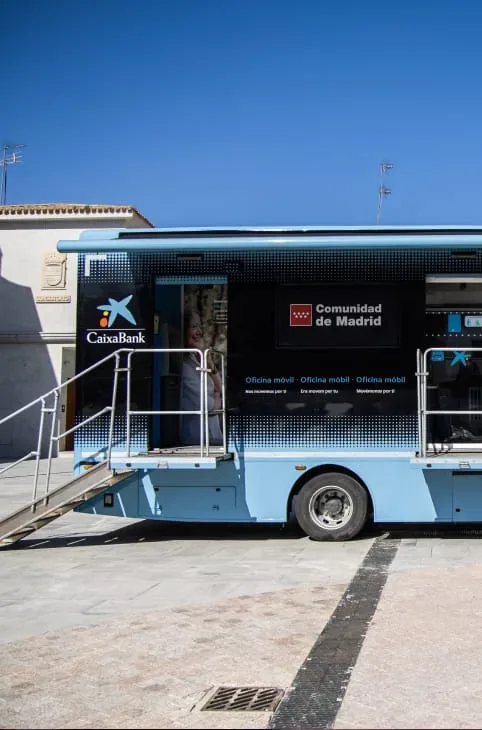
Its 4,200 branches provide coverage in more than 3,700 municipalities throughout Spain, with a presence in 99% of localities with more than 5,000 inhabitants, according to CaixaBank data. The entity is also present in rural areas: It is the only bank in 460 villages, and its mobile offices bring financial services to more than 1,420 localities without a bank branch or with limited access where more than 630,000 people live.
Photos: CaixaBank

Personalized support for elderly people
CaixaBank has developed a special care protocol for elderly people, which includes training more than 30,000 employees in preferential attention, more than 11,000 easy-to-use ATMs, unrestricted teller hours, pension payment advance on the 24th, and personal assistance by phone and WhatsApp with more than 600 agents. The offer is completed by its Generación+ program, with services such as savings planning, retirement support, or dependency benefit management.

Social inclusion for vulnerable groups
The financial entity offers personalized services for groups in vulnerable situations. About 400,000 clients have basic payment accounts, and the entity has accessible branches, ATMs, and digital platforms and promotes clear economic language. For people with hearing disabilities, it has deployed the sign language video interpretation service SVisual throughout its network, allowing this group to access banking information autonomously.

A support for entrepreneurs
The social bank of the CaixaBank Group, MicroBank, closed 2025 with nearly 280,000 operations for more than 2.4 billion euros. Its functions have favored entrepreneurship, job creation, and equal opportunities. This proposal adds to other initiatives, such as the EmprendeXXI Awards for high-potential startups; the imaginPlanet Challenge by imagin for young people with sustainability projects; or the Tierra de Oportunidades program, which fixes population and creates jobs in rural areas to face the demographic challenge.
This broad idea of real inclusion translates directly on the street into concrete measures, such as most CaixaBank branches being designed to be physically accessible, with ramps, automatic doors, and counters adapted for people with reduced mobility. Its ATMs are also adapted for people with disabilities, with options such as a braille keyboard and voice-guided navigation for people with visual problems, easy-to-understand menus, and high-contrast screens. With these measures, CaixaBank tries to establish a balance between business and differentiating itself with the social dimension.
Its CEO, Gonzalo Gortázar, maintains that “CaixaBank is an entity with deep values, capable of succeeding in business and, at the same time, providing a fundamental social dimension.” And he adds: “We have a different way of banking, focused on financial inclusion, both because of our territorial presence, with a network spread throughout Spain, and because of our commitment to leaving no one behind,” explains the bank’s CEO.
A new vision of senior people
Sometimes, it is the branches that reach the users, not the other way around. The service of CaixaBank’s 32 mobile branches allows carrying out the most common banking operations (whether or not they are clients of the entity) to almost 630,000 people living in more than 1,420 small towns without a bank branch or with restrictions limiting access to financial services. Almost 270 of these localities have fewer than 100 inhabitants. These mobile offices represent an important boost to financial inclusion, traveling more than 75,000 kilometers each month in 17 provinces of seven autonomous communities.
There is a group that benefits more from the mobile office service: 70% of mobile office users are people over 65 years old. Four out of 10 clients in this segment in Spain trust CaixaBank, according to the entity’s data. And the figure is likely to increase, considering that in 50 years, 30.9% of people residing in Spain will be 65 years or older, according to the National Statistics Institute (INE).
To adapt to this demographic evolution, CaixaBank has redesigned its value proposition. The entity tries to strengthen this age group that, more or less active, not only needs things to be made easy ―for example, through the special care protocol― but also products adapted to greater longevity.

Through programs like Generación+, CaixaBank offers comprehensive wealth advice, help in processing dependency, life annuities to supplement the pension without giving up inheritance, or they take care of drafting wills and ensuring that wishes are respected. Its approach is based on diversification and shaping solutions to each client’s life cycle, so financial planning evolves with their needs (and circumstances). The goal, the company points out, is to combine tax efficiency, liquidity, profitability, and protection.
Read more Two floors of the Hurtado de Mendoza Palace in Almazán, declared a Cultural Heritage Site, collapse
The commitment to considering this demographic group as active people is also supported by senior entrepreneurship, and microcredits can serve as an incentive. During 2025, MicroBank, CaixaBank’s social bank (as they call it), financed 2,303 entrepreneurship projects led by people aged 55 or older, for a total value of 36.5 million euros. Its average amount has been close to 15,900 euros: most (77%) requested financing to expand their business, while 23% did so to open new business initiatives.
Rural entrepreneurs, at the forefront
These microcredits from the social bank also reach other generations, and last year they mainly allocated financing to five sectors: catering, road transport, beauty, masonry and renovations, and mechanical workshops. The star was the first, catering, which involved more than half of the 4,477 new businesses achieved thanks to the entity in Spain during that period.
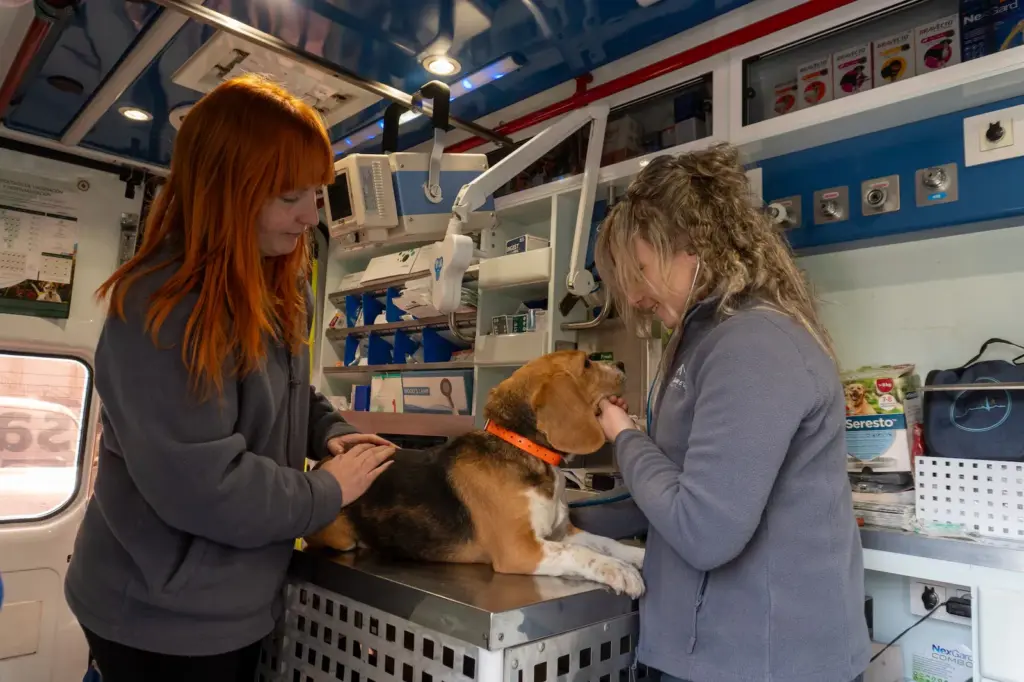
Focused on rural entrepreneurs with active projects, the banking entity also promotes the Tierra de Oportunidades program, which seeks to fix population and employment in rural Spain, through economic aid, training, and support. One of the initiatives benefited in the last edition was the company Gurevet, in Mezkiritz (Navarra), which provides veterinary services for companion animals at home throughout the Foral Community. At first, in 2021, Teresa Etxarri (32 years old, Mezkiritz, Navarra) started alone in her adapted van (it has an operating room for urgent or simple surgeries). Over time, her sister joined as assistant and manager, and for a year now, they also have another veterinarian because they opened a clinic.
My sister and I are from a very small village in the Navarre Pyrenees. Services arrive by van: the baker, the butcher, the fishmonger… and we said: why not also the veterinarian? It’s a way to help different areas.

But the quality of her services lies in that Etxarri travels to homes to vaccinate, conduct consultations or check-ups, or apply palliative care, among other things, mainly to dogs and cats. “There are things that start as something mild that, if we didn’t have this service, would go unattended and end up being serious; people are more aware of keeping vaccines up to date or sterilizing their animals,” she details. The relationship with the client is closer, based on trust, and they respond. “We want to give rural areas the same service they would have in a city,” she emphasizes.
Thanks to CaixaBank’s contribution, the entrepreneur received support not only economically but also in visibility: “For example, they helped us make proper videos for social networks. The truth is, they have helped us gain confidence with certain clients.” In short, Tierra de Oportunidades served as “support and dissemination.”
The “restlessness to help”
The vocation to help is a kind of “restlessness” that you always carry inside, qualifies Pepi Solano. “You know you want to do something, but you don’t know how or where,” she describes. This Andalusian has been able to deploy that energy through Voluntariado CaixaBank. “Through their volunteering, they immediately locate you and say: ‘Pepi, look, they are asking for help in such a place.’ And I respond: ‘We’re there.’”
My husband, who worked at CaixaBank, knew I had the restlessness to try volunteering and showed me the opportunities the bank offered. We got involved together to help, and for more than 10 years, I have collaborated with different social entities.
For more than a decade, she has participated in online cooking workshops for young migrants, activities for children with disabilities, visits to nursing homes, or school support for kids from a vulnerable neighborhood in Cádiz. “Some of those I helped as children are now adults, and we keep in touch. Sometimes, we go for coffee, or they call me, telling me about their lives,” she describes, affectionately. She has been accompanied (they have caught her enthusiasm) by her husband, her two daughters, and some friends. They all had the same feeling: “You always leave there happy and think: this has to be repeated.”
Like them, a total of 24,000 people participated in volunteering activities in 2025, more than 19,000 were employees ―45% of the workforce―. Also, between May and June this year, the fourth edition of the Social Month was held, which, thanks to the collaboration of about 1,400 local social entities, has benefited more than 155,000 people in vulnerable situations and has allowed boosting more than 4,600 solidarity activities in all autonomous communities. Solano states that the people she helps respond emphatically: “They always give you much more than you give,” she assures.
Speaks
