







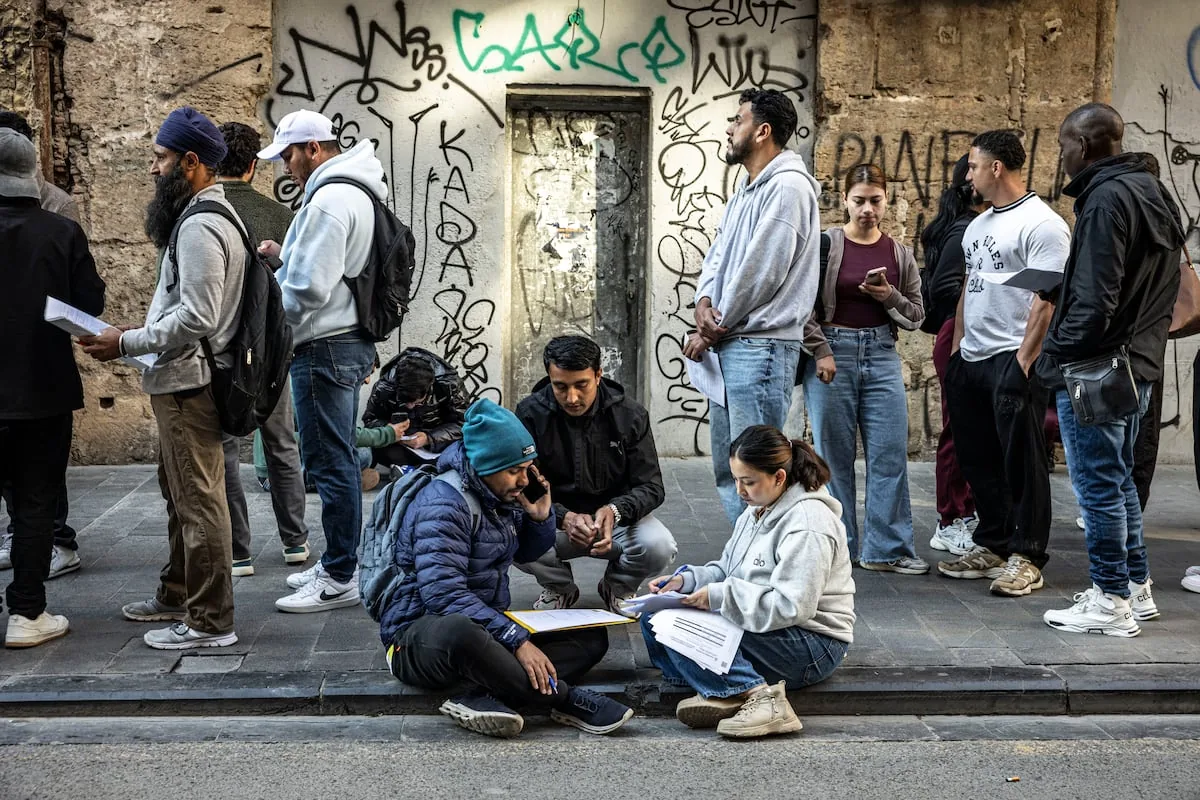
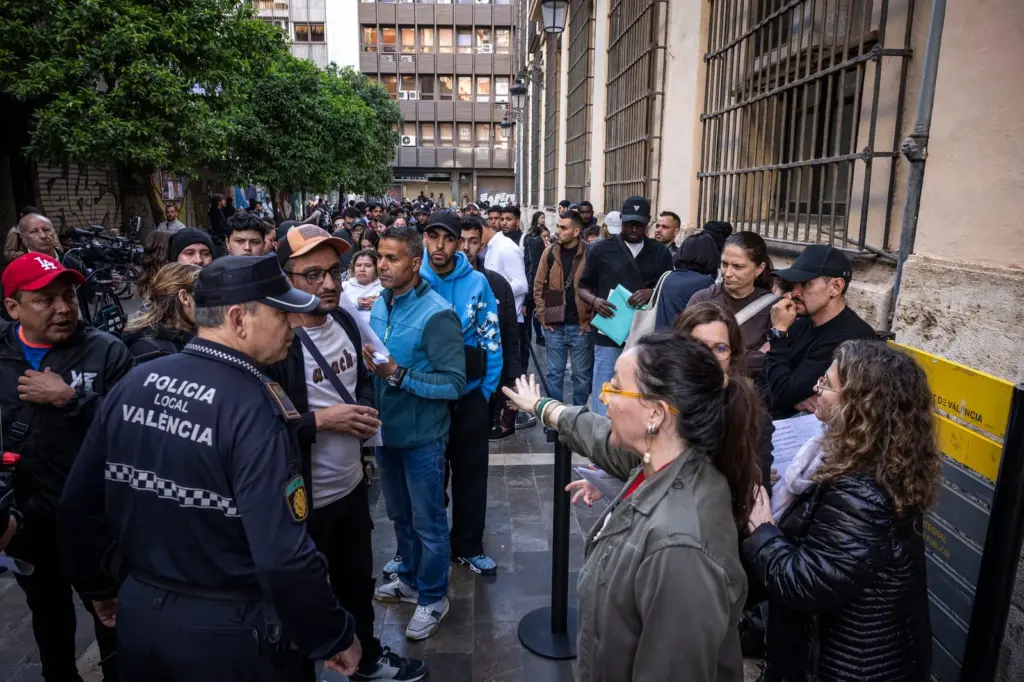
More than 400 offices across Spain opened their doors this Monday to receive regularization applications from immigrants who have a prior appointment. This marks the start of the period for submitting the procedure in person, after the period for online applications began last Thursday. In Barcelona, Valencia, and Logroño, long queues have formed to carry out procedures related to regularization or to submit the application itself. Confusion about requesting a prior appointment or opening hours is constant among foreigners.
The first images of long queues arrived from Valencia early in the morning, to which the Government spokesperson, Elma Saiz, defended: “We have a scaled and perfectly manageable procedure,” in an interview on La 1 of Televisión Española. To handle prior appointments —almost 20,000 were booked last Thursday alone— the Government has enabled 371 Post Offices in provincial capitals or cities with more than 50,000 inhabitants, open Monday to Friday from 8:30 to 17:30; 30 Social Security offices, open Monday to Friday from 16:00 to 19:00; and five Immigration Offices in Madrid, Alicante, Valencia, Almería, and Murcia, from 16:00 to 19:00.
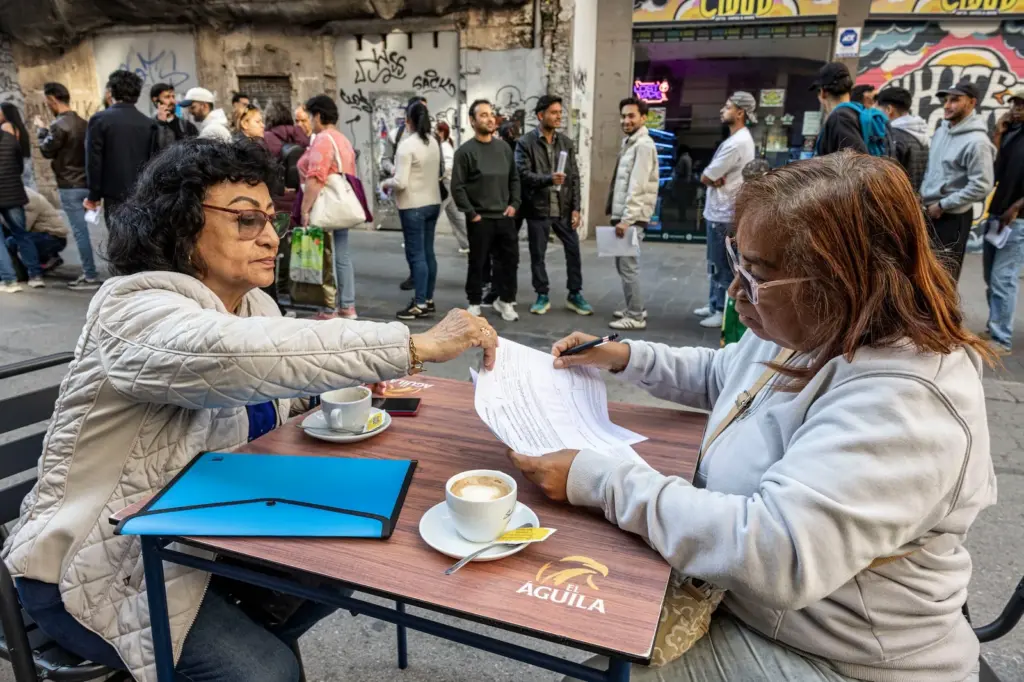
In a couple of Post Offices in Madrid —the one on Pizarro street and at Tetuán Station—, normality reigned early in the morning. At the central Immigration office, which will start attending at four in the afternoon, applicants arrived in dribs and drabs, but found the doors closed. One of them is Álvaro, a 40-year-old man, who prefers not to give his real name to protect his identity. “I came here because I don’t have a digital certificate and it’s impossible for me to get a prior appointment,” he says worriedly, adding that he has been going around offices all morning to see if he has any luck. Álvaro cannot afford a lawyer, although lawyers and managers have also moved to the Immigration office, distributing their business cards to immigrants who come for information.
At Logroño City Council, intense activity has been registered since the start of the regularization process. Since last Thursday, 600 registration certificates and 350 applications for vulnerability reports have been issued. This Monday, queues have also formed there. The first group to arrive, made up of immigrant women, did so at five in the morning to obtain the necessary procedures. “It’s something very impressive, as we will be able to work legally,” said Maite, a 40-year-old Colombian woman, who hopes to complete her training and work in administration and marketing. She is one of the more than 5,000 people estimated to benefit from this process in La Rioja.
Read more Seville April Fair Guide: dates, lighting ceremony, booths, Hell Street, bullfights
In other parts of La Rioja, such as Calahorra (25,000 inhabitants), they assure that the situation translates into a “collapse” due to an avalanche of applications that they estimate could reach 2,000, almost half of the entire community. A situation that has forced unions and social entities, such as CCOO and Cáritas, to demand more “personnel” and a greater number of application submission points, since in La Rioja there are only three (two Post Offices and one Social Security office) and all of them are concentrated in Logroño.
Immigrants who wish to avail themselves of the extraordinary regularization proposed by the Government, which will grant residence and work permits, must be of legal age and have entered the country before January 1, 2026, and prove that they have remained in Spain for five consecutive months when submitting the application, the deadline for which extends until June 31. Additionally, foreigners must demonstrate that they have no criminal record.
Read more A magnitude 7.5 earthquake shakes northeast Japan and generates a tsunami
With information from Laura Llach and Víctor Espuelas.