Until recently, the figure of the doula had been linked to women who support, guide, and assist other women throughout pregnancy, childbirth, and the postpartum period. However, thanks to figures like Nicole Kidman and director Chloé Zhao, as well as the second season of the series The Pitt, death doulas are beginning to appear in pop culture. Doula is a word derived from ancient Greek that, in its original sense, refers to the idea of service and accompaniment. As the symbolic affinity between the beginning and the end of life is recognized, the figure of the doula has also extended to the realm of death. In this context, it designates someone who accompanies the final transition, integrating different knowledge and care practices to support that process.
Read more A «spaceship» in the middle of Manhattan: can New York’s most unique building be saved?
Zhao, director of Hamnet, explained to The New York Times that during the adaptation of Maggie O’Farrell’s novel of the same name, she surprised herself by reflecting on her fear of death, and to face it she has just completed Level 1 training in the UK to become a death doula. “You can see that the pain of losing a loved one doesn’t change. However, the social understanding of death, the space given to grief, and how it is rooted in culture, as well as the medicalization of death, have changed a lot. In the modern world, when death is no longer considered a natural part of life—because now it’s about living as long as possible—there is almost shame around it,” says Zhao.
Suzanne O’Brien is a former nurse who trains palliative care doulas and hosts a podcast called Ask a Death Doula. “We had moved so far away from the idea that death was an option that we finally got tired of it being kept hidden. The first step is to recognize that death is a natural part of life’s journey,” explains O’Brien. “They say death and taxes are the only certainties in life. But people don’t pay their taxes. So I say death is the only certainty,” she asserts.
Nicole Kidman recently shared that the death of her mother, Janelle Ann Kidman, who passed away at 84 in September 2024, inspired her to become this increasingly sought-after figure. “Loneliness is an important part of our current world, especially for people at that stage of life. I want to be there,” the actress said at the University of San Francisco. “While my mother was dying, she felt alone and the family could only offer what they could,” she assured.
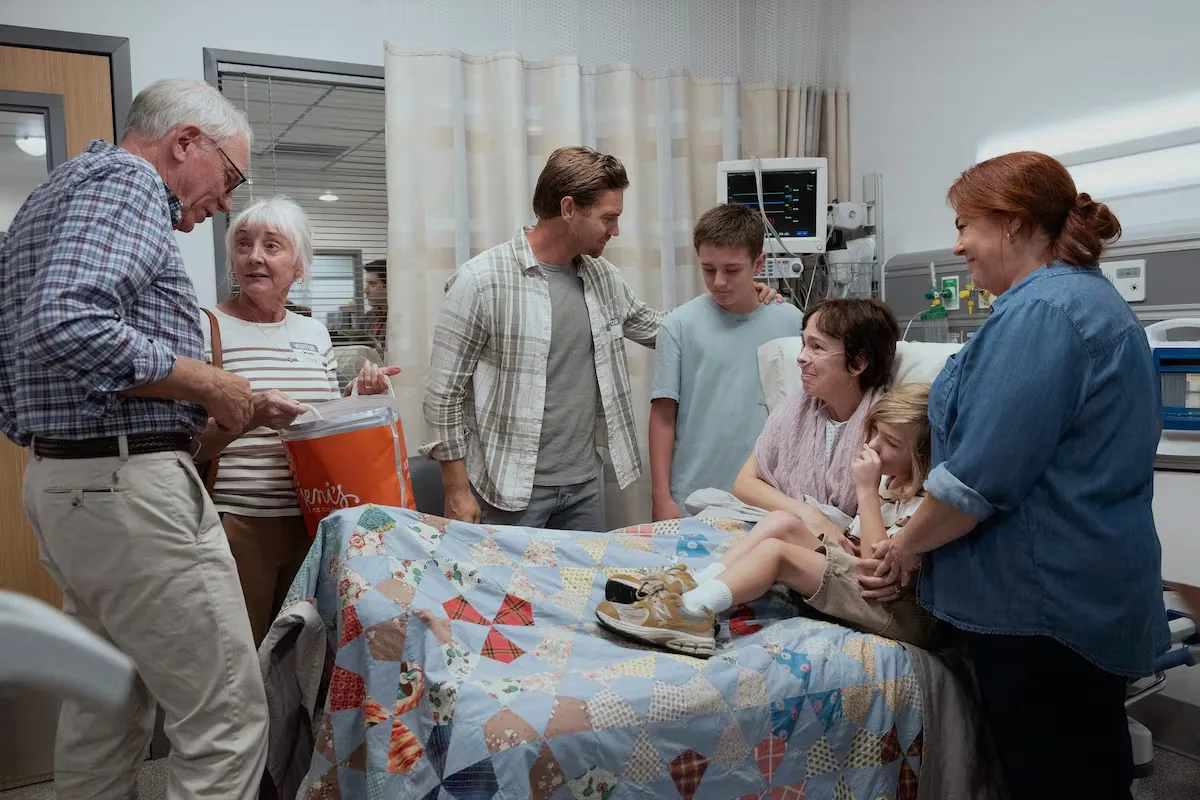
One of the most critically and publicly acclaimed TV series is The Pitt, which is especially praised for the accuracy with which it portrays the challenges facing public health in the United States. The fact that the figure of the death doula appears in several episodes shows that this is becoming more common, although at first, their presence surprises those in the room. In the fifth episode of the second season, the character Lena, a member of the night emergency shift, appears in the room of a palliative care patient dressed in street clothes to the surprise of the team. When she identifies herself as “Roxie’s death doula,” she explains her role to her coworkers, which they had not known until then: “I help advocate for people like Roxie so that their transition to death is a more peaceful process. It’s like a birth doula, but for the end of life.”
“They are like travel guides in a foreign country,” explain Dona International, an organization focused on doula certification. Gemma Polo Pujol, spiritual companion and creator of the Comprehensive Death Doula Training, explains to S Moda how it is possible to facilitate a ‘good death.’ “It is important to prepare well both in life by being healthy without ignoring death, but rather talking to it and keeping it present in our daily lives. If we have a terminal illness, it is important not to leave things pending, to practice forgiveness, and to resolve financial matters,” she assures. “Death can be very beautiful and is part of life. We must observe death from beauty, because it can be magical and beautiful even though it can also be horrifying. One must explain if they have any wishes before dying and how they would like their death to be, such as if they want specific music and flowers. Also, discuss what will happen afterward. The problem is that talking about death is an educational issue that concerns us all. The sooner we name what is happening, the better, because we will open a window in which everything will happen. The big problem precisely comes when no one dares to say anything and the person leaves without having had time to say goodbye,” she laments.
Read more Saga or ‘nepobabies’? The new generation of artists living with their parents’ legacy
“First, I perform an educational outreach role and from there, a whole series of tasks related to death, such as planning and preparation, which include forgiveness, facing fears… Then there is accompanying the death itself, something that many families find distressing. We also provide peace of mind as advisors, as we can advise and talk about what can be done and open up the view to the possibilities we have. After death, we can also offer accompaniment if the family wants to hold a wake at home… In reality, the range of tasks is very broad, but not all doulas do everything,” she warns.
Glynis German is an end-of-life doula, funeral celebrant, and grief support specialist based in Mallorca who appreciates the work Polo Pujol does and having discovered Death Cafe, whose goal is to increase awareness about death to help people make the most of their lives. It is a group discussion space about death, with no agenda, objectives, or preset topics. Far from being a support or grief therapy session, it is a discussion group. “If we are going to keep living with our backs turned to death, we are going to complicate things. My intention is to talk openly about death and prepare myself for a peaceful loving death. I will achieve this by having peaceful and loving relationships,” she explains. “Everything depends on who calls the doula, whether it is the person who perhaps has had a diagnosis that makes them see they need to prepare or if it is a family member. Today I assisted a family to whom I made it known that palliative care, through the public health system, is also available at home. I helped them organize the home care team that comes to the house and after that, they no longer needed the doula’s help for anything else,” she assures.
Gemma Polo Pujol clarifies that there is no regulated training to become a doula anywhere in the world. “There are many trainings like ours, which is the only one in Spain. Many people come with their university degree. There is growing interest and if the figure of the death doula sparks interest, it is because it offers a broader range and a different perspective. We are part of the international movement related to the death positive movement and it does not mean working only in palliative care in hospitals or accompaniment, but it goes beyond that. The training is open to men, there is a small percentage and those who have done it are fantastic. They would technically be doulos, but are also called doulas. I believe the universe of unpaid care has historically always been linked to women and we are trying to transform this,” she assures.
They have trained more than 200 people and have a directory and an association, as their concern is for people to know them. She clarifies that although there are some aspects that overlap with psychology, they like to work in a network having clear their limits and the situations in which they can accompany. “It would be a dream if it were covered by insurance. But to date, many nurses, doctors, and people working in geriatric centers have also trained as doulas. It’s incredible because they are bringing this work into the hospital setting, but informally. As doulas as such, we are not hired in the public service,” she explains.
“A good doula would be one who empowers everyone around the figure at the center,” says German. “We can have conversations that until then no one has been able to formalize,” she adds, “in the end, death does not always come as a surprise. The doula is beside the person who is dying and can talk about how they feel their breathing, if the color of their fingers is more bluish… About everything the dying process entails. The doula is there holding, supporting, and listening. Because if we believe our dear healthcare workers have time to do it…”