









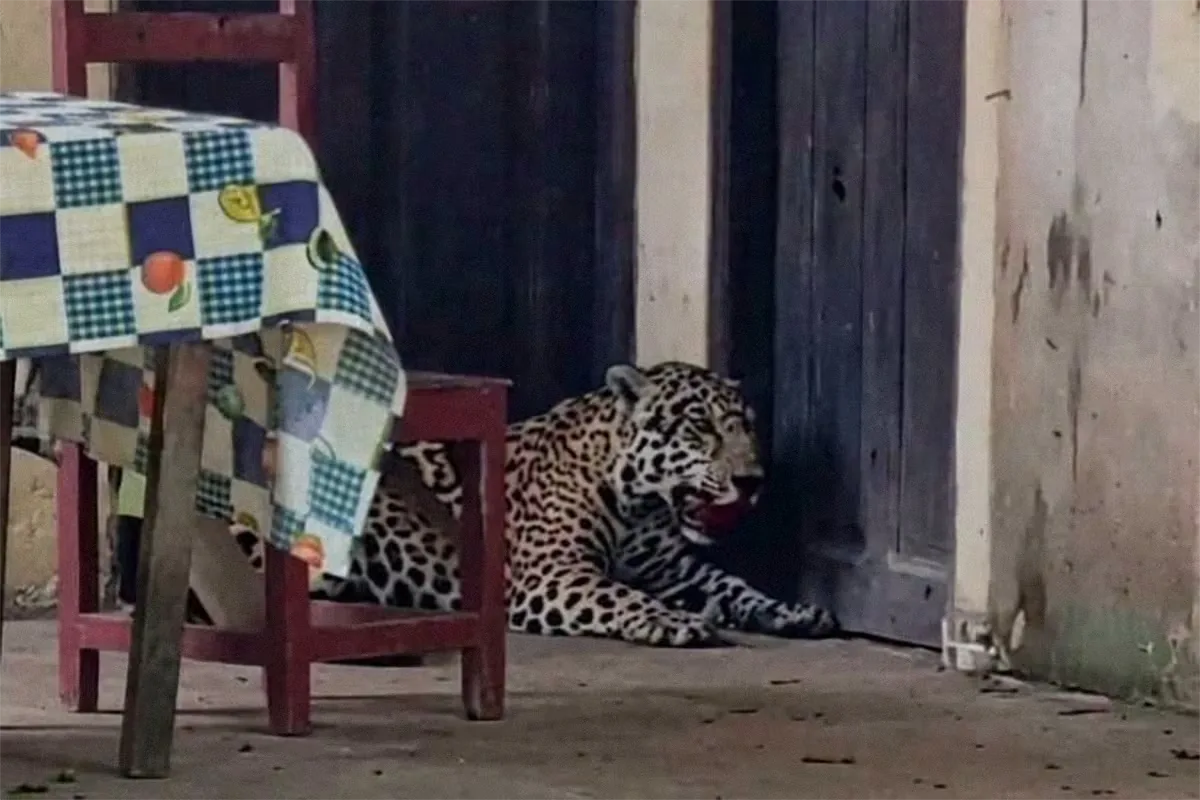
The video of a jaguar agonizing after being shot with firearms is causing shock in Bolivia. The footage was recorded last Saturday by a resident of the municipality of Guayaramerín, bordering Brazil, after the feline entered a house in the Amazonian area. The residents called the neighborhood council, which, with shotgun shots, killed the animal; before being finished off, it was tied by the neck. The body was found a day later, dismembered and in the possession of a woman. The justice system preemptively sent one of the alleged perpetrators to jail for 60 days on Monday night and is searching for another identified individual.
The incident sparked a debate about the actions to take when a wild animal appears in rural populations of the country. On one hand, some defend the reaction of the residents to preserve their lives. On the other, biologists and environmental activists claim that the appropriate safety protocol was not implemented, which does not include killing the animal but rather the intervention of a specialized team. Furthermore, these latter point out, the jaguar — recently reclassified as an endangered species — was a cub and was domesticated because it did not defend itself and reacted meekly to the attacks.
Veterinary teacher and rescuer Marco Antonio Greminger argues that the specimen should have been tied up, handed over to the corresponding authorities, and that they should have decided its situation to return it to its habitat. “The population of these remote neighborhoods is used to encountering these felines. They know that a wild animal, with a simple shout, activates its sympathetic system to attack or flee. But the jaguar in the video is in a sleeping pose, yawns twice, and is not scared by human shouts because it is accustomed.” He believes the feline was “domesticated” because, at that age, which does not exceed one year, its survival depends on its mother.
Greminger’s position is supported by the president of the Association of Autonomous Municipal Governments of Beni (AmdeBeni), Cristian Velasco. “You see an animal that did not represent any kind of risk at that moment. It is truly outrageous when we see that they end up killing it, shooting it again. It is inhumane.” The cause of greatest shock is the dismemberment of the animal: its head, paws, and skin were found, parts that are usually trafficked on the black market.
The specialized unit of the Forest Police for Environmental Preservation (Pofoma) states in its report that the feline received at least four shots and alleges a premeditated biocide. “The animal’s body was found decapitated, skinned, and mutilated,” it reads. The Public Ministry demands the maximum penalties for those involved, which is around eight years.
Read more Response to Fox: the president of the minorities
The case gains greater sensitivity when considering the state of the jaguar. The recent updated version of the Red Book of Vertebrates on the conservation status of Bolivian fauna classifies the specimen as endangered, which means it is threatened by “the illegal trafficking of fangs and parts to Asian markets, the ongoing conflict with livestock activity, the overhunting of its prey, and habitat loss linked to fires.”
The imposing stature of the jaguar, which can measure up to two meters long and weigh 135 kilos, has made it one of the favorite targets of poaching. Bolivia is one of the places with the highest number of deaths; it is the country with the highest annual rate in the world of jaguars killed by illicit activities, reaching an average of 61 specimens, and with 30 carcasses seized each year, according to a 2021 report by the Convention on International Trade in Endangered Species of Wild Fauna and Flora (CITES).
In 2018, a Chinese couple was arrested in the Bolivian Amazon with 185 fangs of the feline, uncovering a trafficking network that had been operating in the country for years and even advertised payments for each specimen on the radio. Recently, the most notorious case of illegal trafficking was in 2024, when it was discovered that the Argentine company Caza y Safaris offered the hunting of a specimen for 11,000 dollars in Bolivian territory.
Read more Time change in Chile 2026: when daylight saving time starts