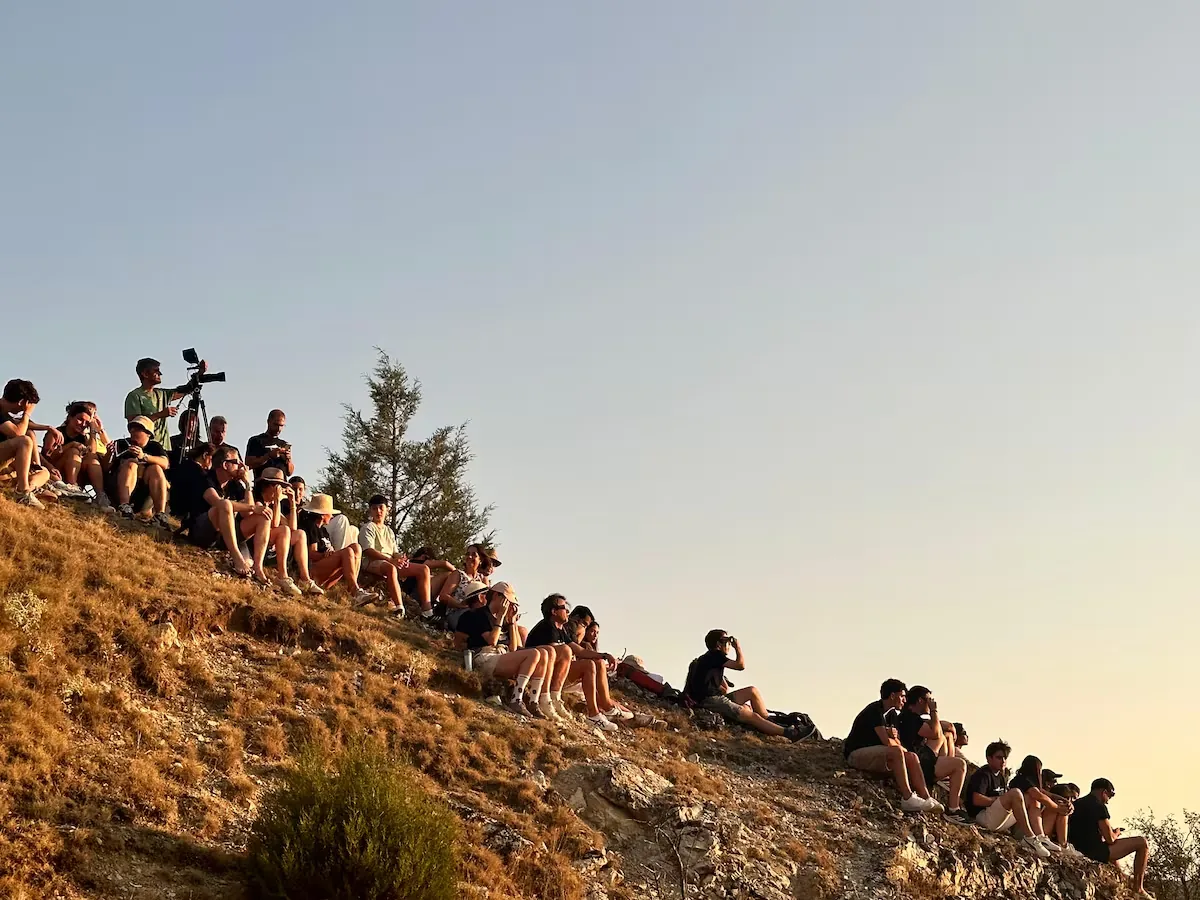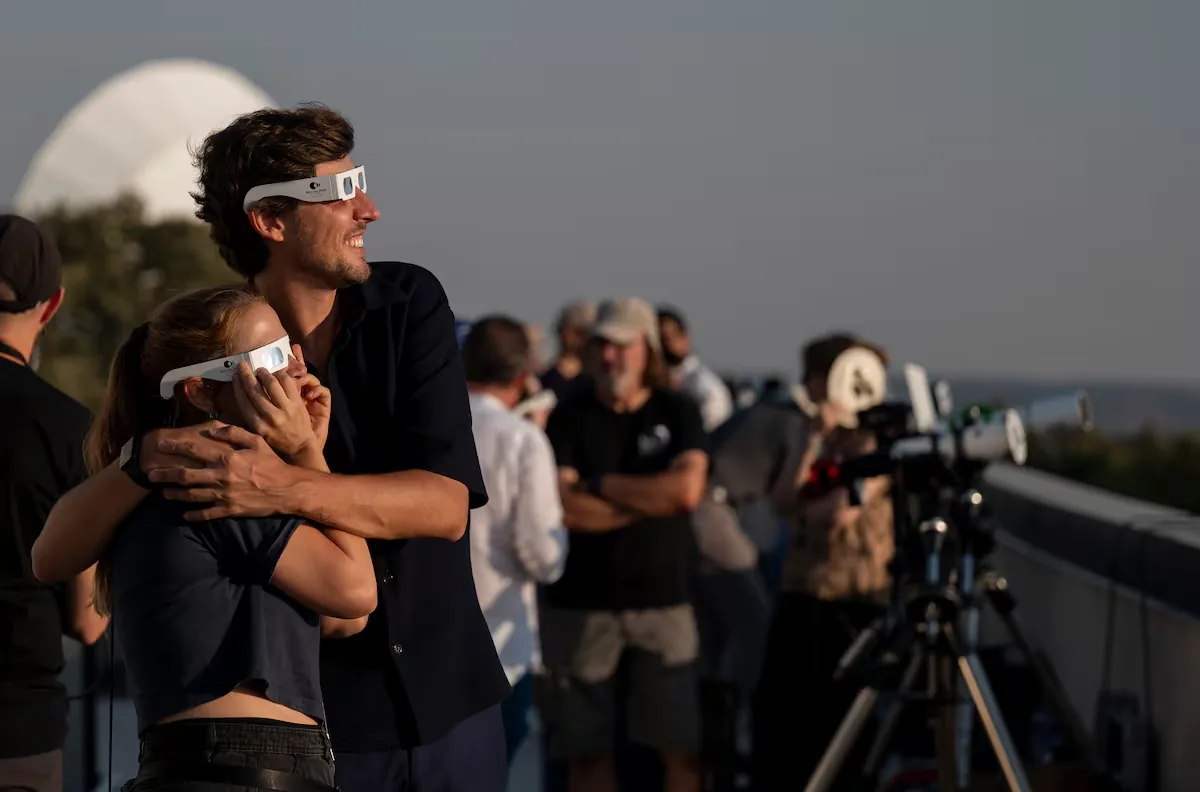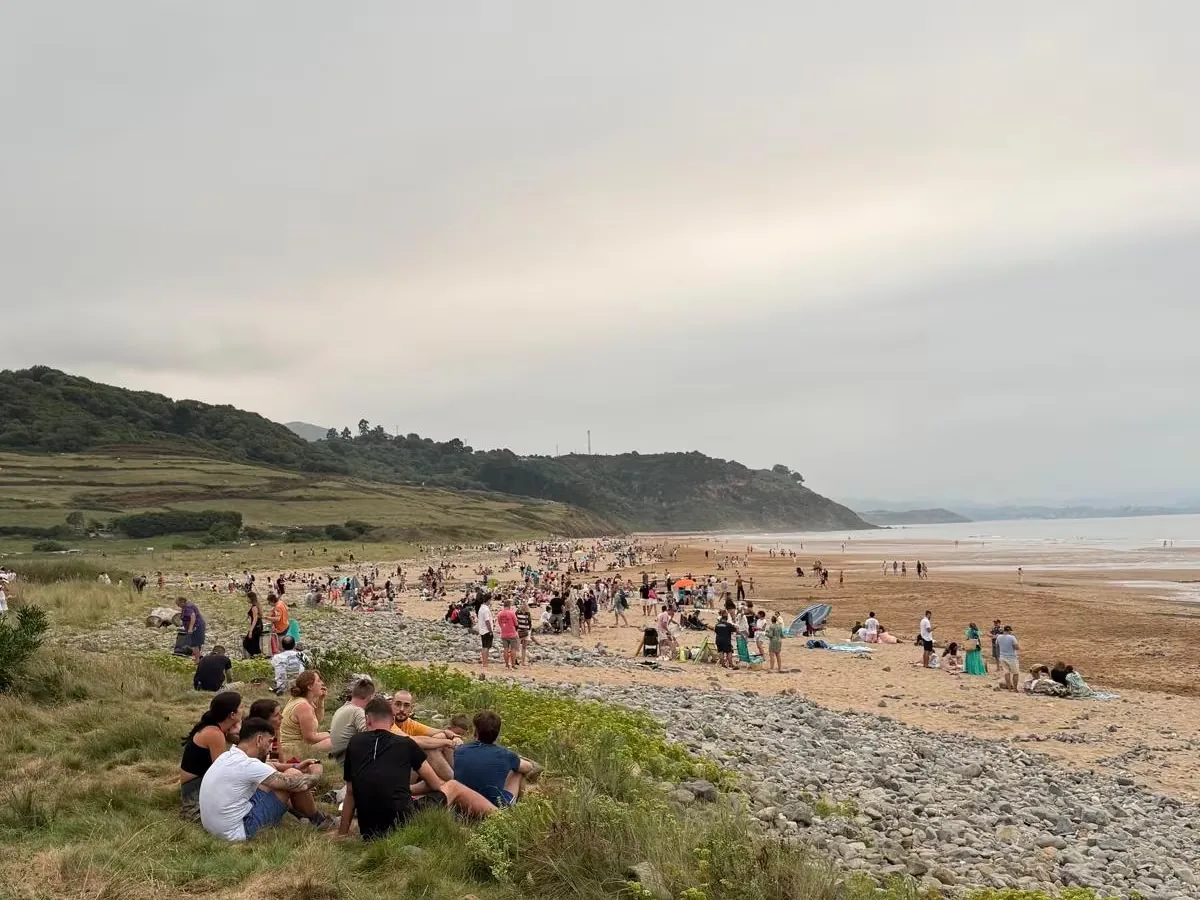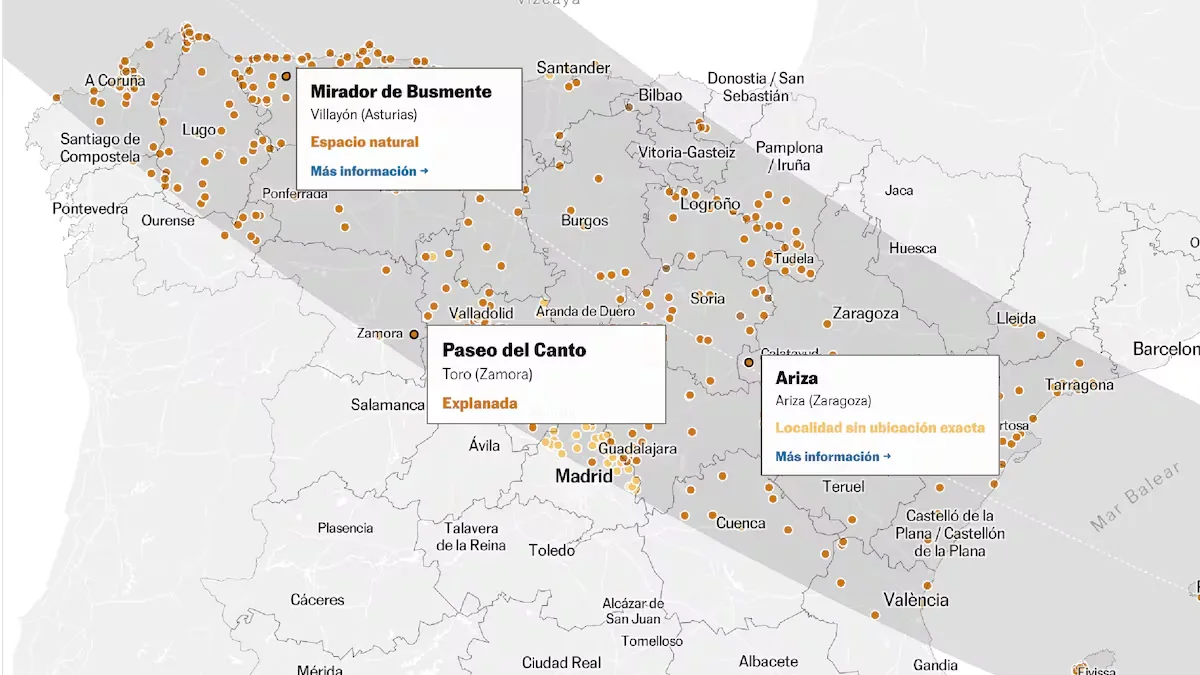
This Wednesday, August 12, starting at 20:26, a strange night will break out across much of Spain that will last a maximum of 110 seconds. Millions of visitors are expected to experience it, concentrated in a 290-kilometer-wide strip crossing the north and east of the country: it is the path of totality of the first total eclipse to cross the Iberian Peninsula since 1905.
The problem is that, happening so late, near true nightfall, it is not easy to find a place to see it. Those who have not found their own spot, following these simple tips with the help of their mobile phone, can head to one of the nearly 500 official observation points compiled by EL PAÍS in the 31 provinces where the solar eclipse will be total. However, the Government has given up on making public a list of safe eclipse viewpoints — with ideal visibility and monitored by emergency services — that various administrations have been selecting since early 2026.
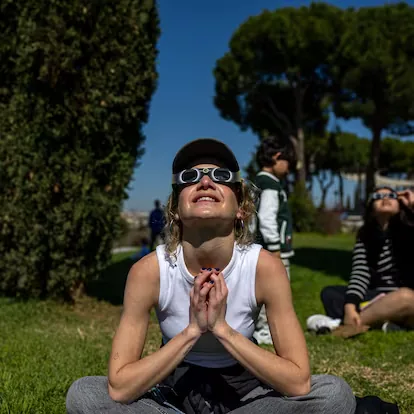
Solar eclipse in Spain: guide to follow the astronomical event of the year
The interministerial commission in charge of preparations, which does have an internal list of official points, considers that providing this information is the responsibility of each community. And not all have fulfilled that task. Faced with this situation, this newspaper created last May the first comprehensive map of these places, with information provided by local, provincial, and regional administrations. In its fourth version, it adds 115 new points, mainly contributed by the Balearic Islands, Galicia, and Madrid. Only one regional government, that of the Basque Country, has not revealed a single point in its territory.
Loading
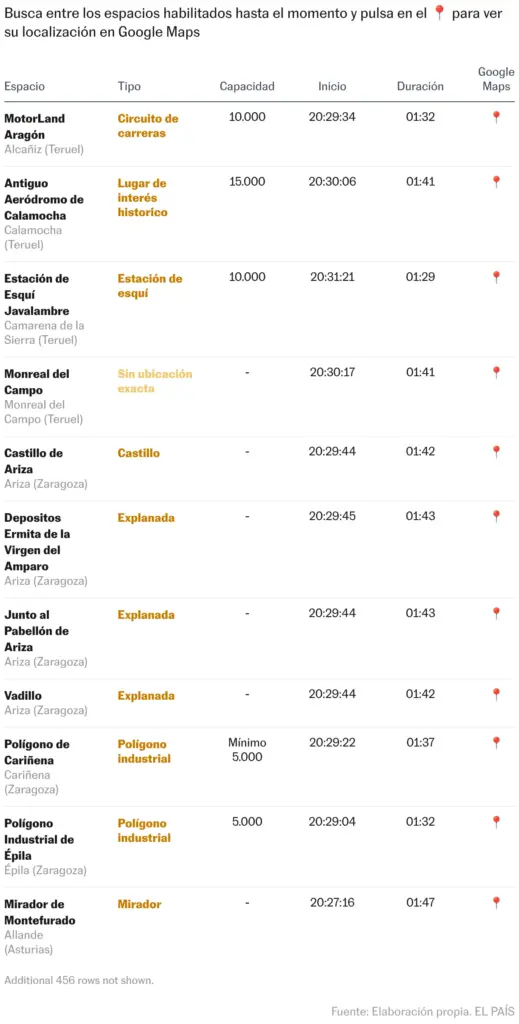
As a complement to the map, the following interactive table allows searching for official total eclipse viewpoints located in the desired municipality, province, or autonomous community. These locations can also be saved on the phone or a route obtained to reach them, thanks to a link to each of them on Google Maps.
Next to each viewpoint, key information for safe observation of totality is indicated: the exact start time and duration (in minutes:seconds). In this latest version, points can be sorted according to these two search criteria, allowing users to find nearby places where the eclipse will last longer.
Do you have information about official observation points that do not appear on this list? Or any data to specify?
You can write to us at fdomenech@clb.elpais.es
Only within the path of totality, in locations like those collected in this map and search tool, can what makes this astronomical phenomenon extraordinary — and once in a lifetime — be experienced. Experts consulted recommend traveling as needed to reach 100% coverage: “A 99.99% eclipse has nothing to do with a total eclipse,” explained Jorge Pérez Gallego, a Spanish astrophysicist from the US National Solar Observatory, in a recent interview.
Given the massive influx expected to the 100% zones, the central Government insists on the recommendation to go to the nearest official viewpoint, minimizing car travel as much as possible. Or better yet, find your own observation spot, as close as possible to home or vacation spot. In principle, any place with a clear western horizon could suffice. But there are mobile phone apps that help ensure if that place is ideal:
Discover your own ideal place to watch the eclipse, with the help of these apps
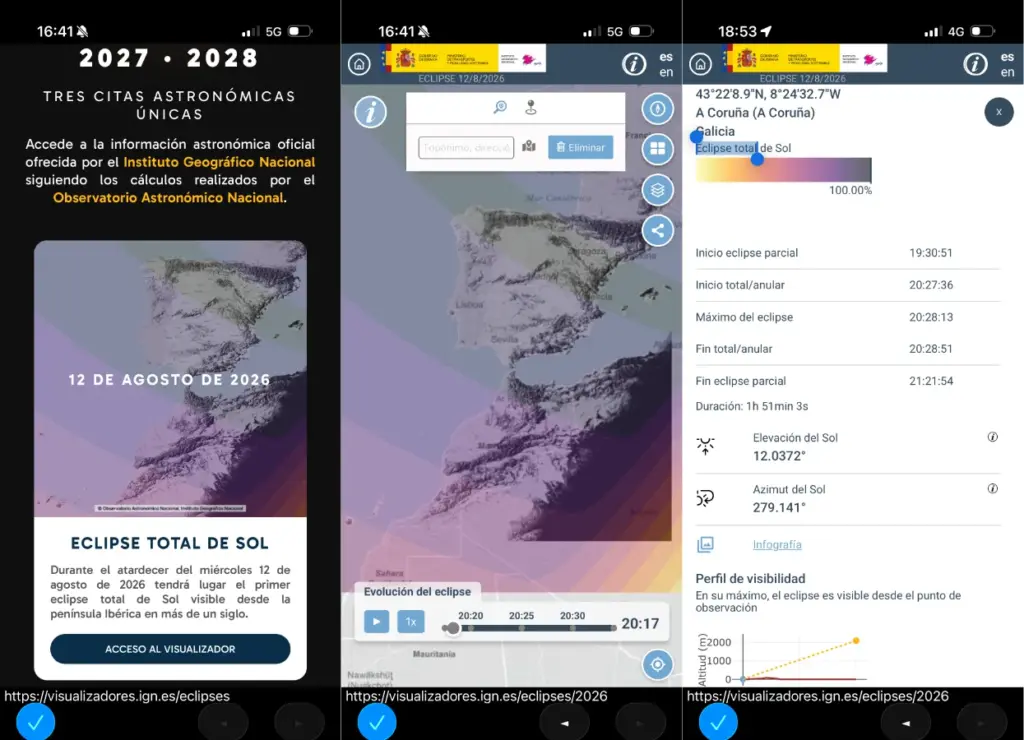
Several free applications allow you to know if the coverage will be complete at any location, the exact time it will occur, and also check if the Sun will be visible there
Asturias, Galicia, and Castilla y León, the three communities where the Sun will be highest during the eclipse and which expect the most visitors, are an example of the different approaches each territory has taken in preparing for the eclipse, despite the Government creating an interministerial commission in July 2025 and later including the autonomous communities to unify criteria.
Read more The rumors that triggered the migratory avalanche towards Ceuta: “The door is open”
The Government of Asturias presented its plan at the beginning of July, which includes an observation point in each of its 78 municipalities and a reinforced mobility plan — via shuttle buses — aiming to minimize car trips. These can be consulted on a comprehensive website, which offers a specific page for each official site, with details, directions, and public transport options to get there.
Similarly, Castilla y León announced in April its intention to prepare 200 points throughout its territory: it is the central community of the path of totality, and the one with the most provinces and area where the eclipse will be complete. However, it has settled on 75 due to difficulties in selecting suitable places to guarantee attendees’ safety or cover possible emergencies, as well as the availability of a limited number of civil protection and police personnel. The Castilla y León regional government offers little information (and quite technical) about its points on a website. Additionally, provincial councils like Soria have their own catalog with additional viewpoint proposals.
Where will there be clouds during the eclipse? Check how the skies and horizon will be in each municipality
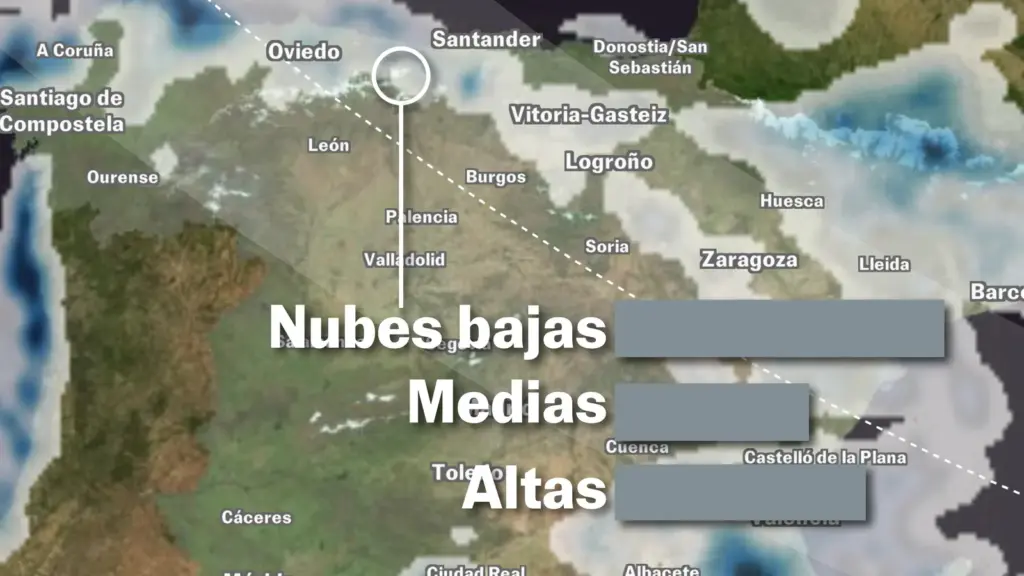
This other map, which EL PAÍS will update until Wednesday, August 12, combines several cloudiness forecasts to show where there will be clouds, what type, and in which direction they will be.
Galicia does not provide any official observation points on its eclipse website. After repeated requests, it has provided EL PAÍS with a list of nearly a hundred places proposed by Galician municipalities. However, the Xunta’s Ministry of the Presidency warns that these are only “proposals of possible places,” about which the regional administration has limited itself to issuing reports and giving recommendations to prevent emergencies. “To confirm which of these recommended points will be definitive, it is necessary to check with the municipalities themselves,” sources from that ministry add, leaving that responsibility to each municipality. However, the central Government tasked the autonomous communities with selecting recommended places for safe observation.
Unlike Galicia, the vast majority of the 13 communities through which the path of totality passes have opted to promote, coordinate, and supervise the selection of suitable points in their municipalities, even rejecting some locations for not having good eclipse visibility or for not meeting easy access or safety requirements. Only the Basque Country and La Rioja have not communicated any plan regarding official viewpoints.
The Basque Government has not made any recommended points public nor responded to information requests from this newspaper over the past two months. Regional sources from the Balearic Islands initially preferred not to promote any location to avoid mass gatherings on their already tourist-saturated islands during the eclipse dates, and finally decided to make public 26 locations spread across Mallorca, Menorca, Ibiza, and Formentera. The Government of La Rioja, which has not offered any own list, mainly promotes private events on August 12 in Rioja wineries (with per-person prices exceeding 50 euros), mixed with prior activities and several observation points selected by municipalities in the community.
With the data provided by the various administrations to EL PAÍS, the map of official viewpoints includes three types of points: already defined places, preselected localities (where suitable locations still need validation), and remote natural viewpoints such as mountain peaks (recommended only for people experienced in those environments and capable of staying overnight, as night falls after the eclipse ends).
As the various administrations have developed different traffic and civil protection plans, some places proved unsuitable — not meeting mobility, safety, fire prevention, or environmental protection requirements — and have been removed from the list compiled by EL PAÍS. While autonomous communities like Navarra and Catalonia were the first to have their selection of points clear, Madrid and Galicia have continued communicating dozens of new observation points in the last two weeks. Just one day before the event, this map can finally be considered definitive, after several updates since it was originally published on May 15.