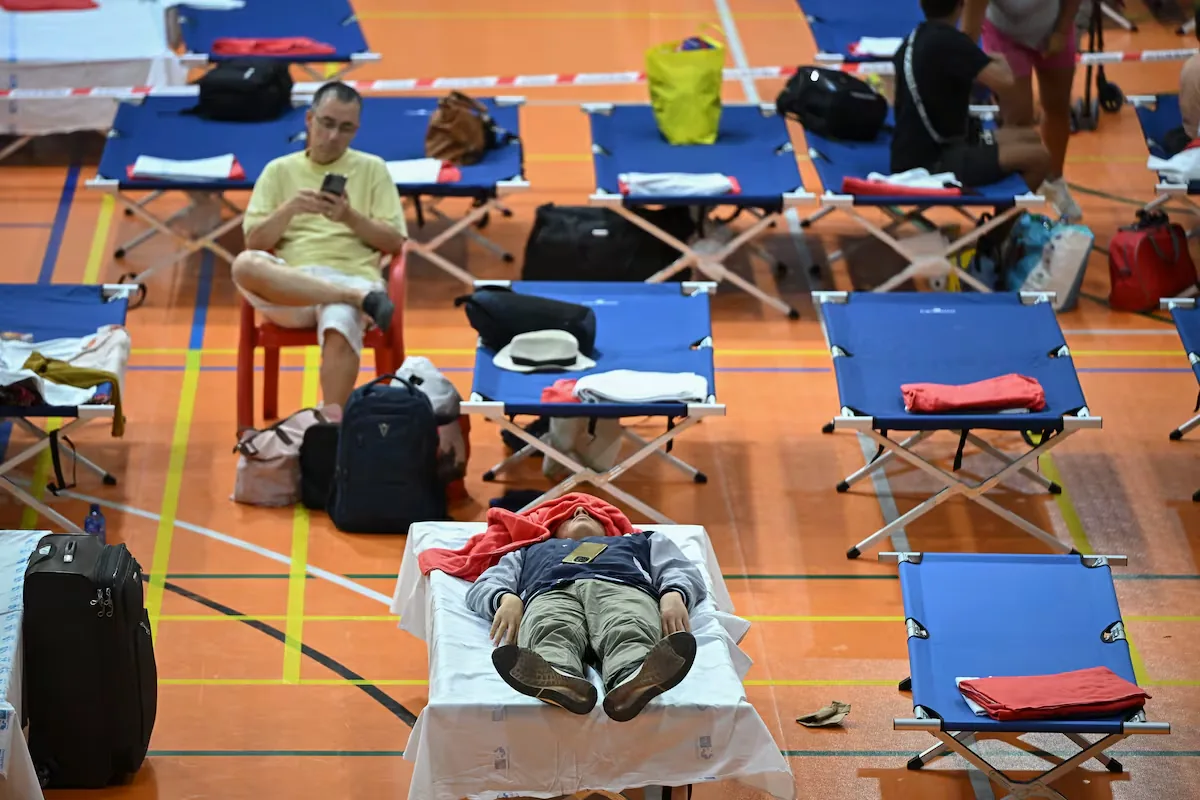
The fire in the Sierra Oeste of Madrid, which has affected 17 municipalities in the region, has not yet been declared extinguished 21 days later. Day and night, firefighters carry out surveillance tasks, although the flames are under control and last Tuesday residents who were still evacuated were allowed to return to their homes. But the displacement of evacuees to other municipalities remains under scrutiny as it does not follow proximity criteria, which has raised suspicions among some town councils about a possible political strategy. Many of the affected residents were moved to towns far from their homes while there were closer municipalities with available infrastructure and prepared resources.
Read more The rumors that triggered the migratory avalanche towards Ceuta: “The door is open”
Thus, evacuees from Cenicientos ended up in Alcalá de Henares, governed by the PP and more than a hundred kilometers by road, when Navalcarnero, under socialist rule, is less than 50. Residents of Navalagamella were sent to Alcobendas, governed by the PP and more than 40 kilometers away, despite Villanueva del Pardillo, governed by the Local Party, being 19 away.
When Operational Situation 3 was activated, the Government of Spain ordered which municipalities to evacuate and coordinated the official alert system, but it was the subdirectorate of Civil Protection of the Community of Madrid that decided to which municipalities the evacuees would go. The mayor of Villanueva del Pardillo, Eduardo Fernández, states that he offered facilities to shelter more than 1,000 people. However, no one was sent to his town, 25 kilometers from Zarzalejo, Fresnedillas de la Oliva, and Colmenar del Arroyo, evacuated areas.
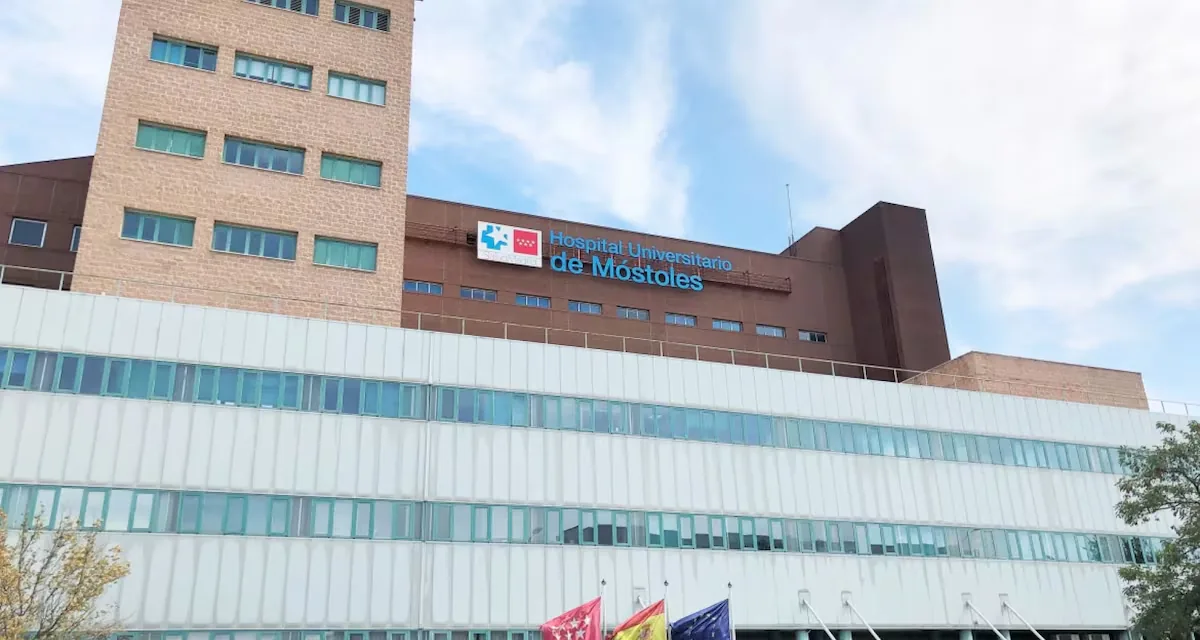
Residents of Zarzalejo ended up in Alcalá de Henares, more than 90 kilometers from their homes, and inhabitants of Fresnedillas de la Oliva and Colmenar del Arroyo were moved to Móstoles, 40 kilometers from their houses and also governed by the PP. “We feel wasted. We believe we could have provided great help. I consider that politics has been done and I regret it. This should be set aside, the only thing needed is humanity to assist those who have lost their homes,” criticizes Fernández.
He recalls that his town hall was already mobilized during the Valencia DANA, the COVID-19 pandemic, and the Filomena storm. “When there is a disaster of this magnitude, there are no colors. Since Thursday, July 23, we showed our willingness to help and communicated this by phone through the Security councilor,” he insists. His municipality, he assures, offered a sports center, two pavilions, the cultural center, and the senior center, as well as clothes and food donated by residents.
“We were prepared and from the Government Delegation they could provide us with material to condition the spaces, although we also had suppliers,” he comments. He will ask for explanations about the criteria applied in the relocation, but believes now is not the time. “It is a matter of institutional respect for the affected localities,” he clarifies.
The socialist mayor of Alcorcón, Candelaria Testa, does not hide her anger. Her municipality is located, for example, closer to Cenicientos and Zarzalejo than Alcalá. While from Alcorcón it is about 70 and 55 kilometers respectively, the distance to Alcalá is 117 and 91. Despite this, the Community housed evacuees from both places in the latter city. “It cannot be that buses passed through Alcorcón and went straight by, when we had capacity for up to 390 evacuees,” she protests.
She considers that the distribution of evacuees did not respond to proximity reasons. “Everything points to the criteria not being clear and that they may have been political. Something was not done well here. Why did they send evacuees to Móstoles, when the mayor said it was at the limit of its capacity, and to Alcalá de Henares? Could there be some reputational issue?” she wonders.
On the first night, 61 people from a residence arrived in her city, relocated the next day to a residential resource due to their vulnerability. Then, another 70 evacuees. “But no one else came,” she comments after lamenting that the total relocated in her municipality only represented 30% of the available capacity: “We made available the Buero Vallejo municipal theater with showers and air conditioning, the M-4 pavilion, another resource, and the Carlos Castillo del Pino occupational center, accessible for people with reduced mobility. We had the beds ready waiting with clothes, towels, masks, hygiene kits, and the Community was fully aware,” expresses the mayor.
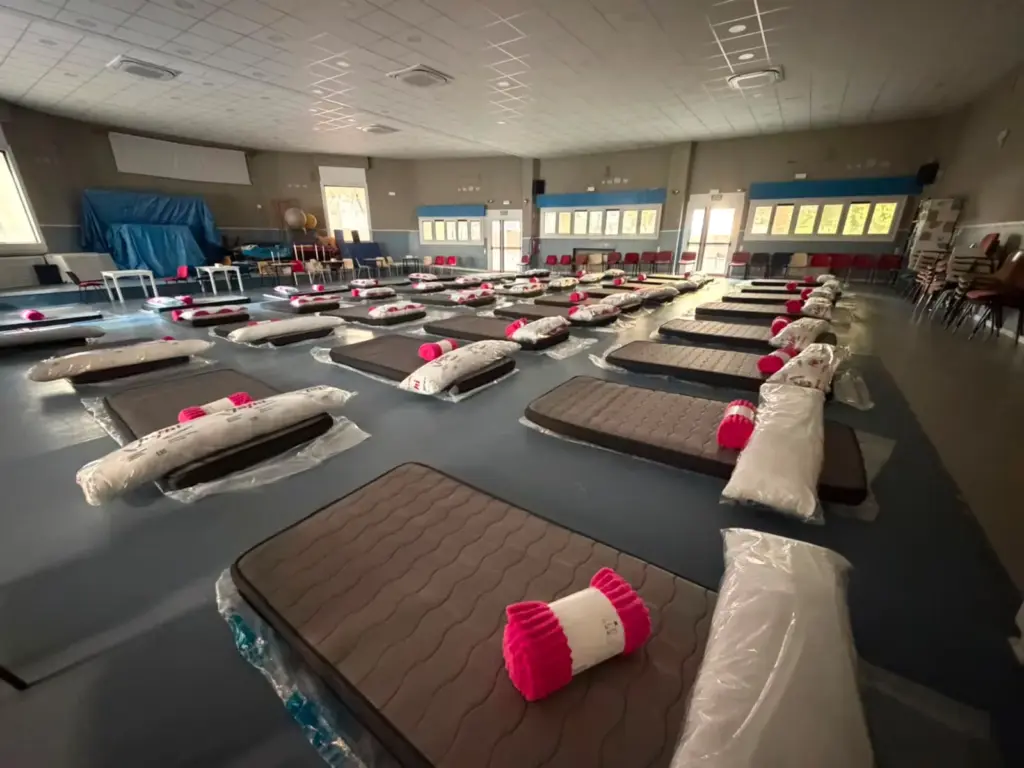
Every day, “from the first minute,” she recalled their availability because she had already made the emergency hiring to have catering and overtime for workers. “Having the capacity and being in the action axis, we did not fill the facilities while the affected went much further away. The most logical, with the fires next to all the exits of San Martín de Valdeiglesias, is that they would have used their heads to prioritize the A-5 axis: Alcorcón, Navalcarnero…”.
Very few evacuees arrived at the latter, despite being 17 kilometers from Aldea del Fresno or 25 from Chapinería and Colmenar del Arroyo. “On Thursday night, the Community Civil Protection warned that they would send two buses and our coordinator explained that it was essential for the regional Executive to send material. They said they took note, but nothing ever arrived. Thanks to Ikea, we got mattresses and blankets that same day. The next morning, with available staff, we enabled a sports center from the first hour,” municipal sources explain after commenting that 27 people arrived, but the regional government workers ended up taking them to Móstoles, except for one family that did not want to leave.
From Saturday, they claim to have received another 60 people until Tuesday, a total of 87 relocated with capacity for 400. “They were great, well cared for. It is hard to understand that, despite our proximity and willingness, we never received material and that during the key days evacuees were sent to municipalities located many kilometers away,” they express. Their Civil Protection coordinator was on vacation and returned when the fire broke out. “We expected to receive many people,” they emphasize without wanting to comment on the relocation criteria.
The Ministry of the Interior claims that evacuations were carried out in record time. “Evacuees were taken to municipalities that offered the best conditions. Navalcarnero was one of the first to be called, but they indicated no availability. Because of this, the Government delegate forced the command post to be placed there. It is a municipality governed by the PSOE. Is that also a political strategy?” they express, while the mentioned town hall denies this version: “The verifiable facts are that we enabled resources, received people, and requested material that never arrived.”
In response to the ministry, Government Delegation sources are critical: “The Community tried to play political games with the evacuations from the first moment. The mayors offered their facilities through a chat created for this purpose, but the regional Government rejected them, prioritizing distributing evacuees among PP municipalities.”
With the change of location of the command post, according to their version, something similar happened. They explain that the regional Executive proposed Móstoles and asked why Navalcarnero, which offered resources and was closer to the fire, was discarded. “It was the most reasonable option regardless of who governed there, as was finally demonstrated. They did not care about moving evacuees away if they could gain a solidarity photo for a mayor. They did not care about distancing the command post if they could use it to whitewash a mayor. The criteria proposed by the Government Delegation were not based on political colors, but on rationality according to resources, capacity, and distance,” they conclude.
For evacuees who ended up in Alcalá, Fuenlabrada was much closer. While Cenicientos is 75 kilometers from this municipality and Zarzalejo 57, to Alcalá it is 118 and 89 kilometers respectively. On July 24, the Fuenlabrada City Council, governed by the PSOE, contacted the Community to offer its collaboration in the relocation. “We had spaces to offer, but they did not send anyone, despite reiterating our offer on the 27th,” sources from this council indicate, showing surprise without wanting to comment on possible intentions in the relocation.
In Getafe, governed by the PSOE, 110 people arrived, although they had capacity for 200. They enabled military facilities of the Air Barracks in coordination with the Air Force to have bunk beds and a kitchen: “We were one of the last municipalities to have affected people.”
All host municipalities are governed by the PP, except Alcorcón, Navalcarnero, and Getafe (PSOE), as well as Villanueva de Perales, with independent rule, whose sources do not perceive “any type of discrimination for political reasons” nor question the distribution made and refer to management “worthy of recognition.” In Getafe, however, the data is striking, according to the council: “The map of municipalities chosen by the Community is very surprising. It is difficult to understand under logistical criteria.”