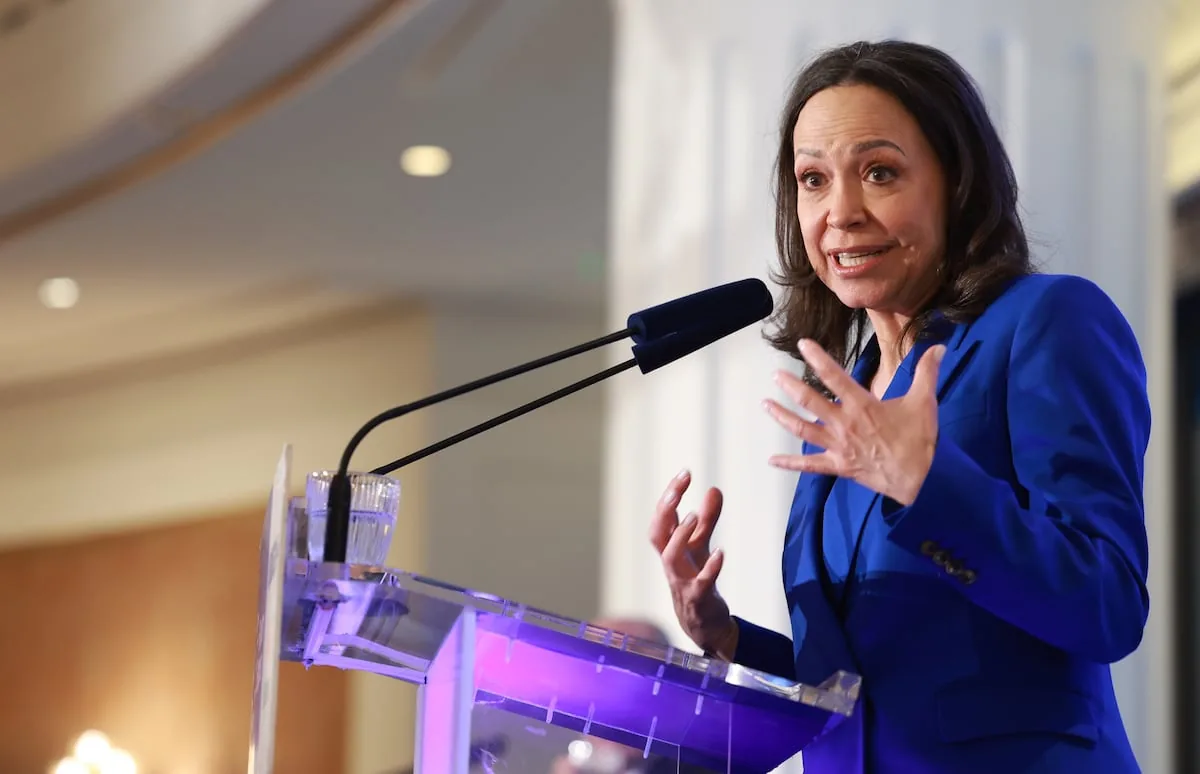
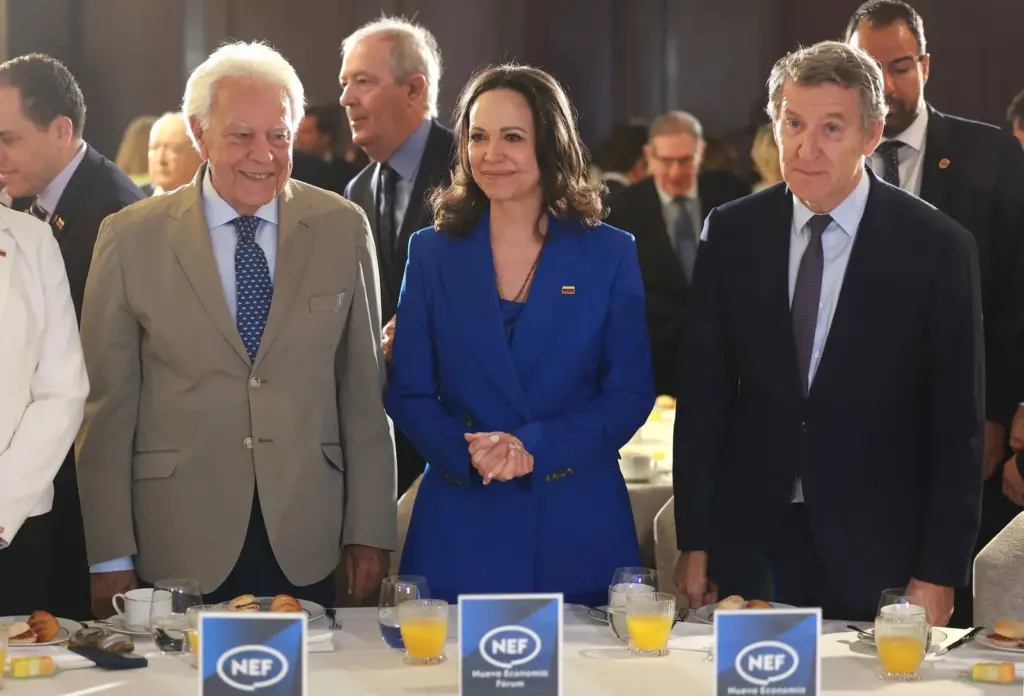
On her last day of public events in Madrid, Venezuelan opposition leader María Corina Machado outlined this Monday at an informative breakfast some of the short and medium-term steps for the arrival of democracy in Venezuela, an event she compared to the fall of the Berlin Wall for Europe. “They don’t know the strength of a country determined to be free,” she insisted before an audience that received her speech with applause and a standing ovation. For the opposition leader, “Venezuela became a strategic focus and a hub for criminal networks that took control of our resources and institutions,” she said. “Taking control of Venezuela was strategic to extend a model throughout the Americas, which is why the fall of the regime will be comparable for the continent to what happened in Europe with the fall of the Berlin Wall.” According to the opposition leader, “this will bring democracy to Cuba and Nicaragua.” Accompanied by former socialist president Felipe González, Machado advocated for a “total privatization process for PDVSA,” the Venezuelan state oil company ravaged by decades of corruption.
Read more A feminist AI assisted more than 2,300 victims of digital gender violence
During her third day in the capital, Machado described the agonizing summer 2024 campaign that resulted in electoral fraud. “No one would have accepted going to elections, but we understood it was the only way to advance towards a transition and dismantle the criminal structure. There was a monumental risk just by opening our mouths, and we did it, and from there, the terror began. It was [for Chavismo] a spiritual, moral, and electoral defeat,” she emphasized.
“What comes next?” Machado asked. In the short term, she affirmed, it is necessary to complete the liberation of political prisoners and the more than 400 opposition members who remain incarcerated, mainly 186 military personnel. Afterwards, she added, dismantle torture centers and facilitate the return of millions of exiles who have had to leave Venezuela. In parallel, propose an electoral calendar as soon as possible.
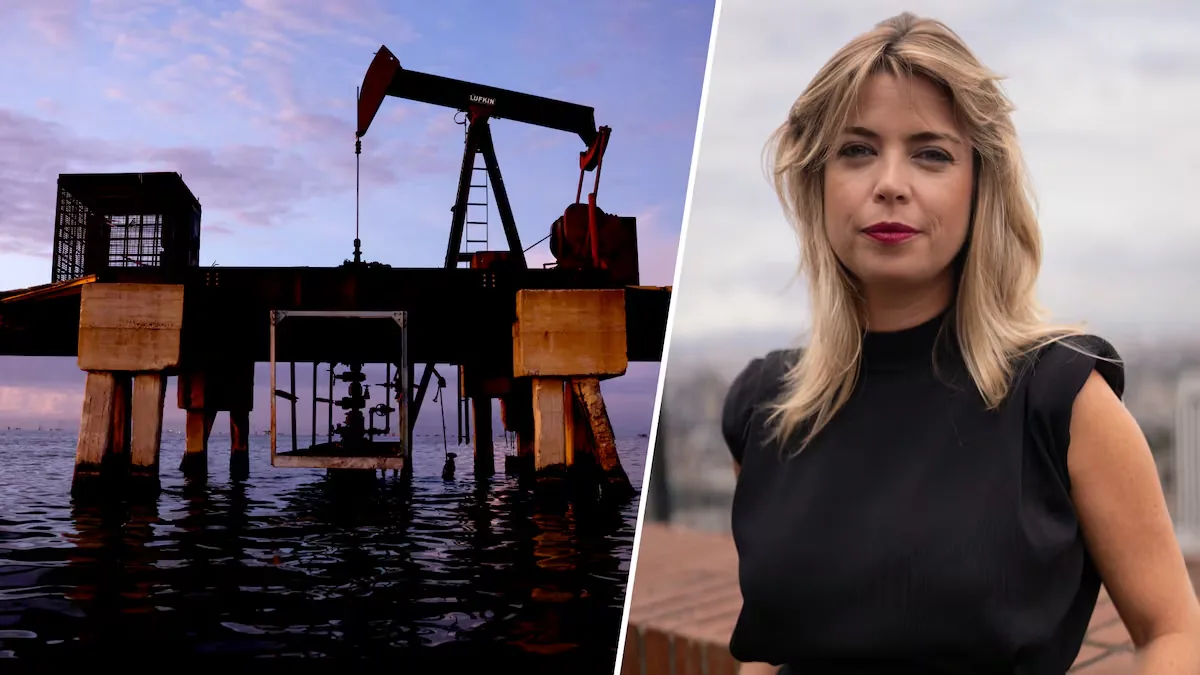
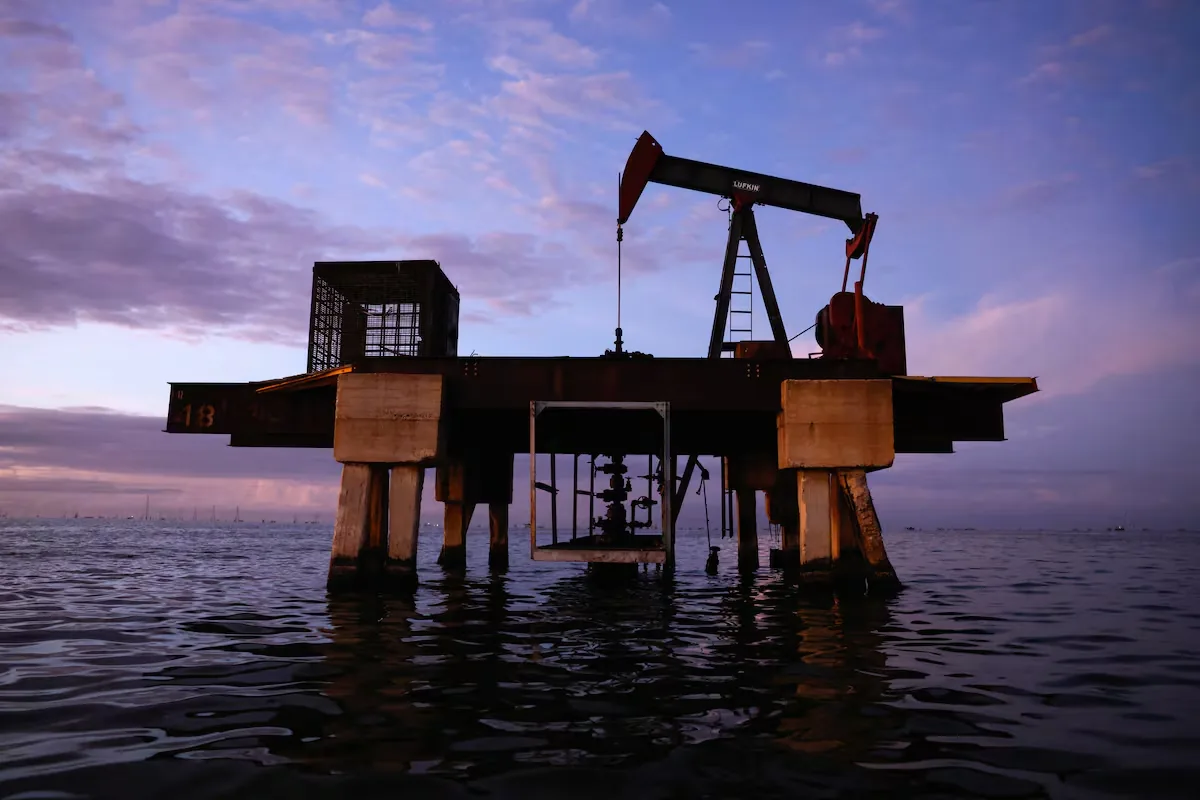
In her economic review, the Venezuelan leader described a devastated country where teachers earn one dollar a week in salary. “Think of it as a devastated country that will be the first to be rebuilt in the era of artificial intelligence,” she continued during the event organized by Nueva Economía Forum. For the opposition leader, if anything has been made clear by the current crisis with Iran, it is that Europe needs “a reliable oil supplier, and that is only possible with a country with clear rules.” “Venezuela has the largest oil reserves in the world, the eighth largest gas reserves, eleventh in drinking water reserves, gold mines…”, Machado detailed.
According to the politician’s team’s calculations, Venezuela currently extracts, at best, one million barrels of oil daily. However, to reach the five or six million it aspires to, an investment of between 150 and 190 million dollars is needed. “Who will bring them? Where will they come from?” she asked, sending a message to the entrepreneurs listening to her: “If you want to invest, come talk to us, and we will tell you what we are going to do in electricity, banking system, oil, tourism…”. María Corina Machado spoke of a “total privatization process for PDVSA.” “My team has already had contact with Spanish companies, and Spanish companies will have the role they want to have,” she insisted.
In one of her brief references to national politics, she stated: “I hope that Spain can soon have elections from which a government emerges that supports the Hispano-American cause.” The current government of Pedro Sánchez did not recognize Maduro’s victory in the last elections, granted asylum to the candidate promoted by Machado, Edmundo González Urrutia, and has just granted nationality to opposition leader Leopoldo López. The Venezuelan politician also said that former president José Luis Rodríguez Zapatero “does not help accelerate a democratic solution.” When asked about the Minister of Foreign Affairs, José Manuel Albares, she avoided confrontation.
All the scenarios envisioned for Venezuela, she continued, “always leave one variable aside: the people.” “They told us it was impossible to unify a country and bring hope, and we have turned that opinion around. Elections are the way to peacefully channel a country,” Machado emphasized before heading to the Senate, where she held her last public event in Spain.
In her speech, she was accompanied by the mayor of Madrid, José Luis Martínez-Almeida, and the president of the Popular Party, Alberto Núñez Feijóo. But also present were prominent figures from the politics and economy of both countries, such as opposition leader Leopoldo López, owners of Venezuelan media outlets, and a large number of councilors from the Community of Madrid.
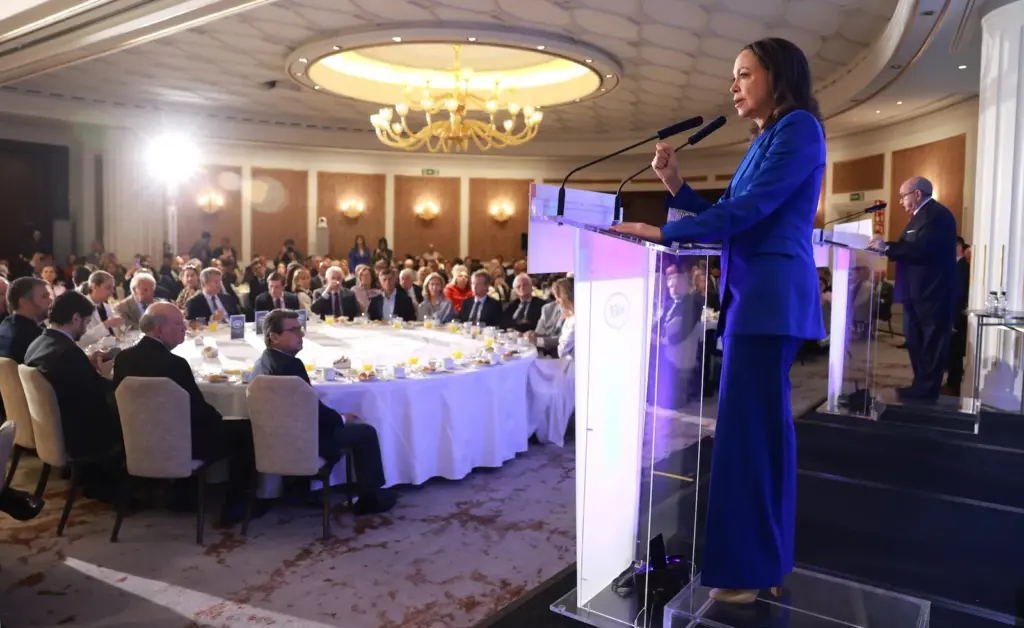
The event’s presentation was given by former president Felipe González, who defined Venezuela as a “dictatorial regime” and called for the return of María Corina Machado with full security guarantees, for which he requested the support of the international community. Regarding the Nobel Peace Prize, González highlighted her “non-mercenary leadership,” which he described as a leadership that “has asked for nothing and has given everything fighting against the Venezuelan dictatorship. Non-mercenary leadership, the first characteristic, leading without asking for anything in return,” González concluded.
In a previous interview with the Efe agency, Machado distanced herself from the chants of “fuera mona” (get out, monkey) that were heard in the Puerta del Sol during Carlos Baute’s performance, in reference to the current president of Venezuela, Delcy Rodríguez. “Never will a word or expression that judges or disqualifies a person based on their religion, gender, or race be heard from my mouth,” she defended. “We propose a process of healing and reunion based on respect for dignity and the right of each person to live freely based on their ideas,” she added. Consequently, “of course we reject any disqualification of this nature.”
Read more The Los Angeles stadium where Iran will play the World Cup starts with the score against them